WWE: 7 Innovations Paul Heyman Did That Changed Wrestling
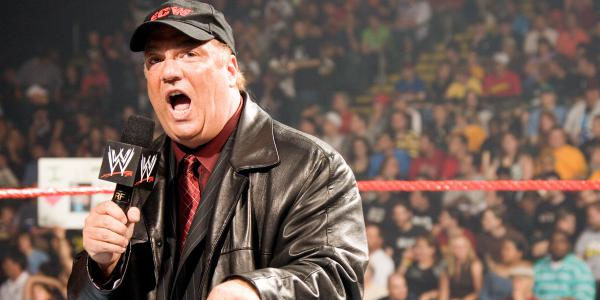
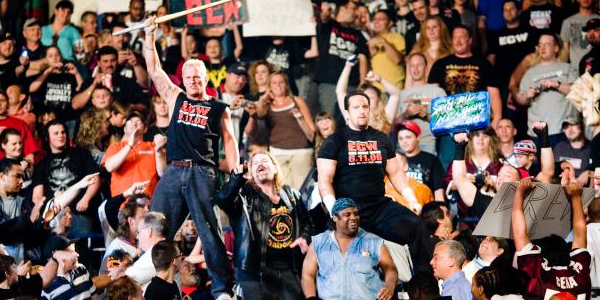
Modern wrestling fans will know the loud mouthed Jew from New York as a manager, representing the likes of the recent Streak Conqueror Brock Lesnar and the longest reigning WWE Champion of the last 25 years CM Punk and his latest acquisition Cesaro, but few men have had as big an impact upon professional wrestling as Paul Heyman. Throughout his 25+ year career Heyman has been a manager, promoter, commentator and journalist in wrestling and a marketing guru outside of it. He started out his managerial career under the moniker Paul E. Dangerously before leaving WCW on bad terms and joining forces with NWA Eastern Championship Wrestling owner Tod Gordon to create the ECW known today, Extreme Championship Wrestling. The company would change the face of wrestling forever before it went out of business and was purchased by the WWE. Heyman joined the new company as a heel colour commentator before going on to manage the man who is still his client and close friend to this day, Brock Lesnar, and then managing Big Show and Kurt Angle against him. Heyman left television for half a year thanks to a combination of injury and a disagreement about his role at WrestleMania XIX and returned as General Manager of SmackDown (where he also served as an award winning head writer). After "quitting" the role of GM he managed the Dudley Boyz and Heidenreich in feuds against The Undertaker, before eventually fronting the revival of WWE's ECW brand. He would leave the company after a major dispute over the failed December to Dismember pay-per-view event but would return in the corner of Lesnar in 2012. Since then he managed CM Punk through his record breaking title reign and temporarily revitalised the career of Michael McGillicutty by rebranding him Curtis Axel and an even shorter time spent with Ryback. It's easy to see that Heyman has left an undeniably large legacy behind him, one very worthy of a surely inevitable Hall of Fame induction at some point in the future, but just how did this one man manage to change the entirety of professional wrestling? Here we shall look at seven of the ways that he changed a brand of entertainment he had viewed as outdated.

7. The Heyman Guys

Im A Paul Heyman Guy While the term has become popular in recent years thanks to a certain 'pipebomb' it is not a recent happening. The obvious candidates are of course Brock Lesnar and CM Punk. They are undeniable successes of the modern era and are both history makers in their own rights, but they are well chronicled Heyman successes and there are so many more 'Heyman Guys' out there that show how he changed the face of wrestling. Starting back in WCW as Paul E. Dangerously, Heyman had two stand-out guys. Ravishing Rick Rude and Stunning Steve Austin. Rude had been Intercontinental Champion under Bobby Heenan in the WWE and continued to exceed in WCW where he won the United States Championship and had some of the finest rivalries of his career against the likes of Sting and Ricky Steamboat. Austin was a relatively new face but captured the Television Championship under Heyman's tutelage. It was in ECW though that Heyman would have the biggest effect on Austin's career, as Austin credits him with "finding the 'Stone Cold' within" during his excellent interviews with the company. Another former WCW man that gives endless credit to the ECW boss is Mick Foley. Ending up in ECW as a result of Heyman's legal disputes with WCW, Foley had a glorious two year run with the company where he showed himself to be more than ready for the biggest possible stage with truly standout promos before he would end up signing with WWE as Mankind. Before any of that Heyman debuted a 24 year old Bam Bam Bigelow to the world, giving him his first professional wrestling match on a heavily media attended event featuring Ric Flair and Dusty Rhodes. In ECW he also handed out big debut opportunities to the likes of Taz, Joey Styles, The Public Enemy and Rob Van Dam all of whom Heyman himself describes as 'Heyman Guys'. Taz and RVD weren't viewed as marketable by the Big Two and Public Enemy and Styles were receiving their first opportunities to make it on a big stage. Heyman went to bat for Styles in particular, telling his pay-per-view carrier that he wouldn't run their first PPV event without Styles as solo commentator. Once Heyman reached WWE he continued to create stars. He revived the Big Show's career in late 2002, as head of OVW he encouraged Mike Mizanin to be himself and began the path to unleashing The Miz upon the world and he had a major hand in the future success of 'The SmackDown Six'. Comprising of Kurt Angle, Chris Benoit, Eddie and Chavo Guerrero, Edge and Rey Mysterio the six men took the tag division by storm, even resulting in the 2002 match of the year, and would each go on to become World Champions (if WWE's ECW Championship counts for Chavo). Some of these men had previously been exposed to American audiences by Heyman in ECW, but more on that later.

6. Hiding Weaknesses Behind Strong Narrative
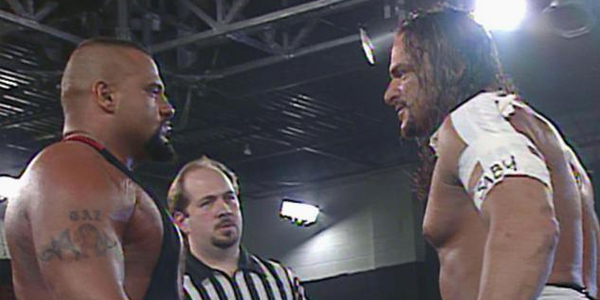
A lot of the criticism that former ECW stars get is about their limitations or that they are just hardcore stuntmen. People who say that are mostly missing the point. Paul Heyman was a master at hiding people's weaknesses (or perceived weaknesses) by both accentuating their strengths and putting forth a strong narrative to create interest in the characters. The weakness needn't always be a lack of in-ring ability, it could be as simply as possessing every single tool necessary except 'the look'. The best examples would be people like Taz or Raven, the latter of which was one of the greatest ring psychologists in the history of the business but WWE never knew how to use him once he eventually arrived there. Heyman just let him do his thing and it worked thanks to the amazing narrative it provided. It was thanks to this (and his infamous Singapore cane beating from Sandman) that Tommy Dreamer became a star as well. People with physical limitations (either visual appearance or movement) such as Mick Foley or Sandman were not held back in ECW as they would've been elsewhere. Instead their positives were focused on, in Sandman's case his character was the important tool along with his Singapore cane. He had two amazing storylines, one of which saw his ex-wife and son desert him for Raven and the other saw him visually impaired for a year. During which time he didn't leave his house to keep the kayfabe alive while ECW wrestlers, whether face or heel, expressed their concern. Two other legendary wrestlers also found themselves held back by appearance in the heavily scarred Sabu and Terry Funk who was deemed too old. Both found tremendous success in ECW despite their supposed problems. A true Heyman trait was his ability to utilise what was presented in front of him. Mike Awesome was a big man who Heyman used to beat little wrestlers to make him look like a powerhouse, a successful formula that both WCW and WWE failed to replicate. The previously mentioned Public Enemy could not have been two more different people but because of a lack of exposure Heyman re-branded them without the world even realising they were ever anything else. The biggest success story of this strategy is 911. An untalented big man that got big crowd reactions because he only ever performed one move, the Chokeslam. But that was all he ever needed for his act thanks to his handling by Paul Heyman.

5. Bringing International Superstars To America

https://www.youtube.com/watch?v=Pp0cH7pmwLw Heyman has spoken time and time again about his desire to make ECW the home of new styles and moving on from what he viewed as dated traditionalism. Most people tend to remember this different style as the extreme hardcore the company name suggests but the reality is that ECW is responsible for much more. Technical wrestlers who had plied their craft and made a name for themselves worldwide were brought into the company. The likes of Chris Benoit, Eddie Guerrero and Dean Malenko all made their names in the US during their ECW run, mostly competing with and against each other. Chris Jericho also received his first American exposure in the Philadelphia based company after Benoit and Perry Saturn recommended him to Heyman. Too Cold Scorpio rounded out the style of technicians that dominated the Television Championship rankings while Taz displayed the style in the World Championship scene. https://www.youtube.com/watch?v=i15XPMvv3hM When WCW did a huge talent raid on ECW in 1995 Heyman decided that to replace what had gone before he had to change things up and try and new style. After consulting with Konnan (who wrestled in ECW at the time while running his Promo Azteca promotion in Mexico), Heyman brought lucha libre wrestling from Mexico to the US audiences by holding a match between Rey Misterio, Jr and Psicosis at the Gangsta's Paradise event in September 1995. Audiences took to it immediately and the pair would continue on to make it an acclaimed three match series. The duo would be followed by the likes of Juventud Guerrera and La Parka before they would all go on to WCW to their Cruiserweight division that was one of the key elements in the Monday Night War. The two styles would continue in ECW even without the originals, even crossing over, as the likes of Jerry Lynn, Lance Storm, Super Crazy, Kid Kash and more would all be shown to American audiences from the hallowed bingo hall. If not for the exposure in ECW many of these men may not have made it in either of the Big Two and future wrestlers such as Daniel Bryan, Kurt Angle, Cesaro and CM Punk may not have been afforded the same opportunity either.

4. Realistic And Grounded Gimmicks

As Heyman was bringing ECW into new territory the wrestling landscape was very different than it is today. WWE was filled with two types of gimmicks, cartoony ones or people who "had day jobs" for example Doink The Clown, Irwin R. Schyster, The Repo Man or the Mantaur. Their opposition WCW weren't innocent of this either with infamous gems as The Taskmaster and The Shockmaster, but were more focused on simply stealing WWE's top stars to fill their roster. ECW decided to make their wrestlers more relatable by having their gimmicks be more grounded in reality. As previously mentioned this resulted in Sandman, a beer drinking badass years before Stone Cold would arrive on the scene. Austin himself would benefit from this style of characterisation as his time in ECW allowed him to bring more of his own personality into his promo work. Mick Foley fitted in straight away thanks to his natural charisma that shone through perfectly when not constricted, something he would carry over to have great success in the WWE. Raven's grungy look and attitude made him a stand-out act as opposed to his runs in both WWE and WCW under the names Johnny Polo and Scotty Flamingo respectively. These two previous gimmicks had seen him play a Florida surfer and a spoilt rich kid, stark contrasts from the Scott Levy the man. Thanks to the creative freedom afforded by Heyman in ECW Raven would cut promos that took advantage of his Mensa level intellect with philosophy and literary references, and had two famous feuds with The Sandman and Tommy Dreamer, the latter of which was made by his refusal to quit despite taking over two years to finally score one victory over his nemesis. The implications of this method were immediate and still hold strong today. Most main event acts since ECW gained mainstream attention have strayed from the cartoony aspect and have incorporated elements of the real personality of the man behind the superstar. People such as John Cena, Daniel Bryan and CM Punk are all recent WWE Champions who basically play themselves, The Miz and Dolph Ziggler are also former World Champions who had success with the same ideology.

3. Three Way Dance Matches

It may seem strange to think now but there was a day when a match would only ever have two sides to it. Whether singles competition or in teams, wrestlers only ever competed against one opponent (or opposing team) with only exception being the free-for-all Battle Royal matches. It is debated who gets credit for the first ever three way match, with many citing ECW's 'The Night The Line Was Crossed' on February 5th 1994 when Shane Douglas, Terry Funk and Sabu faced off to a one hour draw, and some giving credit to Jim Cornette's Smokey Mountain Wrestling but no matter who had the original, Heyman was undeniably one of the first to adopt such a match. Billed in ECW as a Three Way Dance, the match would see three wrestlers (or teams) compete against each other under elimination rules. Unlike modern day Triple Threats, the match would see all three wrestlers compete for the majority of the contest rather than have one man take a breather to cycle through various different combinations of singles matches available. The Three Way Dance became a staple of the company and even had a pay-per-view event named after it that saw the main event competed under the titular stipulation. WCW soon picked up on the idea, labelling them Triangle Matches and changing the rules to have one man stand on the apron needing to tag in and out as well making it one fall to the finish. WWE were a much later adopter, with arguments about whether it was in '96 or '97, in what would eventually become the now popular Triple Threat Match changing the rules again to have all three men in the ring but under one fall to the finish rules. While wrestling has gone on to branch out to Fatal Four Ways, Six Pack Challenges and various other multi-man matches that bring in further stipulations such as Elimination Chambers, Money in the Bank and Triple Threat Tables, Ladders and Chairs matches; they all owe a debt to the original and to Paul Heyman, whether he was officially the first or just the first to feature it at that level.

2. Solidified The Fall Of The NWA

https://www.youtube.com/watch?v=_kpEjrKqf3s When Paul Heyman joined forces with Tod Gordon as the new head booker of Eastern Championship Wrestling in September 1993, it had just become the NWA's top viewed televised show thanks to the departure of WCW from the NWA banner. The former WCW owner Jim Crockett asked Gordon to stage a tournament to crown a new NWA World Heavyweight Champion after the title was vacated in the fallout with WCW. But NWA President Dennis Coralluzzo was suspicious that the two wanted to monopolize the championship the way Crockett previously had in WCW, stating that they didn't have the permission of the NWA Board and he would oversee the tournament personally. Gordon didn't react well to this obvious power play from Coralluzzo and considered removing his brand from the NWA banner. Instead Gordon and Heyman came up with a plan that would change history. It was decided that in the tournament final Shane Douglas would defeat Too Cold Scorpio but instead of accepting the belt graciously he would throw it to the ground in defiance. Naturally Douglas was sceptical of the idea at first but he was talked around by Heyman who told him that the only real negative would be being viewed as traitors by NWA traditionalists. Ultimately Douglas would decide to go along with the plan, motivated by his father, whose life motto was to "do right by the people that do right by you." Coralluzzo had been telling NWA affiliated bookers not to book Douglas on their shows due to a belief he was unreliable, so there was no doubt who was doing right by the future champion. In the infamous speech (above) he looked to the sky and said "This is it tonight Dad" before throwing down the belt and stating that he didn't want to be the champion of a promotion that "died seven years ago" before proclaiming the ECW Championship a World Title and raising that triumphantly instead. And the rest is history. The NWA would be completely overlooked during the Monday Night Wars, relegated to independent level. It would briefly rise to prominence again with the birth of NWA: TNA in 2002, 8 years after ECW separated from them, but TNA would split from them after only two years in order to try and become a major promotion (and signalling even more the stigma attached to the NWA name).

1. The Attitude Era / Monday Night War

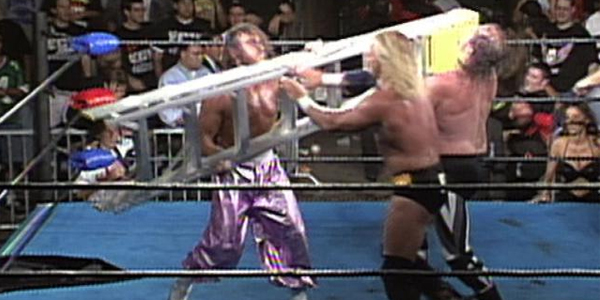
The much beloved era of wrestling that birthed some of the most iconic superstars and moments in the history of WWE and its opponent WCW during the Monday Night Wars. As mentioned in previous entries, ECW was directly responsible for Stone Cold Steve Austin and Mick Foley thanks to their time spent there between mildly successful WCW runs and their rises to stardom in the WWE. These were just two talents from a large list that the Big Two stole from the Philadelphia promotion, many of which have gone on to massive success and World Championship reigns but at the time helped create some of the strongest rosters ever boasted by a company. The Big Two were aimed at children but Heyman saw the potential in television's golden 18-34 age range and as such brought a more mature product to the table in ECW. The new audience focus also brought the some of the highest viewing figures either of the Big Two ever had. Heyman's work within the looser confines saw grounded gimmicks, a ramped up sex appeal and taboo subjects such as race were frequently featured. ECW's Gangstas and comedy units the F.B.I. and the Dudley Boyz all featured racial stereotypes and WWE soon picked up on it with The Nation of Domination that helped make a star out of The Rock. Perhaps the most interesting steal comes in the form of religious symbolism. On October 26th, 1996 Raven attacked his rival Sandman and after a beatdown with his Nest followers placed him on a wooden cross, symbolising crucifying him as they carried him out of the building. This actually caused Kurt Angle, who was in attendance that night and had even set-up an angle with Taz earlier in the evening, to turn his back on the organisation he was considering joining and eventually debuting in WWE instead. Ironically, two months after Angle signed his WWE contract, they copied the exact stunt. Undertaker 'crucified' Stone Cold upon his cross-like symbol to close Monday Night Raw on December 7th, 1998. Another major factor of influence that Paul Heyman's ECW had over both WWE and WCW was the hardcore violence. Neither company really reached the levels of ECW, who become renowned for attractions such as Barbed Wire matches (the most infamous of which saw Sabu require one hundred stitches for a gash caused by getting tangled in barbed wire after missing a move against Terry Funk), Singapore Cane matches and the Dudley trademark of the flaming table but they certainly increased the level of violence and gimmick matches in their arsenal. WWE soon started bringing in ideas like Hell in a Cell, TLC matches and the like in an attempt to compete as well as bringing in their very own Hardcore Championship and division. WCW also attempted the same with their mostly ignored Hardcore division, crazy gimmick matches such as the Triple Cage structure and Scaffold matches, not to mention bringing in Raven's Rules upon the former ECW World Champion's arrival in the company. Quite frankly without Paul Heyman, wrestling would not be the same.

In this post: 
Paul Heyman
 
Posted On: 
Contributor
Contributor

Founder of ForTheRecordNews.com; he is a long time fan of wrestling, television, film, sports and video games from North Yorkshire.