WWE: 7 Wrestlers That Most Influenced The Modern Fighting Style
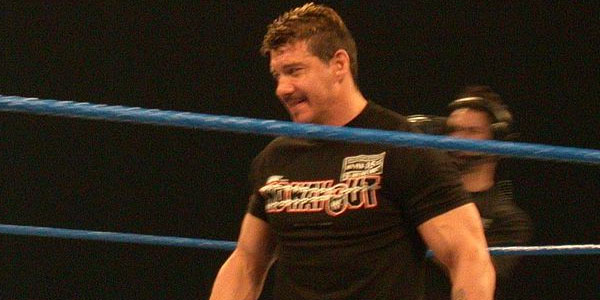 In the past two decades WWE fans have bared witness to a shift in the presentation of elite company performers. While the WWE still remains the land of the giants for all intents and purposes, the concept of the well-rounded fighter has slowly made its way to the forefront of the company. BJJ practitioners like Daniel Bryan and CM Punk have found themselves hovering around the main event picture and the likes of Antonio Cesaro, Seth Rollins and (recently released) Chris Hero, were recently given pushes or opportunities to shine. With news that ROHs American Wolves, Eddie Edwards & Davey Richards, may be extended WWE contracts, the company seems to be more willing than ever to embrace the idea of the amalgamated fighter. However, the seeds for this style shift had been planted in the previous eras of the company. Heres a look at the Top 7 Fighters That Most Influenced the Modern Fighting Style:
7. Dan Severn
 The Beast starts off the list as being one of the first competitors to make mainstream cross-over appearances between MMA and Professional Wrestling. Severn was an All American Amateur wrestler in college and a U.S. Olympic alternate, but gained notoriety in the MMA at UFC 4 by being the first man to fight Royce Gracie to a fight well beyond the 6 minute mark. He is also the only man to hold both a UFC and Pro Wrestling Championship at the same time as he was NWA Champion and UFC Super Fight Champion in 1995. As NWA Champion, Severn was brought in during the Attitude Era of WWE as part of an angle that featured an NWA Invasion. He was put into a program with UFC rival Ken Shamrock as Vince McMahon began a flirtation with using MMA fighters for his promotion. Severn arrived with an in-ring performance that heavily contrasted most of the other matches featured on the card. He employed the use of multiple suplexes, palm strikes, takedowns, and relentless ground and pound on all of his opponents. As a result, his matches had an edgier, realistic, but subdued feel to them. While his character and ring presence fit in well with the rougher side of the Attitude culture, Severns straight-laced persona didnt quite flourish with the flamboyance of the product. Even still, Severns featured performances in the WWE acted as a trial period for the implementation of MMA and grappling techniques to be used predominantly in a professional wrestling performance. A Brawl for All Shoot Tournament was even implemented to try to establish wrestlers on the active roster as legitimately tough. Unfortunately, the tournament was ill-received by fans at the time and nobody got over in the end. Severn would continue to work in both MMA and professional wrestling, still competing to this day.
6. Bret Hart
 Ask anyone about Bret Hart and they will tell you that he is one of the greatest wrestlers in the history of the business, and he is. One of the key aspects of Hart that separates him from the rest of the top tier performers in his field is that his characters persona leaned on one thing: Being the best. Harts main event performances in the 90s were adored for their ring psychology, but were also sold on their style. The idea behind The Hitman was that he was tactical, meticulous, and efficient. The concepts of being bigger or stronger were put on the back burner for the idea that the smarter, complete competitor had the best chance to win in the end. Also, unlike most World Champions before him (Hogan, Savage, Ultimate Warrior), Hart used a submission as a finishing move, which he actively built his matches around by using other strikes and submissions on the legs and lower back of his opponents. The lumbering, brawling style of fighting that used wild, flailing punches and kicks were put aside in favor of a more strategic assault. The likes of Ric Flair predominantly used this ring philosophy in the NWA and aside from a WWE Title Run in the early 90s for Flair, Hart was the first to be given the chance to really run with it for several years.
5. Dynamite Kid Tom Billington
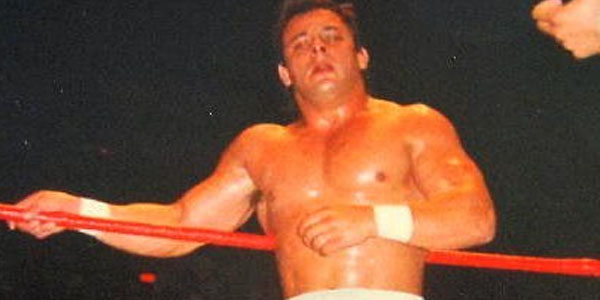 The Dynamite Kid is constantly referred to a as a wrestler who was far ahead of his time. His matches with Tiger Mask in New Japan and WWE are considered the templates for the modern light heavyweight style. As a teammate with Davey Boy Smith, The British Bulldogs performed classic tag team matches with fellow Stampede alums Bret Hart and Jim Neidhart. In the mid-to-late 80s there was not considered a higher pinnacle of a complete, athletic worker than Tom Billington. What made him so special? In short, he was a fireball. Everything he did in the ring was crisp, vicious, and with extreme intent. So much so even that he was actually quite stiff with most anyone he worked with and garnered a reputation for injuring fellow workers. Mick Foley has even told a story in his book that Billington one time dislocated Foley's jaw on a clothesline during a try-out match with the WWE. While his safety as a worker may be debated by those that had the ability to work matches with him, the fact remains that his grappling style influenced several wrestlers of the future generations. Chris Benoit heavily patterned his working style after Billington, and current indy star Davey Richards is virtually a carbon copy of the man. Though he was built like a brick house, Billington was a much smaller competitor than WWE was accustomed to promoting atop their cards at the time. While Dynamite had immense potential to become a top tier performer, the workers of his stature were not often given chances to shine in a singles or world title picture. Unfortunately as well, Dynamites intensity in the ring soon translated to crippling injuries and personal demons that cut his career short. Billington may not have been a practitioner of any other particular form of combat, but his high-flying, high-intensity style is something that many aspiring wrestlers still study and admire.
4. William Regal
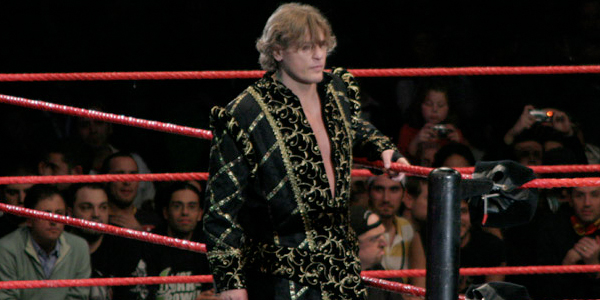 Perhaps one of the most unsung wrestlers in recent history is William Regal. Currently a color commentator for NXT, Regal has had a very successful career that spans over 20 years. He wrestled predominantly for WCW in the 1990s, making a permanent home in the WWE in the early 2000s. Even though Regal never bore the atypical look for a WWE performer, his character and performances have always made him a standout from the rest of the roster. His style of fighting has always been one to use various strikes, uppercuts, and catch-as-catch-can techniques. The core of his abilities stems from legitimate grappling and the use of logical movement. Regal would use strikes that were unique to other wrestlers, but would use them purposefully. In FCW, Regal had an ongoing rivalry with Dean Ambrose, which produced a couple highly entertaining and original matches that showcased Ambroses ability as a layered performer. Why else would Regal be such an influence to the new fighting style? Future development is the key. He had a hand in training a few of the new wave of Main Event performers. Both Daniel Bryan and CM Punk have been under the tutelage of Regal. Running knees and YES! kicks? Thats some Regal right there.
3. Eddie Guerrero
 The late Eddie Guerrero was such a multi-faceted wrestler that it would be impossible to not include him as one of the most influential of the modern fight style. Guerrero meshed grappling with lucha libre style wrestling into an Americanized form of fast-paced dramatic contests. His selling ability was second to none and his persona was one of the strongest in the history of the profession. Latino Heat embodied a fire and intensity that translated into classic confrontations with the likes of Chris Benoit, Kurt Angle, Brock Lesnar, and JBL. Eddie was a break from the mold. His abilities as a tactician never detracted from his ability to still put on a show and establish an emotional connection with the audience. Many wrestlers would expand their style, but end up hindering their character in the process. Others find the opposite true where their character may further develop, but their repertoire begins to diminish. Eddie had a happy balance between the two, which is why he became some a prevalent performer in the top tier of the WWE.
2. Brock Lesnar
 For the modern era, Brock Lesnar was the perfect beast for Vince McMahon to ink to a contract. A former NCAA amateur wrestling champion who is a 63, 285 pound, chiseled behemoth with incredible athleticism and an aptitude for the business? Gold. Lesnar fit like a glove in professional wrestling and he managed to quickly ascend the ranks as one of its most marketable performers. His program with The Rock that led into the 2002 SummerSlam is often praised for the basic manner in which it was built. Both The Rock and Lesnar were filmed in training montages that emphasized the purely physical and competitive aspect of each wrestler. While the vignettes were not incredibly long, they honed in on other traits that were key to athletic competition. Training for flexibility, endurance, power, and recovery, were all sent to the forefront of the storyline. Lesnars persona put an enormous wrinkle into the traditional presentation of the heel monster. Where the big-man performers before him were large, heavy hitters, Lesnar was agile and vastly technical. His amateur background provided a base for grappling, suplexes, and even an occasional submission hold. The Next Big Thing personified an evolution in the expectation of style for the larger athlete. Along with his 02 SummerSlam match with The Rock, Lesnar would put on masterful clinics with Eddy Guerrero and Kurt Angle. To cap off his abilities, Lesnar even made a transition to MMA and held a successful run as UFC Heavyweight Champion, holding the title for nearly two years from 2008 2010.
1. Kurt Angle
 It should come as no surprise that there were quite a few recurring names on this list, Angle being one of them. He tops the list at number one for most influencing the modern fighting style in the WWE. Angle arrived in the WWE in 1999 and by early 2000 was receiving quite the push up the card. In a similar fashion to the push of Lesnar in 2002, Angle was quickly propelled into the spotlight and given a chance to prove himself worthy of holding a main event slot. As a winner of Olympic Gold in the 96 Summer Games and an immensely decorated amateur competitor, Angle had a knack for body control and plenty of athletic ability to match. What put Angle head and shoulders above the rest was his ability to consolidate those technical abilities with the showmanship and pageantry of a professional wrestling performance. While he excelled as a natural competitor, his charisma allowed him to work well as a foil to the larger-than-life personalities of The Rock and "Stone Cold" Steve Austin. Though not a technically savvy altercation, Angle's encounter with Shane McMahon remains one of the more infamous matches of his career. Angle's strengths came from the ability to take the nuances of amateur wrestling and turn them into something that flowed nicely with the end product that WWE wanted. The take downs, the Rolling German suplexes, the "Angle Slam" and the Ankle Lock all became signatures of an ideal performer. Angle looked and acted the part of a professional wrestler, but he adapted what he knew to insert a more intense, forceful performance into WWEs main event picture at the time.