WWE: Top 8 Japanese Wrestlers From The Past 30 Years

Kenta 2345t In a matter of days, wrestling fans will find out if the months of rumors are true: Will Japanese superstar KENTA finally make a splash in WWE? The 33-year-old Pro Wrestling Noah veteran has reached legendary status in his home country, and diehard fans are beside themselves over what bringing one of the top wrestling talents in the world into WWE could mean. Would he rekindle his Ring of Honor rivalry with Daniel Bryan? Can KENTA make a big enough impact to live up to the hype? If KENTA comes to WWE, he won€™t be the first major Japanese star to appear in the Stamford-based promotion, but he might be the most highly touted in the past 30 years. Japanese wrestlers have had mixed success in WWE throughout the years. Some failed to connect with audiences, which could be because of a language barrier or due to stereotypical ethnic booking, while several were quite successful. There€™s no telling what KENTA€™s role or impact in WWE would be, but his ceiling is very high. That alone gives everyone reason to sit up and taken notice if and when he debuts. And if KENTA comes and does well out of the gate, we could see him vaulting past several of these wrestlers at a rapid rate. And no, Yokozuna is not on this list since he was born in San Francisco and billed from Polynesia. If anyone is wondering why Tensai isn€™t on this list, they can stop reading now.

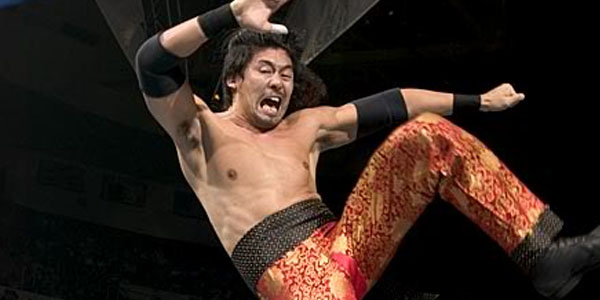
Honorable mention: Hakushi

Hakushi had a 1995 feud with Bret Hart, which turned out to be his ceiling in WWE. When you follow that feud up with a loss to Barry Horowitz (and then a tag team with Horowitz), you know you€™re not making the main event again anytime soon. Hakushi looks like he could have amounted to something in WWE, but it never materialized. More than 15 years later, WWE would recycle the Japanese writing on the face idea with Tensai, with about as much success.

8. Kenzo Suzuki

Blink and you missed Kenzo Suzuki. Lasting a little more than a year on the main roster, Suzuki managed to win tag team gold €“ albeit with Rene Dupree, so you have to wonder what WWE writers were smoking in 2004. But once he engaged John Cena in a battle rap, then you knew they weren€™t just smoking something funny, they were huffing glue too. WWE had big plans for Suzuki and his wife, Hiroko, but the anti-American gimmick was dropped, which may or may not have been a good thing. On the one hand, it€™s such a cop-out to bring in a Japanese wrestler and play up their ethnicity first rather than their abilities, but then again, a feud with Billy Gunn and pairing with Rene Dupree wasn€™t exactly a major step up the card. Suzuki was lost in the shuffle during the 2005 WWE draft lottery and released. He€™s remained active, wrestling in Mexico first and now for All Japan.

7. Yoshi Tatsu

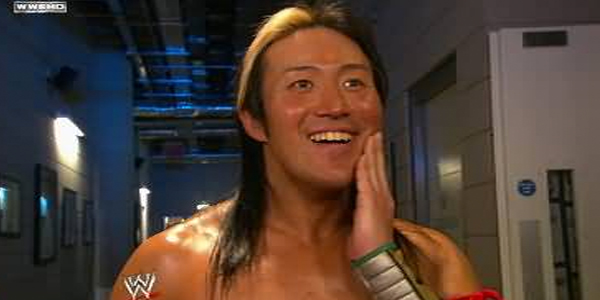
The only current Japanese-born member of the WWE roster, Yoshi Tatsu has been competing for five years and unfortunately probably already has peaked as a competitor. His to-date in-ring high point was a win in the dark match battle royal before WrestleMania XXVI, and he hasn€™t won a televised match in more than two years. That€™s Barry Horowitz bad. Tatsu is not lacking in the ring, and WWE did try to change up his image in 2011 (new tights, face paint), but when you are a five-year veteran who€™s 36 years old, relegated to NXT and hasn€™t won in more than two years, then you€™re probably not going to do much more than be on the new J.O.B. Squad. The Cardiac Kid€™s WWE career looks like it could soon go into cardiac arrest.

6. Mr. Fuji

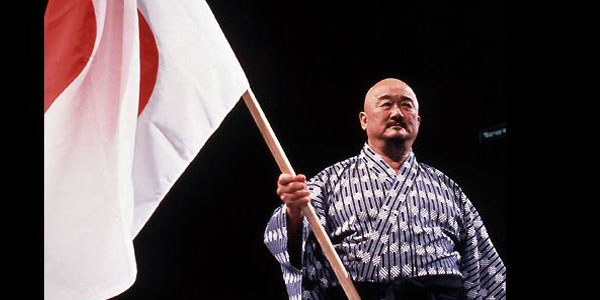
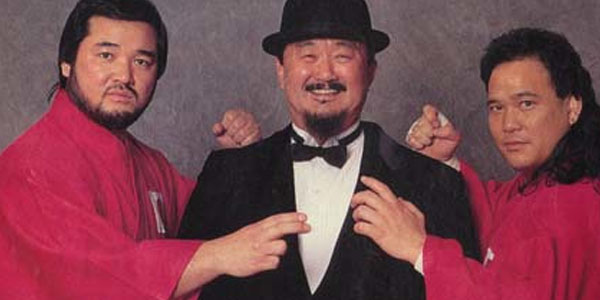
The Devious One might have been billed from Japan, but he was born in Hawaii. Still, as a Japanese-American who attained a great deal of success as a wrestler and a manager, Fuji deserve a great deal of credit. After all, he led Demolition to tag team gold and steered Yokozuna to the WWE Championship twice, plus he€™s a five-time tag champ himself. Mr. Fuji€™s list of clients reads as a Who€™s Who in the 80s and 90s: Magnificent Muraco (and their awesome €˜Fuji Vice€™ videos), Demolition, Powers of Pain, Kamala, Orient Express, Yokozuna and Owen Hart. Fuji might have been born in the United States, but it was his Japanese heritage that brought him to great heights in WWE. He was a great all-around performer who entertained fans €“ even if he looked like his character was inspired by a James Bond movie villain.

5. Orient Express

If you€™re talking about Mr. Fuji, you have to acknowledge a couple of his charges, Sato and Tanaka, the Orient Express. The duo were never able to capture tag gold, but they had a nice little feud with the Rockers and were human punching bags for the Legion of Doom. The team would switch it up a little after a year, when Sato left WWE and Fuji brought in the masked Kato. This presented a problem: the Orient Express had no Japanese-born members, including the manager. Like Fuji, Tanaka was born in Hawaii, and Kato (who was actually Paul Diamond under the mask) came by way of Yugoslavia. But at least that pairing meant the reunion of Badd Company. Neither combination caught traction in WWE, but they were a sound tag team to have filling out the ranks.

4. Jumping Bomb Angels

http://www.youtube.com/watch?v=Poy4q7zYjMI This might seem like an awfully high ranking for a tag team that had such a short tenure in WWE, but if you€™ve seen any of their matches for the Women€™s Tag Team Championship against the Glamour Girls, you€™d understand why they deserve a spot on this list. Itzuki Yamazaki and Noriyo Tateno spent a decade teaming together and made their biggest impact in WWE in late 1987 €“ when they were the sole survivors of the women€™s Survivor Series match €“ and early 1988 €“ when they captured the tag titles at the inaugural Royal Rumble. Watch any of their matches and your jaw will drop with some of the moves they pull off: enzuigiri, double-underhook suplex, various pinning combinations and submission holds, including the octopus (which AJ Lee uses as the Black Widow). These moves were not commonplace in the late 80s, and you can hear Jesse €˜The Body€™ Ventura expressing genuine amazement and appreciation for their talent in the Survivor Series match. The pace and crispness of their moves is unreal, and when you consider that these matches are over 25 years old, it really blows your mind. WWE Divas today should be required to watch their matches with the Glamour Girls (who were no slouches in the ring either) and take notes.

3. Ultimo Dragon

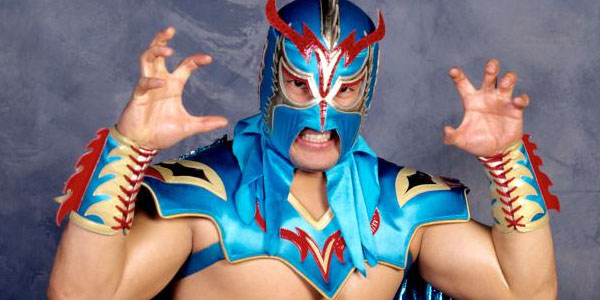
It€™s really a shame, but Ultimo Dragon€™s WWE tenure is probably best known for his near-wipeout during his entrance at WrestleMania XX. That shows just how unmemorable his year-plus run was. In WCW, Dragon was treated as a serious threat. They referenced his capturing the J-Crown and when he won the Cruiserweight title at Starrcade in 1996, announcers sold it as he was holding nine titles at once. That€™s quite the ringing endorsement. Dragon would capture both the Cruiserweight and Television Championships multiple times before an arm injury and botched surgery would derail his career. Dragon deserves credit for innovating and bringing the Asai moonsault, Asai DDT and Dragon Sleeper into the mainstream in the United States. He didn€™t get the Rey Mysterio treatment in WWE, but at least he made it there and hung around long enough for people to track down his bio and realize that he was more than a guy in a mask and costume. And at least WWE didn€™t ask Ultimo to break file.

2. Kaientai €“ Funaki And Taka Michinoku

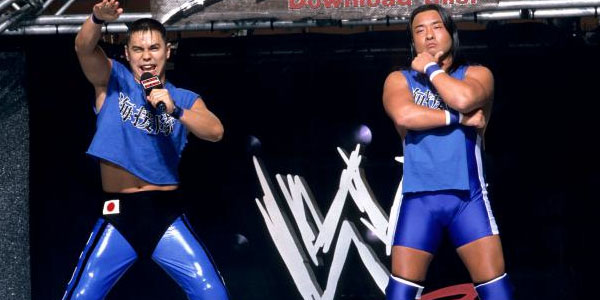
Whether you consider them individually or together, there€™s no doubting the impact that Taka Michinoku and Funaki had on WWE in the late 90s and early 2000s. Taka was the first WWF Light Heavyweight Champion (the first one recognized, at least), holding the strap for more than 10 months. He feuded with and later joined the Japanese stable Kaientai, which would dwindle to a tag team with Funaki. The duo became mainly a comedy team who famously would mouth promos that would be €œoverdubbed€ in English backstage. Funaki would close out each promo with an €œIndeed.€ Taka would share the spotlight with Triple H a little during this time, battling for the world championship and teaming with Funaki and the Brooklyn Brawler to beat The Game. He left WWE in 2001. Funaki, on the other hand, would stay with WWE until 2010, finding various ways to stay relevant and on television. He served as Smackdown€™s backstage interviewer and would go on to win the Cruiserweight Championship in late 2004. After floating in and out for several years, mainly as a contender for the Cruiserweight title and cannon fodder for larger wrestlers, Funaki was reborn Kung Fu Naki in 2008. The gimmick change turned out to be his death knell in WWE, as he vanished for a year before resurfacing for the WrestleMania XXVI battle royal won by fellow countryman Yoshi Tatsu. He was released days later. While both men had fair success in the light heavyweight/cruiserweight division, they spent a great deal of their time with WWE as comic relief and roster filler. Still, if you watch Taka€™s title match against Triple H, you can see the crowd rallying behind him. And Funaki was well-liked by fans and had something nearly everyone on this list lacked: longevity.

1. Tajiri

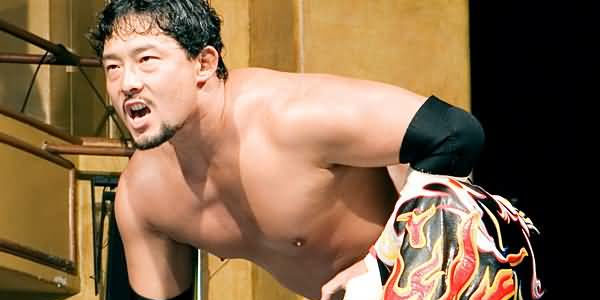
The Japanese Buzzsaw is the most decorated Japanese-born WWE wrestler in the modern era, racking up three Cruiserweight titles, a Light Heavyweight reign, two Tag Team title runs and a turn with the United States Championship. All of this came during a four-plus year run with the company that started after ECW folded and Tajiri came in as Commissioner William Regal€™s assistant. While Tajiri was often played for a laugh, he was never treated as a joke in the ring. In fact, his in-ring talent is what drew fans to him. Whether it was the rope-assistant handspring back elbow, the Tarantula, Buzzsaw Kick or the green mist, Tajiri€™s moves usually drew a good reaction from the crowd. He was believable as a threat despite his size, much like Daniel Bryan is today. Granted, Tajiri doesn€™t have the main event victories Bryan does, but both men relied heavily on kicks and rapid strikes to keep larger opponents off-guard. It€™s been eight years since Tajiri has been seen on WWE television, and unless it€™s a one-shot deal if WWE goes to Japan, there€™s no indication he€™s planning a return despite keeping sharp in Japan. Tajiri€™s still younger than Triple H and Batista and any return would probably be pretty well received, so if KENTA does make his way to WWE, don€™t be entirely surprised if the company brings him in for a nostalgia run. It just might be what€™s best for business.

In this post: 
Hakushi
 
Posted On: 
Contributor
Contributor

Scott is a former journalist and longtime wrestling fan who was smart enough to abandon WCW during the Monday Night Wars the same time as the Radicalz. He fondly remembers watching WrestleMania III, IV, V and VI and Saturday Night's Main Event, came back to wrestling during the Attitude Era, and has been a consumer of sports entertainment since then. He's written for WhatCulture since 2014, establishing the Ups and Downs articles for WWE Raw and WWE PPVs/PLEs and composing pieces on a variety of topics.