10 Incredible Comic Book Panels That Changed Everything
All-Star Superman is an All-Star gem.
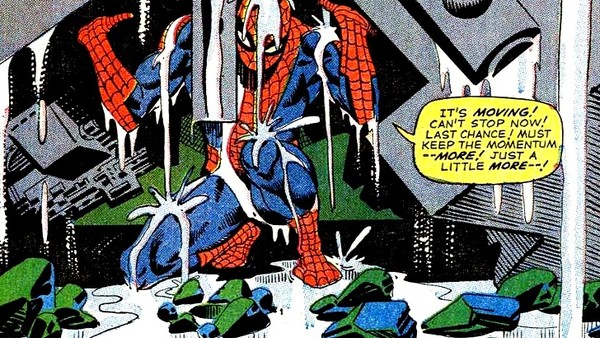
If you were to name any single comic creator whose impact on the medium could be considered immeasurable, it'd be Jack Kirby. He wrote the book on modern comics, and the wave of tributes left in the wake of the artist's 100th birthday have dominated the scene for over a month now. It's certainly special to see the medium bursting with so much positivity. Nazi-Cap is, after all, finally on his way out.
So, in the spirit of Kirby's 100th b-day, taking the odd moment or two to reflect on the best and brightest images to have emerged from DC, Marvel and others certainly feels like a worthwhile endeavour, particularly when it concerns an industry as iconic or as indelibly influential as comics themselves.
Indeed, artists have long been proving that comics aren't nor ever will be the funny books they once were. Granted, they can be funny, but y'know, things are decidedly more grim these days than before. Nuanced, certainly, but also grim.
But what about those panels that truly reinvented the industry? It's been home to plenty of incredible names over the years, including the likes of Kirby, Frank Miller, David Mazzucchelli and more. And so naturally, it makes sense that there've been more game-changing pencils than there've been Elektra resurrections.
As for the ones that really changed the game? Well, we've collected (most) of them here, because we're nice like that.
10. The Death Of Captain America

2007 was a pretty dramatic year for Marvel. Not only had the ludicrously overrated Civil War storyline reached its end, but Captain America scribe Ed Brubaker decided (not on a whim, imaginably), to kill off Steve Rogers too.
The world was sent a fluster, Brubaker received death threats aplenty, and Rupert Murdoch's Fox News shat itself for approximately 24 hours. The storm blew over soon after, but there's plenty to dissect regarding the way the onetime man with a plan perished - ostensibly - during that year.
Indeed, Michael Lark's sketch of the wounded Rogers probably did a lot to stoke the media storm that followed, with a remorseful Sharon Carter holding her partner who, noticeably bloodied, lent a visceral edge to the page.
It bears the echo of JFK's '63 assassination all too deliberately, and the visual of Cap dying a thoroughly undignified and all-too-real death further reiterated Brubaker's message of an American dream turned sour. Bucky would later take up the mantle of course, but Brubaker's death-arc certainly beats whatever the heck Secret Empire is.
9. Hellboy Enters The Scene

The release of Mike Mignola's Hellboy marks one of the formative events in comic book horror, and yet its place in history is often overlooked.
Since the character's debut in 1993, Hellboy has managed to make a remarkable impact both on and off the page - a trend that looks set to continue with the upcoming Rise of the Blood Queen. The perfect thing about the Mignolaverse, however, is that not only is it one of the most accessible comics series out there (seriously, that sh*t's addictive), it's incredibly atmospheric too.
The mastery with which Mignola and other Dark Horse alum command myth, legend and gothic literature in the medium really is special, and Hellboy's arrival on the scene itself strikes all the tones indicative of later Mignola-led works.
The writer/artist's pencils are certainly formidable, but a person who undoubtedly deserves a whole heap of praise is colourist Dave Stewart, whose reds, whites, browns and blues all contrast to create the perfect atmosphere to compliment Mignola's work.
It's certainly not the most striking image to have featured ol' Red, but as a moment in the industry, it's one that is all too often forgotten.
8. Daredevil Rises From The Ashes
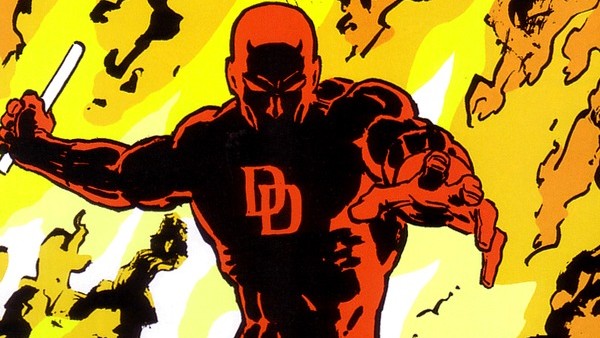
Daredevil: Born Again has been a hot topic as of late, what with all the teasing between the character's second solo web series and that final episode of The Defenders having foreshadowed a live action adaptation of the seminal Miller/Mazzucchelli work. It's a storyline audiences will become (all too traumatically) familiar with no doubt, but one thing hardcore DD fans will be looking forward to is the prospect of seeing all those lovely Mazzucchelli pencils getting a nod in live action.
The artist would collaborate with Miller later in Batman: Year One, and, while his work on the Bat-project is equally formidable, Born Again's imagery really is something to behold. Its use of religious symbolism to portray Matt Murdock's own veritable resurrection - an aspect made all the more ironic by the Devil motif - is particularly iconic, but no panel bears more significance than the one above.
His life systematically dismantled - his identity in ruins - Matt finally reclaims the red suit and puts an end to a murder spree engulfing Hell's Kitchen. It's a true moment of clarity and rebirth for the character, who, quite literally, had come from Hell and back again to rebuild his life.
Obviously there are other panels in the book that deserve mention; Maggie Murdock's embrace of her son is one of them, but having Daredevil emerge from the fires of Hell's Kitchen isn't just a thematically brilliant moment to convey; it's seminal in every regard, and a moment every comics fan should cherish.
7. Spidey Overcomes The Odds
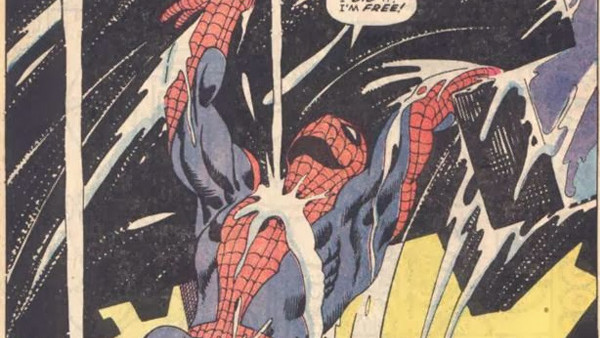
We actually got to see the MCU pay homage to this classic Ditko panel in Spider-Man: Homecoming, so that should go some way in conveying the significance of this moment.
Anywho, in The Amazing Spider-Man #33 - written by Stan Lee and with Steve Ditko on art duties - Aunt May is close to meeting death's door, and the only thing that can save her is a serum lying just out of Spidey's reach. With the wall-crawler having been trapped by literally tonnes of steel, Pete resigns himself to failure, as no matter how hard he tries, he can't lift any of the debris on his back.
It stands up as a tense scene even to this day, and the moment that Spidey finally breaks free genuinely makes for one of the finest comic book moments of all time. Ditko's influence in crafting that tension, however, should not go overlooked.
6. "None Of You Are Safe"

Another Miller/Mazzucchelli work here, but one that's by no means any less influential.
For those not in the know, Batman: Year One was Frank Miller's attempt to rebuild the Dark Knight from the ground up, and provide a modern origin for the established canon. It worked... mostly, but apart from its faults, there are plenty of noteworthy moments to mention, including the scene where Bruce finally announces himself to the corrupt and powerful of Gotham's criminal underworld.
The Caped Crusader's burgeoning crime fighting career wasn't off to the best of starts, but the way in which he introduces Batman to the likes of Carmine Falcone, Commissioner Loeb and others epitomises everything that the character should be. Having blown open a wall at a private banquet, Bats cuts the lights and proclaims - with all due intent - that, "from this moment on", none of them are safe. Spooky stuff indeed.
The moment he extinguishes the roaring flame on the dining table also makes for a terrifying image, but the way in which Mazzucchelli draws Batman almost makes him look like an ethereal spirit of vengeance - the ghost of Gotham's past, present and future.
It's a panel that provided a proper update for the Dark Knight's origins - that much is true - but it's also a truly definitive moment in the character's history.
It also made for a decent animated sequence, so there's that too.
5. "My Ward is A Junkie!"
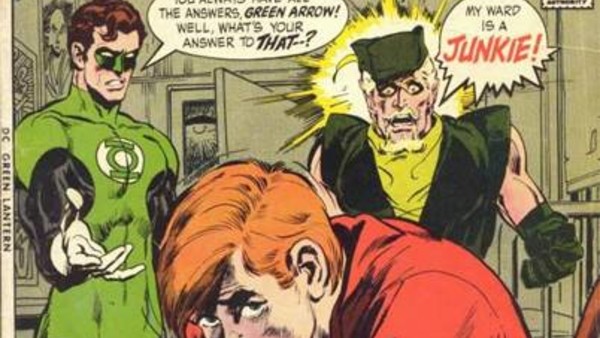
There's so much more to Dennis O'Neil and Neal Adams' Green Lantern/Green Arrow series than just this scene, but hey, it's a panel that fits the bill, so it's here.
Taken from the Snowbirds Don't Fly arc from the same series, Neal Adams' depiction of Oliver Queen's loyal sidekick, Roy Harper, shooting up, proved to be a watershed moment in an industry still heavily censored by the now-defunct Comics Code Authority. Marvel had just produced a similar storyline in Spider-Man, but the O'Neil/Adams arc came from a place of experience, with both creators having dealt with loved ones struggling with substance abuse - particularly heroin - at the height of the seventies' drugs scare.
The language might be dated, but O'Neil and Adams' arc came from a place of good intent. That, and well, the panel of Speedy shooting up was a first in the medium, so it was visually and thematically significant for the industry at the time.
The entire series is certainly worth a read, and continues to be DC's finest - and indeed most revolutionary - work from that decade.
4. Superman Saves A Life
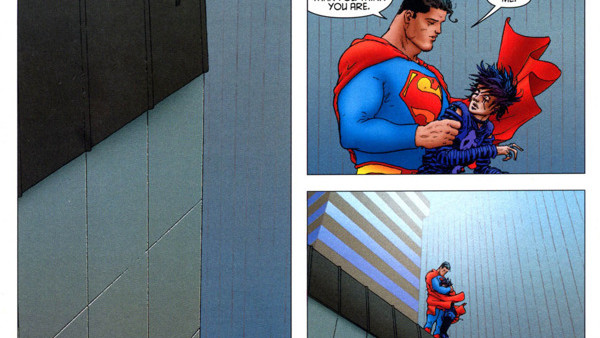
There are few moments out there that can define a character in such a short space of time, but this particular one - found within the pages of Grant Morrison and Frank Quitely's seminal All-Star Superman - is certainly one of them.
Everything about this book just exemplifies what the last son of Krypton should be: kind, warm, powerful - all elements that have made the character what he is over the years. Even in the face of death (the character faces a terminal diagnosis early in the story), Clark Kent does all in his power to make the world a better place, including by saving the life of a young girl, called Regan.
Stood on a ledge, Regan looks as though she's about to commit suicide, before Superman drops literally everything and rushes to her. He doesn't wait for her to jump, and there are other matters at hand, but he stops the world just for her, offering a hug and reassurance that, no matter how grey times may get, she's strong, and that everything will be okay.
The scene has been hailed as the greatest Superman moment of all time, and I'd be inclined to agree. It just represents everything that's wonderful about the character, and provides the defining image of the Man of Steel for a generation to hold onto.
3. The Death Of Elektra

Those who are familiar with the character of Elektra Natchios will know that death is never really the end for the assassin, not that Frank Miller would have much say in the matter anyway.
In Daredevil #181, after many issues of on again, off again collaboration with the man without fear, Elektra was fatally stabbed with her own sai by Bullseye, who - until that point at least - was considered to be something of a gag character. It was a shock move at the time, and her death - drawn by Miller and Klaus Janson - was certainly visceral, with it lasting an entire page in the issue.
The image of the character being stabbed and then stumbling to the floor is awful - there are no other words really for it. And while Elektra would later return, no death has weighed more heavily upon a comic book character than her's. It's a key event in the Daredevil mythos, and one that Matt Murdock - and Marvel itself, for that matter - has struggled to reconcile since.
2. Doctor Banner, Jolted By Gamma Rays
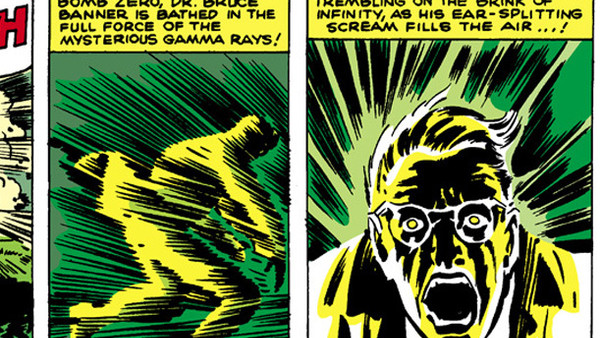
You know we had to have at least some Kirby in here, and while it probably isn't the choice most would expect, there's something altogether horrifying and beautiful about Bruce Banner's origins.
The greens, the yellows and the narration itself all lend a magnetic quality to Banner's gamma ray-infused transformation, seen for the first time in The Incredible Hulk #1, and serves as a reminder that, while the Hulk himself might be a hero, his comic has its roots firmly in the horror genre.
Kirby would, of course, lend his talents to both Marvel and DC, and later create a number of iconic characters for both companies. And again, while this might not be the most famous Kirby drawing out there, there's something oddly captivating about Banner's gamma-based accident - an element owed in part by yes, Lee's iconic narration, but more importantly by Kirby's and Paul Reinman's art.
1. Batman Gets The Last Laugh

Alan Moore and Brian Bolland's The Killing Joke is a lot of things. Controversial? Yes. A brilliant Batman/Joker tale? Absolutely, and the final scene provides a fitting endnote to the pair's relationship, no matter which way you look at it.
The other year, famed Bat-scribe Grant Morrison hopped onto Kevin Smith's much beloved podcast, Fatman on Batman (a great episode to watch, by the way, along with the Dennis O'Neil one), and put forward the view that, at the end of TJK, Batman actually kills the Joker. No, seriously, Batman totally kills the Joker. Just listen:
“Killing Joke’s good. And I kind of like Killing Joke’s… we talk about this, no one gets the end, because Batman kills the Joker… that’s why it’s called the Killing Joke. The Joker tells the killing joke at the end, Batman reaches out and breaks his neck and then the laughter stops, and then the light goes out, because that was the last chance of them crossing that bridge.”
Although The Killing Joke is very much a part of mainstream DC continuity, which should, supposedly, eliminate such an interpretation, Moore's ending is certainly ambiguous. Personally? I side with Morrison on this; not least because it provides a sense of finality to the pair's relationship, but also because it proves even Batman has its limits.
Take your pick in regards to which colours you prefer, but there's no denying that those closing panels provide the perfect definition to what is, most likely, the medium's most iconic relationship.
-
Are there any panels out there that you're particularly fond of? How about The Killing Joke's ending? Let us know in the comments below!