10 Amazing Comic Storylines Derailed By Editorial Politics
Sometimes even the best laid plans can be uprooted or destroyed by those in power.
Comic book industry superstar Mark Waid once wrote that the role of an editor is to facilitate the creative process, not impose on it. That certainly sounds easy enough on paper especially if a project is creator owned, when the editor is just there to essentially keep production on schedule. But it is very rare for a mainstream comic book story to remain completely untouched by the heavy hands of an editor.
And typically, the higher the profile of the comic book series or storyline, the more likely somebody from editorial will step in to make sure the project in question sells well and doesn't inspire any negative attention from fans or critics. Still, there's the expected level of editorial interference, and then there are instances where the powers that be push so hard on the direction of a storyline or a series, it causes irreparable damage to all that are involved.
In all of the 10 examples listed here, editorial input had a very negative impact on some popular and/or critically acclaimed comic book titles. Because of this meddling, many talented creators quit, series were prematurely cancelled, or ongoing storylines were so disrupted, they were rendered incomprehensible.
These 10 tales serve as a cautionary reminder for fans of the comic book medium that sometimes even the best laid plans of a comic book creative team can be uprooted or destroyed by those in power.
In these instances, the editors most certainly did not facilitate the creative process they dictated it, with terrible results.
10. The Trials Of Tribe
After its successful debut as an independent publishing company in 1992, Image Comics hired an executive director to oversee financial affairs and to make sure creators were more reliable in meeting their deadlines. One of the titles that was jettisoned as a result of Images tighter ship was Todd Johnson and Larry Stromans Tribe.
Tribe #1, which sold more than one million copies, was noteworthy for being the best selling comic to be produced by African America creators. Johnson and Stroman intended for their African American superteam to eventually consist of more than 200 members, with new heroes being added every issue. But that idea never came to fruition.
Due to creative differences, the duo was notorious for missing deadlines. Eventually, Image cancelled the series before a second issue could be produced. Tribe was eventually picked up by Axis Comics, which published issues #2 and #3. But then Axis went bankrupt and folded. A fourth and final issue, Tribe #0 was published by Good Comics but, by that point, the potential magic of the series was long gone.
9. Jim Starlin Quits Warlock
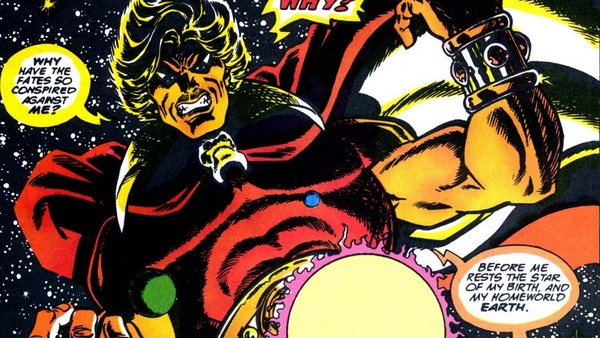
Jim Starlin was one of the godfathers of Marvel's cosmic universe, having created comic book mainstays Thanos, Gamora, and Drax the Destroyer, and generating interest in failing characters such as Captain Marvel and Adam Warlock. During Starlin's ballyhooed run on Warlock, which included a universally loved story that pitted the golden hero against his evil dark self, Magus, the writer/artist clashed with Marvel's editor-in-chief Gerry Conway.
During the production of one of his post-Magus Saga issues, Starlin was made aware of some art corrections and demanded that he get the opportunity to make changes. Conway refused on the grounds that the corrections would incur late penalties. So Starlin quit, ending his run on one of the most successful cosmic comics ever.
When Archie Goodwin took over for Conway, Starlin was eventually wooed back to script and pencil a two-part Warlock/Thanos story in Avengers Annual #7 and Marvel Two-in-One Annual #2. But in the opening pages of the first story, the reader sees that Gamora had died without explanation.
Starlin told Newsarama that Gamora's situation was to be explained in Warlock #16, an issue that never saw the light of day because of his rift with Conway.
8. The End Of The Stern/Byrne Run On Captain America
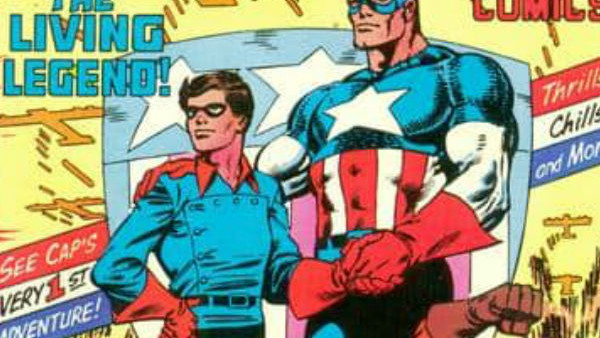
Roger Stern and John Byrne's work on Captain America in the early 1980s was as short lived as it was acclaimed. The duo breathed new life into the character, including a very well-received standalone issue where Captain America debates running for president. But both quit the book after only nine issues after a series of clashes with Marvel's editorial department.
There are multiple accounts of what led to the break-up. One story stems from Marvel's editor-in-chief's short lived no three-part stories edict. Stern had scripted a three-parter involving the Red Skull that Marvel refused to publish as part of its new mandate, so he quit the book and Byrne left in solidarity. The story would later be clarified in an interview Stern gave to Marvel Masterworks.
According to the article, the conflict was more over editorial bonuses than the no three-part stories edict. Marvel's editors were concerned that Stern and Byrne would miss a deadline and were insistent on hiring a fill-in creative team for one issue. The fill-in team would have disrupted the bonus money Stern and Byrne were set to receive for working on six consecutive issues.
The lost royalties, combined with concerns that the substitute team would cost the book a chunk of its readership led to Stern and Byrne resigning from the series.
7. One More Day

Peter Parker, aka, Spider-Man's marriage to supermodel girlfriend, Mary Jane Watson, had long been a polarizing development within Marvel's circle of creators and editors. Some thought it made the character more relatable, while others thought it was harder to identity with a middle age-ish superhero with husbandly responsibilities.
Regardless, the Peter/MJ dynamic was at its very best when written by Amazing Spider-Man scribe J. Michael Straczynski, who reunited the couple after a multi-year separation in the early 2000s. But despite all of the excellent Peter/MJ stories, JMS was tasked by Marvel editor-in-chief Joe Quesada with breaking them up for good. Straczynski was reluctant to do the story, dubbed One More Day, and even asked to have his name taken off the comic in protest, but later backed off so as not to sabotage Marvel or Quesada.
Quesada remained very adamant that the Spider-Man series would be better off without Peter's marriage to MJ, so the story went forward, and ended up being what many consider to be one of the worst Spidey stories of all time. In the set-up to the story, Peter's Aunt May is shot by a sniper bullet and he is offered a deal by Marvel's version of the devil, Mephisto, that he could say May's life in exchange for his marriage being wiped from existence.
Readers were shocked that Peter accepted. Not only were 20 years of continuity wiped from existence, but Spider-Man, a beloved character with established morals, made a deal with the devil to set it all into motion. Critics railed against the story, calling it editorial interference run amok, though the marriage remains annulled more than five years later with no sign of it being reinstated.
6. The Cancellation Of Supergirl
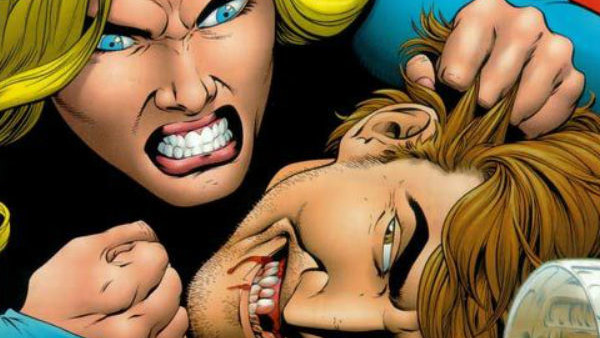
Peter David's critically acclaimed run on Supergirl was on the verge of cancellation in 2002 when he convinced the powers that be at DC to revive the original Supergirl, Kara Zor-El, whose death in the Crisis on the Infinite Earth was one of the most iconic moments in comic book history. Kara would join forces with Davids current incarnation of Supergirl, Linda Danvers.
DC agreed to the resurrection angle, but under the condition that it would be for a six-issue arc. David, however, had bigger plans for the series, and just wanted some time to make his case.
As David told Comics Should Be Good, he had hoped the revived interest in the Supergirl series would lead to a new team book starring Kara, Linda and Power Girl. Sales did pick up during the arc, and the story was warmly received by critics and fans. But DC stuck to its guns and, at the end of the arc, cancelled the series, never giving the team book an opportunity to catch on with readers.
5. Heroes Reborn

In a move that shocked the industry and was, as one editor described, catastrophic to morale for those still working at the company, Marvel killed off the Avengers, the Fantastic Four, Doctor Doom and a host of other characters as part of the Onslaught event in 1996, and relaunched the The Avengers, The Fantastic Four, Iron Man, and Captain America. But this wouldn''t be just another reboot. Marvel relinquished control of its characters and paid millions to the California studios of Jim Lee and Rob Liefeld two artists that had defected from the company to form Image a few years earlier to create these core titles, while other long-time Marvel creators were unceremoniously kicked to the curb.
The editorial decision was met with harsh criticism from those within the industry and outside of it. Writer Kurt Busiek told a newspaper, The Marvel reader is essentially being told that Marvel's long-term history is more or less irrelevant. It's secondary to what will make the character more popular and what will make the company more money. And even though the controversial decision was fiscally motivated, in some instances, Heroes Reborn didn't even help sales.
In one instance, the successful Mark Waid/Ron Garney run on Captain America was cut short in favor of Liefeld's re-imagining of the character (with a laughably disproportion chest), and sales actually went down on the book.
A year later, Marvel ended its experiment and reintroduced all the heroes under the banner, Heroes Return.
4. Death And Return Of Jean Grey
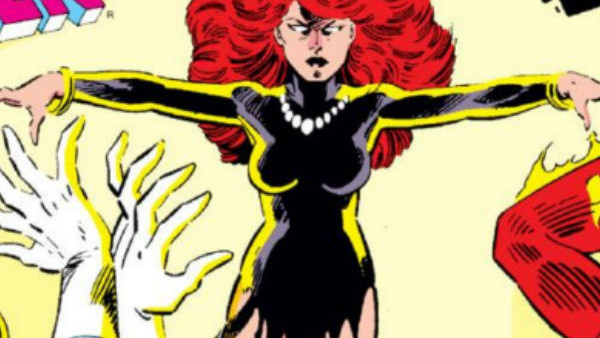
The Dark Phoenix Saga is widely considered one of the greatest comic book stories ever created, and yet the story was strongly guided by editorial input that went on to have a negative impact for Marvel years after it was first published.
In its original form, the storylines creative team, Chris Claremont and John Byrne intended for Jean Grey, who had been consumed with the dark cosmic Phoenix Force, to atone for her sins (which included the destruction of an entire planet) and survive the ordeal. But Marvel's editor-in-chief, Jim Shooter, refused to publish the story unless Jean faced legitimate consequences for her actions. Shooter essentially dared Claremont to kill Jean off, and that's exactly what he did in the arc's final chapter in Uncanny X-Men #138.
As it worked out, Shooter's interference arguably made for a better story, despite the shock of Jean's death. But the story doesn't end there. By the mid-1980s, Byrne had moved on to begin an epic run writing and penciling Fantastic Four, producing some of the title's greatest stories since the original Stan Lee/Jack Kirby collaboration.
During this time, Marvel decided to resurrect Jean for its new X-Factor series. Taking a suggestion from fan (who turned out to be future comic book writer Kurt Busiek), Jean's body was found in a cocoon in Jamaica Bay and it was just the Phoenix Force impersonating her during the Dark Phoenix Saga. Despite the contrivances of this story, the idea was green-lit and Jean was to be brought back in issues of the Avengers and the Fantastic Four. However, Claremont continued to take ownership of the character even though he was not involved in either series.
According to Sean Howe's book, Marvel Comics: The Untold Story, Claremont convinced Shooter to change two of Byrne's pages in Fantastic Four, which infuriated the writer/artist. That incident, combined with some other clashes with editorial, convinced Byrne to leave his exclusive contract with Marvel (in the middle of a Fantastic Four arc) for DC, where he played a key role in rebooting Superman in the mid-1980s.
3. Hobgoblin Saga
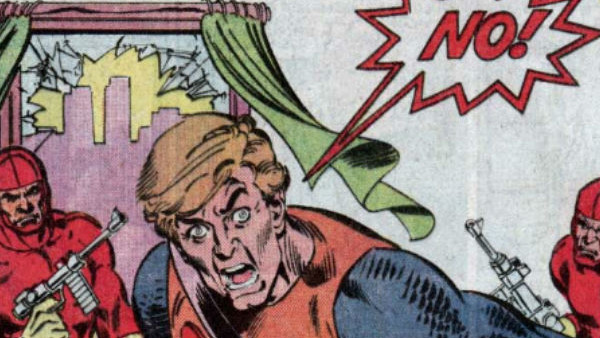
The reveal of the secret identity of the Spider-Man villain Hobgoblin is considered one of the most poorly executed storylines in company history. Roger Stern and John Romita Jr. first introduced the character in Amazing Spider-Man #238, and planned to keep his identity a secret for a handful of issues before revealing him as wealthy businessman (with a lookalike brother) Roderick Kingsley. But Stern and JRJR left the book before getting a chance to finish out the story, handing over the series to Tom DeFalco and Ron Frenz.
DeFalco and Frenz wanted to take the Hobgoblin in a different direction. According to interviews, DeFalco wanted to reveal Richard Fisk, son of Wilson Fisk, the Kingpin of crime, as the Hobgoblin and Kingsley was slated to be another criminal, the Rose. The only problem was that DeFalco and Frenz clashed with Spider-book editor Jim Owsley (now Christopher Priest).
At one point, Owsley demanded that DeFalco reveal the Hobgoblin's identity to the press, so the writer told the reporters it was mild-mannered Daily Bugle reporter Ned Leeds to throw them off the scent. Owsley eventually fired DeFalco and Frenz from Amazing Spider-Man and then laid waste to what he thought were their plans for the Hobgoblin. In the Spider-Man vs. Wolverine one-shot that Oswley wrote, he killed off Leeds. Then he asked upstart writer Peter David to pen the Hobgoblin reveal with someone else under the mask.
David, thrust into a situation he couldn't win, decided to write the story based on the information presented in the comics. David concluded that Leeds was the Hobgoblin, despite the fact that he had been killed by Owsley to piss off Tom DeFalco. The story was met with scorn and disappointment from fans who at one point thought the Hobgoblin was one of the best villains ever created in the Spider-Man universe.
About 10 years later, Stern retconned the awful decision, revealing that Kingsley had brainwashed Leeds into thinking he was the Hobgoblin. Still, the damage was done to the character.
2. Miracleman
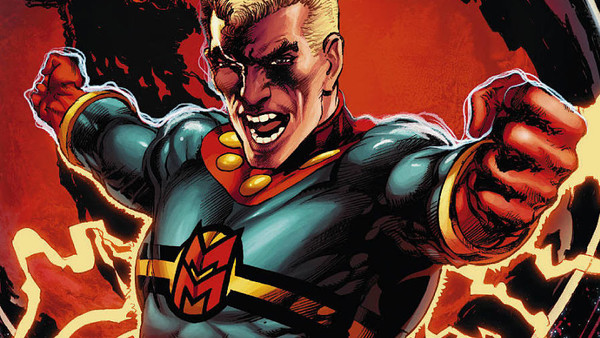
The saga of Marvelman, aka Miracleman, is one of the most complicated and bizarre in comic book industry history. In 1953, American publisher Fawcett Comics discontinued its series Captain Marvel due to a lawsuit from DC, who claimed the hero was too similar to Superman. Because British publisher L. Miller & Son, Ltd. was already publishing black and white reprints of the series, comic packager Mick Anglo was brought in to repurpose the character as Marvelman.
In order to retain the title's audience, Miller continued to use logos and trademarks that were similar to what Fawcett had produced, giving the impression that Marvelman was still Captain Marvel. Anglos association with Miller ended in 1960 and the packager recycled some of his Marvelman stories as Captain Miracle, published under the Anglo Comics imprint. Meanwhile, a variety of Marvelman and Young Marvelman titles continued to be published by Miller until 1963.
The character was picked up again in the early 1980s for the British black-and-white monthly magazine Warrior. A young Alan Moore, getting his first crack at superhero comics, was recruited to write the series until disagreements between Moore and editor/publisher Dez Skinn disrupted that arrangement, and the series ended. By August 1985, another publisher, Eclipse, started printing colorized versions of Marvelman, renaming the series Miracleman to avoid legal complications from Marvel Comics.
Moore wrote the series through issue #16 when Neil Gaiman took over alongside artist Mark Buckingham. Gaiman continued to work on the series until 1994 when Eclipse went bankrupt. Gaiman had produced an issue #25 of that series that was never published. Then, in 1996, artist and Image Comics co-founder Todd McFarlane purchased Eclipses assets including, he believed, Miracleman, despite Gaiman claiming he still maintained ownership of the character. McFarlane used Miracleman's alter ego, Michael Moran, in his Spawn franchise and intended to use other characters in the future until Gaiman sued McFarlane over ownership of the character in 2002.
As it turned out, Skinn never had the rights to sell the Eclipse portfolio to McFarlane in the first place and the sale was nullified. At New York Comic Con last October, Marvel announced it had purchased the rights to Miracleman and in January, started reprinting the series. As part of this arrangement, Gaimans lost issue #25 will finally see the light of day.
1. The New 52
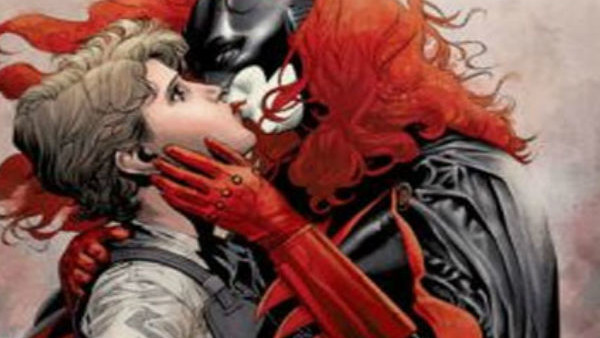
DC made the controversial decision in 2011 to relaunch its entire line of comics and erase years of continuity Clark Kent and Lois Lane were no longer married and other notable events were retconned. But this major revamp also brought with it a slew of editorial issues that have derailed a number of series that were a part of the launch.
Within the first year, legendary artist George Perez had left Superman, while industry firebrand Rob Liefeld left his three titles in an effort to preserve my sanity, as he said on Twitter. Last summer, James Robinson, one of the anchors at DC for years, quit Earth-2 without much explanation (he was immediately picked up by Marvel). But the biggest controversy came last September when Batwoman creators J.H. Williams and W. Haden Blackman announced via Twitter that they had quit the book citing massive editorial interference.
Recently, Batwoman, Kate Kane, had proposed to her girlfriend Maggie Sawyer in what would have been the industry's first lesbian marriage. However, DC editorial told Williams and Blackman no marriage can result. Williams said the decision wasn't meant to be anti-gay but instead driven by the fact that publisher didn't want any of its characters to be married.
Regardless, the Batwoman interference blew up into a PR nightmare for DC that still reverberates today.