10 Marvel Graphic Novels You Must Read Before You Die
New classics, old favourites, and stories even newbies can enjoy!
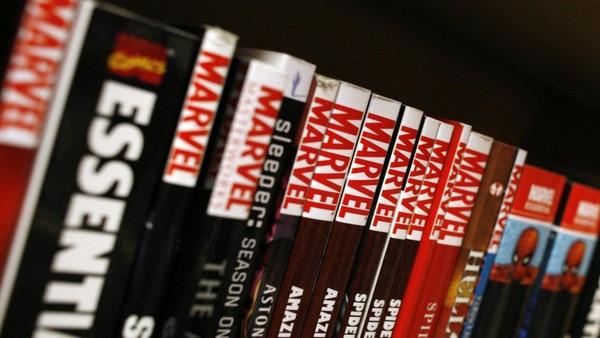
You can't swing a dead Robin without hitting an excellent DC graphic novel, but when it comes to the House Of Ideas it's a different story. Marvel characters tend to be better known for single issues (like Spider-Man's The Night Gwen Stacy Died), long runs on a title by a certain creative team (like Ed Brubaker's Captain America), or simply as ongoing series themselves.
There isn't really the same canon of classic, trade paperback-length storylines in the same vein as, say, Batman: Year One. Plus most of the more well known miniseries, crossover events or classic stories - Civil War, Infinity Gauntlet, The Dark Phoenix Saga - are so well known as to be part of the collective pop culture consciousness. You probably know what happens in them before you've even read them. They also don't really work as standalone graphic novels. Civil War would be totally impenetrable if you weren't already acquainted with the vast cast of costumed characters, Infinity Gauntlet's pretty impenetrable either way, and The Dark Phoenix Saga doesn't pack anywhere near the same emotional punch if you've not read the preceding few years of X-Men stories.
Say you're faced with the curious friend who wants to read more comics, or has never picked up a funnybook in their life. You couldn't, in good faith, expect them to jump right into Iron Man's ongoing and understand what's going on. You also don't want to just point them to a collected edition of one of Marvel's long-running series - that's way too big a commitment for a novice fanboy.
Luckily, even though they're less common than with DC's smartly packaged collections of miniseries and story arcs that work as complete stories, Marvel do have a handful of easy-to-read stories that are as entertaining, enriching and understandable to veteran comic readers as newbies.
You just have to know where to look. And it just so happens you're looking in the right place, since these are our pick of the ten Marvel graphic novels you must read before you die.
10. The Punisher: Welcome Back, Frank
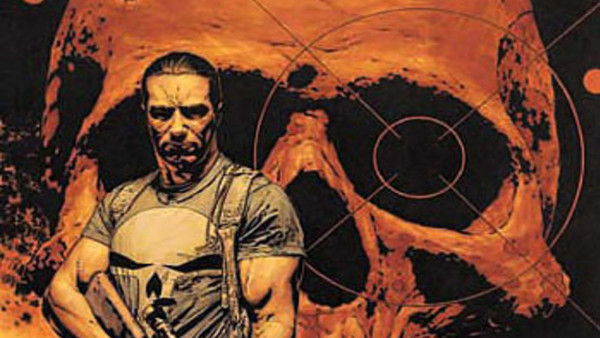
The Punisher is often cited as the comic book of choice for people who don't normally read comics. For the most part the exploits of Frank Castle are kept at a street level, existing as part of the Marvel Universe but usually apart from it. He made his first appearance in a Spider-Man book but most of the time the Punisher doesn't trouble himself with superhero types, instead busying himself with the eradication of all-too-human criminals of the sort that murdered his family.
Still, like most Marvel characters, he's accumulated quite a back catalogue since his introduction in 1974, with multiple titles running at the same time.
Where to start? And where to stop, for that matter?
This collection of Garth Ennis and Steve Dillon's 2000 Marvel Knights miniseries solves both of those particular problems, since it's a great entry point for new readers and wraps up its storyline in twelve issues/chapters. What those in the business call a "soft reboot", Welcome Back, Frank reestablishes the Punisher's history as a widowed Vietnam vet as Frank himself reasserts his place in the New York underworld, setting his sights on the mob and sitting at odds with the local police department.
Welcome Back, Frank is like a great crime TV show that only has one season, meaning it's not much of a commitment and both the main story and its subplots all get wrapped up at the end. The Punisher's origin is briefly gone over, and he gains a whole new supporting cast. With Ennis' wicked sense of humour and Dillon's singular art style, this is a great book for comic book fans and people who love great, gritty crime fiction.
9. Silver Surfer: Parable

French artist Jean Giraud, known professionally as Moebius, won fame for his unique style and influential works translated from his native language. He counted Hayao Miyazaki, Federico Fellini and, surprisingly, Stan Lee amongst his fans. Perhaps not so surprising, considering that much of Moebius's work had a surreal sci-fi bent, which perfectly gelled with some of Lee's more out there Marvel creations, including Fantastic Four bad guy/friend (depending on when you were reading) Silver Surfer, herald of the planet-eating space monster Galactus.
A rare foray into Western comics for Moebius, Parable was an award-winning two issue miniseries "written" by Stan Lee and drawn by the French savant. In fact most of the credit can go to Moebius himself, since the story was produced using the infamous Marvel Method, where an artist works from a loose plot but puts the bulk of the comic together themselves, with the writer adding dialogue and such afterwards.
As usual with Moebius works, however, it's the art that's really the main attraction over the words. In collected form, Silver Surfer: Parable is a sumptuous book, one you could keep on your coffee table and have read by arty types whilst still being about a Fantastic Four villain who's a giant purple guy and his shiny bald sidekick who travels round space on a flying surfboard. Not that the FF stuff is important, since this is an out-of-continuity tale and, well, an actual parable that anybody could pick up and be blown away by.
8. Fantastic Four: 1234
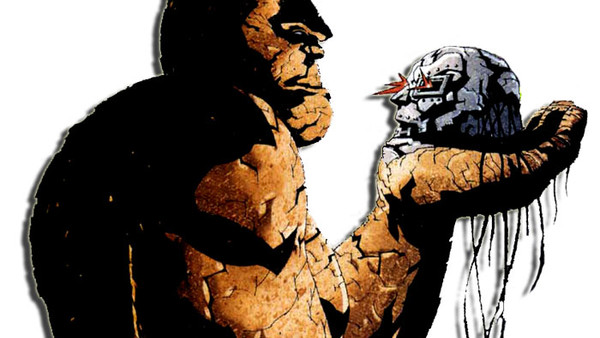
You also don't need much more than a working knowledge of Marvel's first family to enjoy Grant Morrison and Jae Lee's 1234, another Marvel Knights limited series that reintroduced and refocussed a set of characters who'd been around for a good forty years at that point.
The origins and archetypes of the Fantastic Four are relatively well known, thanks to blockbuster movies and Saturday morning cartoon adaptations, but this book gives a deeper and more grounded status quo for a superhero team made up of a stretchy genius, a kid who sets himself on fire, a man made of rocks and an invisible woman.
Setting the Fantastic Four up not as a historic superhero team on a pedestal built on decades of back issues, Morrison and Lee instead depict them as the sort of flawed, human characters you get on a good cable TV show. The Thing tries to get back some of his humanity by returning to his home borough, there's some marital trouble and possible infidelity between Mr Fantastic and the all-to-Invisible Woman, and the hotheaded Human Torch gets brought down to Earth for once.
Like Parable this all turns out to involve some alternate reality shenanigans, which is both an extremely comic book-y conceit but also makes 1234 perfect as a standalone graphic novel. You don't need to know much about the characters going in, and everything has to be resolved so as to not mess up all that history. With Morrison's grown up storytelling and Lee's unique art style, this is a truly essential read.
7. Wolverine
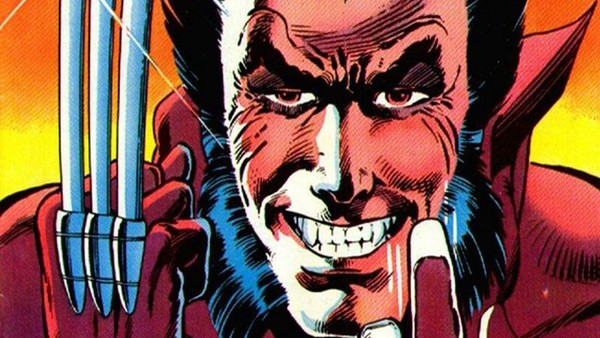
He's the best there is at what he does, and what he does isn't very nice. Before this 1982 series by Chris Claremont and Frank Miller, Wolverine had neither the popularity nor the insanely convoluted history that he has today, owing to his overexposure in the comic books and the crazy success Hugh Jackman has had portraying him in the films. Up until this point Logan had merely been a member of the main X-Men title's ensemble cast, getting as much screen (or we guess page?) time as Storm, Cyclops or Nightcrawler.
It's in this story, collected into graphic novel format, that his character gets fully developed and he becomes a well rounded, three dimensional anti-hero.
Taking Wolverine completely away from the concerns of the X-Men, this miniseries works perfectly as a piece unto itself - so perfect that it was used as a template for the most recent of his solo movies, in fact.
The Wolverine movie got bogged down in that aforementioned convoluted history, however, whilst the source material is a particularly lean and pacey affair. In fact the 1982 Wolverine isn't really a superhero book at all, but a ninja epic set in the East which lets Miller uncork his love of Japanese works like Lone Wolf And Cub in his art. It also does a great job of making Logan, so often written as a one-note gruff stereotype, human and humane. There's plenty of blockbuster action sequences of him taking on ninja clans, sure, but the bulk of the plot hinges on his tragic romance with future wife Mariko Yashida.
Wolverine is a book that fans of action films, the X-Men or Japanese culture could all enjoy equally for different reasons, a fully realised story that can be used as a springboard to reading more about the character, or enjoyed by itself.
6. Spider-Man: Kraven's Last Hunt
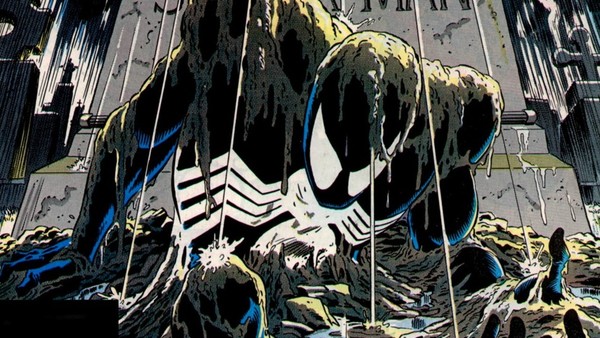
Despite having been around around for as long as the Green Goblin and Doctor Octopus, Kraven The Hunter never seems to have caught on as a classic Spider-Man villain in the same way. Maybe it's because his schtick - big game hunter who wears a lion pelt and hunts superheroes like he's on safari - is somehow more ludicrous than even theirs, or simply because he's not ridiculous enough to stand up against, say, a man who can turn into sand. We're talking about the Sandman there, FYI.
Both Spidey and his readers took Kraven seriously after this book, though, thanks to J.M. DeMatteis and Mike Zeck. Kraven's Last Hunt does rely on some backstory, but most of it comes across in the text itself: you know that he's been after Spidey for a while, and has never bettered him. The webhead himself is clad in his black costume, but that's not really important to the plot, and serves more to highlight the dark nature of this story. It's a lyrical and almost classical tragedy, a wonderfully complex twist on superhero norms as Kraven seemingly "kills" Spider-Man and takes his place, masquerading in a copycat costume and dispensing violent justice against New York's supercriminals.
With a photorealistic art style by Zeck and DeMatteis totally getting away with quoting William Blake poetry throughout, this is a genuinely mature and literary comic book that happens to be about a dude dressed as a spider and another dressed as a lion tamer. It's a fascinating depiction of insanity and violence, and will blow away comic fans and newbies alike.
5. Nextwave

We are huge, unabashedly evangelical fans of Nextwave here at WhatCulture. Warren Ellis and Stuart Immonen's love letter to the more esoteric elements of the Marvel Universe is next level bonkers, a sugar rush of a superhero team book with throws everything and a kitchen sink full of murderous koala at the walls and would be surprised to find it stick, if it wasn't plowing through that wall with no regard for its own safety or that of others. To call the ragged group of obscure and new characters heroes would be missing the point somewhat - Nextwave are something different, something new, something totally bizarre.
Honestly, it's kind of hard to write about. Both because it doesn't have much in the way of a plot, and we're worried that we're going to sound like a teenage girl gushing about her first crush in her secret journal. You know, the sort that has a voice activated lock, like you've seen on the adverts.
Ellis has never been more deliriously inventive than in this story of an anti-terrorist group brought together by a secret intelligence agency which, it turns out, is funded by a terrorist organisation. So the Nextwave agents go rogue. Really, though, it's about a robot that is fuelled by beer, a British monster hunter who delights in killing all manner of beasties, a suicidal Nick Fury analogue with mommy issues, a kleptomaniac mutant and a former Avenger who can't stop telling people about how she used to hang out with Captain America.
It's a bit like an Adult Swim version of the Marvel Universe, except it actually got published by the House Of Ideas, a gloriously silly spoof of superheroes with more wit and inventiveness than most straight-laced comics. It's manic and energetic enough to appeal even to people who don't know who Devil Dinosaur is, and the series was done in twelve issues, meaning you've got one complete crazy journey to get your hands on.
4. X-Men: God Loves, Man Kills
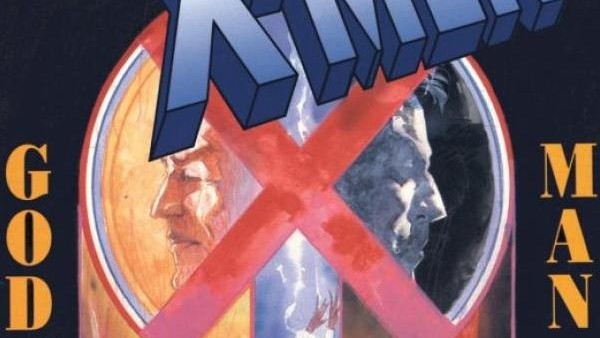
One of the literary readings of mutants in Marvel Comics is that they're an allegory for any number of oppressed groups in the real world, including the LGBT community but most popularly cited as being analogous with the Civil Rights movement of the era when the X-Men comic debuted, with peace-loving Professor X and militant Magneto being roughly equivalent to Martin Luther King and Malcolm X. Which is actually more of a retroactive thing, since when the book launched it was more just yet another title off of the Stan Lee and Jack Kirby assembly line, another attempt at winning big in the same way they had with The Hulk, Avengers et al.
It wasn't until this original graphic novel - yes, our first proper graphic novel! - by Chris Claremont and Brent Anderson that this subtext was imbued into the text.
God Loves, Man Kills is very explicit in drawing parallels between the X-Men and other "hated, feared" groups, as controversial Reverend William Stryker who uses his firebrand preaching about mutants being an ungodly abomination, fuelled by his own disgust at (and murder of) his own deformed mutant son and wife.
God Loves, Man Kills includes things like a plot to wipe out mutantkind using psychic powers, kidnapping and the reluctantly heroes teaming up with their fiercest adversary, but otherwise it's as far away from a typical superhero story as you can get.
This was intentional, as the book was never designed to be canonical, and an early version even called for Magneto to be killed off at the climax. Thankfully such histrionics were avoided and this remains a powerful, disturbing story about the evil that men do and the corrupting influence of religion when interpreted hatefully.
3. Truth: Red, White & Black

Speaking of the evil that men do, we now come onto a Captain America series that's all but been forgotten (partially due to confusing rights issues between the publisher and writer). Cap has been a stalwart Marvel character since before the outbreak of the second world war, a perennial favourite who - much like DC's Superman - has come to represent all that's good and pure about his home country, delivering a consistently patriotic and uncomplicated brand of heroism that's sort of refreshing amongst his brooding, conflicted peers.
Even Steve Rogers isn't free of controversy, however, as this story about the early days of the super serum project that gave him his powers reveals. Inspired by the horrific Tuskegee experiment that took place between the twenties and the seventies, where the US government dosed hundreds of unknowing black citizens with syphilis to test the long term effects of the illness, writer Robert Morales said of Truth: Red, White & Black that "I wrote a proposal that was so staggeringly depressing I was certain they'd turn it down. But they didn't."
We're certainly not going to debate him on the first point, and we're infinitely thankful that the Marvel editorial at the time didn't turn him down. Because even separated from its comic book context, it remains a powerful and important work.
Drawing on both Tuskegee and the awful treatment of black soldiers in World War II, the series follows a regiment who are forced to become guinea pigs in the military's attempts to create Captain America, each of whom dies in an often gruesome manner as a result of the failed experiments. The only one who survives, one Isaiah Bradley, has his existence covered up in favour of the white, blonde haired, blue eyed Steve Rogers.
Truth is a damning indictment of the way Americans have treated black people in their country for decades, and continue to do so. It's a protest song of a graphic novel, and deserves - and is designed - to be read as widely as possible.
2. Daredevil: Born Again
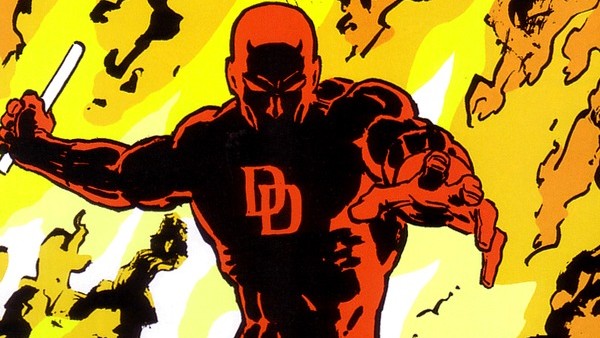
Look, we give Frank Miller a bit of a hard time on here, but you always hurt the ones you love, right? Besides, we've been put off by the modern day right-wing nut Miller. The reason that he remains one of the most respected creators working in the industry (and why he appears twice on this list) is because he has produced some of the greatest comic books in history, beginning with his unparalleled run on Daredevil in the eighties.
At first paired with writer Roger McKenzie, the title about a blind vigilante trying to clean up the particularly Taxi Driver-esque section of New York dubbed Hell's Kitchen really came into its own when Miller took over both script and art duties, coupled with his usual genius inker Klaus Janson. That run wrapped up in the middle of the decade, but Miller was coaxed back to the title and penned the iconic Born Again, originally published in in Daredevil #227-#231 but later collected in a graphic novel format, drawn with gritty flair by David Mazzucchelli, whom he would later team with for Batman: Year One.
Revisiting one of his favourite themes from his original run, Miller goes full Catholic guilt on Matt Murdock as the lawyer-turned-superhero has his faith tested as long term arch enemy the Kingpin makes a concerted effort to destroy his life and drive Daredevil insane. Like the rest of the books on this list, you don't need to know anything about these characters or their history to realise this is a masterpiece, a densely packed and accomplished work packed full of religious allusions, a realism seen previously only in Miller's earlier Daredevil work, and a career-best turn by Mazzucchelli, whose art looks nothing like your typical superhero comic and everything like a grim and gritty European graphic novel.
Born Again is a fantastic, fascinating graphic novel we'd recommend to anyone. Except maybe the devoutly Catholic. May be in bad taste.
1. Marvels
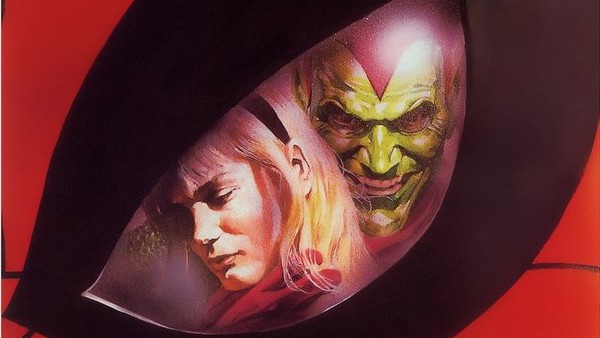
Kurt Busiek and Alex Ross's Marvels is the ultimate example of everything we've been praising in this article so far: it's a graphic novel with superb writing, gorgeous art, a complete and easy-to-understand story, and totally apart from the decades of history Marvel comics have racked up at this point. At the same time, it's a book that's entirely steeped in that history, a whistle stop tour through all the biggest events in the fictional universe's timeline that is certainly enriched by a prior knowledge but certainly doesn't falter in the absence of one.
Told through the (literal) lens of photojournalist Phil Sheldon, a purposeful everyman who represents the audience as they're privy to the first appearances of superheroes in a realistically rendered New York City, painted beautifully by Ross, and the world tries to adapt to this totally new status quo. In retelling key events in Marvel's history new readers can become acquainted with the decades of backstory that may have stopped them from getting into other comics, whilst also getting a contemporary and humanistic angle on some of the more colourful and fancy free adventures of the sixties. Busiek does a terrific job making us identify with Sheldon, an ordinary man who finds himself out of time once costumed superheroes begin to populate his city.
In a way Sheldon is like a new reader trying to get to grips with the totally insane and intimidating world of comic books, totally baffled and unable to process these completely new and unprecedented creatures. Besides being a good audience identification figure, though, Phil helps to ground even Marvel's more street level heroics in the everyday, in a world that's familiar to us and thus makes the appearance of Spider-Man, Fantastic Four and all the rest all the more earth-shaking.
In many ways, Marvels is the perfect Marvel graphic novel. And not just because of the name - it sums up everything that's great about the publisher's output. A nostalgic trip through their backstory for established readers, a good history lesson for new readers, and just a great story for everyone else.
If you don't get to anything else on this list, at least make sure Marvels is a graphic novel you read before you die. You shan't regret it.