10 Accidental Masterpieces From Otherwise Bad Directors

These guys were geniuses for a while. Then they made another film.
There are those filmmakers who are so consistently successful that their names are as synonymous as some of the movies they have made: mention of Scorsese, Spielberg, Kubrick, Hitchcock, and Coppola alone can bring up countless images of some of our favourite characters and moments in film history. Then there are those directors who have proven to be true anomalous curiosities: the one-hit-wonders of the film industry. Once heralded as up-and-coming sensations, they turned out to be the antithesis of a cinematic marvel. They made a film that resonated so profoundly within the public conscious that they were embraced by the world at large as directors of great ability. However, these magicians soon had the green curtain pulled away to reveal their true selves: uninspired filmmakers who lacked the ingenuity and tool set to capture anything other than bad films and dismal reviews. They were given the key to the castle and they threw it in the moat. The good news is that despite their proven incompetence, we are still left with 10 amazing films to enjoy. At the end of the day, these filmmakers have left their legacy in one way or another. In some cases though, it is certainly arguable what history will perceive that legacy to be...

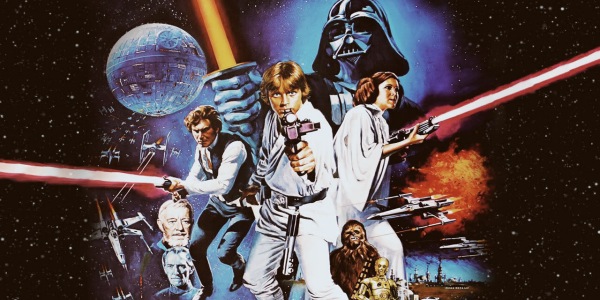
10. Star Wars €“ George Lucas

A long time ago in a galaxy far, far away, George Lucas was Hollywood's golden boy. He was a young director hot out of film school who had made an obscure sci-fi film called THX 1138. This got Hollywood's attention and he was given a chance to make a small semi-autobiographical film called American Graffiti. While certainly successful at the time, this film would open the door for what we really know George Lucas for €“ Star Wars. Star Wars changed the way films were made and marketed. It introduced the world to a cast of memorable characters: with names like Luke Skywalker, Han Solo and Darth Vader. An epic story of good versus evil in a world so real we could taste it, despite the fact it was set in outer space. On paper, Star Wars could have been laughable but the classic struggle of the little guys against the big bullies was something that resonated within something inside many of us. You know the rest of the story concerning the Star Wars franchise. It's still culturally relevant to this day and will continue to be for many, many more years, at least. Now, it must be stated that placing George Lucas on this list is not easy, but it must be done. Despite his writing and producing prowess, he is simply not a good director. All the greatness that he brought to the original trilogy was tarnished by the prequel trilogy that he single-handedly directed himself. His actors roam around the CG environments like cardboard cut-outs in a space themed shooting- gallery. Stiff dialog and bad acting seem to only serve the purpose of bridging the two trilogies. The material was there, but the execution had critics and fans wondering "what if?" (someone who knew what they were doing had directed this mess). Fortunately, (and ironically, sadly) Lucas stepped down from all things Star Wars and sold the Empire to Disney, who have put the film franchise in the seemingly capable hands of J.J. Abrams. Thankfully Lucas will still be around to advise on the films, which may be Lucas' best suited role from here on out.

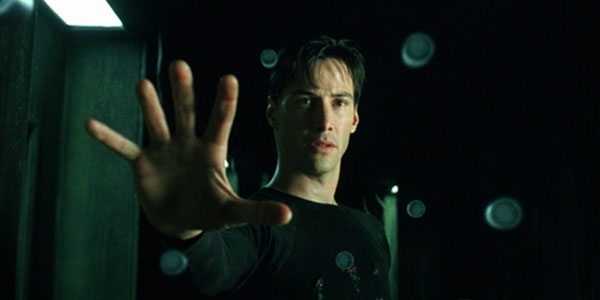
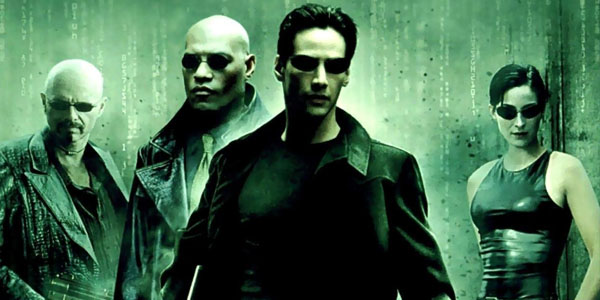
9. The Matrix €“ The Wachowskis

Andy and Lana (previously Larry) Wachowski first made their mark with the crime thriller Bound, but it was their spectacular, brain-bending, sci-fi masterpiece The Matrix that got everyone's attention. The Matrix got everyone talking and hypothesising about it's true meanings and subtexts. When two sequels were announced every film geek started pondering the possible paths the trilogy would take. With such a phenomenal first act, The Matrix was poised to dethrone the Star Wars films as the greatest trilogy ever. Boy, what a huge let down. It seemed people wanted to like The Matrix: Reloaded but it was almost as if everyone wanted to wait until the third act, The Matrix: Revolutions, to determine just how well it would support the preceding films as a whole. Well, it didn't. What started as a promising start to a film series became a convoluted mess layered with heaps of philosophical and religious under tones that managed to only confuse people. Even those who seemingly understand the films can't really seem to explain it to the rest us dummies. The Wachowskis followed up their trilogy with an adaptation of the Alan Moore and David Lloyd graphic novel V For Vendetta. While somewhat popular to the comic book geeks around the world, the film failed to reach the high watermark set by the original Matrix. Since then, the Wachowskis have directed Speed Racer and Cloud Atlas. Speed Racer was almost instantly forgettable, and while Cloud Atlas was a good film that got good reviews it must be mentioned that the Wachowski's directed three of the six narratives within that film (Run Lola Run's Tom Tykwer picked up the baton for the other half) so it really can't be considered a true Wachowski film. However, give credit where credit is due €“ Lana and Andy have an ambitious project in production titled Jupiter Ascending. Perhaps this film, with Cloud Atlas, can help remove the bad aftertaste their last few films have made.

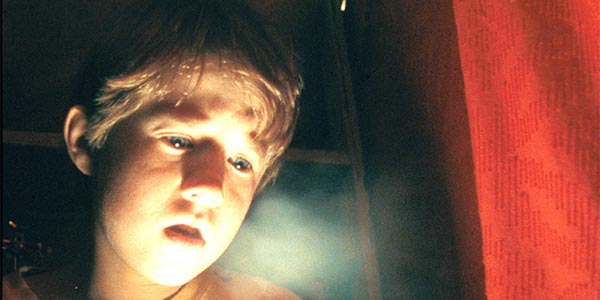
8. M. Night Shyamalan €“ The Sixth Sense

" I see dead people." This is unarguably one of the most memorable lines in film history. The Sixth Sense introduced us to a hot, new filmmaker named M. Night Shyamalan. With The Sixth Sense, Shyamalan weaved a masterful story of a young boy who was haunted by spirits of the dead, all trying to communicate with him because he could see them and no one else could. Bruce Willis gave instant credibility to the film and a young actor named Haley Joel Osment proved to us that not all child actors suck. The film managed to scare us, but this was not a horror film. It had living, breathing characters we sympathized with. By the time it sucker-punched us with its twist ending, we were invested in everyone in the film and how it affected them. Not surprisingly, Shyamalan was heralded as the next great thing in Hollywood. Shyamalan followed up The Sixth Sense with Unbreakable. While not a bad film by any means, perhaps the expectations were simply too high. Shyamalan tried to dupe us with another unexpected twist but it didn't have quite the same impact within the context of this story. His next film, Signs, was a successful film about an alien invasion but anyone with half a brain could see the gaping plot hole €“ why would aliens that are dangerously susceptible to water try to invade a planet that is seventy percent water and inhabitants made up of sixty percent water? With The Village, Shyamalan went back to trying to fool us with another trick ending. However, by this point everyone was wise to his tricks and pretty much bored with it - never mind the fact that the trick ending was an insult to our intelligence. Things have not gotten any better for the once highly regarded director. His name has become synonymous with box-office poison, directing (and writing) 'memorable' outings such as Lady In The Water, The Last Airbender and the widely lambasted After Earth. It's sad really €“ we can only hope that M. Night Shyamalan can return to his previous form of greatness, however one can't help but feel that it should have already happened by now, if it was going to happen at all.

7. Life Is Beautiful €“ Roberto Benigni

Before Life Is Beautiful, Roberto Benigni was mostly known as a comedic television and film star in Italy until he made appearances in a few films by Jim Jarmusch. Benigni would then try to reinvigorate the Pink Pather franchise by playing the illegitimate son of Peter Seller's classic character Inspector Clouseau in Blake Edward's dismal Son Of The Pink Panther. Benigni then directed and co-wrote an unconventional film titled Life Is Beautiful. The film told the story of a Jewish man in 1939 Italy who courts the woman of his dreams and goes on to marry and have a child with her. When the war starts they are shipped off to the concentration camps and he is interned with his son. Throughout their internment the man convinces the young boy that it's all a game, as a way to shield the boy from the horrors occurring around them. The film was controversial for depicting events of the Holocaust in a somewhat trivial manner, however, Benigni's ability to move seamlessly from romantic comedy to human drama is a display of his craft as a director. Since Life Is Beautiful, Benigni has directed his interpretation of Pinocchio, which was pretty much ignored in North America - and The Tiger And The Snow, a film about a love-struck, Italian poet who falls in love and then gets caught up in the horrors of the Iraq war. Sound vaguely familiar?

6. Leon: The Professional €“ Luc Besson

Luc Besson may not be an obvious choice for this list. Certainly, his film Leon: The Professional is his greatest piece of work, telling the story of a hit-man who befriends and mentors a young girl who is orphaned by the very men he is trying to assassinate. Besson's portrayal of the relationship by this hardened hit man (Jean Reno) and a young, vulnerable girl (a young Natalie Portman) is both complex and touching. Their relationship treads delicately as the realities of the pending violence loom's around them in the face of a crooked-cop, played deliciously by Gary Oldman. Besson's other significant film, The Fifth Element, is a toss-up. It has polarized many audiences: some seeing it as the greatest sci-fi film since Star Wars while others see it as self-indulgent drivel drowning in its own excesses. While the masterpiece here is Leon: The Professional, The Fifth Element hovers somewhere between classic sci-fi and overbearing sci-fi pulp. Other than these two films, Besson has given the world a decent list of mostly forgettable cinema fair: films ranging from ambitious epics like The Messenger: The Story Of Joan Of Arc to last year's risible crime comedy The Family. In the twenty years since Leon: The Professional, his name has long been removed from the list of hot, young directors and he has since been relegated to just another name in the pile.

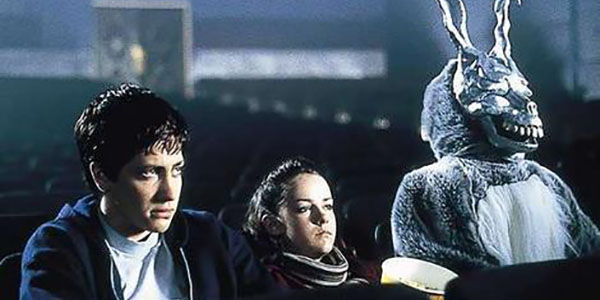
5. Donnie Darko €“ Richard Kelly

Donnie Darko is a film that is a mix of genres: part comedy, part sc-fi, part teen drama, part horror and many parts something else. It deals with some very complicated ideas of time travel and tangent universes juxtaposed against the awkwardness of being in high-school. In theory, this film has no right being as good as it is but director Richard Kelly is able to mesh all the ingredients and bake a very palatable and very unique film that gets better upon multiple viewings. It was a slow burn with audiences, eventually becoming a popular cult film that sparked a horrible sequel and a chance for Kelly to write and direct again. That film was Southland Tales: a horribly cluttered, self-indulgent mess that showed that the writer/director couldn't make up his mind on what kind of film he wanted to make. The interesting thing is that both Donnie Darko and Southland Tales share some similar themes such as time travel and spirituality. While able to successfully combine genres with Donnie Darko, lightning didn't strike twice for Kelly. Kelly has since directed a film called The Box. Heard of it? Possibly, you think? Exactly.

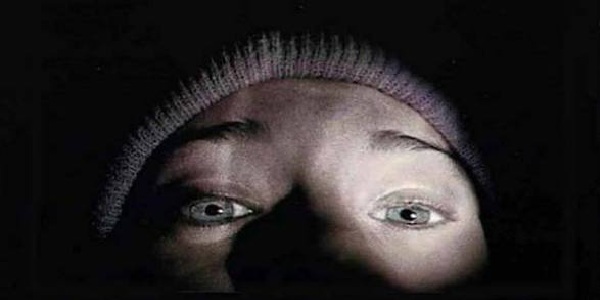
4. The Blair Witch Project €“ Daniel Myrick, Eduardo Sánchez

Daniel Myrick and Eduardo Sanchez redefined the "found footage" genre. Cannibal Holocaust was one of the more popular original takes on the genre, but The Blair Witch Project managed to crawl under your skin without having to show real animals getting butchered in the process. Filmed by a group of friends with just a few cameras and no real script to read off, the duo created one of the most influential films of the horror genre in recent years. Often copied but rarely duplicated to similar effect, The Blair Witch Project lacked high-production values, cheap scares and any real gore. Yet it still managed to scare the mud out of you. It proved that a few creative minds with the right tools were capable of tapping into your darkest fears and shaking them out of you. Conversely, it also proved that less creative minds with more money could drive a stake through the heart of the genre. Fans of The Blair Witch Project could only try and guess what this team of guerrilla filmmakers could do with a real budget, real actors and big Hollywood backing. The Answer: Not a damn thing. Seemingly, the strength in numbers thing was not to their liking and the two have gone off on their own to direct a decent list of films you have never even heard of €“ The type of films you see streaming on Netflix with 2-star ratings. Films like Lovely Molly, Altered, The Strand, and a segment that appeared in the horror anthology film, V/H/S/2.

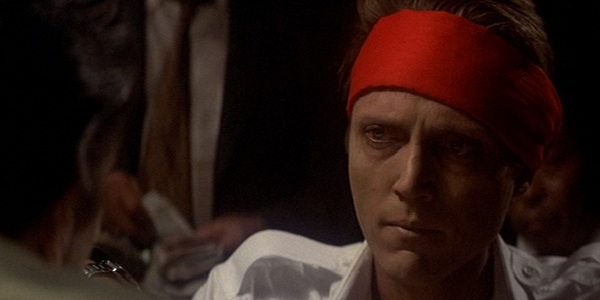
3. The Deer Hunter €“ Michael Cimino

Before Apocalypse Now, Platoon and Full Metal Jacket there was The Deer Hunter. Many Americans were torn over the United State's role in the Vietnam War, abd Hollywood would accurately portray it's affect on those who fought in the war and those who came home after it. This was the premise of Michael Cimino's The Deer Hunter. The film plays out almost like a home movie at times. Oftentimes it's not focusing so much on what the characters are saying, but allowing the viewer to eavesdrop on these relationships, friendships and personal moments, those last moments and occasions before a group of them are shipped off to go fight in the Vietnam war. It's a delicate balance between being obtrusive and being engaged with these characters. What is also so striking is the contrast of their small-town lives and the chaos and violence of the war, made all the more stark by their return to that small town. Even to the viewer, things don't look or feel the same when they return home. We can connect with how it must feel to these men who have returned to try and find their place in the world again after enduring all the horrors they had to face. Cimino's direction is both grand and intimate. He captures the small nuances of american blue-collar life as well as the gritty, claustrophobic sense of being a prisoner of war. His style brings to mind the epic scale that Francis Ford Coppola brought to the first two Godfather films. Deservedly, Cimino won an Academy Award for Best Director and The Deer Hunter won for Best Picture. After The Deer Hunter, Cimino would direct a film called Heaven's Gate. Grand by design and epic in failure, the film defined what a Hollywood flop was. Costing an estimated $44 million (in 1980), the film managed to only return $3 million domestically and nearly, single-handedly, bankrupted United Artists. Furthermore, Cimino became black-listed as a director who went exceedingly over budget €“ even on The Deer Hunter. Cimino would eventually direct again but never to the degree that he displayed in The Deer Hunter.

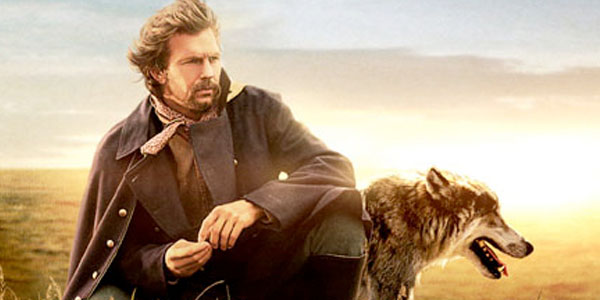
2. Dances With Wolves €“ Kevin Costner

Kevin Costner had earned a reputation as a reliable and popular actor through the late eighties. But it wasn't until 1990 when he wrote, directed and starred in Dances With Wolves: a sprawling Western epic that cast him as a Lieutenant in the American Revolution that he went truly stratospheric. Lieutenant Dunbar is assigned to an abandoned military outpost on the outskirts of the frontier. There, he eventually meets and befriends a tribe of Sioux Indians and finds love with one of their tribe members. Finding himself drawn to their lifestyle and customs, he is confronted with the dilemma of his duties as a soldier and his moral obligations. While seemingly drawing heavily from the story of John Smith and Pocahontas, Dances With Wolves was a huge box-office hit and earned Costner Academy Awards for Best Director and Best Picture. Costner's hot-plate soon cooled as a director €“ he went on to co-direct the largely over-budget Waterworld that, at the time, was the most expensive movie ever made. The film opened to luke-warm reviews and reception and it would take years to recuperate its large budget. Costner followed up with the apocalyptic film The Postman, which failed to reach an audience or any critical favour. It was a long, slow and clunky piece of work that saw Costner's stock drop. Costner wouldn't direct for another five years until another western called Open Range. It was certainly a decent film, and yards better than his previous few outings, but there was nothing terribly grand about it either. Costner has not directed a film since.

1. American History X €“ Tony Kaye

Some directors have made a career of the relationships they've with the actors they put in their films: Scorsese and DeNiro, Burton and Depp, Hitchcock and Stewart, etc. British director Tony Kaye, however, seems hell bent on burning all the bridges to Hollywood. More recently he made enemies with Bryan Cranston for his film Detachment of which Cranston was politely quoted as saying, " I don't believe I'll be working with him (Kaye) again". Tony Kaye directed American History X (1998), a taut, tense and emotional tale of a Neo-Nazi skinhead who tries to break free from his racist past. Actor Edward Norton Jr. and Kaye had an epic squaring-off over the films final cut. Kaye wanted to cut the film down to 87 minutes, but when Norton stepped in to assist in editing the film to a length that would do the story and characters justice, Kaye tried to remove Norton's name from the film. Kaye told Entertainment Weekly that Norton was, "a narcissistic dilettante" who "raped" his film. Furthermore, Kaye spent $100k of his own money to fill the trade papers with advertisements denouncing and bad-mouthing Norton and the films producers. For the record, Norton went on to earn an Academy Award nomination for the film and Kaye was blacklisted in Hollywood. He has just started to earn some small favour around town again, but as evidenced with his pairing with Bryan Cranston, things haven't changed much. Sure, actors and directors don't always get along €“ David O. Russell is nearly notorious for the way he's been known to treat some actors, but to his credit he continues to make good films. Maybe there's reason Tony Kaye doesn't.

Contributor

My name is Alejandro. I answer to Alex, Al the pal, Uncle and various other pet names. I was born and raised in Los Angeles and currently live in San Diego, Ca. Being a native Southern Californian, I have been spoiled by good weather, beautiful women , celebrity sightings and diverse culture. I have a season pass to Disneyland and despite this, I still consider it to be the happiest place on earth. I am an avid film geek and gamer. There are many reports of expletives omitting from beyond my bedroom door during marathon sessions of Call Of Duty. I spend a lot of my free time writing, playing/producing music and playing bass in a 90's cover band called The Big Lewinsky (www.facebook.com/thebiglewinskyband). I also enjoy iphone-ography with my 4- in-1 Ollo clip and gorilla tripod along with the countless apps available for photo editing. My favorite films of all-time (currently) are The Godfather, The Shawshank Redemption, The Exorcist and anything by Stanley Kubrick, except Barry Lyndon...and maybe Lolita.