10 Australian Films You Need To Watch

Happy Australia Day, ya little rippers!

Think of Australian films and there are certain images which automatically spring to mind. Comparing what is and isn't a knife for example, or P. Sherman, 42 Wallaby Way, Sydney. But whether it's Australia's own or a good humoured stereotype (or both), what you see of films made down under is only the tip of the iceberg. Not only does Australia have its very own feature film industry, it had the very first feature film film industry, ever. On December 26th 1906, when pioneers in Europe and America were creating short pieces as gimmicks to impress and show off the new medium of film, Australian Charles Tait's 70 minute epic The Story Of The Kelly Gang, was busy having its premiere at Melbourne's Athenaeum Hall. (The only reason this film isn't on the list itself is that only 20 minutes of footage are known to have survived) These days though it is an industry which, Baz Luhrman aside, Hollywood seems more content to pilfer and plunder than work alongside. America sends its productions across the international dateline because tax incentives make it cheaper to do so, and actors have been crossing back across the pacific for decades. For all the talk of the latest Spider-Man and Superman being Brits, Bruce Banner, the Joker, Thor, and even Wolverine himself have all hailed from the land Down Under. But while actors may have been making the journey, for far too long there have been those Australian gems that have stayed below the equator as much as the radar. So what better time than Australia Day to put another shrimp on the barbie, flame a gallah, and go for a walkabout of cinematic discovery? As the land that gave the world cork hats, Vegemite, and the Crocodile Hunter celebrates all things Australian, why not celebrate alongside them with one of these little beauties?

10. I Know How Many Runs You Scored Last Summer

It's fair to say that Aussies are known for their laid back attitude and ability to laugh at pretty much anything. This is something immediately apparent from the title alone in this epitomisation of the Ozploitation flick, I Know How Many Runs You Scored Last Summer. Leave it to the Australians to combine the layered history of the slasher flick with Cricket, but that's what they've done in this tale of a bullied team mate who comes back for bloody revenge. A low budget indie film, it is one of those which follows the conventions of the genre, but doesn't take itself seriously (it is a slasher film about Cricket after all). There's one moment in particular that hammers home the meaning of a ball ache, but its most famous feature my be the gratuitous shower scene which utilises the most of Miss Nude Australia's body doubling 'talents'. To call it a B-Movie would be an understatement, and no doubt there's those who consider it an acquired taste, if not completely lacking it it, but that didn't stop audiences lapping it up at festivals from Aberystwyth's Abertoir, to South Africa's Horror Fest.

9. Wolf Creek

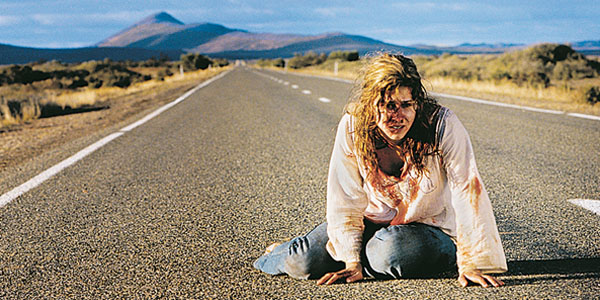
Ideas of Australia generally include backpackers, and things that can kill you. It's therefore no surprise there are countless tales of backpackers enjoying sun surf and sand before being brutally chopped down and/or into pieces. Several films have tried to take on the challenge, Lemon Tree Passage is a recent example which fails to deliver on account of, amongst other things, not making sense. The one that stands out is Wolf Creek. Receiving its Sundance premiere a year before Eli Roth's Hostel brought torture porn to the masses, it divided critics into two camps; one praising the brutal violence which caused the other to walk out. For all its gore however, the biggest controversy came from its release during the trial of Bradley John Murdoch. Accused of the murder and attempted assault of backpackers Peter Falconio and Joanne Lees respectively, the courts filed an injunction which prevented the film from being released in the Northern Territory, believing it could influence the verdict. While not the direct basis for the film, this was just one of several similar instances that inspired it. Despite this, it hasn't stopped backpackers coming to, and safely leaving Australia, in their thousands.

8. The Interview

It may not be as legendary as Morgan Freeman's, but thanks to all his speeches as Elrond, the vouchsafing of V and Agent Smith's seemingly constant "Mr Anderson"-ing, his distinctive voice has become a trademark of what Hugo Weaving now brings to his roles. This hasn't always been the case however, with Eddie Rodney Fleming being a fine example. Back in 1998 he starred in The Interview, a thriller set mostly in a police station after Fleming is brought in to be questioned about a missing car. It's a tale of cat vs mouse where everyone is out for everyone else so tense that it is only after the film's taught conclusion that you realise he has been speaking the entire time with that typical Aussie inflection of raising his voice at the end of every sentence. The variety of roles Weaving has taken on is vast, from road tripping drag queen to Nazi Supervillain, and he even provided the voice of Sheep-dog Rex in another Aussie made 90's classic, Babe. Here is the closest you will get to see him as an everyman, but still it is a role in that you couldn't imagine anyone else playing.

7. The Proposition

Is a western still a western if it isn't set in the west? As former British colonies, Australia and the U.S. have many similarities, not least the lawlessness of their pioneering settlers. Thanks to this the deserts of Australia make the perfect background for a good old fashioned tale of cops vs robbers. In a true upside-down fashion though, this Aussie offering sees iconic British 'ard man Ray Winstone as the tough but fair Police Captain, come to civilise this ruthless land. Fellow Brit veteran John Hurt also makes an appearance as well travelled bounty hunter Jellon Lamb, but in this tale of European immigrants, both are out-Englished by native actor David Wenham. Known internationally for his work in The Lord Of The Rings and 300, here he is unrecognisable as antagonist to pretty much everyone. But what exactly is the proposition the movie takes its name from? Outlaw Charlie Burns, played by Neighbours' very own Guy Pearce, is given nine days to save his younger brother, Mikey, from the noose. The one condition being that he needs to kill his older brother, Arthur.

6. Rabbit-Proof Fence

Another important similarity between Australia and the U.S., indeed any former British colony, is the treatment of native inhabitants. Some of the worst acts of human history were committed in the name of the British Empire, but from which also came the strongest tales of the human spirit. Named after the 1,139 mile fence in Western Australia, and based on the true story of three girls who followed it home, Rabbit Proof Fence deals with the so called "stolen generation" of Aboriginal children who were forcibly removed from their families to re-education camps. Directed by Phillip Noyce, who also helmed Patriot Games and Clear And Present Danger, it stars Kenneth Branagh as A.O. Nevill, who orders the girls' relocation. As with many films dealing with such subject matters there are those who criticise the authenticity of Rabbit Proof Fence's depiction of events. "Not my story" is how the real life Molly Craig described the film, but only in terms of not getting the happy ending depicted on screen.

5. Van Diemen's Land

Remind an Aussie of their country's period as Britain's number one choice of penal colony, and they'll probably just remind you how much has been achieved in the past 200 years from such humble origins. Conditions were often harsh, and settlers were even more often underprepared, but still they survived. While hardly the basis of modern Australian society, Van Diemen's Land tells the true story of Andrew Pearce, and his escape from a Tasmanian penal settlement alongside seven other convicts. Far from the celebration of the human spirit in Rabbit Proof Fence, here you are shown the savagery and desperation of those banished half way round the world, often for something as petty as stealing just six pairs of shoes. As supplies dwindle and hunger grows, the men start looking to each other (quite literally) for their next meal. Admittedly a rather extreme view of this overstated period in Australian history (settlers consisted of more than just prisoners), but one that goes to show just how tough survival was for those who weren't ready for it.

4. Mad Max 2: The Road Warrior

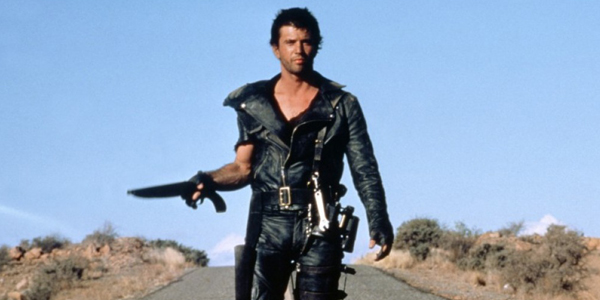
They may be rare, but every now and then there will be an Australian film which does stamp its mark on pop culture worldwide; Mad Max did this with an entire trilogy but it is the second which takes pride of place. Thanks to a bigger budget and newcomer Terry Hayes joining George Miller on scriptwriting duties, the post apocalyptic setting of the first, to say nothing of the action quota, is greatly expanded. At heart The Road Warrior is just a simple story of good guys vs bad guys, but it works on so many levels, much more so than a lot of recent American offerings. Mad Max 2 is a must-watch, not just for any fan of jaw dropping action, but for anyone who considers themselves a fan of cinema in general - master storyteller Joss Whedon describes it as "perfect". It's just a shame Mel Gibson's other film from the same year didn't reach the same levels of success...

3. Gallipoli

Even taking into account the relatively short period of time in which Australia has been settled by westerners, Britain still has countless battles which to this day are celebrated and commemorated. D-Day, the Somme, the Battle of Britain, the list goes on. Think of Australian battles, and Gallipoli will be first and foremost every time. One reason being that it was the first time Australia charged into battle as a country in it's own right rather than British colony, another being the sheer number of troops who lost their lives there. It is no wonder then that this page of Australia's history has been immortalised in celluloid. Released back in 1981, it centres mostly on the lives of the soldiers before arriving at Gallipoli, rather than focusing too heavily on the battle itself. Combining the best elements that make up Jarhead and Full Metal Jacket, it gives a distinctly Australian view of brotherhood and a war taking place far away from home, and finishes on an ending which has only been bettered by Blackadder Goes Forth.

2. Ten Canoes

It wasn't until 1901 that the various Australian states united as a single country, although Australia Day itself actually celebrates the arrival of the first fleet of British settlers in 1788. Either way, the time since those events are both a small drop in the ocean compared to Aboriginal history, which at an estimated 80,000 years old is the worlds longest surviving continuous culture. Cave paintings in Europe could be found from a similar time period, but require educated guesswork to decipher, whereas those found in Australia would be understood instantly to anyone who knows contemporary Aboriginal culture. A tale of jealousy and unrequited love, Ten Canoes is a celebrarion of this culture, and the first film made entirely in Aboriginal languages, with different cuts featuring narration in either English or Yol‹u Matha by celebrated actor David Gulpilil.

1. The Water Diviner

If there's any film Australia is getting excited about right now, it's The Water Diviner. The directorial debut from Russel Crowe, it tells the story of a father who sets out to find his sons who were lost at Gallipoli (first and foremost, remember). A film with a universal theme, but a distinctly Australian setting, Crowe also stars in the Water Diviner alongside Olga Kurylenko and Terminator Genisys' Jai Courtenay. Released in Australia, New Zealand, and Turkey (where Gallipoli is located) back in December, it recieved great reviews from all sides, but won't be shown in British cinemas until the beginning of April. Three weeks later American audiences will be treated to what will be a limited release. This could easily have been even smaller without Crowe's name attached as director, as, despite the universal themes, it has a distinctly Australian setting. Even the title is something which only achieves its full meaning once you have seen the film itself, and so it will be interesting to see how it fares with U.S. audiences when competing with the likes of Ex Machina and Furious 7. What great Australian movies have been missed? What are you doing for Australia Day. Discuss all things about the land Down Under in the comments below.

Contributor
Contributor

One man fate has made indescribable