While it may not be entirely true to say that Hollywood is completely out of fresh ideas, the well is certainly running dry. With so much money being pumped into their summer blockbusters (often at the expense of more interesting sounding projects), the studios have been playing it increasingly safe and relying on a stable diet of sequels, prequels, remakes, reboots and comic book movies in order to generate the majority of their profits. The phrase 'if you can't beat em, join em' also applies to this method of film-making. If a unique-sounding project turns out to be a massive critical or commercial success, then the chances are high that a number of similar-sounding yet ultimately inferior movies will be rushed into production. Think of the number of poor imitators that followed in the wake of Jaws, Star Wars and Gladiator to name but three, hoping that simply repeating a successful formula would yield similar results. There has been more than enough evidence over the years to prove that Hollywood will attempt to replicate success by jumping on a bandwagon and creating an industry-wide trend, and this article will look at ten such instances. Spanning decades of Hollywood history, numerous genres and budgets that range from a few thousand to hundreds of millions, this list will look at ten cinematic trends that the movie business tried their hardest to run into the ground. Do you agree with the choices in the article? Are there any other trends that you would have included? As always, sign off in the comments below.
10. The 1980's Slasher Movie
While John Carpenter's Halloween was by no means the first slasher movie, it may well be the most influential. Made for just $325,000, the movie would go on to earn $70m at the box office in 1978 and inadvertently establish many of the slasher's genre conventions in the process. By the 1980's the slasher movie was Hollywood's go-to option in the horror genre and every October the cinema was virtually swamped by identikit movies featuring an unnamed serial killer stalking a bunch of teenagers, dispatching of them with increasingly violent methods. Halloween got the ball rolling, but it was the commercial success of Friday the 13th in 1980 that really kicked the trend into high gear and soon theaters were deluged with the likes of Graduation Day, Prom Night, My Bloody Valentine, A Nightmare on Elm Street and dozens of others, with the increasing saturation of the marketplace seeing countless slashers suffer from both a critical and commercial backlash that saw the genre quickly dwindle in popularity. The slasher movie boom was already over by the 1980's after a series of box office flops and critically-reviled releases, with only the major franchises continuing to churn out sequels of ever-declining quality. By the end of the decade there were already five Halloween movies, five entries in the Nightmare on Elm Street Series and no less than eight Friday the 13th's, as the genre desperately clung on to any kind of relevance before eventually fading away into obscurity. Until they were all remade, of course.
9. 1970's Disaster Movies
Essentially, the disaster movie was to the 1970's what the comic book movie is to this decade; a series of big-budget effects-driven movies that hit theaters with increasing regularity and often enjoyed huge success at the box office, despite many of them putting a slightly different spin on a well-worn and familiar narrative. For the disaster genre, this usually meant an ensemble cast (and at least one A-list star) dealing with personal drama against the backdrop of a destructive event. The release of Airport in 1970 started the trend, and the movie's box office haul of $100m and ten Academy Award nominations including Best Picture spawned a slew of imitators, before the critical and commercial success that greeted The Poseidon Adventure in 1972 turned it into a full-blown craze. However, by the middle of the decade the genre had already reached its peak commercially and after The Towering Inferno and Earthquake both did big business at the box office in 1974, interest in the disaster movie began to gradually decline. It didn't help that most of these movies were incredibly derivative and uninspired, with the likes of The Hindenburg, Rollercoaster, Avalanche and City on Fire somehow managing to put less effort into their scripts than their titles. By the end of the decade the disaster movie had reached saturation point and a combination of poor box office and even worse reviews saw the genre fade away, a fate that was confirmed in 1980 by the genre-spoofing genius of Airplane!
8. Remaking Every Known Horror Movie
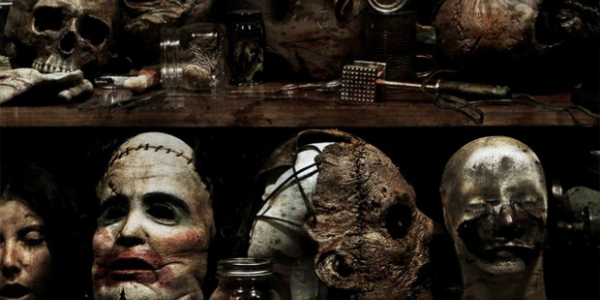
At the tail end of the 20th Century, Gus Van Sant's shot-for-shot remake of Psycho and Jan de Bont's big-budget update of The Haunting were met with a general mixture of apathy and derision, mostly due to the fact that these new versions of classic horror movies weren't very good. Had they come along just a few years later they would have been in much better company, because suddenly Hollywood's latest trend saw the studios giving the remake treatment to almost every recognizable horror movie under the sun. Michael Bay's production company Platinum Dunes have a lot to answer for, as the craze was kick-started when The Texas Chainsaw Massacre earned $107m on a budget of less than $10m back in 2003. As well as that movie getting a prequel, Platinum Dunes are also responsible for remakes of The Amityville Horror, The Hitcher, Friday the 13th and A Nightmare On Elm Street, all of which turned a profit at the box office despite generally negative reviews. Things have gotten so bad that another Friday the 13th reboot is already in development, despite the remake only hitting theaters five years ago. The Evil Dead, Halloween, The Crazies, Carrie, The Fog, The Hills Have Eyes and The Omen are just a very small few of the recognizable horror movies that have been given the remake treatment in the last decade, and while the overwhelming majority of these offerings have ranged from the mediocre to the downright awful, the trend continues to this day with a new version of Poltergeist set for release next year.
7. Live-Action Fairy Tales
Ever since Tim Burton's Alice in Wonderland unexpectedly earned over a billion dollars at the box office back in early 2010, it seems as if every well-known fairy tale is being given the live-action treatment, with the ominous phrases of 'gritty' and 'grounded' often being used in conjunction with these projects. The enduring popularity of the original stories has seen a great deal of these movies do big business at the box office, something that ensures the trend isn't over by any means. Following Alice in Wonderland's massive commercial success, a huge slate of similar projects were not-so-coincidentally announced, and now land at the multiplex with increasing regularity. For the most part, these movies also tend to be incredibly expensive; in the last two years alone we've seen Snow White and the Huntsman ($170m), Jack the Giant Slayer ($185m), Oz the Great and Powerful ($215m) and Maleficent ($180m) all released to varying degrees of critical and commercial success. The lower-budgeted likes of Mirror Mirror, Red Riding Hood and Hansel and Gretel: Witch Hunters have also capitalized on Hollywood's latest trend, yielding similarly mixed results. The slate of live-action fairy tale adaptations continues at pace; Kenneth Branagh's Cinderella is set to hit theaters next March, swiftly followed by Joe Wright's origin story Pan in July. Beyond that, Alice in Wonderland sequel Through the Looking Glass is currently in the midst of production, Bill Condon is attached to Beauty and the Beast and Sofia Coppola recently in negotiations for The Little Mermaid, all hoping to cash in on the popularity of what is a relatively recent cinematic trend.
6. Dark And Gritty Reboots
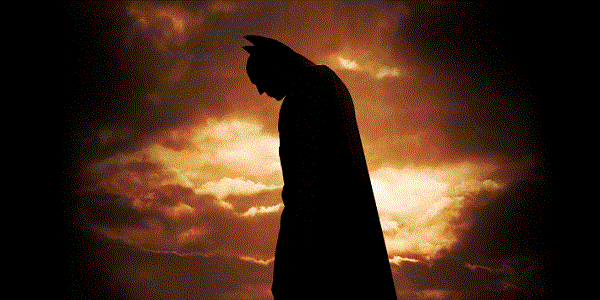
Reboots, remakes, re-imaginings or re-interpretations; it seems that if a movie has the 're' prefix in front of it then it will be directly influenced by Christopher Nolan's Batman Begins. A more realistic and serious take on the Caped Crusader, Nolan's superhero movie has since become the yardstick by which all reboots are now compared. Given the constant stream of existing properties that are being recycled for audiences, it's difficult to remember if there was a time when reboots weren't dark and gritty. There are countless filmmakers that have name-checked Batman Begins as the example when discussing an upcoming origin story or reboot; the people behind Casino Royale, Robocop, Rise of the Planet of the Apes, G.I Joe, Godzilla, The Amazing Spider-Man and obviously Man of Steel to name but a very small few. It seems that because it worked so well once, the 'grounded and realistic' treatment will therefore apply to every franchise in need of an update, but more often that not the results are less than stellar. While it may have worked for Rise of the Planet of the Apes and Godzilla, they seem to be exceptions to the rule and in recent years things have started to become repetitively tedious. Unfortunately, the trend looks set to continue for a while yet; Dracula Untold recently gave the title character a completely unnecessary dark and gritty reboot, while a recent pitch being touted around Hollywood was offering the same treatment to Zorro of all people! It would be a real turn-up for the books if Hollywood mixed it up for a change and announced a reboot that wasn't described with the words 'dark', 'gritty', 'serious' or 'grounded'. We can but hope...
5. Die Hard In *Insert Location Here*
No matter how bad A Good Day To Die Hard was, and it was pretty terrible, no amount of disappointing sequels will ever be able to put a dent in the reputation of John McTiernan's action classic. One of the greatest and most influential movies in the history of the genre, Die Hard both gave rise to the popularity of the everyman action hero and seemingly formed the basis for every action movie pitch made to studio executives in the early 1990's. While Die Hard 2 stuck rigidly to formula and delivered 'Die Hard in an airport', the franchise's 'ordinary guy in extraordinary circumstances' template led to a huge number of similarly inspired genre efforts. There was Die Hard on a boat (Under Siege, Speed 2), Die Hard on a bus (Speed), Die Hard on a cliff (Cliffhanger), Die Hard on a plane (Executive Decision, Passenger 57), Die Hard on a train (Under Siege 2) and Die Hard on Alcatraz (The Rock). Before The Matrix came along pointed everyone in the direction of kung-fu, bullet-time and leather, Die Hard was the looming shadow on the action genre for most of the 90's. The movie's influence continues to this day and in recent years we've seen efforts range from Die Hard on a space station (Lockout) to Die Hard in the White House (Olympus Has Fallen, White House Down). While several of these movies are great in their own right and are among the action genre's best, most of the thinly-veiled pretenders were pale imitators of John McClane's first outing in the iconic white vest.
4. The Found Footage Movie
Despite The Blair Witch Project earning almost $250m on a $25,000 budget back in 1999, it was almost a decade before Hollywood realized the potential low-risk/high-reward potential of the genre and the onslaught of found footage movies really began. When Paranormal Activity earned $193.4m with a production budget of just $15,000, the studios realized they had found a new avenue of potentially making huge profits without having to spend much cash. Ever since then, the found footage genre has reached saturation point and has spread far beyond just the horror genre. With budgets in the high thousands to low millions these projects would rarely lose money even if they bombed at the box office, and for an industry as financially-orientated as the movie business it was a win-win situation. Over the next several years multiple Paranormal Activity sequels, Diary of the Dead, Quarantine, The Last Exorcism, The Devil Inside, Apollo 18 and countless others hit theaters with increasing regularity as found footage became Hollywood's latest trend. The industry's penchant for found footage quickly spread beyond horror and began to infiltrate multiple genres including comedy (Project X, A Haunted House), the superhero movie (Chronicle), sci-fi (Europa Report) and even the disaster movie (Into the Storm). Much like the slashers of the 1980's and the 'torture porn' of the 2000's, found footage almost instantly became the go-to option for studios looking to make a quick buck in the horror genre. However, unlike the other two found footage could be applied to multiple genres and ended up becoming one of the fast-growing trends in recent memory, not to mention one of the most overused.
3. Converting Everything Into 3D
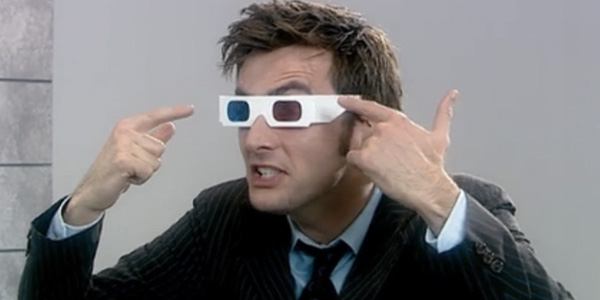
Damn that James Cameron. After the director's decade-in-development sci-fi epic Avatar became the highest-grossing movie in history thanks largely to its groundbreaking use of 3D, the studios realized that if their movies were also released in the third dimension then they could charge a couple of extra bucks for tickets and see their profits increase, often dramatically. Since Avatar, nearly every major studio release has come with the addition of 3D with the number of shoddy post-conversion jobs far outweighing the effective use of the format. Studio executives must have been salivating when Alice in Wonderland and Clash of the Titans cashed in on the post-Avatar 3D boom to earn $1.025bn and $493m at the box office respectively, with the latter in particular featuring one of the worst post-conversions you're ever likely to see. While respected auteurs like Ang Lee (Life of Pi) and Martin Scorsese (Hugo) have made great use of shooting in native 3D, it seems that most big-budget movies simply see post-conversion as a way to convince audiences to part with a little extra of their hard-earned cash, although animated movies tend to make much better use of the format than live action these days. Even though the percentage of ticket sales for 3D showings of movies has steadily declined, the trend shows no signs of slowing down anytime soon as the sheer volume of 3D projectors now installed in theaters across the world makes it a continually viable option for the studios. It seems strange to think that ten years ago 3D virtually a laughing stock until the director of Avatar once again changed the face of the industry. Not on purpose though, because as South Park famously said; James Cameron doesn't do what James Cameron does for James Cameron. James Cameron does what James Cameron does because James Cameron is James Cameron!
2. Young Adult Literary Adaptations
Ever since the Harry Potter franchise turned a literary phenomenon into a cinematic one and became one of the biggest and most popular movie series' in history, there have been dozens of similarly-themed adaptations that have made their way to the multiplex with an almost frightening regularity. A huge number of these movies have crashed and burned spectacularly at the box office, with only a small few going on to create the latest blockbuster franchise. Despite the incredibly high risk of failure that comes with the genre, the trend shows no signs of slowing down. Outside of Harry Potter, the two biggest success stories are The Twilight Saga and The Hunger Games. The adventures of the sparkly vampires and poorly-realized CGI werewolves score huge commercial success, with the five movies earning over $3.3bn at the box office. The Hunger Games quickly became one of the biggest brands in Hollywood, with the first two installments earning over $1.5bn, and the upcoming Mockingjay - Part 1 poised to do similarly huge business. The Maze Runner and Divergent both got off to solid starts this year, earning over $300m each against relatively small budgets and seeing sequels quickly enter production. However, the list of failed adaptations is a lengthy one. The Chronicles of Narnia made it to three movies and Percy Jackson got two which is better than most, but disappointing box office returns against hefty production costs currently sees both franchises dead in the water. A selection of entries in the genre that failed to make it past the opening chapter makes for some harrowing reading (deep breath now); Lemony Snicket, Stormbreaker, City of Ember, Inkheart, I Am Number Four, Beautiful Creatures, Eragon, Cirque de Freak, The Mortal Instruments, The Host, Vampire Academy and The Giver to name just a few. Still, all of this failure isn't going to stop the studios from trying, in the hope that one of these never-ending stream of literary adaptations manages to hit big.
1. The Shared Cinematic Universe
Marvel's groundbreaking strategy of having multiple movies and franchises existing in the same big-screen continuity has paid off spectacularly for a studio relatively new to the Hollywood game; the movies of the Marvel Cinematic Universe have so far earned over $7bn at the box office, with this year's Captain America: The Winter Soldier and Guardians of the Galaxy providing two of the studio's strongest efforts both critically and commercially. Of course, this kind of success has led to rival studios announcing their own plans to have their blockbusters share a cinematic universe.
Staying inside the comic book genre, Sony announced plans for a rapidly-expanding Spider-Man universe, with this emphasis on laying the groundwork for the future one of the main criticisms of the studio's lackluster The Amazing Spider-Man 2, and before the web-head's next solo adventure hits theaters in 2018 Sony plans to release The Sinister Six and a movie centered on an as-yet-unnamed female character. Marvel's old rivals DC also refuse to be left behind; after rebooting Superman with Man of Steel, Warner Bros suddenly accelerated the development of their own shared universe by adding Batman into the mix with Dawn of Justice, before announcing a huge slate of titles through to 2020 including two Justice League movies. It isn't just comic book movies attempting to jump on this bandwagon either; with Dracula Untold already in production Universal announced that their stable of classic monsters will also inhabit a shared universe, and even shot a new present-day ending to the movie so the character is free to appear in future monster mashes, which officially kicks off with The Mummy in June 16 and continues with the catchily-titled Untitled Universal Monster Franchise Film that hits in April 2017. Even more worrying was the recent news that Sony had made a seven-figure purchase for a pitch that re-imagines the adventures of Robin Hood and his Merry Men as a 'Marvel-style universe', because apparently this is how blockbuster franchises need to exist these days.
I don't do social media, so like or follow me in person but please maintain a safe distance or the authorities will be notified. Don't snap me though, I'll probably break. I was once labelled a misogynist on this very site in a twenty paragraph-long rant for daring to speak ill of the Twilight franchise. I stand by what I said, it's crap.