10 Best Moments From The Hobbit: The Desolation Of Smaug Extended Edition

Beorn, Dol Guldur, a white stag and more...
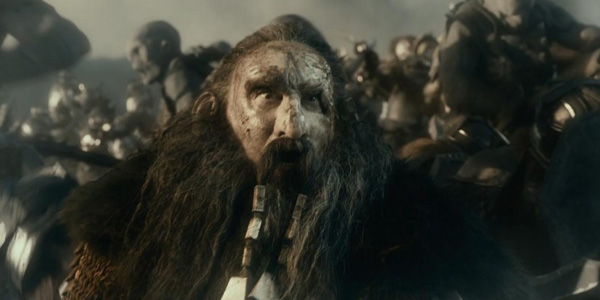
Whenever Peter Jackson releases a new movie in his still expanding Middle-Earth Saga you know the film in the cinema is only half the story. They may run close to three hours long, but Jackson has actually held some more footage back to craft the expansive Extended Editions. Following on from the success had with The Lord Of The Rings, these longer edits have the same production values of the films proper, giving serious fans the opportunity to spend even more time in Middle-Earth. With The Battle Of The Five Armies, the final part of The Hobbit Trilogy, just over a month away, the extended version of the second movie has just been released. Like An Unexpected Journey before it, The Desolation Of Smaug's Extended Edition is a superior experience to the film we got in cinemas. The added time is spent fleshing out characters given a short shrift in the theatrical versions (you may come out of this cut actually knowing all the dwarves names) and makes for a more well-rounded story. The debate will continue as to whether J.R.R. Tolkien's thin novel should have been turned into an epic cinematic trilogy, but as it stands the Extended Editions show how it can be done semi-competently. You're no doubt curious as to what the added twenty-five minutes amounts to, so here's a run down of the ten best moments from the Extended Edition of The Desolation Of Smaug. This isn't exhaustive, but gives you a taste of the very best of Peter Jackson's additions.

10. Bilbo Vouches For Thorin

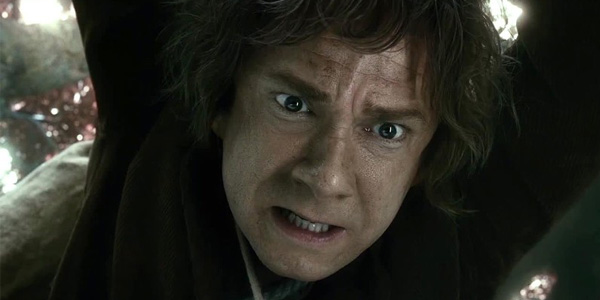
When In The Film Is It: During the night-time showdown between Bard, the Dwarves and the Mayor of Laketown. What Happens: Instead of being welcomed immediately by the rulers of Laketown, Thorin finds his authority questioned, at which point Bilbo steps up to vouch for his character with a nice little speech; "if Thorin Oakenshield gives his word, then he will keep it." The film then continues as it does in the theatrical version, with Bard stepping in to challenge the dwarves. Why It's Great: After being the crux of the character development in An Unexpected Journey, the relationship between Thorin and Bilbo took a backseat in The Desolation Of Smaug, with narratively superfluous action pushed to the fore. This is only a small moment, but it serves of a reminder of the pair's previous conflict and the respect Thorin commands.

9. Actually Meeting Beorn

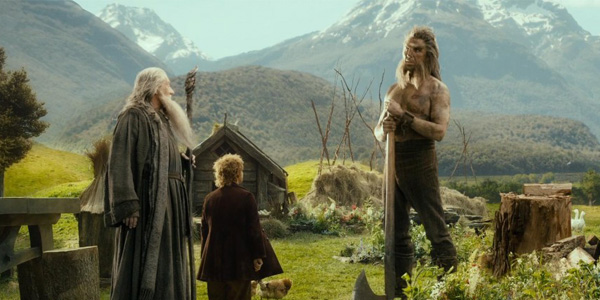
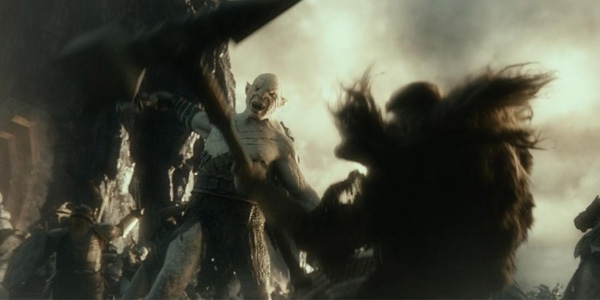
When In The Film Is It: Just after the gang wake up in Beorn's house. What Happens: In the theatrical edition Beorn is little more than an afterthought, included in the opening twenty minutes just because he has to be. In this scene, Bilbo and Gandalf go outside to talk to Beorn, attempting to downplay the presence of the dwarves (the shape-shifter is not a fan) before they all burst out. Later on the bear-man and the wizard discuss the approaching darkness. Why It's Great: Beorn isn't the most important secondary character in The Hobbit, but he deserves more screentime than he got. Given that he plays a more pivotal role in the events of the final film - he kills the leader of the orcs in the book (there Bolg, but in the films Azog) and it seems like he'll play a part in freeing Gandalf from Dol Guldur - it makes sense to spend a little more time setting him up. The scene also provides an opportunity to give up another roll call of the dwarves (that's really needed).

8. Burying The Witch King

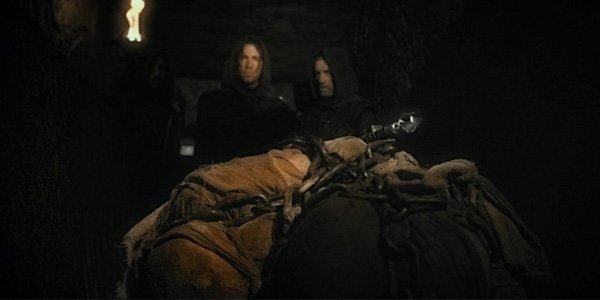
When In The Film Is It: When the dwarves prepare to make for Mirkwood. What Happens: During Gandalf and Beorn's discussion about Sauron, a mention of tombs sets off a quick flashback showing the Witch King of Angmar's dead body, covered and chained up, being locked away in a bit to control his evil. It provides a more logical motivation behind Gandalf's quest than having Galadriel simply psychic-call him. Why It's Great: In terms of narrative importance this is a take-it-or-leave-it scene; we'll find out all the information when Gandalf visits the tomb later. But the opportunity to get a Galadriel-narrated flashback about some of Middle Earth's history is too exciting to pass up: it's reminiscent of The Lord Of The Rings, yet remains applicable to The Desolation Of Smaug's story directly. It's also nice to see a reminder that the Nazgûl were ordinary men once.

7. The Battle Of Moria Redux

When In The Film Is It: Throughout - in the prologue and during Gandalf's visit to Dol Guldur (more on that later). What Happens: We already saw the Battle of Moria (its officially called the Battle of Azanulbizar, but in the films using Moria makes more sense) in An Unexpected Journey, but in this Extended Edition we see a bit more. During their discussion in Bree, Gandalf and Thorin muse over the fate of the latter's father, Thrain, with a flashback showing he tried to stop his son from taking on Azog before disappearing from sight in the battle. Later on we learn that Thrain was only captured, ready to appear later on. Why It's Great: The Moria fight may not be totally necessary to the events at hand, but it serves as a nice, unifying part of Middle Earth's history, deepening the film world. Aside from that, it's a solid link to An Unexpected Journey and allows for a slightly more tormented side of Thorin.

6. A Slower Descent Into Madness

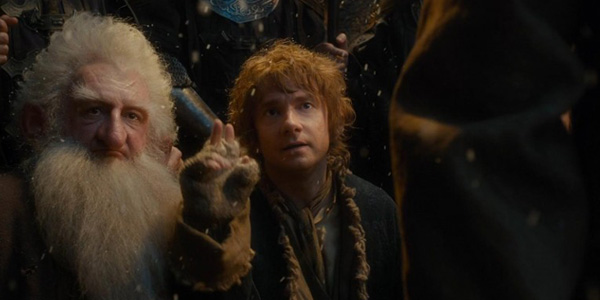
When In The Film Is It: In Mirkwood before the spiders turn up. What Happens: While walking through the woods, the dwarves come across the Enchanted Stream and struggle a way across, with Bombur (the largest of the dwarves) succumbing to the forest and passing out. Later on, when things start to get really trippy, there's some added shots showing more of Bilbo's hallucinations. This is one of the longest additions to the film, with the whole new sequence running over five minutes long. Why It's Great: As with Beorn, the gang becoming delirious by the magic of the forest felt a little rushed in the theatrical edition. Here there's a bit more time commited to it, making things feels a bit more natural; we don't jump straight into distorted images and echoey sounds. The whole thing feels like more than just another diversion, with the inclusion of the stream providing a tangible source of the magic.

5. More Master

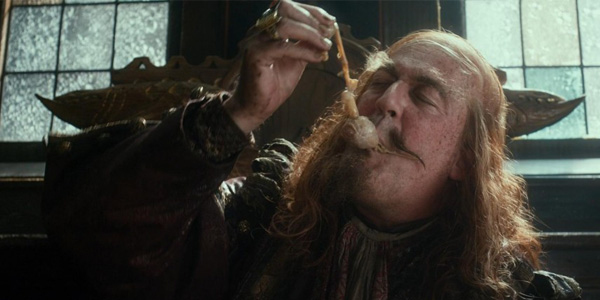
When In The Film Is It: Throughout the time spent in Laketown. What Happens: One of the characters really boosted by the Extended Edition is the Master of Laketown. His introduction runs a little longer, showing to a greater extent his worries about Bard and the corruption present in the town, with him writing a new statute limiting barge owner's involvements in political affairs. A subsequent scene shows the remaining dwarves try to get him to help save Kili to no avail. Why It's Great: The Master of Laketown was little more a caricature in the theatrical edition and while he's still a little silly for this world in the Extended Edition, the added scenes do provide added justification for his inclusion, making him look like more than just a pompous puppet of the snivelling Alfrid. He comes across as a more detestable person, which makes his subsequent imprisonment of Bard a bit more in character.

4. The White Stag

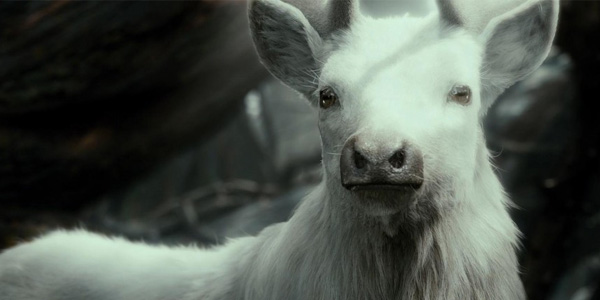
When In The Film Is It: During the descent into madness in Mirkwood. What Happens: After getting across the Enchanted Stream, but before coming up against the spiders, Thorin and Bilbo spot a white stag walking through the forest. The dwarf leader instinctively loads his bow and fires, but misses, startling the deer which runs off. Bilbo dreamily comments it's bad luck, to which Thorin responds that he doesn't believe in luck. Why It's Great: It's bizarre that in turning a thin book in a cinematic trilogy some moments from the source itself are still omitted. The white stag appears in Tolkien's Hobbit and its importance has proven to be the source of much discussion. Is it a fantastical manifestation of the wood's magic, a false-symbol that the group are getting close to safer land or a mark of their entrance in elf-territory? That's something that couldn't be chewed over after seeing the film in cinemas, but can now that it's been reintroduced.

3. The Desolation Of Smaug

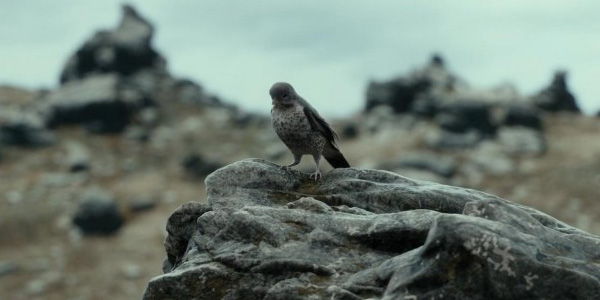
When In The Film Is It: As the dwarves are making their way from Laketown to Erebor. What Happens: We see the dwarves traverse the Desolation of Smaug, which is one part of Middle Earth where you really wouldn't want to visit. There's limited greenery and, as Bilbo comments, it's eerily quite. While hearing what the land used to be like from Balin, he spots a thrush flying along, before the company finally come across the abandoned city of Dale as in the theatrical version. Why It's Great: Thrushes plays an important part in the events of the book, signalling to the dwarves they can enter Erebor and providing Bard with the information needed to kill Smaug. Their inclusion in the films (a snail tapping one appeared at the end of An Unexpected Journey) is rather symobolic, but like the white stag it serves as a nice reminder of the source. On top of that, we actually get to spend a little time in the location the title alludes to, rather than having it simply name-checked, which should really have been done originally.

2. Thrain And Gandalf Fight

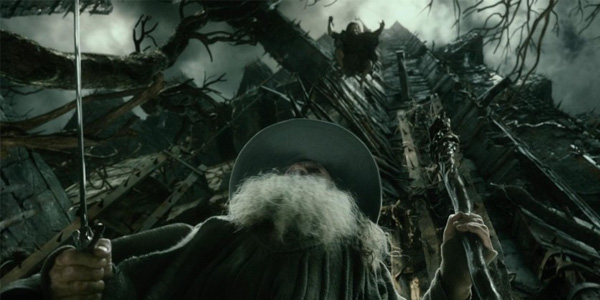
When In The Film Is It: When Gandalf arrives at Dol Guldur. What Happens: Gandalf is attacked shortly after arriving at the ruins by, who he discovers to be, Thrain, Thorin's father. Revealed to have been kidnapped after the Battle of Moria, Thrain has been brainwashed into thinking he can't leave. Using magic to dull the dwarves madness, Gandalf tries to help the dwarf king escape, but they are ambushed by Azog. Thrain is ultimately killed by the Necromancer. Why It's Great: This was a moment we first saw in the trailer for An Unexpected Journey, back when the series was going to be just two films. Now, over two years after seeing that tease, we finally see the scene in its entirety. But beyond that, the Extended version gives the Dol Guldur events some actual prominence, with Gandalf doing more than mumbling a few incantations before being ambushed.

1. The Ring And The Warning

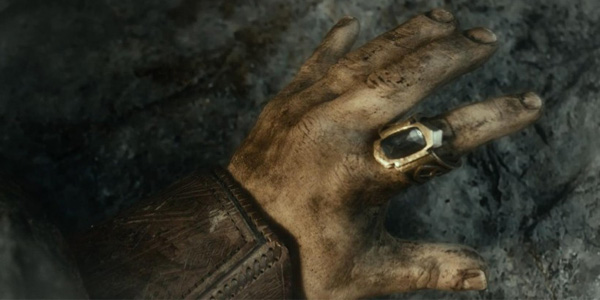
When In The Film Is It: During the Thrain sequence. What Happens: There's a real purpose to Thrain popping up beyond bolstering the run time. He reveals to Gandalf that not only was he kidnapped by Azog, but that the white orc also took his Ring, one of the seven given to dwarves in the prologue to The Fellowship Of The Ring. Later, when he learns that Thorin is on a quest to reclaim Erebor, he delivers some even more disquieting news. It turns out Smaug is already in cahoots with the Necromancer, making the dwarves' mission even more deadly. Why It's Great: If you're going to try hand over fist to tie the events of The Hobbit into the wider story of The Lord Of The Rings then this is the way to do it. Having a mention of one of the Rings is a simple and mostly unobtrusive link, while the Smaug reveal directly implicates the events at Erebor with the wider scope of Middle Earth. Smaug siding with Sauron is one the biggest threats the fire-drake poses, with it becoming an actuality adding an extra layer of tension to the subsequent showdown. Why wasn't this in the finished film? Have you seen The Desolation Of Smaug Extended Edition? And if so what did you make of it? Is it a superior version of the film or a cynical cash grab? Head to the comments and have your say.

Contributor
Contributor

Film Editor (2014-2016). Loves The Usual Suspects. Hates Transformers 2. Everything else lies somewhere in the middle. Once met the Chuckle Brothers.