 As we all know, Hollywood loves a franchise. In an era when the mid-budget movie is all but dead, studios are much more wiling to hedge their bets (and no small amount of cash) on properties with built-in name recognition and brand appeal, with the hope that it will lead to a money-spinning series of sequels and merchandising deals. With this becoming a much more apparent trend in today's crowded marketplace of adaptations, sequels, remakes and reboots, this article will take a look at ten blockbusters with hefty budgets that failed to kick off the lucrative franchise the studios were no doubt hoping for. Unsurprisingly, not a single one of these movies are based on an original property and it just goes to show; no amount of name recognition and Hollywood's beloved 'four-quadrant appeal' will make your movie a success if it isn't very good.
Honorable Mention: Any Young Adult Series That Isn't Harry Potter, Twilight or The Hunger Games
 This may seem like lazy journalism lumping all of these movies in together, but it isn't. Ever since the Harry Potter juggernaut showed that books skewed to a younger audience could generate billions in box office revenue, the studios have taken the approach of throwing any young adult novel at the screen and seeing what sticks. Out of them all, only the Twilight and Hunger Games franchises have gained any traction. Don't believe me? Here is a list of potential young adult 'franchises' that failed to make it past one movie; Lemony Snicket's A Series of Unfortunate Events, Stormbreaker, City of Ember, Inkheart, I Am Number Four, Beautiful Creatures, The Seeker, Eragon, Cirque de Freak: The Vampire's Assistant, The Mortal Instruments: City of Bones and The Host. And those are just the ones I can name from memory! There are exceptions, however: the Narnia series made it to three films but after The Lion, The Witch and the Wardrobe's massive success, sequels Prince Caspian and Voyage of the Dawn Treader both grossed over $300m less than the first installment, putting a potential fourth film in limbo due to the massive budget required for a large-scale fantasy epic. Somehow, Percy Jackson managed to get the sequel nobody was crying out for. Despite The Lightning Thief failing to make it past $250m worldwide in 2010, Sea of Monsters was released this year to very little fanfare and has so far only grossed $188m.
10. The A-Team (2010) - Budget: $110 Million / Total Gross $177.2 Million
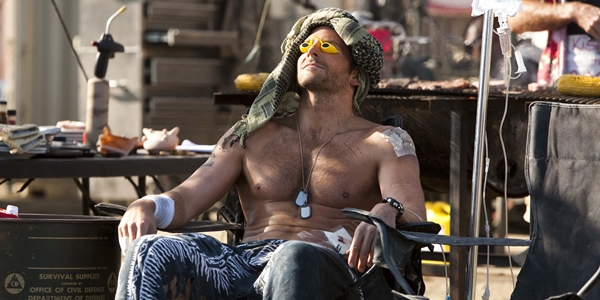
Out of all the 1980's TV shows that were rumored to be getting the big screen treatment, The A-Team always stood out as the most cinematic. Despite how cheesy the original show seems now, the central conceit is still solid; four war veterans on the run for a crime they didn't commit end up working as soldiers of fortune. It couldn't be that hard to turn it into a successful action franchise. Could it? After years stuck in development hell, the project finally began gaining traction when Joe Carnahan decided to take on his first mainstream blockbuster. Cinema's unlikeliest new action hero Liam Neeson signed on as Hannibal Smith, along with rising star Bradley Cooper as Face and the relatively unknown (yet awesome) Sharlto Copley as Murdoch. UFC star Quinton 'Rampage' Jackson completed the central quartet as the seemingly perfect choice for a modern-day BA Baracus. After a promising first act that gets the team together and utilizes the believable dynamic between the main actors, The A-Team soon descends into banality thanks to predictable twists and turns using a poor MacGuffin, a two-dimensional love interest and some ludicrous action set-pieces. I know the original show was fairly ridiculous but the 'flying tank' sequence and the finale at the shipyard are just an avalanche of poor CGI and even poorer physics. The movie disappointed with just $26m from its domestic opening weekend and ended up with just $99m internationally, a very low number for a big-budget action movie based on a show that it still popular three decades on. Despite the best efforts of the cast, who are let down by an underwhelming script and workmanlike direction, The A-Team will live on only as a 'Friday night flick' instead of a blockbuster franchise.
9. Speed Racer (2008) - Budget: $120m/Total Gross: $93.9m
 Five years after the conclusion of the Matrix trilogy, the Wachowskis returned to filmmaking with something radically different; a candy-coloured family film. Continuing to embrace the Japanese influences that were so apparent in the Matrix series, the duo adapted the popular manga and anime Speed Racer for the big screen. Assembling a talented cast including Emile Hirsch, Christina Ricci, John Goodman and Susan Sarandon, the movie was shot almost entirely against greenscreen to capture the gleaming, futuristic look the directors had intended. Confident the film would appeal to all demographics, Warner Bros went all out with the marketing effort and secured lucrative merchandising deals were made with the likes of McDonalds, Target, Mattel and Lego. Oops. The film opened to a poor $18.3m at the domestic box office, and closed with only $43.9m. This was a huge disappointment given the amount spent on advertising and merchandise. Instead of appealing to all demographics, Speed Racer had inadvertently appealed to none. Any ideas of a child-friendly franchise with the Hollywood marketing machine behind it had disappeared. Speed Racer is certainly an ambitious movie, and at times visually stunning. If it had been released following the 3D boom that followed Avatar maybe results would have been different. However, the ultra-bright aesthetic grows tiresome after a while, not to mention a script that offers nothing more than cardboard characters against a neon background. Much like the original series, the movie version of Speed Racer had appealed only to a niche market.
8. Sahara (2005) Budget: $130m/Total Gross: $119.3m

Based on the best-selling book by Clive Cussler, Sahara was intended to create a new action-adventure franchise in the mold of a 21st century Indiana Jones. Instead, the movie was a shambles that resulted in a huge financial loss for Paramount and ultimately ended with the author filing a lawsuit against one of the producers. Having four credited screenwriters surely contributed to the nonsensical plot that involved lost Confederate gold, an African warlord, a solar plant and contaminated water (sometimes in that order, sometimes not). This jumbled mess of ideas was poorly executed by director Breck 'son of Michael' Eisner, resulting in generic action scenes and no real sense of urgency or propulsion to the narrative. The only real saving grace is the chemistry between leads Matthew McConaughey and Steve Zahn, but you need more than witty banter to save a movie of this scale. Oh, and the soundtrack was pretty good. Following the release, Cussler sued the filmmakers for failing to consult him over the script, and was then counter-sued for attempting to sabotage the production before release which resulted in the author paying $5m in damages and $13.9m in legal fees. The litigation continued until March 2010, when the ruling against Cussler was overturned. Despite taking top spot at the box office when it was released, Sahara's opening weekend was a poor $18m, and expensive distribution costs and low international revenues would see movie lose almost $100m. For a production that went through ten writers on its way to the big screen and wasted $2m shooting a plane crash that didn't even make it into the final cut, it could have been a lot worse.
7. The Last Airbender (2010) Budget: $150m/Total Gross: $319m
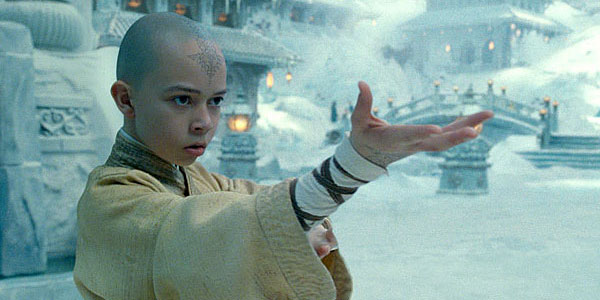
Oh M. Night Shyamalan, where did it all go wrong? The man once pegged as 'the hottest new director in Hollywood' after the triple whammy of The Sixth Sense, Unbreakable and Signs has seen his career slip so far from the heights once predicted that his name was almost entirely absent from any promotional material for his latest, After Earth. It may have had something to do with this multiple Razzie winner. Based on the first season of popular animated series Avatar: The Last Airbender (with the title obviously changed in the wake of James Cameron's game-changing epic), the movie actually did decent business and opened to $40.3m on its way to a respectable $131.7m domestic. Originally envisioned as the first part of a trilogy (what isn't?), these plans were soon put on the backburner when the overwhelmingly negative reviews came in. Despite some solid visuals, The Last Airbender suffered from a 3D post conversion that was Clash of the Titans bad, rendering many of the action scenes incomprehensible onscreen. You would never have guessed Shyamalan was an Academy Award-nominated writer either, as the clunky and overwrought dialogue drowns in a sea of turgid exposition. The cast didn't fare much better; lead Noah Ringer's martial arts prowess didn't conceal the fact that the little guy wasn't a trained actor, while the more experienced cast members weren't any better. The film picked up no less than nine Razzie nominations, and 'won' for Worst Picture, Worst Director, Worst Screenplay, Worst Supporting Actor and most fittingly, Worst Eye-Gouging Misuse of 3D. Although The Last Airbender did stellar business at the box office, it didn't exactly garner the goodwill on which to build an expensive franchise.
6. Van Helsing (2004) Budget: $160m/Total Gross: $300.2m

Rebooting Dracula's dusty old nemesis Abraham into the younger, more Hugh Jackman-shaoed Gabriel and positioning him as a Vatican-sponsered monster hunter is, quite frankly, a great idea for a franchise. Alas, as with most Stephen Sommers movies Van Helsing soon becomes a melting pot of half-formed ideas, poor dialogue and CGI excess. There is a good movie buried somewhere within Van Helsing. The black and white opening scene is brilliantly old school and is in keeping with the tragedy inherent in Frankenstein's Monster. The airborne assault on the beautifully constructed Transylvanian village is suitably tense and atmospheric, and the mirror scene at Dracula's ball is the best in the movie by far. After setting up the characters, Van Helsing quickly escalates and soon becomes set-piece after set-piece, leaving no time for such trifles as characterization and a logical plot. The dialogue is at times cringeworthy, the plot twists obvious and the performances all over the place; Richard Roxburgh's Dracula is one of the poorest ever committed to film, David Wenham's Carl is more irritating than anything, and Kate Beckinsdale's love interest is little more than an accent in a corset. Despite opening with a $57.1m weekend and going on to become the 13th highest-grossing film of the year, Van Helsing suffered from poor reviews and ultimately made less than either of Sommers' entries in the Mummy franchise. It remains a true guilty pleasure, but also a huge missed opportunity.
5. The Golden Compass (2007) Budget: $180m/Total Gross: $372.2m

Based on Philip Pullman's hugely popular His Dark Materials trilogy, The Golden Compass was surely hoping to follow in the footsteps of The Chronicles of Narnia: The Lion, The Witch and the Wardrobe, which grossed an impressive $745m worldwide in 2005. On paper, it all sounded very promising; a prime late November release date, a star-studded cast featuring Nicole Kidman, Daniel Craig, Eva Green, Sam Elliot and Christopher Lee, not to mention a pre-existing fanbase that had seen the book series sell like gangbusters. All overseen by one of the directors of American Pie. Critical reception to the movie was lukewarm at best, and the film only grossed $70m domestic. Despite earning over $300m at the international box office, most of the overseas distribution rights had been sold off to cover the hefty production budget. Ultimately, the disappointing performance of The Golden Compass proved to be one of the final nails in the coffin of New Line Cinema, which was merged with Warner Bros in early 2008.
The movie did pick up an Academy Award for Best Visual Effects (beating out Michael Bay's Transformers, no less!) but if you can't make an entertaining fantasy movie when you have Ian McKellen and Ian McShane voicing armored polar bears, then quite frankly you don't deserve to be a franchise.
4. Prince Of Persia: The Sands Of Time (2010) Budget: $200m/Total Gross: $335.1m

Video game movies have always been a notoriously tough sell at the box office and despite the pedigree of producer Jerry Bruckheimer, director Mike Newell and a talented cast led by Jake Gyllenhaal, Gemma Arterton and Sir Ben Kingsley, Prince of Persia received a mixed response at best and yet another potential franchise fell by the wayside. Bruckheimer must have been hoping the movie would be viewed as a desert-set Pirates of the Caribbean and do similarly big business. Instead, it grossed only $30.1m through opening weekend which was only good enough for #3 at the box office. Although it became (and still remains) the most successful video game adaptation in history, the numbers just weren't strong enough to warrant a sequel. Despite having a story devised by original game creator Jordan Mechner and three credited screenwriters, the movie was all style and no substance; in typical Bruckheimer fashion, character development and anything resembling an interesting story were buried under a sandstorm of (admittedly impressive) visual effects. My deepest apologies for the terrible pun. Things were hardly helped by a charisma-free turn from Gyllenhaal in the lead role and 'humor' in the form of racing ostriches. Oh, the hilarity. Prince of Persia: The Sands of Time is what I would call a 'Sunday afternoon movie'; it is perfectly harmless entertainment, a pleasant enough way to waste a couple of hours but completely forgettable twenty minutes after it ends. Michael Fassbender and Assassin's Creed, it's your move.
3. Green Lantern (2011) Budget: $200m/Total Gross: $219m
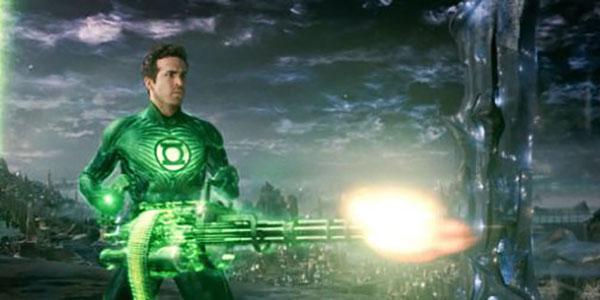
No doubt jealous of the continued success of the Marvel Cinematic Universe, DC went all-out to prove that one of their characters outside the 'Big Two' of Superman and Batman could headline a movie. Things didn't exactly go to plan; a hero is only as good as their villain, and unfortunately for Green Lantern the villain was a cloud. An undoubtedly risky proposition, an epic space opera featuring an intergalactic police force was always going to be a tough sell to casual audiences. Director Martin Campbell, who had managed to both update Zorro for modern audiences and reboot James Bond twice, seemed like a safe pair of hands. Ryan Reynolds was cast as the lead despite the shaky quality of his previous comic book movies (Blade Trinity and X-Men Origins: Wolverine, that's you) and surrounded by a a stellar cast that included Peter Sarsgaard, Tim Robbins, Geoffrey Rush and Michael Clarke Duncan. While Green Lantern should be applauded for having such lofty ambitions, in the end it descends into another CGI-heavy assault on the senses. I know this can't be avoided when dealing with aliens from across the galaxy and a hero that can create whatever he wants with a power ring, but it should at least be entertaining. Things aren't helped by a leaden script that leans too heavily on exposition to create the world of the Green Lantern Corps. The movie grossed a solid $53.1m in its domestic opening weekend, but saw a steep decline in the ensuing weeks and only made $103m internationally, a very poor number for a superhero movie. Despite solid buzz and a generally enthusiastic response from the fan community, Green Lantern just didn't connect with casual audiences and sent DC back to the drawing board with their secondary character.
2. The Lone Ranger (2013) Budget: $225m/Total Gross: $260m

It seems that producer Jerry Bruckheimer and director Gore Verbinski will need to reign in the excesses that blighted the second and third Pirates of the Caribbean movies after this bloated, overcooked mess of a movie became the most high-profile flop of 2013, potentially causing a $150m write-down for Disney in the process. Despite the fact that fantasy-tinged westerns such as Jonah Hex, Cowboys and Aliens and Wild Wild West have all underperformed at the box office in recent years, how somebody still found it a wise idea to spend $225m on a movie that was previously best known as a 1950's television series in a genre that has very little international appeal is more than a tad perplexing. The Lone Ranger isn't as awful as some reviews have made it out to be; it is beautifully shot, Armie Hammer and Johnny Depp have great chemistry as the two leads and the action sequences are as spectacular as we've come to expect from the creative minds behind the Pirates franchise. However, the movie is at least forty minutes too long, features a framing device that frequently stops the narrative dead, and is so wildly uneven in tone that it glosses over the slaughter of Native Americans and the fact that the villain eats people's hearts in favor of slapstick comedy and lowbrow humor. The latest in a string of high-profile disappointments for Jerry Bruckheimer that has ultimately brought an end to his partnership with Disney, The Lone Ranger is everything that is wrong with modern blockbuster filmmaking; a monstrously expensive misfire that forgoes story and narrative coherence in favor of sheer scale, proving that bigger does not equal better. Nobody should ever spend a quarter of a billion dollars on a Western but they did, and it should at least have been better than this.
1. John Carter (2012) Budget: $250m/Total Gross: $282.8m
 It certainly seemed as though Andrew Stanton bit off more than he could chew with his first foray into live-action filmmaking. The Pixar alumnus, director of critical and commercial smash hits Finding Nemo and Wall-E, embarked on the mammoth undertaking of adapting Edgar Rice Burroughs' eponymous hero for the big screen. Despite the fact that movies set on Mars tend to perform poorly at the box office and the director had never worked in live action before, the movie was greenlit with a massive $250m budget. What could possibly go wrong? John Carter is by no means a bad movie. The world of Barsoom is incredibly detailed, the visual effects almost flawless and the production design is at times astonishing. On the flipside; Taylor Kitsch's performance is so wooden he'd struggle to convince me as a table, which does the convoluted script no favors. The double framing device doesn't really work and the action scenes are mostly forgettable. The most unfair criticism of the movie is that it was derivative; but in adapting a book that was originally published in 1917 and has since become a seminal sci-fi text, how could it not be? Disney also seemed unsure of how to sell the movie to audiences. Was it a space opera, similar to Star Wars? A story of lovers from across the stars, like Avatar? Or was it a war epic that just happened to be set on a distant planet? Either way, the confused marketing effort did nothing to entice the casual cinemagoer, and John Carter's opening weekend came in at just $30.2m on its way to a paltry $73m domestic.
The underwhelming box office performance of the movie would ultimately end up costing Disney over $100m and lead to the resignation of studio head Rich Ross soon after. Stanton's labor of love has instead become something of a cult favorite, instead of the blockbuster franchise it was intended to be.
Scott Campbell
I don't do social media, so like or follow me in person but please maintain a safe distance or the authorities will be notified. Don't snap me though, I'll probably break. I was once labelled a misogynist on this very site in a twenty paragraph-long rant for daring to speak ill of the Twilight franchise. I stand by what I said, it's crap.
See more from
Scott