10 Blockbuster Films Made More Interesting Thanks To Their Flaws

These movies struck up fierce debate between viewers, which subsequently kept them in the public consciousness longer.
There is no type of movie more feverishly discussed than the blockbuster: even discounting the obvious fact that they're the most popular and widely-viewed movies going, their (usually) easily-digestible plots and iconic characters make them ripe for discussion whether you're a film buff or a more casual cinema patron. We'd all love for a great comic book movie to be "flawless", but sometimes a new movie being riddled with flaws accidentally causes it to be a lot more interesting than we would have otherwise expected. Sure, this can be a mixed blessing: these 10 movies all caused their fair share of frustration with fans, but rather than merely have them be adequately pacified and move onto something else, these movies struck up fierce debate between viewers, which subsequently kept them in the public consciousness longer. Compare that to, say, Green Lantern, which wasn't just heavily flawed but irredeemably awful, and promptly evaporated from the consciousness of just about everyone who dared watch it. The point here is that sometimes it's more interesting for a blockbuster to be divisive and "flawed", rather than being a serviceable but rather blandly passable film. Given how the Internet has given movie fans the world over a voice to debate about movies, isn't it a lot more fun when a movie has some tricky issues to crack into? Let us know what you think in the comments!

10. Superman Returns

The Flaws: Bryan Singer's Superman Returns was widely praised for its technical brilliance, but also drew a mixed reception regarding its narrative. Though it dealt with the usual format of Lex Luthor (Kevin Spacey) concocting a convoluted evil scheme, it also devoted a large amount of screen time to Superman's (Brandon Routh) familial issues, namely his five-year absence from Earth, in which time Lois (Kate Bosworth) has given birth to their son, Jason. It's become something of a cliche to say by now, but the most common criticism of the movie is that it's just not very exciting to see Superman playing the role of a "deadbeat dad". Why It's More Interesting: Though Superman Returns definitely wanted for more action, it was refreshing to see a somewhat different take on the material, given how thoroughly played out Lex Luthor is as Supes' enemy (it was certainly a relief to see no sign of him in last year's Man of Steel). Taking a cerebral, contemplative approach to the Superman character may not have been to mainstream tastes in particular, and the movie is definitely bogged down by it, but above all else, it was something different, and a daring, if not entirely successful, attempt by Singer to reinvent the character.

9. Star Trek Into Darkness

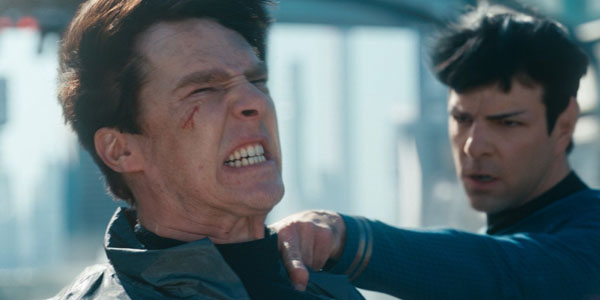
The Flaws: J.J. Abrams can't resist building his movies and TV shows around a mystery, and last year's Star Trek Into Darkness was certainly no exception. Most of the pre-release chatter revolved around the identity of Benedict Cumberbatch's antagonist, who was referred to in promotional materials as John Harrison, though was widely believed to be Captain Kirk's classic villain, Khan. Why is this a flaw? Because any self-respecting Trek fan had cottoned onto this long ahead of time, and distributing a pre-release clip of Cumberbatch's character referring to the number "72" made it absolute certain that he was Khan. More to the point, given that the majority of the audience will consist of casual viewers rather than Trekkies, even making a mystery out of it in the first place doesn't exactly seem very pointful, especially one that was so easily dissected by the community. Then there's the fact that the climax of the movie was a lazy rip-off of the end of Star Trek II: The Wrath of Khan, albeit with the Spock and Kirk roles reversed. Why It's More Interesting: The funny thing is, it's hard to imagine being that excited about Star Trek Into Darkness without that mystery lingering on everyone's lips. It was pretty much the only thing people would talk about in relation to the movie, and though Cumberbatch playing the iconic character proved to be heavily divisive, it opened an interesting dialogue about actors of different races playing iconic characters, and a perceived double-standard in which an ethnic character can be "whitewashed", but not often the other way around. The ending being lifted from the original second movie also sparked an interesting debate about where the line between homage and straight-up cribbing from previous works can be drawn.

8. Iron Man 3

The Flaws: 2013 was a year full of divisive blockbusters, though arguably the most contentious was Iron Man 3, which drew considerable ire and praise in different circles for its depiction of Iron Man's famed foe, the Mandarin. Initially believed to be played by Ben Kingsley, it's revealed half-way through the movie that he is, in fact, an actor, a decoy used to propagate the Mandarin myth, while the "real" Mandarin, Aldrich Killian (Guy Pearce), safely operates from the shadows. This caused considerable rage among fans of the character, who felt that Marvel betrayed the essence of the Mandarin in an attempt to appear more subversive and clever. Why It's More Interesting: Iron Man 3's sly plot twist created a fascinating discussion about the responsibility that movie studios owe (or don't owe) to comic book fans: is it fair for them to do what they like with characters, even if they are in direct opposition to the comic book portrayal? Obviously, some things just don't translate well from the page to the screen, though in the case of The Mandarin, it seemed like Shane Black and Drew Pearce deliberately strayed from the source material. Naturally this wasn't of much interest to those unacquainted with the character beyond what they were expecting from the trailers, but for comic book fans, it was a major point of division.

7. The Twilight Saga: Breaking Dawn - Part 2

The Flaws: The producers of the Twilight series had a difficult hurdle to face when preparing the plot of the final movie, because the conclusion of the book, Breaking Dawn, is so famously anti-climactic. The book ends with the Volturi realising that human-vampire hybrids don't present a threat to their way of life, and then leaving. That's it. This isn't at all cinematic, so the movie version ends in a way that's half-genius, half-irritating: a final fight breaks out, in which numerous key characters from both sides (Jasper, Aro, Carlisle and Jane) are killed in gruesome fashion, before it's revealed that the entire scene is merely a premonition that Alice (Ashley Greene) is showing to Aro (Michael Sheen) of what will happen if he starts a fight. Aro and the Volturi leave without incident and the movie ends on a relatively happy note. Why It's More Interesting: It's safe to say that this ending would frustrate a lot of people: those who haven't read the books might think the premonition twist was a cheap cop-out, while fans of the books might be initially angry, and then relieved that the ending hasn't been changed. However, for all of the mistakes this movie made (and boy, are there a lot of them), this was a relatively clever way of giving audiences an action-packed finale but without compromising the "integrity" of the original story. It was certainly far more interesting and exciting than the original book ending, which would have basically been the cinematic equivalent of a shrug.

6. Hulk

The Flaws: Assigning an acclaimed art film director of Ang Lee's caliber to direct a major Hollywood blockbuster probably seemed like less of a gamble after his outstanding Crouching Tiger, Hidden Dragon, which perfectly blended action, drama and romance into one spellbinding whole. Sadly Lee's deliberate approach didn't exactly blend well with the big, angry green guy, leaving audiences fidgety, even bored, as the movie dared to develop Bruce Banner as a character before The Hulk finally showed up, far too long into the bulky 138-minute runtime. To Lee's credit, he tried his hardest to approach Banner as seriously as he had any of the characters from his more grounded dramas, though in a huge way that's also the problem: it is damn-near impossible to take this character seriously, especially when his alter ego's favoured quip is "Hulk smash!" Why It's More Interesting: Much like Bryan Singer's attempt at Superman, it's an admirably flawed movie, one which at least tried to branch out and reinterpret the Banner character in an ambitious way. This combined with its superb art style makes it unlike any other Hulk movie before or since, and while it proves divisive, it is nothing if not intriguing.

5. The Matrix Reloaded

The Flaws: After the ground-breaking effects extravaganza that was the first Matrix movie, the Wachowskis were always going to struggle to top or even just equal it with their long-awaited sequel, and surprise, surprise, The Matrix Reloaded proved to be a visually stunning fest of set-pieces with a wholly underwhelming plot. Though the laughably gratuitous Neo-Trinity sex scene was enough to turn the stomachs of many, the real disgust came when Neo met the "father" of The Matrix near the end of the movie, the Architect, a smooth-talking Colonel Sanders lookalike who delivers one of the most needlessly verbose, impenetrable dialogues in the history of cinema. Rather than explain the character's beliefs and motivations in a way that's interesting whether you're a person of average intelligence or a Philosophy pHD, we're inundated with a tidal wave of words and ideas that aren't particularly easy to swallow down amid all that CGI-infused bombast. Why It's More Interesting: That said, the film is more interesting on repeated viewings, as the implications of what the Architect has said become clearer. Much of what he says hints at (though doesn't confirm) various fan theories, such as the Merovingian and Seraph being possible Ones in previous incarnations of The Matrix, and while the self-important dialogue makes it difficult to want to listen, when boiled down to its simplest elements, there are some interesting, world-expanding ideas there. It's just a shame the Wachowskis didn't run with the ball in the hugely disappointing final film, The Matrix Revolutions.

4. Spider-Man 3

The Flaws: Spider-Man 3 is regarded by many as the worst Spider-Man movie to date (though with the recent release of The Amazing Spider-Man 2, that might have changed), a considerable step down from the goofy but incredibly efficient, faithful first two Sam Raimi movies. The problems are numerous: for one, there are too many villains crammed into the film, with the Green Goblin, Sandman and Venom all struggling to steal the screen from one another. As a result, none of the villains get a particularly decent treatment: Green Goblin is hampered by some terrible effects, the Sandman's storyline retcons a major part of Peter Parker's character by having him be the (accidental) cause of Uncle Ben's death, and Venom is, well, Topher Grace. Then there's the silliness of the whole thing. Raimi's movies always had a goofy charm to them that was consistent with the comics, but this went into unacceptable overdrive in Spider-Man 3, with Peter's symbiote-induced dance moves making even the most devoted Spidey fan shudder all the way home. Why It's More Interesting: Rather than opting for the rather familiar trajectory of the previous Spider-Man movies, whereby a scientist ends up betrayed by his own technology, becomes a theatrical bad guy and then dies a sympathetic death, the third Spidey film at least opted to do something different. Yes, Harry Osborn's Green Goblin and Sandman were particularly sympathetic still, but at least the movie tried to spin more plates rather than simply opt for entertaining if unadventurous formula. It strove for greatness, it failed, but for all of its rough edges, it is a perversely entertaining, deeply flawed and endlessly fascinating movie. Crucially, it's a testament to making a director work with something he's not even really a fan of: Raimi openly he admitted he didn't care for the Venom character, but was forced by Sony to include him, as they were hoping to follow Spider-Man 3 up with a spin-off movie.

3. Prometheus

The Flaws: Where to begin? Ridley Scott's visually stunning movie had the template for a sci-fi masterpiece, and though it fell a little short in the long run, it was still a tremendously entertaining movie, and considerably better than any Alien movie following the first two. There are countless problems with the script, which could easily have been ironed out by anyone with a functioning brain stem: the fact that the characters remove their helmets so easily in unknown territory, how completely lacking in caution the scientists are when approaching the creatures, and how Charlize Theron's character doesn't even try to avoid being squashed by a falling ship. Then there's elements that flat-out aren't explained: why David poisons one of his own crew with the alien goop, why the engineer starts attacking everyone when woken up from stasis, and just why the engineer + a giant facehugger = a proto-Xenomorph. Why It's More Interesting: The dumb character actions are truly more frustrating than anything, but the lack of an explanation for the latter events just makes us more curious about how far this world could expand in the planned Prometheus follow-up. Had Prometheus been made as a solo prequel to Alien, then this ending would have been incredibly annoying, but given that the sequel is 100% set to happen, we should hopefully get some answers in due course.

2. Watchmen

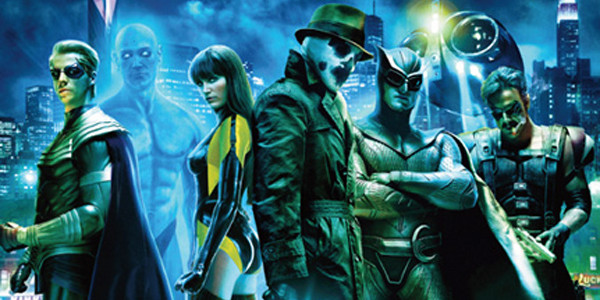
The Flaws: The climactic moment in Zack Snyder's Watchmen occurs when Ozymandias (Matthew Goode) reveals that he is the mastermind behind everything, and is plotting to destroy the world's key cities using energy reactors he and Dr. Manhattan built together. The desired effect is that this would unite the U.S. and Soviet Union together against a common enemy, and bring about peace on Earth. A clever plan? Sure, except that in the original graphic novel, it occurred a little differently: Ozy instead sent a giant squid to New York City, which subsequently died and sent out a gigantic psychic shockwave, killing half the city's population. Though Snyder's ending still works, it's not as bracingly effective as the squid, because the visual image of a grotesque squid is simply more potent and dramatic than that of explosive energy, and is therefore more likely to unite the citizens of the world. Why It's More Interesting: The exclusion of the squid certainly got people talking, but you also have to consider that the squid would likely not have translated well to the movie form: seeing some slimy CGI squid exploding all over the place would probably elicit laughs from those not already acquainted with the source material and therefore already accepting of the idea. 20 years following the graphic novel's publication, where the idea of a giant squid likely seems a bit sillier than it did back in the mid-1980s, switching it out for Dr. Manhattan really isn't that bad an idea: it doesn't make the same point as emphatically, but conveys it in a way that more casual viewers are going to be able to comprehend. Dumbed down? Not so much as altered to fit with the times.

1. The Dark Knight Rises

The Flaws: Christopher Nolan's The Dark Knight Rises concluded in suitably spectacular fashion, though also proved to be extremely divisive with huge fans of the director's trilogy. The script boasts an epic canvas, and to a point this is more important than the individual details, but there are a number of questionable plot elements: how easily John Blake finds out that Bruce is Batman, how quickly and easily Bruce heals his injured back, Bruce losing his money through fraud (this would never be allowed to stand), the entire GCPD being stuck down in the sewers apparently for months, how Bruce gets back to Gotham, why Batman wastes time lighting a fire on the side of a building, and how Bruce fakes his own death but appears to hang out in totally-low-profile, swanky restaurants in Florence. Why It's More Interesting: The above issues (and many more, no doubt) are all valid criticisms or questions about Nolan's plot, and though some of them could have been tightened up to be a little more convincing, others present fascinating questions for the viewer, and have kept the dialogue about the movie going long after it fell out of cinemas. Nolan could have opted for something a little more believable, even sensible, for his finale, but you can guarantee the movie wouldn't be as discussed and interesting as it ended up being. Did we miss any endlessly debatable blockbuster movies as a result of their perceived flaws? Are any of these movies just flat-out bad in your opinion? Let us know in the comments!

Contributor
Contributor

Stay at home dad who spends as much time teaching his kids the merits of Martin Scorsese as possible (against the missus' wishes). General video game, TV and film nut. Occasional sports fan. Full time loon.