10 Classic Movies People Tried To Sabotage

10. Woody Allen Begged United Artists Not To Release Manhattan
 Despite being probably the second-most acclaimed film in Woody Allen's career - after his Oscar-winning Annie Hall, of course - Manhattan is not a film the writer-director-star is proud of. While garnering luminous reviews across the board and an eventual two Oscar nominations, Allen was so dissatisfied with the final result that he begged United Artists not to release it, even offering to make his next film for them for free as an incentive. Allen was quoted as saying, "I just thought to myself, 'At this point in my life, if this is the best I can do, they shouldn't give me money to make movies'". The famously modest, self-deprecating filmmaker appears to be his own worst enemy as far as success goes, though at least UA didn't relent and actually take him up on his offer. They clearly knew they had a winner on their hands; the film made $39m against a $9m budget.
9. Studio Heads Wanted To Cut American Graffiti
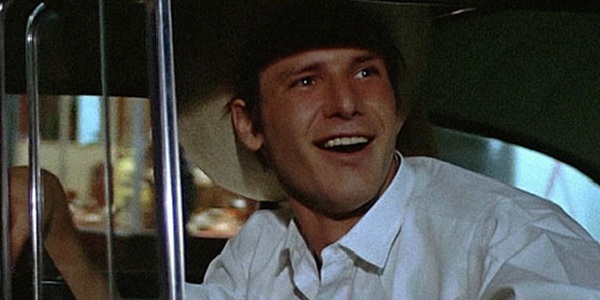 1973's American Graffiti is the film that shot director George Lucas to fame ahead of his Star Wars franchise, and was no doubt a valuable crash course for the filmmaker in how everything that can possibly go wrong often will. The nightmare began with Harrison Ford being arrested after a bar fight, the cast and crew were frequently drunk on set, and two camera operators almost died while filming the climactic car chase. Above all this, though, is the cold, hard fact that Universal simply didn't like the film very much. They planned to cut it to pieces, and only decided against a complete overhaul when producer Francis Ford Coppola's The Godfather won the Best Picture Oscar. Instead, the studio decided to cut "only" three scenes, but also position it for a TV release rather than theatrical. It was only when various studio heads saw the film and couldn't stop talking about it that, again, Universal gave in and ran the film for a limited engagement in major cities.
8. Studio Suggested The Crow Should Be A Musical Starring Michael Jackson
 Here's a film that, if the studio had their way, would not only have been completely different, but would have been absolutely awful. Incredibly, however, this gritty adaptation of the cult graphic novel The Crow not only managed to overcome studio meddling, but even the death of its star, Brandon Lee, near the conclusion of filming. The creator of the original comic, James O'Barr, famously stated that while meeting with a studio executive, he was informed that they wanted to adapt the graphic novel into a musical. Oh, and who would be starring? That's right, the first name to come to mind - Michael Jackson... It's an idea insane enough to make you lose complete faith in Hollywood; I don't know what they were snorting out there, but it must have been good. It's an example of seemingly intentional sabotage so strong that it veers dangerously close to self-parody. A Crow...musical...but on the other hand, I definitely would have watched it, so it could've been a worse idea, frankly...
7. Quaker Oats Attempted To Use Willy Wonka & The Chocolate Factory To Sell Chocolate
 In a clear demonstration of not giving a single, solitary crap about the movie business, the Quaker Oats Company bought the rights to Roald Dahl's classic novel Charlie & The Chocolate Factory, with the hope of adapting it into a glorified, 100-minute advertisement for their new "Wonka" chocolate bar (hence the film's title being changed to Willy Wonka and...). This came about by pure coincidence, when director Mel Stuart was meeting with producer David L. Wolper and mentioned the book, after which Wolper had a meeting with Quaker Oats, and given that they were looking for way to promote their new candy, he put two and two together, getting in bed with a company who knew absolutely diddly squat about making movies. Ironically, while Quaker funded the picture, it went on to become an iconic cinematic classic, while their Wonka bar soon enough faded into obscurity. Despite not giving a damn about whether the film did well or not, it seems like everyone got their just desserts in the end...
6. Studio Execs Pressured Director To Cut 'Over The Rainbow' From The Wizard Of Oz
 Even those two folks living under a rock who have never seen The Wizard of Oz know that the most iconic song in the film is the wonderfully haunting "Over the Rainbow", yet that didn't stop studio executives from trying to coerce director Victor Fleming into cutting the scene entirely, as the studio reportedly didn't much fancy the idea of their lead star singing in a farmyard. Why that is exactly we'll never know, but it would most certainly have impacted upon the film's status as it stands today. Of course, even without the song there's still plenty to marvel at, but why on Earth did an executive want to ditch a song that's so beautifully filmed and vocalised? Because of a farmyard? I hope someone got the sack for that one...
5. Producers Of The Wicker Man & Rod Stewart Tried To Eradicate It From Existence
 1973's The Wicker Man is without question one of the greatest horror films ever made, a disturbing cult classic with one of the most twisted endings in the history of cinema. That said, it's a film so controversial and discomforting that even those who trumped up the cash to have it made wanted to bury its release...literally. The film's distributors had such disdain for it that they wrote the film off as a tax loss, and the original print of the film reportedly ended up being buried underneath the M4 motorway. And then there's Rod Stewart, who was married to star Britt Ekland, and not wanting the world to see his wife in the nude, apparently attempted to buy the original negative so that he could destroy it. With so many folks out to get the film, it's amazing that a copy has survived for our home video viewing pleasure at all...
4. Once Upon A Time In America Re-Edited Into Incomprehension
 Sergio Leone's crime masterpiece is a film that just shouldn't be tampered with, even with its beefy 229-minute run-time, but that didn't stop the studio from having a go anyway. Without Leone's supervision or approval, a 139-minute cut - that's a whole 90 minutes shorter - was released, in which the plot is completely butchered, and Robert De Niro and James Woods' characters don't show up until the film is basically a third over. So drastic was the studio's interference that reviewers championed the original cut while deeming the studio edit a "travesty", and in one critic's case, "the worst film of 1984" (while Woods noted that the same critic saw the full cut and deemed it the best of the 1980s). Clearly, here's a studio that didn't give a damn about what the master director was doing, and if a filmmaker as talented and revered as Leone couldn't escape the studio's scissors, then is anyone really safe?
3. Salvador Dali Made Un Chien Andalou Intentionally Incomprehensible As A Protest
 The 1929 surrealist short Un Chien Andalou, directed by Luis Bunuel and conceived by Salvador Dali, is without question the most famous work of the surrealist cinema movement, a film most memorable for its iconic scene in which a woman's eye is cut open with a razor. While it's easy to imagine that Bunuel and Dali thought they were making a film that was the zenith of intellectualism, in fact, they knew that the film was basically incomprehensible, and fully expected audiences to despise it. Bunuel wanted to insult the bourgeoisie, stating, "the film represents a violent reaction against what in those days was called avant-garde, which was aimed exclusively at artistic sensibility and the audiences reason", and reportedly had pebbles in his pocket during the first screening, ready to lob them at hecklers. However, this proved unnecessary, as the film was a huge success, and was screened continually in Paris for roughly 8 months following its initial screening.
2. Studio Tried To Mangle Blazing Saddles, Forgetting They Gave Mel Brooks Final Cut Privilege
 Blazing Saddles is a classic satire from Mel Brooks, an extremely funny mockery of how Hollywood mythologises the Old West, and essentially white-washes history. While this might have been a contentious subject in the mid-1970s, Warner Bros' attempts to sabotage Brooks' vision failed because of their own stupidity. Studio executives called Brooks into a meeting, where they gave him a laundry list full of things they wanted him to change before release, such as cutting every use of the N-word, and eliding the now famous beans scene, which was the first fart joke in a major studio feature. Being the conscientious type, Brooks took extensive notes of the meeting, reportedly only to dump the notes in the garbage outside following the meeting, well aware that he had final cut privilege on the film, and nobody was going to be able to tell him what to do. Brilliant.
1. Miramax Wanted To Butcher The Lord Of The Rings
 We should count ourselves lucky that The Lord of the Rings trilogy ended up at New Line Cinema, because if the original deal with Miramax went through, they would have been a very different beast indeed. Peter Jackson had always wanted to make a trilogy out of the three books, though conceded that a studio would be unlikely to bite, so proposed to Miramax a two-movie adaptation, but that wasn't enough of a concession for them; they wanted the story contracted down into one film, and characters such as Rohan and Gondor combined into one. With Jackson's bulls*** detector going off the charts, he instead convinced Miramax to allow him to take the project to New Line, while the Weinsteins remained on-board as Executive Producers, in case the films were, you know, actually any good. New Line gave Jackson essentially carte blanche to achieve his vision, and the film was of course a massive success, though this ironically led to Jackson getting too big for his breeches with The Hobbit, as Warner Bros. allowed him to distend one short book into three painfully protracted films. Which devious cases of movie subterfuge rankle you the most? Let us know in the comments below.