10 Classic Movies You've Always Misunderstood
To put it plainly, you're wrong.

There are just shy of 300,000 films on IMDb's records. Ranging from Cannibal Zombie (how is that a threat to us?) to The Shawshank Redemption (current first place in the site's Top 250), it's to be expected that every now and again a film will come along that not everyone fully understands.
Some, like The Tree Of Life or Memento, are purposely instilled with an overly complex narrative that will take more than a single viewing to get (although in the formers case it's all lights and no brain matter). But inevitably a classic film that everyone knows and love will have some members of the audience needlessly confused.
Here we bring you ten films (and one blockbuster TV show) that even you may have completely misunderstood, taking the wrong message, not getting a plot twist or just generally missing what made the film so great in the first place. And if you did misread a film on this list, take some solace in that sometimes the company behind it is pushing you towards the wrong conclusion, like the television example below...
Honourable Mention: Lost - The Island Isn't Purgatory

The most enduring fan theory behind Lost, that the island was in fact purgatory, stuck around despite multiple characters escaping to the mainland at various points in the series. By the point time travel was introduced though, that theory seemed dead in the water. That was until the series finale revealed the alternate timeline that showed a reality where the plane didn't crash was a sort of purgatory where those from the island met up in after death.
Unfortunately, many fans misread this explanation as the whole thing being purgatory. Oddly enough that's despite Christian Shepherd, the man who explained it all clearly stating everything was real.
This wasn't helped by ABC choosing to air images of the original, lifeless crashed plane over the end credits. Chosen due to their iconic status (and being much calmer than a garish voiceover for what was on next), many fans thought it was irrefutable proof it was all purgatory.
10. The Terminator - The Time Travel Makes Sense

Whenever you use time travel in a movie you're going to be fighting an upward battle, thanks in no small part to there being no definitive theory behind how it works as a concept. The real issue is that the biggest time travel movie of all, Back To The Future, has such confused rules that, even though it doesn't fully follow them, audiences take as gospel.
I like to think of the base time travel theory to be one of whatever happened, happened (there's another element of Lost no one understood). The loop well-known as a grandfather paradox - where you dont change the past, rather fulfil a scientific influenced destiny - keeps everything in one universe, with no parallel realities. But when it comes to The Terminator, a film that uses this theory religiously, people get confused.
Admittedly it doesn't help the sequels mess up the rules, but James Cameron's first movie is so tight, with the final scene reaffirming that Kyle Reese is, and always was, John Connor's father.
Now I'll bet many of you are sat there going well duh, but you don't have to travel far into the internet to find someone who thinks there's multiple universes at work in this very simple plot. Damn you technically superior, but narratively confusing Judgement Day!
9. Battleship - It Knows It's Dumb

Hate it as much as you can, the Michael Bay school of filmmaking, where PG-13 sexiness and lumbering CGI action are horrendously shot, makes a lot of money. When Battleship came out in cinemas in 2012, many thought Peter Berg was simply going in and attempting to cash-in on this.
And yes, in many parts he is. Theres a gross misunderstanding of military hierarchy, a terribly shot soccer match and robots with superfluous designs, not to mention a run-time only just shorter than the full cadet training programme for the U.S. Navy.
But what stops this film from being quite in the same level as Bay's output is that it seems to know what it is. I'm not saying Battleship is a good film; it was one of the worst blockbusters of 2012. But at least it knew it was. Numerous plot points, most notably an entire sequence near the end where a bunch of war vets commandeer the USS Missouri and take on the aliens, are little more than the filmmaker's just taking the piss.
Everyone immediately dismissed Battleship without seeing it and thus few are aware of these self deprecating moments. Battleship is a bad film, but it's far from a dumb one.
8. Inception - The Top (Or The Ring) Doesn't Matter

There was only one question on everyone's lips when they left Inception; was Leonardo DiCaprio awake or not. The entire film had been toying with the idea, although the final twist with Mal seemed to settle it. That is until the now iconic final shot of Cobb reunited with his children, only for the camera to pan down and reveal the spinning top (his method of telling whether youre in a dream or not) was still spinning, albeit a bit wobbly.
The thing is, in asking the question of whether Cobb's awake or not is missing the whole point of the film: it doesn't matter. For the past two and half hours hes been haunted by his past actions, unable to craft his own dreams and chased by the literal memory of his dead wife. The film's ending is the point where hes escaped that; he's faced his demons in limbo and has accepted this current level as his reality, irrespective of whether it actually is.
And if you're going to quickly point out that the totem was Mal's and Cobb's was in fact his ring, we know. But thats not the point at all.
7. The Shining - It's Not Just Scary

Along with The Exorcist, The Shining is one the greatest horror of all time contenders that contemporary audiences leave thinking whats all the fuss about. Primarily misunderstanding that horror films dont need to be terrifying from the production logos (in the same way not every comedy needs Airplane's high delivery level or every drama needs you weeping for two hours), in the case of Kubrick's remarkably unfaithful adaptation theres a devilishly (or bartenderishly) deep subtext at work.
The Shining is a truly terrifying film, although it is one that takes a couple of viewings to fully appreciate the full scale of it's horrors. But while you may be a gibbering wreck at the unconventional reimagining of the three little pigs after two, by the tenth or twentieth viewing youre finally getting to the understanding that its mastermind intended.
From Native American revenge to an exercise in subliminal advertising, Kubrick instilled The Shining with so much hidden visual cues theres a film dedicated to the obsession of it's shot combing fans (one even proposes the film is an apology for faking the moon landings). This may be more a misconception of general moviegoers, not just cineliterates, but it's certainly worth repeating here.
So yeah, not just a latter-day The Conjuring.
6. The Dark Knight Rises - Bruce Wayne Survived

The Dark Knight Rises divided far more people than it should have. A brilliant film in its own right, it crowned off the best trilogy of the past decade. The divisive nature comes from many countless Nolan made, but the big fish is the ending; how much you like the film tends to correlate with how much you accepted the film's conclusion.
Much was discussed in the preamble before the films release over whether Bruce Wayne would make it to the end credits alive or not. And up until the last five minutes it seemed hed most certainly bit the atomic dust. Until, in an ending shot as relieving as Inception's was infuriating (but as we know now, not really), we discover he's alive and well with Selina Kyle. The elation at this moment, after genuine uncertainty, brought the film and the trilogy to a fitting end.
But some people read the Florence-set cafe scene as part of a wishful hallucination the grieving Alfred's having after, as he sees it, letting Bruce die. While thats a more poetic ending, theres been nothing in the film (nor itkis direct predecessor The Dark Knight) to suggest anything we've seen isn't real.
5. Iron Man 3 - Killian IS The Mandarin

Now the furore has settled down, the polarising opinions on Iron Man 3's central twist are a little less intense. Those who hated it have moved on and those who liked it still like it. While a big, polarising reaction can only help a mega film like this, the negativity wasn't exactly planned by Shane Black and co.
However, I think people would have been notably less irritated at the Mandarin's dethroning if the subsequent crowning of the character had been better conveyed. Obviously everyone got Killian was the mastermind behind the whole plot, but him actually assuming the small orange mantle was severely downplayed.
Just before Pepper uses her suddenly discovered powers to knock Killian back, he screams in a rather fire drowned rasp that he is the Mandarin. This line is quite hidden and doesn't alter the twist, but changes the view of The Mandarin; it's a title for the head of The Ten Rings, not just the public terrorist.
4. (500) Days Of Summer - Tom Is An Idiot

This one may not be one that you personally have made, but I know people who have, so let's explore shall we.
(500) Days Of Summer is, for all its spontaneous dancing and distinct visual style, one of the most realistic relationship films ever made, showing an unashamedly bleak look what is normally treated as a fairytale story. Despite being repeatedly told the contrary, Joseph Gordon-Levitts Tom continues to imagine a future with Zooey Deschanel's Summer, leading to long stretches of depression. It's a mature take on the rom com genre, showing us how what we see in movies isn't always the truth.
But I know people who've taken something completely different from it. Before seeing the film it was sold to me as an even more tragic tale, with Summer leading Tom on and being a general (and I'm quoting here) bitch towards him. While thats how, at one point, Tom does take it, the film suggests nothing of the sort; it's all about his stupidity.
In the film, we learn Tom took much of his view on romance from a misunderstanding of The Graduate. Who'd have thought this film would be misread in a similar way too?
3. The Usual Suspects - The Twist Is Brilliant Because We'd Already Had One

Bryan Singer's masterful thriller is an endlessly watchable, tightly woven film that delivers everything you could ever want from a movie. Its final twist, that Verbal Kint is in fact crime mastermind Keyser Söze, is so ingrained in popular culture that (like The Sixth Sense and Fight Club) you can't be chastised for accidentally revealing it (but in case I just have, how have you not seen it?).
When people discuss the greatness of the film, they often jump to the brilliant twist. Citing the scene near the beginning where Verbal sits, eyes darting over the bulletin board, it's signposted, yet impossible to spot. However, there's a lot more to the twist than just that.
Before Kujan sees the hometown of Quartet boards, the audience has already been rocked once; we've had the first reveal that it was Gabriel Byrne's Keaton who was the shadow prince of crime. It's a twist within a twist. You, like the police, let your guard down, allowing the final reveal to floor you. So many people treat the reveal as just a great twist, when its in fact a masterful playing with the audience.
2. Wall Street - Greed Is Bad
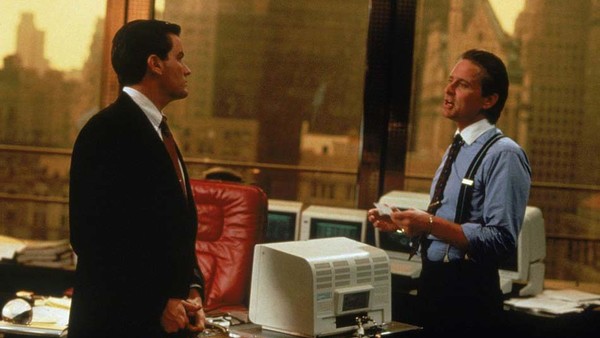
When you ask anyone what they think of when you say Gordon Gekko, you'll get one of two responses; a brick mobile phone or the phrase "Greed is good". Now while either make sense, with both getting a humorous mention in the 2010 sequel, the second element has been taken a tad too literally.
When your major character is also the movie's villain, their motives and beliefs can get muddled with that of the film. And thats exactly what people took from Wall Street. Sure, most understood Oliver Stone was passing judgement on greed thanks to the Sheen-Sheen relationship, but theres a big group of people who didn't see past the expensive paintings and lavish apartments. What makes this misunderstanding so depressing is what these people did after taking their reading of the film to heart; they went into the financial sector on the back of it.
In an interview around the time of Money Never Sleeps Stone was bemused by how many people looked up to Gekko as a role model, probably leading to the much more umming nature of that film (not to mention the real world events it details).
1. The Lion King - Hakuna Matata Is Just Plain Wrong

If you don't come out of The Lion King humming one of its instantly recognisable songs the likelihood is you're a worse being than Scar. Each of the songs have a such a distinct nature beyond being just catchy tunes that someone can tell you their favourite and you'll never be able to judge them (unless its Can You Feel The Love Tonight). But its exactly this trait in the songs that leads to one of cinemas biggest misunderstandings.
Some of the songs contain questionable morals. But whereas Be Prepared is full of dark imagery highlighting its villainous nature and Zazu acts to temper the overblown ideas of I Just Can't Wait To Be King, the equally erroneous Hakuna Matata has no such restraint. The song's message - that putting you're behind in your past is the right way forward - is completely against the film's (learn from your past).
As Rafiki's eventually righting of Simba's wrongs isn't accompanied by a catchy song, its importance is often forgotten, leaving people just remembering the false message. This point is blurred further in The Lion King 3 when Rafiki teaches Timone the ways of Hakuna Matata, only to later have to teach Simba the opposite in the original.
So there we have it. Did you misread any of these classics? Feel free to own up in the comments below and let us know about any more you can think of.