10 Complex Movie Schemes That Actually Make No Sense

The League Of Shadows ain't as smart as you think.
The best laid plans of mice and men often go awry, but somehow movie villains manage to pull theirs off. At least until the very last minute, when the heroes swoop in to save the day just as they're about to succeed. Which is a surprise, since increasingly the evil schemes put together by bad guys are needlessly complicated. Whatever happened to the good old days of kidnapping a good guy's significant other, tying them to some train tracks, and twiddling your moustache whilst cackling? Nowadays, in order to completely bamboozle their opponents, film villains will compose absolutely bonkers, lateral thinking puzzles of evil plans, of the sort that even the screenwriter seems to barely understand. And if the person coming up with it can't make sense of it, what chance do their characters have, eh? Well, as it happens, they absolutely shouldn't be able to. Because often, these plans don't make a lick of sense. Even accounting for the suspension of disbelief that comes from watching a popcorn flick, these things are complete boohockey. From Bond villains who don't understand the economy to supervillains with a weird penchant for getting captured on purpose, here are ten complex movie schemes that make no sense.

10. Goldfinger Doesn't Understand The Economy

The first great James Bond film has one of the best, most sensational villain's plots this side of Moonraker: Auric Goldfinger aims to break into Fort Knox - with the aid of his diminutive, mute hat-throwing butler and an all-female flying circus - so that he can set off a nuclear pulse which will irradiate all of the US government's gold, thus causing the price of the gold standard and thus, the world economy, to collapse. That is, unless all the major world powers get in bed with Goldfinger, who will control the majority of the planet's gold and, thus, all said powers will be in thrall to his evil wishes. Which...well, it's not clear where they extend past gold. He loves only gold, after all. So not only is the ultimate endgame of Operation Grand Slam a little hazy, but the whole thing seems built on some fairly unsteady foundations. For one thing, the US economy wasn't based on the gold standard so much in 1964 (when the film was made), and it was eliminated entirely by 1969. His plan might've affected the economy a little, but not to the point that he would have some considerable pull over what the world's governments do. If he wanted to do that, he probably should've been mucking around with America's oil supplies - except that's what Quantum Of Solace was about and, honestly, that didn't make a whole lot of sense either.

9. Mission: Impossible Is Mission: Improbable
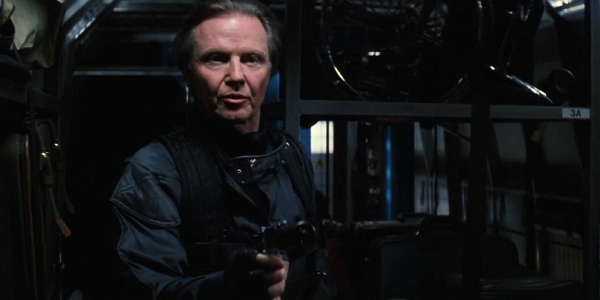
Jon Voight's plan is simple, he €“ actually, no it's not. At all. His double-crossing IMF agent Jim Phelp's scheme in Brian De Palma's glitzy blockbuster update of the cult sixties show is almost certainly responsible for the ongoing trend of action thrillers to have endless twisty turny last-reel shockers where it's revealed somebody else had been pulling the strings all along, and there's a bunch of flashbacks explaining it, and it still doesn't really make sense. Mission: Impossible opens with a team of agents trying to stop the theft of a bunch of covert operative's identities from the American embassy in Prague. It doesn't really work out. As in, the rest of the team dies horribly, except for Tom Cruise's Ethan Hunt, who has to go on the run and try to figure out who set them up. Because he was the only survivor, so his bosses assume he was the mole inside the group. Except - surprise! It turns out Jim Phelps didn't die at all, despite his bloody murder being caught on camera. Faked it all, didn't he. And a member of the team of IMF rogues Hunt has been chilling with was also working with him. So somehow he faked his death, returned from the dead, set it up so Hunt would take the fall but also hook up with Jean Reno's similarly double-crossing Krieger, and why do they end up in the Channel Tunnel again?

8. Candy Hates Money...For Some Reason In Django Unchained

The greatest White Liberal Guilt movie since James Cameron's Avatar, Quentin Taratino's surprisingly (and needlessly) epic Western sees Christoph Waltz's bounty hunter Dr Schultz freeing Jamie Foxx's badass slave Django for reasons, then training him up in the way of the cowboy so they can go bust Django's wife out of her own horrible life on Candyland, a cotton picking ranch owned by Leonardo de Caprio and his infeasibly long cigarettes. After farting about shooting snowmen for about an hour, the pair decide to get down to brass tacks, planning to use all their bounties to buy Broomhilda's freedom. Except Schultz decides di Caprios' Candy won't want to sell Broomhilda to some random dude because, well, slave owners are infamously unreasonable. What with the slave thing and all. So they decided to buy one of Schultz's bare-knuckle wrestlers instead, hoping they'll throw in Django's wife for free. Wait, what? Why? Why would they do that? Why do they think Candy would be okay with them buying one random fighter instead of one random slave? Apparently Broomhilda is a pretty troublesome employee anyway, so he'd probably be glad to see the back of her. Candy is a monster, but he's still a monster who likes money. He would've taken it. No need for everyone to get shot up and exploded, but perhaps that would've spoilt the third act.

7. Superman Returns, Lex Luthor Buys Up Real Estate

The Man Of Steel is the prototypical superhero, a larger-than-life champion for humanity who protects the powerless using his own god-like abilities. His arch nemesis is a man envious that his species look up not to him, but an alien who he sees as an "invader" rather than a paragon of his kind. When they clash, it's pretty spectacular. At least it should be - apparently Bryan Singer didn't get the memo, since when he dropped the X-Men franchise in order to make his love letter to the old Christopher Reeves Superman films, he decided it should mainly be about Clark Kent's paternity troubles, and Lex Luthor putting together a plot that involves seizing of real estate. Wow, aren't comic book films a great form of escapism from the drudgery of real life? Not if you're watching Superman Returns. Kevin Spacey was inspired casting as the supervillain, but his plan was...honestly, the plan is still a little shaky. He kills, like, a whole bunch of people so that he can seize control of an island. Then he terraforms the island so that it's all made of Kryptonite, then lures Superman there, so he ends up all weak and weepy and stuff. Which makes more sense then, y'know, just getting a bit of Kryptonite and stabbing it into the Man Of Steel's heart, or making a Kryptonite canon, or literally anything else.

6. Hans Gruber Pretends To Be A Terrorist, Dies Harder
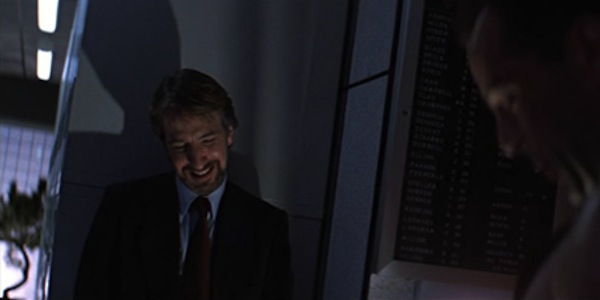
Hans Gruber certainly looks smart on he surface. After all, he's a German bad guy being played by an English actor - that's doubling down on villainous traits for a Hollywood action film. It's like, how much more evil could he get? And the answer is none. None more evil. His quiet confidence during his heist of the Nakatomi Plaza also implies that his whole scheme is simple and brilliant, idiot proof, that it would go off with a hitch. Were it not for the "hitch" in the shape of that cowboy in the vest and no shoes, for some reason. Is he a hippie or something? Anyway, the bit where he writes about having a machine gun on the dead guy's chest is cool. Bit morbid. Right, but regardless of John McClane's heroic intervention, it doesn't seem like Gruber's plan would've come off anyway. The idea is to pretend to be Eurotrash terrorists who have taken the plaza's population hostage until a bunch of world governments release some prisoners. Except that's all a cover for him and his cronies robbing the huge vault at the bottom of the skyscraper, with all its cash and bearer bonds and stuff. Right...so why pretend to be terrorists? That just means you're wanted on larger charges than robbery, and the feds get involved, and the whole thing gets SO MUCH HARDER FOR NO REASON.

5. Any Time The Villain Gets Captured On Purpose

It's become the done thing for big summer blockbusters that, halfway through the film, the villain gets captured by the heroes. Aha, except that's exactly what they wanted to happen! In fact their capture was all part of the plan all along. They just wanted to get closer to the heroes' weaknesses. The blind fools! That was the case with Loki in Avengers, Khan in Star Trek Into Darkness, Raoul Silva in Skyfall and, erm, Loki in Thor: The Dark World. It makes a crazy kind of sense, and is a pretty neat bluff: the goodies think they've succeeded, their guard is down, and that allows the enemy to strike them where they live. Except these plans all rely on a staggering amount of luck, and very little strategy. For one thing, they have to ensure they get captured by the protagonists, rather than killed; but they have to put up enough of a fight that nobody cottons onto what they're up to. Then they have to be sure that they can break out of whatever prison they're being kept in, despite having never seen said jail cell before. After that, the plans follow things that they can actually sort of control - except Silva's in Skyfall, which is the most needlessly complex way of getting to Dame Judi Dench's M that he could possibly think of. He already blew up MI5 headquarters, why not just do the same thing again? Who knows. Spies eh.

4. Ocean's 11 Isn't Nearly As Smart As It Thinks It Is

Movie villains don't have a monopoly on exceedingly complicated schemes that really shouldn't work but, somehow, do (at least for a little while). Heroes can get in on the action, too, mostly in the form of the heist film, where the main draw is seeing the characters put together and successfully pull off a complicated plot. Which is all well and good, especially when it's filmed in the glitzy star-studded fashion that Ocean's 11 is, but if you stop to think about the whole thing for a minute you realise there's plot holes that you could drive a bus through. Danny Ocean's plot to rob a trio of casinos with the help of a sub-Rat Pack crew seems incredibly smart and complex but, really, it's only the latter. As soon as you start picking apart the mechanics of how they managed to rip off the Bellagio, The Mirage, and the MGM Grand casinos in one night, it all starts to collapse. Basically any time the plan seems to diverge, stuff just sort of works out, which it shouldn't because the whole thing was so clearly planned out beforehand. There's even a bit that doesn't make sense and Steven Soderbergh admits as much on the director's commentary, noting it's a screenwriter screw-up. The original plan is stupid enough, though, with the building of a replica vault, fake SWAT teams and the like (all of which probably cost more than the money they made in the end). Would've been easier to just hold the casinos up to be honest.

3. The Star Wars Are Sparked By Tax Evasion

Obviously there's a lot to complain about when it comes to the Star Wars prequels, to the point that the unnecessarily complex evil plot that underpins the whole thing tends to get forgotten amongst a tidal wave of terrible performances, poorly framed action sequences and unfortunate CG-augmented updates of The Black And White Minstrel Show. Seriously, though, that whole scheme of Senator (later Emperor) Palpatine's that begins in The Phantom Menace and, presumably, doesn't come to a proper end until Return Of The Jedi? It makes absolutely zero sense. It relies on a lot of luck, other people being really stupid, and he actually misses a bunch of opportunities to make his rule of the galaxy go smoother than it did. For a start, he engineers a war where he controls both sides, which seems like overkill. Couldn't he have waited for war to break out and then sneak in to take power? It's Star Wars. People are probably erupting into conflict all the time. He's not really very good at hiding his plotting, either, since his courting of Anakin to the Dark Side is pretty blatant. And pretty easy, so why didn't he try and recruit more of those young Jedis instead of, well, murdering them all in cold blood? Plus he keeps on breaking his own "Rule Of Two" thing by chilling with Anakin, Count Dooku and Darth Maul at the same time pretty much. Let's not get started on how the Trade Federation and his manipulation of tax laws plays into all this either.

2. Every Dark Knight Villain Relies On Luck, General Idiocy

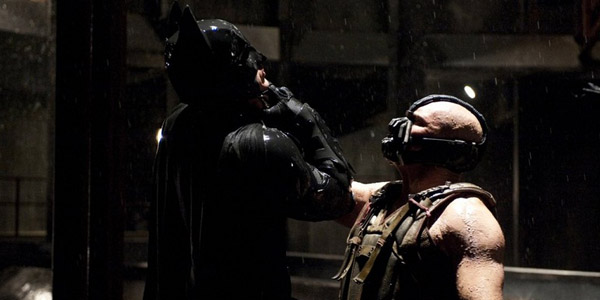
Danny Ocean might rely on a surprising amount of lucky breaks for his capers to be pulled off successfully, but that's nothing compared to every villain Batman faces in Christopher Nolan's Dark Knight trilogy. Take, for example, the bank robbery at the start of The Dark Knight: it requires absolutely expert timing for everything to work out properly, including every member of the team killing each other, and that school bus crashing through the wall just in time for The Joker to not get shot himself. How did the Clown Prince Of Crime know that would happen at exactly the right moment? He didn't. He probably should've just shot the guy. The League Of Shadows definitely win the prize for the most complex schemes which make no sense, however. For one thing, they're weirdly obsessed with Gotham City - and their plans to bring it down rarely hold any water. In Batman Begins they plan to turn every member of the city into murderers using a transmitter on a train, which is a terrible way to "tear a city apart" and also, why not just use the Scarecrow's fear gas? Then the Dark Knight Rises...right, what was Bane's plan even? And why did it involve ruining Wayne Enterprise's stock? And how would that even work, since he held the stock exchange up so clearly Wayne Enterprises didn't do all that dodgy stuff? Why not just kill Batman and get it over with at the start?

1. Law Abiding Citizen Is Peak Lunacy

Law Abiding Citizen is the absolute gold standard for complete batsh*t nonsense. The Dark Knight Rises didn't make a whole lot of sense, but people tend to overlook the plot holes in favour of the bluster, the action, and Tom Hardy's hilarious accent. It's impossible to look past the complex scheme in Law Abiding Citizen, because there's literally nothing else to the film. It's just watching Gerard Butler's absolutely insane plot to get revenge on the people who raped and murdered his wife and child, and the lawyer (Jamie Foxx) who let them go free. Seriously, it starts of nuts and gets worse from there. After killing the pair a decade later in particularly gruesome ways, Butler's Clyde Shelton surrenders to police custody, confident Foxx's prosecutor Nick Rice has nothing on him. From their Shelton reveals that he's sent a snuff video to Rice's kid, buried one of the murderer's lawyers alive, kills his cellmate with a steak bone, blows up the judge from the original case with a cell phone bomb, murders one of Rice's employees with a weaponised robot, and then it turns out Shelton owned a garage next to the prison he was in and regularly popped out to try on some disguises and use a large cache of weapons to murder people. When Charles Bronson gets upset about family members being killed, he just heads out onto the street and shoots criminals. He doesn't put together, like, a Rude Goldberg machine of death that he somehow operates from a jail cell and nobody cottons on. Never watch Law Abiding Citizen. Unless you want your brain to melt out of your head afterwards.

Contributor
Contributor

Tom Baker is the Comics Editor at WhatCulture! He's heard all the Doctor Who jokes, but not many about Randall and Hopkirk. He also blogs at http://communibearsilostate.wordpress.com/