You can think less of a film for a variety of reasons. Maybe it couldnt possibly live up to expectations. Maybe it had a glaring flaw. Maybe it was misunderstood. The point is that plenty of films fall short of our appointed standards of greatness some by a little, and some by a lot. But the worst thing you could possibly do is dismiss these strange, unexpected and the just plain flawed films as outright crock. To damn them would be to cut off your nose to spite your face needlessly destructive and dismissive. Dont get me wrong, this doesnt apply to all films there are still plenty which are objectively awful, but equally, there are some films that dont deserve the condemnation they receive. Its a shame when they do, because one little inconsistency may bury a really, really good film. So without further ado, heres a list of ten highly underrated films. They might demand open-mindedness, patience and a little bit of forgiveness at times, but none of them are objectively bad they just have something against them. Hell, some dont even have that, theyre just unappreciated. So lets shine a light on them. Keep in mind, a SPOILER WARNING is in effect.
10. Quantum of Solace

Im really looking forward to Skyfall. I think everyone is. Yet the way its been portrayed continues to trouble me. Its viewed as some sort of Bond reboot, taking the franchise out of the mire in which its found itself and the blame for this situation is being laid at the door of 007s last outing, Quantum of Solace. But was it really that bad? No, I dont think it was. In fact, I think it was rather good. It just couldnt have been more badly timed. The problem with Quantum was that it came directly after the unfathomably awesome Casino Royale. Royale had more or less dragged the franchise out of the grave dug for it by Die Another Day, through a combination of glamour, brutality and most of all novel plot structure. It subverted audience expectation; rather than centring on Bond stopping a megalomaniac bent on world domination, Royale was more focused on Bonds relationship with Vesper Lynd, herself a subversion of Bond formula insofar as she isnt just a sex object. Le Chiffres eventual death wasnt even the climax of the narrative. All these were unorthodox, bold and universally appreciated moves. So when Quantum reverted back to the old villain-centric formula, one could argue it was a bit of a let-down. Yet by virtue of Quantums status as a direct continuation rather than a reboot, it was hamstrung on the originality front from the get-go, having been set out as a revenge flick providing closure to the Vesper arc. Another bold twist wouldve possibly been dismissed as arbitrary. So Quantum was always judged next to this impossible benchmark. This is a shame because whats on offer here is mostly very good. A slightly mediocre villain and some stiff dialogue aside (the crew had to come up with the lines on set thanks to the Writers Guild strike) it rattled along at a good pace, opening with a tremendously brutal and thrilling car chase, and ending with some good character growth for 007, and was punctuated with an excellent rooftop chase in Siena and the introduction of a well-rounded Bond girl in Camille Montes. It also featured an absolutely fantastic scene; the Quantum meeting in the Austrian opera. These scenes marry the glamour and subterfuge of the Bond universe (who the hell stages a secret meeting at a performance of Tosca, if not Bond villains?) with a rousingly atmospheric gun-battle silent but for the opera music and culminates in a suitably badass moment when Bond drops a bodyguard off the roof, only for Dominic Greene to show his villain colours (which werent shown often enough) when he has the same bodyguard executed for looking at him. What Im saying is this: yes, Quantum of Solace isnt as good as Casino Royale. But taken by itself, its still worthy of praise an excellent character piece featuring some great action sequences. If nothing else, its certainly much better than the Die Another Day nadir, and nobody wants to go back to Bond kitesurfing. (While I was writing this article a whole analysis of Quantum of Solace came out on WhatCulture, and its really good. Look at it here http://whatculture.com/film/007-reasons-why-quantum-of-solace-is-a-great-bond-film.php)
9. Smokin' Aces

Ok, admittedly Smokin Aces has a stupid premise, featuring a plan cooked up by a mob boss to kill his rival (whos also a magician, naturally) by making multiple master assassins and nutcases converg e on his Vegas hotel. Aside from how impractical the whole thing is why not just pay one person to do it and not suffer the ultraviolent complications the film suffered from a completely arbitrary twist, making what couldve been an intriguing plot seem ridiculous by the time the final pay-off rolls around. The audience were left puzzled by the plot development, which stacked up to a convoluted mess. There was a deep-cover FBI agent, bail bondsmen, Jason Bateman in a tutu, and far too many killers to keep track of, never mind adequately characterise. But Id ask you to do something novel with Aces. Id ask you to take away the petty concerns of plot and characterisation, allowing you to drill down to the heart of what the film really is. Its simply an excuse for several people to shoot the crap out of each other over a series of protracted gun-battles, and it achieves this goal with aplomb. Its like a nine-year-old was asked to create his perfect film, and the ensuing result was infused with enough old Vegas glamour to make the Rat Pack come back to life. Its a potent combination of insanity, from characters to location. Theres neo-nazi chainsaw gangs, a blaxploitation duo of foxy ladies, a man who wears peoples faces, a Mexican nutcase and Ben Affleck being gunned down in one of the earlier reels of the film. Its an eclectic mix, lets put it like that. Its the sort of film you sit down to watch with a beer in your hand and your brain firmly in the off position. Its schlocky entertainment, there for a good time rather than to provoke thought while some films exist to make us question the universe and to deliver powerful messages, Aces is not one of these films. Its plot merely exists to allow the entire enterprise to jump off the deep-end and into balls-out entertainment. Yet it doesnt descend into travesty. As it was once said, Joe Carnahan appears to be like Michael Bay, if Michael Bay was good at his job. While theres a smorgasbord of OH S***! moments where people are stabbed, proliferated in lift-shafts, thrown across lobbies by sniper rifles, sat down on chainsaws and simply shot to bits, it's all preseneted with real verve, flair, and above all, self-knowing audacity. Its the film Michael Bay would create if he had the imagination and the lack of Ritalin supplies to do so, such is its ridiculous variety and brilliant lack of shame. So if I have to sit through a damp squib of an ending for such a tremendous middle act, then so be it. After all, theres only one film where I can watch Chris Pine murder the ever-loving shit out of Ben Affleck. Aces is a great bad film it understands what an action film can be if it just stops caring, and rushes headlong to that conclusion.
8. Hannibal

Hannibal is derided for two reasons. Reason one, its not Silence of the Lambs. Reason two, Hannibal Lecter seems to have changed a lot since we last met him. Hes stopped being a terrifying force of nature, and has instead become just really, really creepy. When we combine the perceived lack of sharpness in Lecters character with a tonal shift from the tense-ness of Silence, its easy to view Hannibal as a listless, bumbling film. Yet Id argue the tonal shift was necessary: Silence had already taken that horse as far as it could run, achieving the fabled lock-out at the Oscars (Best Director, Best Screenplay, Best Actor, Best Actress, Best Picture). To attempt to ape this again would inevitably mean a pale imitation, so a new direction was taken, featuring a more languid, artsy pace and a more avuncular Lecter. One could argue that this much slower burn gave the obligatory ultraviolent scenes more power Theres a lot to be said about a film which is just as at home explaining the intricacies of fine art as it is showing a brutal disembowelling. It also allows for a brilliant character study. While Silence mainly portrayed Lecter as a psychopathic murderer, the florid approach of Hannibal utterly negates this intensity to the point that the audience begins to properly warm to him as an anti-hero. Hes not a coiled spring any more, hes like that strange but likeable uncle, which makes us all the more horrified when he does commit an atrocity. For example, by the end of the film wed spent the run-time effectively cheering Lecter on against the heinously awful Mason Verger (an excellent Gary Oldman). But then he goes and takes off the top of Ray Liottas head, cooks his brain and feeds it back to him. Watching Lecter do this is made even more powerful due to the tone of the movie Silences terse approach leaves you in no doubt that he would commit these heinous acts if given the chance, but the follow-up lulled you into a false sense of security, making the more grotesque elements of Harris source material seem more shocking as a result. Such an approach was also a triumph of style for Ridley Scott while Silence only let us view Lecter as an animal in a cage, Hannibal brought the audience into his worldview, replete with its sense of gothic hedonism. Everything is given the lavish treatment, from the incredibly beautiful opera scene to the sickeningly macabre demise of Ray Liotta. Even the monster that is Mason Verger is housed in sufficiently luxurious surroundings. This aesthetic is well-suited to the underlying horror of proceedings, and makes Lecter into an even more compelling character. Rather than being the almost one-dimensional killer of Silence (although what a dimension it was), hes rounded out into something puzzling; hes an aesthete, a personable chap who just so happens to like eating people, albeit rude ones. Hes also strangely in love with Clarice Starling, to the point where he chops his own hand off rather than hers to escape. We see an unnervingly human side to the cannibal, and its impressive that the film manages to adequately convey both sides of the Lecter coin without descending into pastiche.
7. Abraham Lincoln Vampire Hunter

Abraham Lincoln Vampire Hunter took an absolute kicking at the critic screenings. It was seen as preposterous, and lumbered with a collection of boring characters. But to dismiss it on these fronts would be to miss the point entirely. Yes, Benjamin Walkers Lincoln was slightly boring , mired in solemnity and overtly serious. Yet that was the point; this Lincoln exists to be burdened. Not only is he dealing with the Civil War, the affairs of a nation in crisis and the freeing of the slaves, he also has to contend with some sort of vampire Armageddon. Inarguably, this would take its toll on a man, so a burdensome portrayal of the great man was probably a good idea, and Walker pulls this off well. The other strength to this approach was that it lent seriousness to the plot. At no point does anybody in the film turn around and wink at the camera, treating this as one big joke, and this turns what couldve been an exercise in high-camp preposterousness into a strangely realistic story, given the subject matter. Its often said that the best fiction is only one step removed from the truth, Vampire Hunter proves an excellent example of this. Though were given a preposterous premise vampires and an axe-wielding president the rest of the film wisely reins itself in, using real-life events as a jumping-off point for vampire lore. This proves to be an excellent move. By tethering even the most fantastical characters to a historical context, these fictitious individuals sudden find themselves saved from the realms of silliness. The films serious (axes-considered) depiction of Lincoln augments this authenticity, placing the film in dramatic, rather than spoof territory. These supernatural elements are viewed as an extension of history, and but for some awkward pot-shots at the South (it turns out everybodys ancestors south of the Mason-Dixon line were in league with evil vampires...) this synthesis of the fantastical and the realistic comes across rather well. The idea that a large community of vampires who wish to use slaves as an easily-accessible blood supply is a decent way to marry two disparate themes together, as well providing a good route into the necessary exposition for the vampire-hunting world. The short-cut of realism frees the film from long-winded vampire explanations, and grants Vampire Hunter a tauter structure. It allows it to play to its strengths; namely axe-fu, and plenty of it. Make no mistake, the action set-pieces are probably the highlight of the film, chock-full of Honest Abe engaging in wanton, hyperkinetic violence, twirling his trusty axe-gun around like a cheerleaders baton and demolishing all in his wake. Coupling the moves of Americas 16th president with some heart-stopping set-pieces the train finale especially provides excellent, take-your-breath-away entertainment it makes what couldve been a run-of-the-mill action film into a very good one, give or take an idiotic stampede chase scene. Vampire Hunter effectively plays on the other side of the table from Smokin Aces. Though theyre both fundamentally silly action films, Hunter uses a more po-faced approach than the revel-in-the-nonsense tone adopted by Aces, and though this is riskier, Timur Bekmambetovs film deals well with it. The historical and fantastical elements compliment each other well, proving to both contextualise the far-fetched axe fights with real-life stakes and as well as livening up the occasionally dry course of history with the absurdity of vampire violence. Its to the films great credit that neither loses track of the other.
6. Silent Hill

Most of the time, most game-to-film adaptations are complete pieces of shit. Sorry I didnt mince my words on that one, but it really is true. Between Uwe Boll and the Resident Evil franchise that just wont die, the moniker adapted from a hit videogame has really taken a pounding down the years. So when Silent Hill was announced, I was understandably apprehensive. After all, Silent Hill takes pride of place in the gaming pantheon as something made excellent entirely by setting the right mood one of dread, horror, fear and suspense. Also, it managed this only fleetingly; since the fourth incarnation the series took a nosedive, unable to re-capture its former glories. So what-the-hell chance did a film have of doing the same? Indeed, this was the question on everybodys lips, and to most, it didnt pull off this feat. They labelled it a confused, jumbled mess, with a nonsensical plot and constant overacting. You could see where these people were coming from most of them hadnt played the games or were only dimly aware of its existence. Much like a Harry Potter film, I think you really needed to come into this one with prior knowledge for it to work. But if you did come in with some prior information, by god, did this film get it right. It was an arthouse film in all the right, unpretentious ways; while there was a plot, this film was more about mood an overbearing sense of the horror and macabre constantly lingering in the background, informed by a series of disturbing events that either happen outright or are hinted at. Through clever use of sound (the noise the nurses make is creepy as all hell) and visuals the monsters, even though some (Pyramid Head) were clearly used as fan service, were terrifyingly well realised the film attained levels of atmospheric creepiness which the earlier games had in spades. Couple this with some disturbing adult themes such as cults and child-sacrifice and youve got a film which ably conveys the ideas of waking nightmare. This clearly wasnt a 15, even though it was labelled as such the child-burning sequence alone was disturbing enough to guarantee an 18, but because this film was so very subtle with how it scared you, I dont think the censoring board knew how to take it. The whole thing was amorphous, and put you ill-at-ease, chilling you rather than scaring you outright. But this subtlety as well as an admittedly bonkers ending also cost it some outsider viewers who werent well-versed in the canon and therefore didnt quite know what was going on. They dismissed the film instead, and thats a shame.
5. Funny People

The bulk of feeling toward Judd Apatows Funny People was that it was overtly long, and possessed an unnecessary final act which devolved into cliché. Superstar comedian George Simmonds fight with cancer was the primary focus of the film, and when it goes into remission one could argue the film came to a natural conclusion. Yet the film just continued, fleshing out what had up to then been a sub-plot George trying to reconcile with his unhappily married ex-fiancée, Laura. Up to that point, the cancer had served to create an excellent character study into the fragile and self-loathing psyche of a man who is deeply, deeply damaged, and it was an incredibly impressive performance. The melodrama threatened to derail a film which had so far been grounded in human realism. Its obvious really; when your main premise has been resolved and is as monolithic as cancer, it probably isnt wise to expand a sub-plot to further the main narrative. Everything which follows the c-bomb will appear cloying and hollow, as is the case here. However, what this arbitrary final act disguised is that up until the Eminem cameo, the film had actually been nothing short of excellent. It provided a wry, bittersweet look at the vacuous, empty life of a superstar comedian alienated from all others by his staggering success and self-destructive nature. And George Simmonds is brought excellently to life by one of cinemas rarities; a great Adam Sandler performance. His portrayal of a man consumed by equal parts narcissism and regret underpins the film and drives it on. It was a revelatory performance, adding Funny People to the (admittedly sparse) pantheon of great Adam Sandler films up there with Punch Drunk Love and Reign Over Me. Because hes not playing the caricature he so often falls back on, he actually has to exert himself to capture the nature of a character far more complex than a Longfellow Deeds, Larry or any other identikit role the comedian plays in his Happy Madison films. Admittedly, its not much of a stretch for Sandler hes essentially playing himself. And therein lay a further problem for some people. To many, it was too real. George Simmonds wasnt a caricature, he was a pastiche of Sandler, right down to the career trajectory. Both men were settling into a superstardom supported by mediocre films behold the utterly banal looking Re-do, clearly a satire of some of Sandlers ill-advised back catalogue, such as Click. This self-awareness made Funny People easy to criticise, because Sandlers performance here was two things; uniformly excellent yet utterly knowing of his previous shit performances. If in the wake of this film Sandler had graduated onto more dramatic fare, Funny People mightve been seen as some sort of paradigm shift in the dramatic life of Sandler. But as we all know, thats not what happened; he went back to identikit, low-brow comedies, releasing the utterly terrible Grown Ups in the wake of this and annoying many passionate film fans. This made them angry it was as if Sandlers filmography now represented a giant middle finger to his fans. Yet should we damn Funny People, just because of the context in which it finds itself? No, I dont think we should. FunnyPeople was a damn fine film, helped along by its self-awareness. It brutally skewers Sandlers own career to provide an excellent character study, and supplemented this with a bracingly realistic look at the cut-throat world of start-out stand-ups. This unflinching critique of the comedy world represents an enthralling premise and must be held to the films credit. So hiding underneath the overtly long run-time and the later vitriol over Sandler is an excellent film. I really do believe that if Funny People had shed its final act, Sandler mightve been nominated for an Oscar for his performance here. Then Grown Ups wouldve looked really stupid.
4. Sunshine
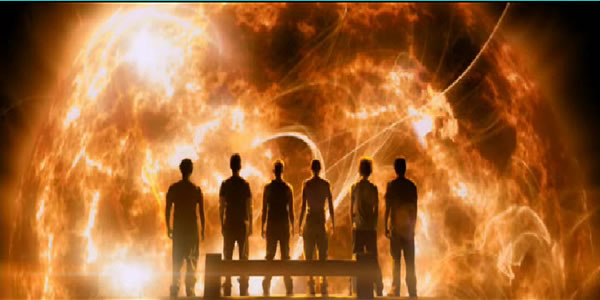 People often said Sunshine was good, but not great. So one could argue it might not fit into the ballpark of critical flop, but Id argue it does itwas received with a general meh upon release which it really didnt deserve, and wasnt even able to claw back its own budget. Written by frequent collaborator Alex Garland, its frequently held up as the weakest of the Danny Boyle canon, and is seen to some as something of a misfire amongst his other much-vaunted flicks. But I put it to you that there are two types of people in this world; people who love Sunshine, and people who are wrong. For my money, its one of the greatest, most harrowingly beautiful hard science fiction films ever, only really beaten out by the holy twosome; Solaris and 2001. Seriously, I cannot express to you how great this film is. Simply put, its bracingly realistic. This is something science fiction often forgets to do, or willingly chooses to sacrifice in order to create a more traditionally entertaining film. While theres nothing wrong with doing this I love Star Wars as much as the next guy its always very interesting to see a film which goes against the grain, choosing to show us the human cost of these innovations. Sunshine, much like Moon later, is set in the grey area between the present day and the distant future where the march of technology has yet to outstrip its potential to cause pain to humanity. Technology, at this point in time, isn't the cure-all it often is in later-set sci-fi. So while nearly anything is possible after all, at its basest level this is a film about dropping a bomb on the frickin sun its not without great cost. The mission itself is incredibly dangerous, the set-up of Icarus II oddly reminiscent of old Soviet cosmonaut ships essentialist, sparse and brutally designed, highlighting that there is little room for failure. The oppressive, oddly beautiful dankness of it all sits at odds with the clear, vibrant and comfortable approach to space-faring from other science fiction. It's fiction just one step removed from reality, brought expertly to life by Boyles usual penchant for visceral sensory overloads. Such direction creates an oppressive, unremittingly bleak tone. Its made clear early on that the chances of these guys succeeding (and indeed, surviving) are pretty slim Icarus II represents humanitys desperate last throw of the dice against the solar winter. Consequently, the majority of Sunshines plot is dominated by the psychological burden the crew are carrying, and how they react to its enormity. The whole enterprise is simply remorseless, from the magnitude of the task to the oppressiveness of the grungy industrial décor, as well as of course the overbearing presence of the sun itself, forever glaring down upon the crew. What makes this film great is the way these characters react to the unfolding threat; theyre resoundingly human, insofar as their responses accurately convey the spectrum of human emotion. Theyre not perfect; they crack under pressure and consider committing heinous crimes for the good of the mission. Yet theyre also capable of great nobility, even when completely psychologically unravelled by the task at hand. Boyle achieved this mentally-frayed effect by making the cast live together in cramped conditions, creating something which couldnt be easily faked. Despite its eventual descent into formulaic horror although the villainous Pinbackers motivations are an interesting comment on religion and mysticism Sunshine stands out amongst science fiction films as gloriously unique insofar it treats the audience with respect, refusing to hold its hand. Its allowed to be an utterly compelling tragedy by fully acknowledges just how terrible the situation is. It doesnt allow the cardinal sin of sci-fi; using future-tech as a deus ex machina to save these utterly damned characters they die because its necessary to the plot, and its impressive that the film doesnt pull any punches in this regard.
3. Meet Joe Black

Meet Joe Black is held back by a single thing its long. Bogglingly long. The glacial pace of the film, coupled with the restrictions of its genre a hybrid of rom-com and opulent costume drama alienated many, perhaps understandably so. Nobody seemed to be in a rush to do anything, least of all leading-man Brad Pitt, whose dead-pan delivery (at odds with his then-boyish good looks) served only to reconfirm what audiences suspected, that this was a boring film, a long hard slog rather than an enjoyable watch. Fair enough, theyre entitled to their opinion. However, I feel it can be argued that Meet Joe Black is one of the most misunderstood films in the history of Holywood. Its actually great, and its all down to the performances of the actors. When a film is mostly set around human drama (which but for its supernatural premise, Meet Joe Black is), the very least it requires is the characters it exposits be interesting enough to make us care about them. If not, things get very bad very quickly; without a sufficient in-road into whats unfolding on-screen, the audience can be left cold, held at a distance. So its to the casts great credit they manage to flesh out characters who couldve easily tumbled into dullness, parody or stereotype, and instead create engaging, varied characters. Pitt plays an incarnation of Death, having been possessed by the otherworldly force early on in possibly one of the most sudden (and retrospectively hilarious) death scenes ever put on film. What this represents is an incredibly brave curve-ball on behalf of the writers and director. When Pitt is first introduced, hes just a young, cocky guy, but the film immediately drops this façade to let him adopt the persona of Death. A hard task for any actor to pull off, never mind one as fresh-faced as Pitt was here. Hes even got surfer-blond hair, for gods sake. Yet both the actor and the script play this contrast to perfection. The idea of Death taking his place on Earth is supposed to be a jarring one, and its made even more so when its inhabiting something so inoffensive and benign as a young, classically good-looking guy. He just clearly doesnt look like death, and this makes his ethereal presence all the more strange. He simply contradicts himself, blending an impossible omniscience with child-like infatuation for Parrishs daughter, Susan. He doesnt seem to belong to this time, or any time. Its the right way to play such as character, making for an incredible performance. Pitts turn is equally matched by Anthony Hopkins as Elliot Parrish, a grounded newspaper magnate who emanates decency from every fibre of his being. As befitting his status as one of the greatest actors ever, Hopkins gives a performance positively brimming in pathos and charm, forlornly bonding with his family whilst staring down his on-coming end, which has decided to take human form and sit down to dinner with him. And has sex with his daughter. The actor imbues his portrayal with his glorious voice the scene where Death takes on Parrishs own form behind some frosted glass , and proceeds to rattle off an incredible speech in Hopkins dulcet tones is nothing short of spine-tingling, and worth the price of admission alone. If you havent seen it, I must insist you do its spell-binding, hair-on-end stuff. These performances, set against a backdrop of corporate intrigue and the moneyed socialite life, really stand out, even among such an excellent supporting cast featuring greats like Jeffrey Tambor and Marcia Gay Harden. It all culminates in an amazingly bittersweet conclusion, which thanks to the 178 minutes weve spent in the company of these characters, really packs emotional heft. Its only fair for a film which for much of its runtime heroically awkward sex scene aside is simply wonderful.
2. Lucky Number Slevin
When Slevin came out in 2007, it was greeted with scepticism. Critics lined up to take shots at it, branding it an incredibly stilted Pulp Fiction-lite. Its easy to see where they got this conclusion; Slevin has several things in common with Tarantinos masterpiece an array of larger-than-life characters, hyper-real urban locales, a non-linear narrative and whip-crack dialogue. This was too many things to some people, and anything which attempts to ape a masterpiece isnt going to come off well. But just because its not as good as Pulp Fiction, does this mean we should dismiss it out-of-hand? Hell no. Slevin nails the sense of easy cool which defined it's inspiration, and features sterling work from an all-star cast bringing an incredible script to life. Make no mistake, what some believe to be Slevins greatest flaw the script is actually one of its major strengths. The casts lines are razor-sharp, and complimented well by an unfolding whodunit narrative, all underpinned with a series of innovative slow reveals and twists. On top of this, all the actors are perfectly cast; Hartnett plays the vulnerable sweetness of the central character extremely well, making his gut-punching character arc all the better I defy you not to be shocked when he expertly pulls a gun on The Fairy, and then calmly converses with Bruce Willis Goodkat moments later. Were compelled to drop everything we thought we knew about the character he goes from being an unlucky goofball to a man with a real malevolent edge to him, and were all really shocked by it. Likewise, Willis seems perfectly cast for the inscrutable, perma-scowling Goodkat. Though he looks inert, his wry smile and sure-of-himself demeanour easily suggests he could kick a whole lot of ass, or even pick off two ex-Mossad operatives bursting through a wall. Furthermore, we need no reminder that when given reason to be, Morgan Freeman and Ben Kingsley can be psychotically formidable. It's quite a thing for Freeman to give you that world-famous warm smile before threatening to kill you if you go to the police. Similarly, ever since Kingsley f-bombed his way through the runtime of Sexy Beast, we've been aware he can be a pretty scary bloke. It's an excellent, well-rounded piece where all the characters are given room to breathe. Even Lucy Liu who runs the risk of being expendable to the plot comes across well. Her character couldve been utterly vacuous, simply the means by which Slevin is humanised as a character, but the script imbues her with enough quirks and dimension for the audience to be invested in her plight. I was certainly pleased when it turned out Goodkat hadn't killed her. So whilst some would argue that no normal human being would come out with some of the zingers Slevin and company use on a regular basis, but I dont particularly care. I wouldnt watch Shakespeare to see organic dialogue, I watch it to see what somebody could do with the English language if given the chance to just run with it. In a much less vaunted fashion, Slevin does this too, allowing distinctive, interesting characters the means by which to express themselves in various kick-ass ways. Yes, these people are too cool for school, but it doesnt make them any less entertaining.
1. The Matrix Reloaded Obviously, Im not going to say its better than the original because plainly, it isnt. The original Matrix was ground-breaking, with a thought-provoking premise and great action sequences to pad this out. The follow-up, The Matrix Reloaded, was welcomed with slightly less fanfare. There were a plethora of negative reactions, ranging from the simple meh of indifference to the full-on horror screaming forth from the fingers of keyboard warriors. It was bashed for numerous reasons; relying too heavily on action, possessing an unfathomable plot and most notably the Architect scene. Though its clumsily handled, I would argue that the end twist is actually a very good one. While the scenes with the incomprehensible Colonel Sanders look-a-like are impenetrable at first, if you re-watch it (as you should with all good films) the fast-talking one actually instigates a very philosophically clever rug-pull. His revelation that Zion and The One are actually part of the Matrix plan insofar as they represent solutions to a problem (how to deal with the minority who wont accept the programming) not only makes you question everything thats happened thus far (like good twists do) but comes completely out of nowhere (like great twists do). It forces you to re-evaluate Neo, Zion and reality itself in a much grander scope; are these humans aware of the real year? Do they know theyre technically doomed? Do they know their hopes, dreams and prophecies are all just part of the machines pre-determined plan? These are all interesting questions. This existentially troubling reveal is complimented well by a series of great action sequences. The Burly Brawl and the fight in the Merovingians chateau excellently convey just how god-like Neo has become, and the scene where a katana-wielding Morpheus duels the ghosting Twins smacks of innovation and imagination. This is all capped off by the absolutely brilliant freeway chase scene. While its essentially just an extremely long set-piece, Carrie Ann-Moss desperate escape on the back of a motorcycle must go down as one of the most ambitious and electrifying sequences committed to celluloid; epic in scope, seamlessly well planned and utterly thrilling to watch. With the smooth transition from set-piece to set-piece, the stakes and scope are ever-increasing what starts out as a simple chase scene soon morphs into a duel atop a moving truck, and eventually culminates with explosions such a process can only be admired. Can a film featuring something so insanely ambitious that they had to actually build a freeway to shoot it really be considered as a bad film? Truly, I dont think so. So while Matrix Revolutions is widely derided for dropping the ball (seriously, what the hell happened to all the kung fu?), we shouldnt attach the same stigma of failure to Reloaded. Its everything you hoped a sequel to The Matrix would be a hugely ambitious action film for the thinking man. It expands the mythos, keeps the trippy philosophical implications and adds a truckload of action. What else could you have wanted? Agree or (violently) disagree? As always, feel free to comment.
Edward Owen
Contributor
Durham University graduate and qualified sports journalist. Very good at sitting down and watching things. Can multi-task this with playing computer games. Football Manager addict who has taken Shrewsbury Town to the summit of the Premier League.
You can follow me at @Ed_OwenUK, if you like ramblings about Newcastle United and A Place in the Sun. If you don't, I don't know what I can do for you.
See more from
Edward