10 Essential Japanese Horror Movies You Must See Before You Die
 The Japanese really love their horror. And they love all different sorts of horror. From beautiful, creepy ghost stories like Kwaidan to ultra realistic torture porn like Grotesque and everything in between. There are some ultra perverted Japanese movies out there that mix explicit sex with gruesome violence, they are classics of a kind but they don't belong on the list here. Instead, I am concentrating on la creme de la creme of J Horror. In the list, you will see the true brilliance of J Horror from 1960 to the present day. Italy had a similar talent for producing horror, but unfortunately, that seems to have dwindled. J Horror is strong and vibrant and endlessly inventive. I have picked what I think is a good representation of the heights of Japanese horror cinema, but ultimately people's tastes are different so please add your favourites below.
10. Tetsuo: The Iron Man (1989)
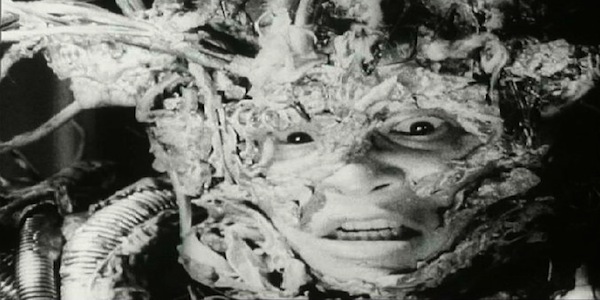 A strange man known only as the 'Metal Fetishist' has a compulsion to stick metal things in his body. After he discovers maggots wallowing happily in his rotten flesh, he runs outside and gets hit by a car. 'Salaryman' is the driver and although Metal Fetishist could possibly be dead, he drives on with his girlfriend. Later Salaryman notices he is slowly turning into metal. Oh yes, Metal Fetishist is alive and well and is the driving force for Salaryman to be turned into a living piece of scrap metal. The special effects are very well constructed and the black and white nature of the film is ideally suited to the material which is David Cronenberg /Lynch-esque and stylistically similar to Eraserhead. Of course the film showcases a dread of the possibilities of technology, a dread in which it starts to encroach upon the human body. The film paints a very dark picture of technology and its worst excesses, and is also very pessimistic about the future. Much sick mirth can be derived from scenes in which Salaryman has sex with his girlfriend and has a major metal boner right in the middle of shagging her. A very divisive film - in that you will either get it 100% or despise it completely.
9. Pulse (2001)
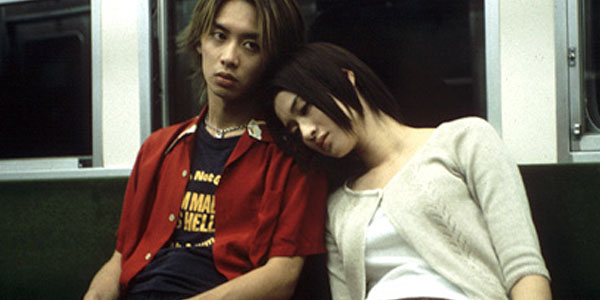 A rash of Japanese University students are committing suicide. It is connected to sinister goings on with the internet. Close friends and family of the dead students begin to die or just fade away. This quickly depopulates not just a busy Japanese city - but all the whole world. The few survivors left pass their time quietly in a ghost dominated post apocalyptic city. A couple of survivors twig on to the fact that the phenomenon was started by someone researching the afterlife online and they must race against time to stop the horror whilst battling with their own wills to live in an increasingly ghost haunted world. Pulse is eminently watchable and scary. It is yet another J Horror that is more of a ghost story - in the mode of Ringu, Ju on, Dark Water - and does not need splatter to carry it off. Compare it to the excellent but insanely gory Tokyo Gore Police, and you will find it a million miles away from that film's ethos. Everything in Pulse is restrained and measured. The horror - from a bunch of students killing themselves and finally ending in global apocalypse - is skilfully handled. The sorry fact of the high teenage suicide rate in Japan is touched upon, in addition to the disconnection of Japanese society - the alienation and loneliness of many people and how they reach out to the internet to try and make a connection. Having been made in 2001, a lot of the technology of the film seems a little dated but that should not deter the viewer from enjoying a solid J Horror effort from Kiyoshi Kurosawa.
8. Kwaidan (1964)
Horror portmanteau film from Japan that received an Academy award nomination for Best Foreign Film. The film concerns four stories. In the first story a man dumps his loyal but lowly wife in order to marry into money. However, his new wife turns out to be shallow, stupid and impatient - the complete reverse of his former loyal and devoted wife. He thus returns to his former wife and a nasty shock is in store for him. The second story 'The Woman of the Snow' depicts Yuki-onna a spectre who inhabits snowy planes. She intrudes upon two men sheltering in a hut during a snow storm. She kills one of the men and tells the other one she will never harm him unless he speaks to anyone about the events of the night. For years he keeps his word until he falls prey to a Yuki-onna look alike and tragedy ensues. 'Hoichi the Earless' is the story of Hoichi, a blind musician whose speciality is to sing a ballad about an old War. He goes to perform for a Royal audience but his loved ones think he is going to see ghosts. 'In a Cup of Tea' is the final tale concerning a writer who keeps seeing ghosts in his cup of tea. Kwaidan means ghost and that is what all of the four stories concern - ghosts. There is no gore or sensationalism in the film. It is not particularly scary but its Expressionist style makes the film very eerie and weird. It is intensely absorbing and beautiful to look at with its visual poetry. The story telling is masterful and the film is unusual for a portmanteau movie in that it doesn't have a central tale weaving everything together (in contrast to the Amicus series of Anthology movies such as Asylum). The film clocks in at 3 hours, and this has probably put a lot of people off watching the movie, however, the movie is so engrossing and of such beauty, time flies by and it is a treat for the eye.
7. Jigoku (1960)
 Shiro is a young university student who is engaged to a lovely young woman. He has, however, a sinister friend called Tamura who has a hold over him. Tamura holds incriminating evidence over others as well. One night he offers Shiro a lift home and he runs over a drunken Yakuza man. Shiro wants to report the accident but Tamura motors on. The man's mother witnesses the accident and notes down Tamura's licence plate number. She vows to take revenge. Realism now takes a flying leap through the window. Despite being the moral one, Shiro suffers the death of his girlfriend, terminal illness of his mother, his father's exposure as an adulterer. The Yakuza's mother and wife are on his back and Shiro seems to be surrounded by people who are guilty of causing the death of other people. And then there is a descent into hell which is very violent and gory. Jigoku is a unique film in that it doesn't seem to have a precursor in the Japanese film world. It just appeared out of the ether. Immensely influential in the world of J Horror, Jigoku set a template of nightmarish torturing, gore and sadism that the worst excesses of J Horror would seek to imitate. It's influence can be seen in Guinea Pig 2: Flower of Flesh and Blood and the recent Grotesque. But more importantly, the film kickstarted and set the sadistic violence that is characteristic of a lot of J Horror films - even mainstream J Horror. Jigoku was also the first film to feature a large amount of gore (I wonder if HG Lewis had a peak at this film before he made Blood Feast). It was an instant horror classic that was fiercely iconoclastic and must have really put the wind up audiences in 1960. The torture scenes and special effects are more cheesy to modern audiences than anything. The film has a groovy jazz score to offset all of the torture. Heck, this whole film is torture porn before the sub genre had ever been invented! An absolute must see for J Horror fans - this is where it all began.
6. Dark Water (2002)
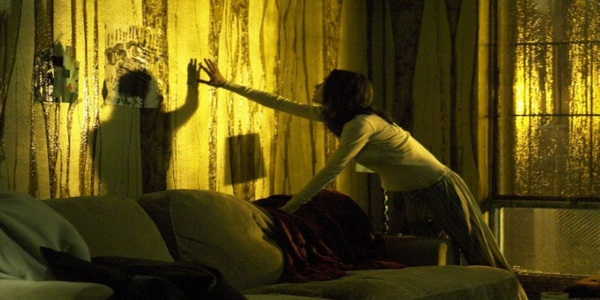 Yoshimi has just separated from her husband Kunio. It was an acrimonious split and they are fighting over custody of their little daughter Ikuko. Yoshimi and her daughter move into a run down apartment where the ceiling has a bad leak. The apartment above them is mysteriously locked and puddles of water are appearing everywhere. Yoshimi sees glimpses of a little girl in a yellow coat, but isn't sure if she is real. On top of that, Yoshimi is trying to juggle work with motherhood and matters are not helped by Ikuko's increasingly weird behaviour. Are Yoshimi's fears based on cold reality or is there a more supernatural answer to them? A spooky and tragic film, Dark Water is another low key J Horror movie which carefully builds up characterisation and plot before the final horrible denouement. Like Ringu, there is no blood or gore in the movie - it is a ghost story and also a psychological horror. The acting in the film is solid and really sells the atmosphere of dread and the dialogue in the movie is vey believable. The little girl who plays Ikuko is alarmingly good in her role which is an extremely difficult one to pull off. The director Hideo Nakata uses camera tricks and manipulates the soundtrack (for example, long times in which there is nothing but silence) to build an eerie and disturbing movie. Dark Water doesn't really put much of a foot wrong.
5. Ringu (The Ring)
 Another film like Ju on, which does not rely on blood and guts to elicit fear in the viewer, is the terrifying Ringu. A VHS cassette, which is said to be cursed, is doing the rounds among Japanese teenagers and they are popping up dead - usually with terrible fear on their faces. Reiko, a journalist, does a bit of snooping and comes across the video and watches it. Afterwards she gets a phone call signifying that she has a week to live. Reiko turns to Ryuji, her ex husband for help in solving the mystery. Their little son gets a hold of the tape and watches it which makes solving the riddle more frantic. They trace the video to the island of Izu Oshima and with time running out, they go there and learn that the tape was made psionically by a dead girl called Sadako. She was the daughter of Shizuko, a famous psychic who committed suicide due to being called a fake. Sadako's powers outstripped her mother's and she was thrown down a well by her father. The video is Sadako's revenge. Reiko and Ryuji find the well and recover Sadako's corpse. Reiko survives the curse and they think it is the end of the horror. Ryuji is at home the next day when he is amazed to see the TV turn itself on and Sadako crawl out of the TV - literally scaring him to death. Ryuji had been in the process of calling Reiko who hears his terrible last moments. She realises that she survived because she copied the tape and passed it on to Ryuji. This is the key to survival - passing a copy on to someone else. Reiko has to save her son before it is too late. The image of Sadako coming out of the television to frighten Ryuji has now become an iconic scene in J Horror circles, much parodied, the scene still retains its power to frighten viewers. Ringu has a terrific atmosphere of menace the whole way through. Much of it is suggestive horror - for example, we don't see how people die, but we see their faces contorted into absolute panic and terror in death. The VHS cassette is deeply unnerving with strange images that we must attempt to decipher alongside the protagonists. The film is tight and well paced and it invokes in the viewer a dread of what is going to happen next. The grainy, almost documentary, feel of the film makes it even more frightening as well as the revelation we come to at the end - Sadako is an implacable enemy who defies attempts to tame her. The film may alienate gore hounds who like splatter in their horror and a gory death every five minutes. However, Ringu is infinitely more terrifying than most gore movies and is worth watching, even if it is only to catch the notorious end. Sleepless nights beckon!
4. Suicide Circle (2002)
 54 Japanese schoolgirls commit mass suicide by throwing themselves under a train. A further group of Japanese students fling themselves off the roof of their school. There is soon an epidemic of suicides sweeping the nation as the police hurry to find what the source behind the craze is. I will say that out of all of the films in the list, Suicide Circle terrified me the most, especially the scene on top of the roof where the teenage school pupils talk each other into suicide. They have no genuine motive for committing suicide, they aren't depressed but the power of conformity urges them to take the leap. There is a confusing attitude in Japan to suicide - on the one hand it is a taboo, and on the other hand it is seen as something honourable. There had been 33,000 teenage suicides in Japan the year before this film was made. There is a cult of youth In Japan where the young are treated venerably. Like Pulse, Suicide Circle poses a similar answer to modern angst in being 'connected' to yourself, the environment you are in and the people around you. It is a vast tale of alienation - meaningless suicides brought about for nothing. Maybe if people were a bit more tender in their relations with one another, life wouldn't be so cheap and extinguished so easily with such glee abandon. The film is full of references and symbols, everything is very deliberate - like the girl band called Dessart which is sometimes spelled Dessert or Desert. Everything is imbued with meaning in the film and it is a horror movie that will disturb, frighten and unsettle you. If you haven't caught this slice of J Horror, I give it the highest recommendation possible.
3. Audition (1999)
 Shigeharu Aoyama is a wealthy widower whose son Shigehiko wants him to find happiness with a new woman. He teams up with Yasuhisa Yoshikawa, a film producer, who gets women to 'audition' for the role of Shigeharu's wife. Shigeharu takes a fancy to Asami but Yoshikawa has a bad feeling about her, being unable to collect references. Nonetheless Shigeharu pursues Asami despite the fact that the viewer is increasingly aware that Asami is a nutcase. She lives in an empty apartment with a sinister looking sack. She sits immobile for four days next to the phone waiting for Shigeharu to get in touch. They date for a while and when they get down to business, Shigeharu notices cuts on her body and she tells him she was abused as a child. He declares undying love for her. Asami goes missing. On the hunt for her, Shigeharu finds out all of her bosses met terrible ends. Asami goes to Shigeharu's place and spikes his drink. Via a flashback, we see a mutilated man crawling out of the sack in Asami's apartment. She barfs into a bowl and he hungrily eats it. Now she has Shigeharu at her mercy and some torture with needles and limb removal is on her agenda.. Possibly the most warped female character in the whole of J Horror, Asami is a true cold blooded, sadistic murderess and torturer. The scenes of limb removal are so appalling, even the staunchest J Horror fan will be squirming on their sofas while watching the atrocity. Many directors including Hostel director Eli Roth have testified to the film's influence upon their work and also to the nerve shredding effect the torture scenes had on them. A critically well regarded film, widely touted as Takashi Miike's finest movie, Audition makes you feel very sorry for Shigeharu. He is a well drawn character who is lonely and wants love but he should have insisted upon references! Not as violent as Miike's other pieces Ichi the Killer or Visitor Q, the gore is relatively scant in Audition, but when it gets underway, by golly does it make an impact. The whole way through the film, we are privy to information about Asami that Shigeharu doesn't have which creates narrative tension and makes the ending very scary because we have been speculating all along what misfortune Asami is going to give to Shigeharu. And it is every bit as bad as we feared, even more so...
2. Onibaba (1964)
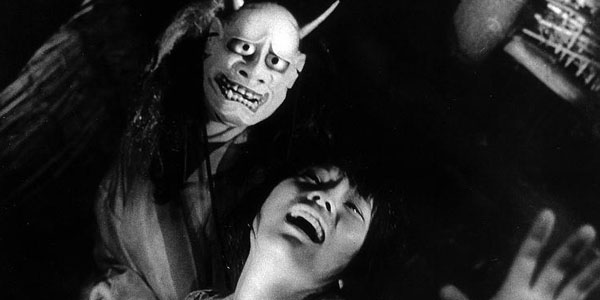 The setting is 14th century Japan where feudal war rages. The film highlights the suffering of the people in Japan at this time and the lengths her people had to go to in order to survive. The wife and mother of a soldier who was forcefully inducted into the army are forced into attacking worn out Samurai. They take their possessions and sell them to a greedy merchant. The mother comes to distrust the daughter in law when she shacks up with a dissenter. She takes to wearing a Samurai's mask in order to break up her daughter in law's relationship. She frightens her daughter in law but finds that after it has rained, she cannot remove the mask. She pleads with the young woman to help her remove the mask. When it is removed the older woman's face is covered in sores and her daughter in law freaks out, thinking she is a demon. She runs away and the mother in law runs after her, crying that she isn't a demon. Both disturbing and entertaining at the same time, Onibaba is a classic slice of J Horror which still retains its powers to scare and menace 50 years after its birth. It is a story of lust, sexual tension and greed which ends in bitterness and revenge through the mechanism of a Samurai's mask. Beautifully shot on an atmospheric landscape, the movie is a poetic horror film with strong psychological themes being played out - and it is from the relationships in the movie that we derive the most tension - the two sexually unfulfilled, lonely women and the man who comes between them. The film is minimalist in the amount of characters in the movie, but it is lush with symbolism and uses black and white stock to its fullest effect. Strictly adult fare, the film is nevertheless, never gratuitous or explicit, and it manages to evoke horror in the viewer purely through our imagination and the vivid hardships of feudal Japan. Featuring a fair amount of nudity for those of you who like the raunch factor, Onibaba is not just a horror masterpiece - it is an all round cinematic masterpiece.