10 Essential Tips On Directing Your First Short Film
 Everybody has had the thought of directing a film at one point or another. Whether you just saw a great movie and you wanted to get a slice of that glory or you just watched a terrible movie and thought you could do much better. You must admit that the idea at least crossed your mind at some point. While there is no one route to becoming a director, the most commonly treaded path is that of the short film. Many of your favorite directors almost certainly started their careers making little short films, many of which you may be able to find online. Short films allow you to experience production, think about your craft, find your voice and get an understanding of the technical aspects of putting a movie together in a small condensed dose. Once you have a short film, you aren't just talking on the promise that you will be great at directing, you actually have evidence. It gives you a chance to be seen and judged as you can enter your film in one of the MANY short film festivals around the world. While I am no Scorsese, I do have about 6 years worth of experience working in and around movies, having directed two shorts myself, produced some and written and script doctored many more. I also spent three years o my life dedicated entirely to film production at university, so while I can't tell you "how to make it big" (I am still trying to figure that out), I can perhaps give you some incite into how to direct a short film and about getting a project off the ground.
10. Do Some Acting
 This might sound terrifying to many of you. You thought you were getting behind the camera to stay out of the spotlight and let someone more attractive and less nervous do all that 'acting' business. But as someone who got into filmmaking having once wanting to be an actor, it is really invaluable experience. One of, if not the most important things you will do as a director is interact with actors. It is your job to get compelling performances from you them. Seeing as you may be working with amateur actors for your first short, you will find that incredibly difficult, maybe even impossible. But having an understanding of the craft and how these strange creatures called actors will at least give you a fighting chance. Sure you could read some literature on Bertolt Brecht and Constantin Stanislavski to get an idea about the theory of acting but there really is no experience quite like getting up on stage and learning for yourself. You will quickly learn phrases like, "give me more" or "you should try that, but happier" are damn near useless to an actor. Good performances comes from emotional association and being able to talk to an actor so they make choices from emotional memory, as opposed to simple ideas like 'happy' or 'sad', will greatly improve the performance you get from your leading man or woman.
9. Always Be Confident, Even When You Are Not
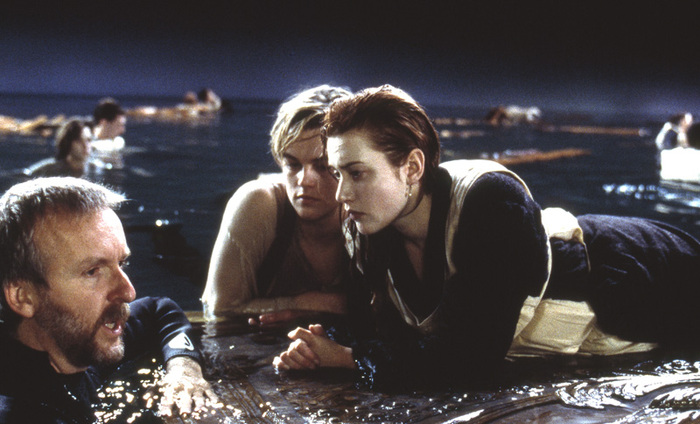 Confidence is one of the most important aspects of any director. Confidence in your crew, confidence in your actors, confidence in your ability and confidence in your ideas is of the utmost importance. You are going to have to inspire many with your vision along the way and if you show a sign that you have doubt about your abilities, you will find it a struggle to get them have confidence in your film. Of course, you are a director wanting to do your first short film. You have no idea what you are doing. Having directed two myself, I don't either. You will undoubtedly be a little aprehensive about your abilities and some of your ideas as every artist does. But the trick is not to show it. Inspire people to want to work with you, make them think that their time is going to be worth giving to the film. Many of them will be working for free on your first short so let them know that this is an opportunity that they really shouldn't miss. I have always found the answer to a lack of confidence or nervousness is just to do it. Jump into the deep end. Be realistic but aspire to big things. You will be surprised how much you can figure out on the job as long as you go in prepared and the belief that you can. If the people you have hired to be around you believe in your abilities, your job will be made incredibly easy.
8. Do As Much Planning As Possible
 This seems obvious but it is something so many new directors don't do, which is really a shame because it is the deciding factor between a good and a bad director. Too many times have I seen people say that they will, 'figure it out on set' and they will 'feel it out on the day'. Funnily enough, this is the failing of most every writer starting out too. Figuring it out as you go along is absolutely fine but it is only informed by the research you have done before hand. It informs everything. Inevitably on set, everything you have written down and planned for will go out of the window. But you need to have done the leg work before hand to inform the new ideas you will inform. Getting your shot lists, storyboards, floor plans, writing your notes on your shooting script, figuring out your set ups are all things that need to be done before you set foot on set. Here is an example for you. Once I drove to a different city to shoot in a rather lavish church. It wasn't until we got there that I realised I had left half the equipment back at my house. I luckily had a microphone, a tripod and a camera, but my tracking shots, lens changes and my lighting set ups all had to be dropped at a moments notice. Everything need to be reevaluated incredibly quickly to stay on schedule. I pulled through and we got what we needed but it was only possible because I had devised a shot list before hand, knew the script as well as the character motivations inside out and knew what I wanted to convey due to all the time I had spent planning before hand. So know everything you need to know about a scene, how it has been achieved in the past, how you are going to achieve it and devise a precise plan for the day. It could and probably will all go out the window the second you step onto set but it is integral that it was there to begin with.
7. Listen
 It is ironic that for a job that is based around being heard, one of the keys to its success is to listen. You all know the stereotype of the shouty director who is aggressive, tempremental and difficult to work with. I have only seen one director like that once before and let me tell you, it was a disaster. That is the job of the 1st AD, don't take it away from them. While before I said have confidence in your idea, never let that lead to arrogance because that in turn leads to ignorance. I know we like to think of films with one authority such as Martin Scorsese, Christopher Nolan or Steven Spielberg but the truth is that their films are the artistic expressons of hundreds of people. Concept artists, directors of photography, make up artists, costume designers and set designers all have incredibly influential roles over how a film will end up. These people are experts in their field and will generally know more about their specialty than you or even a hollywood director. Yes, it is your job to have a vision but your success will be dependent on the ideas of others. It is so important to listen to everything everyone has to say and actually consider their points up against your vision. If an idea is better than yours, be happy to admit it and implement it. Your short film will be much better for it.
6. Spend Time Visualising Your Short Film
If a director's job can be boiled down to a small job description it would be "to visualise a screenplay". The director is the person who can see the finished film in its entirety in their mind's eye before even stepping on set. This doesn't happen automatically. While you may have some strong ideas about what key moments might look like, it takes serious work to figure out what every scene is going to contain. This is hard to give solid tips on as this is really a personal exploration for the director that wil change from person to person. So all I can do is give you some incite into some of the things I do. For me a story is most satisfying when it communicates an idea, feeling or message concisely. Rigouressly reading the script and figuring out why you were drawn to it and what its true meaning is to you should be one of the first things you do. The meaning will act as a mould that will inform all your decisions in the film. After that you need to get ideas down to paper by writing up a shot list, doing a storyboard, doing floor plans etc. These will allow you justify your choices and also consider your scenes beat for beat. After that? You are on your own. You may like to do it on your own or by talking to your crew, in a dark room or on a walk through a park, while you are travelling or while you have carved out some time dedicated to it specifically. This is your process and as a new director, the time you spend forming ideas will be important to your success.5. Get A Great Producer
 When people decide they want to be a director, I find that they can have only a loose idea of what a director does. While it is true there is no one way to approach or do the job, many people simply get the job of the director and the producer mixed up. Allow me to clean it up for you. A producer is the ones that secure the locations, they are the ones that figure out how your movie can be made, they are the ones that schedule your shoot, they are the ones who get everyone to set, they are the ones that do all the paperwork and make sure everything is in order. And most of all, the producer is your boss. You answer to them for everything and they can tell you no when ever they want. They are your best friend and your greatest enemy, and they are completely necessary. I don't know where the myth that a director is the most powerful person on set started, but it is totally false. If a producer tells you can't do something, you can't do something. I like to see the relationship as similar to that of an architect and a building company. If the building company doesn't have the resources to make the beautifully expressive and artistic building the architect wants, there is nothing the architect can do about it. They must go back to the drawing board and make the idea work within the realms of reality. If you are both good at your job, you will likely butt heads with your producer multiple times in preproduction but they will ensure that the movie gets made and that you are on track. I am telling you as a director who has taken on producing responsibillities of two short films, save yourself the pain. It will inevitably take you away from the doing your job as a director. You should be spending your time visualising and discussing your film with your actors crew. That can be hard to do when you are writing up schedules, confirming locations and making sure there will be enough food for everyone.
4. Spend Time Doing Other Jobs On Film Sets
 This is an utterly invaluable piece of advice. A director has to make choices on every aspect of what goes into a shot and that is a culmination of many different departments. In order to know how to realise your vision, it will be important that you know what will affect it and how. This can only come from an understanding of each of these deaprtments. Do you need tundra gels on the lights? Are you going to use fluorescent lighting or red heads? Are you recording in mono or stereo? Will this 50mm lens really convey the emotion of the scene or is the 20mm better? These are all things you will have to consider and you need to be able to speak the language to be able to communicate your ideas. In my six years of working in film, I have worked in almost all departments at some point and it is all invaluable experience. Here is a list of some of the jobs I hve done in the past: director, producer, co-producer, writer, editor, 1st assistant director, second unit director, lighting technician, boom op, clapper, production assistant, sound designer, cable basher, continuity and the much maligned runner. When trying to put together your short film, knowing how to do as many jobs as possible will be invaluable because you may find that you are picking up a lot of slack. On my sci-fi short I ended up as the director, producer, writer, editor and sound designer. A nightmare situation that you never want to find yourself in but the only reason that film got made was because I had a passing knowledge at how to do it all. You don't need to be fluent in the terminology and you don't need to be an expert. I have always been a little slow to grasp every concept and the language of lenses. That is fine. That is the job of the person you or your producer should have hired. But you do need to be able to talk to them and understand their points and how they are trying to help you.
3. Engage In A Film Community
 I miss being in education. I miss it because once it is gone, you begin to feel you instinct and knowledge dulling. I spent three years engaged in the world of filmmaking when I was at university. I spent my days surrounded by lecturer's and other aspiring talent and it was one of the best things that ever happened to me as a writer and director. Being part of and engaging in a community of film makers or critics will keep you sharp and keep you talking about film which you need to understand if you want to be a good director. For me, this came in the form of a university course. For you, this could come in entirely different forms. Go online, find people who meet up and talk about film, start writing about film for a blog, join forums or join a film club. If possible I would encourage you to meet up with people and talk about it rather than just spamming forums about your ideas. Your retention of discussion will be sharper and your confidence in what your saying will grow. Being part of a group of people who are talking about film constantly will allow you form your own opinions, find your voice and eventually push you abilities. Being challenged by them is important to keep you motivated through the preproduction, production and the absolute slog that is postproduction. By creating films around other people who make or love films will keep you accountable to finish what you have started. Living and breathing the practice you want to start doing will inevitably make you better at it. That will be so much easier if you have people around you who are doing the same thing.
2. Experience Life
"Write what you know" is always thrown around by writers. "Direct what you know" is just as valid a statement for directors. Of course, this isn't literall. If you are directing a film about a guy experiencing time travel for the first time, you obviously won't 'know' that. However, what you hopefully will know are the ideas of loss, confusion, wonder and joy that your character will go through during that event. It is your job to 'know' those emotions. If you have not felt them, it will be mighty hard to convey them. If you want to go down the route of film school, it is important for you to know that some schools won't even considering accepting applicants until they are 25 or so. I know many incredible directors who haven't made the cut above someone who has never directed before merely because they haven't 'experienced' life enough. If as a director you can only imagine what feelings your characters are going through, your audience aren't going to believe in them. You will likely be taking your inspiration from another film dealing with similar themes. Often as an audience we exclaim that empathy with characters are the most important thing, and it is! You don't want that to be second hand in your short film. There is wisdom in the advice to "go out and get your heart broken." If you have never truly experienced that, why as an audience member should I believe your character is going through it?1. Go Make Your Movie
 This is the most valuable piece of advice I can give you. It is bleeding obvious, but it is the point where most people fall down. While making a film is an incredibly draining and time consuming process, it easier now than ever to go out an make a short film that looks great. DSLR cameras, consumer editing packages and cheap VFX have made filmmaking incredibly accessible to anyone who is willing to put the effort in. For merely 500 pounds, I made a 15 minutes, VFX heavy, socio-political action sci-fi that alluded to the alien intervention with human affairs. 500 pounds sounds like a lot but most short films aren't trying to be that ambitious and take place in one location. Many short films are made for absolutely free. You would be surprised how easy it is to find actors, sort out a location and find equipment. I find many people convince themselves that the idea of filmmaking is unattainable to them because there is some sort of secret test they have to pass. It is not true. The only thing stopping you going out there and making your movie is you. So go ahead, make an enquiry today. Call a location or post an advert on a casting website. Consider it the first step into being a film director.