10 Film Biopics That Totally Lied To Us
 Telling the story of real-world individuals through the medium of film, biopics and historical films have been a cinematic staple for a number of years now. They are typically highly regarded by critics, and a number of actors and actresses have recently secured Academy Award wins for their portrayals of figures such as Abraham Lincoln (Daniel Day Lewis), Harvey Milk (Sean Penn), Edith Piaf (Marion Cotillard), King George VI (Colin Firth), Margaret Thatcher (Meryl Streep) and Ray Charles (Jamie Foxx). Many films in the genre use a degree of artistic license to tell their story, usually by omitting minor events in the individuals life, creating composites of similar supporting characters or by making chronological alterations. In some films, these changes are minor and barely noticeable but other films, such as the ten featured on this list, feature more dramatic deviations from actual events. This is not necessarily a bad thing, as tinkering with reality often allows for a more cohesive, entertaining and enjoyable film. For the sake of clarity, however, this piece looks to separate fact from fiction. Films that merely use real people in a predominantly fictional story, such as The Untouchables, The Last King Of Scotland or The Social Network have been excluded, lest the line between a biopic/historical film and a straight-up drama be blurred. So without further ado, and in alphabetical order
10. A Beautiful Mind (Ridley Scott, 2001)
 The Subject John Nash, a Noble laureate in the field of economics. The Story (According To The Film) Nash (Russell Crowe) is a gifted mathematician who becomes involved with The Pentagon after making a name for himself as both a student at Princeton and a teacher at the Massachusetts Institute Of Technology (MIT), meeting and marrying a student named Alicia in the process. Later diagnosed with schizophrenia, it is revealed that Nash has been suffering from both visual and auditory hallucinations, and that both his Department of Defence handler and former roommate/best friend are fictitious creations of his own mind. Frustrated by side effects, he eventually stops taking the medication that he has been prescribed for his condition and with the support of his wife eventually learns to deal with his hallucinations in other ways, eventually earning the right to teach once again. The Lies There are many, including the following: Nash is shown to have both visual and auditory hallucinations in the film, whilst in real life, he only suffered from the latter. Nash is shown to have the support of his wife throughout his life until his Nobel prize win in 1994, when they actually divorced in 1963. A throwaway line towards the end of the film implies that Nash is taking newer medications for his condition, when in reality he stopped taking any and all types of medication in 1970. The film completely ignores the fact that Nash had a son born out of wedlock in the early 1950s, refusing to marry the mother of the child due to his belief that she was beneath him, something that wouldve conferred a great stigma on her at the time.
9. American Gangster (Ridley Scott, 2007)
 The Subject Frank Lucas, a Harlem crime kingpin, and Richie Roberts, the detective and later defensive attorney intent on bringing him down. The Story (According To The Film) Former limo driver Frank Lucas (Denzel Washington) begins to take control of the Harlem criminal underworld, masterminding the importation of high quality Heroin from Thailand to sell on the streets at a lower price than the inferior product sold by his competitors. He quickly establishes a monopoly and becomes rich and powerful in the process, building up a vast property and nightclub empire. Richie Roberts (Russell Crowe) is one of few honest cops in his precinct and seeks to bring down drug suppliers following the death of his addicted partner. Contending with corrupt officers, he becomes aware of Lucas operation and eventually takes it down. After failing to bribe Roberts whilst in custody, Lucas instead decides to provide evidence against corrupt officers and federal agents, leading to the arrests of 75% of New Yorks DEA operatives. Roberts opts to quit policing and become a defence lawyer, taking on Lucas as his first client. The Lies The film portrays Lucas in a somewhat sympathetic light, glossing over the fact that he was described in reality as being illiterate, vicious, violent, and everything Denzel Washington was not by one of the judges involved in bringing him to justice. Other falsehoods featured in the film include: The implication that Lucas collaboration was responsible for the indictment of several corrupt DEA agents, something that is wholly inaccurate. The showcasing of Lucas as the right-hand man of 60s gangster Bumpy Johnson and as the mastermind of the method used by his organisation to smuggle heroin into the States, both of which are disputed by one of his biographers. The portrayal of Roberts as being embroiled in a child custody battle, when he in fact had no children at the time.
8. Argo (Ben Affleck, 2012)
 The Subject Tony Mendez, a CIA exfiltration specialist tasked with the recovery of six diplomats hiding in Tehran during the hostage crisis of 1979-80. The Story (According To The Film) Following the Iranian revolution, militants storm the American embassy in Tehran, taking all of the staff within it as hostages. Six, however, escape to the home of Canadian ambassador Ken Taylor. CIA operative Tony Mendez (Ben Affleck) is tasked with bringing the six home safely, as if found by the Iranians they will be executed as spies. He formulates a plan that involves a fictional movie, Argo, pre-production for which involves the scouting of locations in the Middle East, including Iran. He seeks to take the six diplomats out of the country disguised as the films crew. Mendez enters Tehran and meets with the six, who are reluctant to go ahead with his plan. He is told to cancel the operation in favour of a military rescue of the six, but ignores the order to successfully carry out his own operation and get the six to safety, barely managing to do so following a number of close shaves at the airport. The Lies Though its undoubtedly one of the greatest films of recent years and is fully deserving of its Oscar glory, Argo features a vast number of deviations from reality, including the following: Adding a number of scenes for dramatic effect, which imply that the six diplomats were in more danger than they actually were. These include both their trip to the bazaar, in which a confrontation with a merchant ensues, and the entire airport finale, which actually went off without a hitch. Glossing over the roles of both the British and New Zealand embassies, who are both stated to have turned down the diplomats, when in reality they provided assistance to the Canadians who housed them. Completely omitting John Sheardown, a Canadian official as important to the hiding of the diplomats as Ambassador Ken Taylor, from the film. Overstating the CIA involvement in rescuing the diplomats, when the bulk of the rescue was down to the efforts of the Canadian government. Jimmy Carter, the American president at the time of the hostage crisis, criticised the film for this.
7. Braveheart (Mel Gibson, 1995)
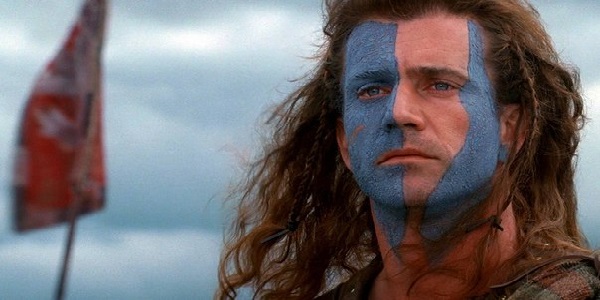 The Subject William Wallace, a Scottish warrior who leads many of his countrymen during the Scottish Wars For Independence. The Story (According To The Film) Following the death of its King, Scotland is invaded by the English King Edward I. During the invasion, Wallace (Mel Gibson) witnesses the death of his father and brother. He marries a girl, but witnesses her being killed after he defends her from being raped by an English soldier. Wallace and several villagers then vengefully strike back at the English, before his rebellions against English rule grow larger and more effective, including a sacking of the city of York. He also attempts to solicit the support of Robert The Bruce, a contender for the Scottish crown, whose father wishes to submit to the English in favour of having his son become a puppet ruler. Edward sends Isabella of France, the wife of his son, to negotiate with Wallace and the two begin a tryst. Several noblemen then betray Wallace as the war continues, including Robert The Bruce, who is remorseful and later changes sides once more. His father and several other noblemen, however, arrange for the capture of Wallace, who is executed in London. The Lies None of us were around in the 13th century, so its difficult to debate specific details about William Wallaces life. There are, however, a number of things included in the film that historians unanimously disagree with, including: The depiction of Scottish characters wearing kilts, a tradition they didnt begin until several hundred years after the timeline of the film. The inclusion of a relationship between Wallace and Isabella of France, who is shown as a grown woman. In reality, Isabella was just three at the time of Wallaces death. The betrayal of Wallace by Robert The Bruce, who despite changing sides at the beginning of the wars is remembered as fondly in Scotland as Wallace himself.
6. Catch Me If You Can (Steven Spielberg, 2002)
 The Subject Frank Abagnale, a conman who is pursued by the FBI due to his skilful involvement with check fraud. The Story (According To The Film) After his parents divorce, Frank Abagnale Jr. (Leonardo DiCaprio) runs away from home and begins resorting to confidence scams in order to acquire money. His schemes become increasingly elaborate and most notably he poses as an airline pilot on several occasions. After he begins to make a significant amount of money from forging airline payroll checks, Frank is pursued by FBI agent Carl Hanratty. The two have several close encounters as Frank moves around the country, successfully posing as both a doctor and a lawyer as he continuously tries to impress his father, a conman himself. Following Franks engagement to a girl, Carl and the FBI catch up to him at his engagement party, but he manages to escape to Europe, albeit without his fiancée, who learns the truth about his lifestyle. Several months later, Carl captures Frank in France and brings him to justice. He is imprisoned, but soon becomes an employee of the FBI, working with Carl to combat check fraud. The Lies Abagnale had no involvement with the film, and only met with the writer who wrote the book that served as the films source four times. As a result, aspects of the film that are fictional include the following: The continued interactions between Frank and his father. After leaving home in real life, Frank never saw his father again, but the film shows them meeting on a number of occasions as Frank attempts to impress the man. The implication that Carl Hanratty was almost solely responsible for capturing Frank. In reality, there is no Carl and his character is a composite of several agents, most notably a man named Joe Shea (which was the characters original name in the script). The depiction of Abagnale on the list of the FBIs Top 10 Most Wanted criminals, a list that is reserved for violent individuals and terrorists, not nonviolent white-collar criminals such as Frank.
5. The Doors (Oliver Stone, 1991)
 The Subject Jim Morrison, lead singer of rock band The Doors. The Story (According To The Film) Jim Morrison (Val Kilmer), attends film school at the University Of California, Los Angeles (UCLA) and begins to integrate with the local Venice Beach culture. He forms a band with a group of other individuals, calling themselves The Doors. After experimentation with psychedelic drugs, the group become popular during the counterculture movement of the 1960s, but Morrison becomes increasingly erratic as his drug use and alcohol consumption skyrockets, leading to a number of sociopathic episodes. He begins to miss recording sessions and shows, drawing the ire of his bandmates as he becomes involved in a sexual relationship with a journalist involved in witchcraft before being found dead in a Paris bathtub at the age of 27. The Lies Surviving members of the band have been extremely critical of Stones portrayal of their former bandmate, themselves and other people in their lives, with criticisms including the following: The somewhat psychotic depiction of Morrison. Though those around him have previously stated that Morrison was prone to rages, scenes such as him putting somebody in a closet and setting it on fire are entirely fictional. Similarly, the alcohol consumption by the screen version of Morrison is said to be excessive in comparison to reality, The composition of several individuals into the character of Patricia Kennealy, Morrisons wife, who even director Oliver Stone later admitted shouldve been given a fictitious name in the film to avoid insult.
4. The Hurricane (Norman Jewison, 1999)
 The Subject Rubin Carter, a boxer convicted of a triple murder. The Story (According To The Film) Promising middleweight boxer Rubin Hurricane Carter is arrested for the murder of three New Jersey bar patrons and spends twenty years in prison as a result of the testimony of another suspect, despite proclaiming his innocence. Three Canadian activists believe that he has been wrongly imprisoned and seek to have his case re-examined by the authorities, eventually securing his release when it is ruled that his imprisonment was a result of racism and constitutional violations. The Lies Heavily criticised for a number of factual inaccuracies despite the high quality of Denzel Washingtons performance, the films falsities include: The depiction of Carter losing a fight to Joey Giardello solely because of racist judges. In reality, Giardello dominated the fight and was barely touched by Carter over the fifteen round distance. The implication that Carter was in fact innocent of his crimes. In his youth, hed been arrested for both armed robbery and assault, whilst during his trial he failed a lie detector test, witnesses who had provided alibis for him admitted that they had lied and two convictions, backed by significant volumes of evidence, had to be thrown out because of administrative errors by the prosecution team. Whether or not he killed the three men is still open to debate, but it would seem that he did.
3. Michael Collins (Neil Jordan, 1996)
The Subject Michael Collins, Irish revolutionary. The Story (According To The Film) After the Easter Rising of 1916, Michael Collins (Liam Neeson) and other Irish revolutionaries, including Eamon de Valera, are either killed or arrested by the British. After their release, Collins takes command of the Irish Republican Army (IRA) when de Valera is arrested once again. With friend Harry Boland at his side the organisation becomes more militant, treating collaboration with the British as a death penalty offence and launching assassination attempts against prominent British individuals before freeing de Valera from prison in England. Angry that he has been overshadowed by Collins actions, de Valera heads to America in an attempt to seek international recognition, taking Boland with him but returning unsuccessful. Attacks on the British continue until Collins is sent to London to negotiate with them, signing the Anglo-Irish treaty that puts Ireland on the path to independence but is opposed by de Valera and others, forcing former allies to fight against one another for their respective causes. This culminates in Collins death. The Lies Though its accuracy is considered superior to many other historical pieces, the film still takes a few liberties with history, with the most notable including the following: The death of Ned Broy. In the film, Broy is a double agent for the Irish nationalists within the Dublin Metropolitan Police but is eventually discovered, tortured and killed for his passing of sensitive information to Collins. In reality, he lived to the age of eighty five, dying in 1972 after a controversial political career. The depiction of Eamon de Valera, played by Alan Rickman in the film, is antagonistic in nature, creating a villain for Collins, the films hero. In reality, de Valera and his career of more than fifty years in politics have their fair share of critics, but few characterise him as weakly as the film does. The highly subjective manner in which the film as a whole is presented. The British are depicted as card-carrying villains and whilst few can argue that their actions in the Ireland of the time were acceptable, several of their depictions in the film, such as the massacre they commit at a Gaelic football game, are false or grossly exaggerated.2. Public Enemies (Michael Mann, 2009)
 The Subject John Dillinger, Great Depression era bank robber. The Story (According To The Film) Prolific bank robber John Dillinger (Johnny Depp) and his associates become targets of the newly-established FBI led by J. Edgar Hoover. Pursued by agent Melvin Purvis, Dillinger continues his crime spree whilst falling for a woman, Billie Frechette. The cat-and-mouse chase between the criminal and the authorities is intensified by a number of deaths on both sides. Seeking out one more job to fund retirement, Dillinger sets out to take part in a train robbery. His girlfriend is arrested and used to set him up, leading to his death when he reaches for his gun in a crowded street full of agents. The Lies Though Mann was allegedly a stickler for historical accuracy, a number of mistakes made their way into his film, including the following: The death of Pretty Boy Floyd at the start of the film, before Dillingers most infamous exploits have been carried out. In reality, Floyd was killed three months after Dillingers own death. Homer Van Meter and Baby Face Nelson are also shown as being killed before Dillinger, when they too both outlived him. The presence of Dillinger in one of the films opening scenes, in which he engages in a shootout at a prison to free several of his fellow criminals. In reality, Dillinger was imprisoned elsewhere in the country and his involvement was limited to arranging for the smuggling of weapons into the facility, after which the other criminals were on their own and fired far fewer shots than depicted on their way out. The fact that Dillinger kills several people when in reality he is said to have killed just one police officer during his lifetime.
1. The Pursuit Of Happyness (Gabriele Muccino, 2006)
 The Subject Chris Gardner, homeless man turned stockbroker. The Story (According To The Film) Medical supply salesman Chris Gardner is abandoned by his wife and left with little money and the guardianship of his five year old son. The two become homeless after being evicted from their home due to unpaid taxes and are forced to resort to sleeping in subway station bathrooms, amongst other places. Chris is accepted on a stockbroker internship after a chance encounter with a manager, dedicating himself to his new unpaid work in an attempt to get the only paid position that he and nineteen others are fighting for whilst desperately trying to provide for his son. He ultimately succeeds in becoming a successful man and respectable father. The Lies The film differed from actual events in a number of ways, attracting criticism for its predominantly positive portrayal of Gardner when in reality many of his actions were objectionable. Notable omissions from the film include: The fact that for much of the program, Gardner neglected his son (who was two at the time and not five as shown in the film) and had no idea of his whereabouts. The fact that Gardner was involved in both the taking and selling of drugs. The fact that Gardners arrest before an interview was believed to be the result of him being accused of domestic violence, not for unpaid parking tickets as depicted in the film. Of course, these are just a handful of biopics and historical films that, great and engaging as they may be, have deceived the audience by twisting the truth. There are plenty more of them out there, so feel free to share them and put them forward for inclusion in a sequel article in the comments section.