10 Film Genres You Never Knew Existed

Don't tell us you've never heard of the Meat Pie & Bushranger Western.
The 21st Century film is either part of a generic franchise, as predictable as your popcorn choice (case in point: the normalised laziness of the Paranormal Activity anthology) or a genre-bender; a mush of unconscious and deliberate twists on the old familiar tropes and ideas influenced by the producers€™ peers, politics and past. Not forgetting their biggest interest, you, the audience. Like ants far from the nest, we look for snippets of cinema that we can schlepp back into our own culture, changing them into something we can process and understand. Look at the U.S. and Japan, where film houses take each other€™s stories and styles (say, the Western and J-Horror respectively) and develop them into something very much their own. Often the film€™s immigration transforms the film and the intended target audience entirely and you have to wonder whether they€™re still characterised as part of the original collection. This mismatching of genres is often one of cinema€™s greatest strengths, the yoking together ideas and styles are like a mad scientist in his laboratory; you really never know whether the cocktail produced is going to entertain; educate, send you into a hallucinogenic trance or all three. Whatever the case, here are 10 film genres that€™ll help send any film buff bully spluttering into his double orange mocha frappuccino.

10. Tech Noir

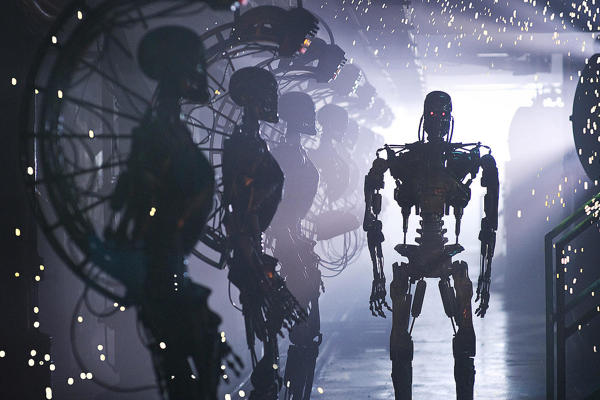
Examples include: The Terminator (1984), Blade Runner (1982), Minority Report (2002), AntiViral (2012), Black Hat (2015) Seen as the stylish older brother of Cyberpunk, Tech Noir is a futuristic approach to the swagger and sophistication of Film Noir. Imagine Humphrey Bogart stepping out of his virtual reality Packard, flicking back his Oculus fedora and puffing on his electronic cigarette and you€™re in the right genre. Emerging in the early 80s in response to the exponential progress of computing technology, it often depicts hard-boiled detective fiction in a futuristic dystopia - the name literally comes from the nightclub in The Terminator where, amongst the power-ballads and bouffants, Sarah and John Connor have their first showdown with robo-Arnie. In a world still in the chokehold of the Star Wars and Star Trek franchises, Tech Noir offers a slick and vitriolic counter attitude and a refreshing twist on the familiar sci-fi adventure tropes.

9. Giallo

Examples include: Deep Red (1975), A Lizard in a Woman€™s Skin (1971), Opera (1987), Amer (2009), Berberian Sound Studio (2012) Giallo is an Italian blend of mystery and horror that was popularised in the early 70s and still has a considerable cult following today. The name stems from a series of cheap, paperback mystery novels that were published around the time (Giallo is Italian for €˜Yellow€™), but the move from book into film is a huge transformation in theme and style. Using lurid and vivid colours and extraordinary set designs, Giallo films can often feel like a serial killer in a school disco (which actually occurs in 2014€™s The Guest). Using many of the conventions of earlier horror films like Psycho, such as the camera providing the killer€™s perspective in murder scenes, Giallo developed its own retelling of the mystery and horror hybrid, adopting a supernatural quality which appealed to Italy€™s Catholic heritage and Edgar Allan Poe fans across the globe. Instead of the investigators finding the culprit through their skills in logical deduction, the protagonist is thrown into the paranormal; where only spirits, ghosts and invisible powers can save them from death and madness. In the US, prog-rock was associated with sci-fi (Vangelis for Blade Runner, the bands U.F.O. and Yes) but in Italy, they took the otherworldly sound of the synthesiser as a method of building the tension in a horror format. Artists like Fabio Frizzi and Goblin chill the spine with tinkling keys and then blast your senses raw with their over-fuzzed electric guitar crescendos. If you€™re looking for a spot of unexplained, unadulterated creepiness, Argento€™s Deep Red and Tenebrae are seen as pioneers in the genre and leave you with the chills long after watching.

8. Bizarro

Examples include: Eraserhead (1977), Naked Lunch (1991), Escape from Tomorrow (2013), Tokyo Gore Police (2008) The unstable reality of bizarro is simply put, a nosedive into the stories of the weird; where the €˜je ne sais quois€™ is intensified into WTF. An outsider genre that has made the most waves in its written form, its roots can be traced in top-shelf cult films such as the gross-out odd world of David Lynch€™s Eraserhead and William Burroughs via David Cronenberg€™s Naked Lunch. If Alice was in her late teens when she fell into Wonderland, the warped; psychotic world she entered would be a typically Bizarro one. The owner of Eraserhead press, Rose O'Keefe pretty much defines the genre, suggesting €˜It clearly wasn€™t horror, science-fiction, fantasy, or even experimental fiction. The only real way to describe it would be: weird... It was like the kind of stuff that is common in the cult sections of video stores, with films such as Six String Samurai, Brazil, Repo Man, Pink Flamingos, Tromeo and Juliet, and David Lynch€™s Eraserhead.' Many other films can now be added to this list, such as Gummo; John Dies at the End and Rubber.

7. Ostern

Examples include: White Sun of the Desert (1970), The Burning Miles (1957), The Bodyguard (1979), The Sixth (1981) Because €˜eastern western€™ sounds weird and paradoxical, Ostern became the term used to encompass the Eastern European and Soviet Union€™s adoption of the Western movie (Ost is Russian for East). What€™s notable about the genre is the historical context of these films. Set against the backdrop of the Cold War, the Ostern holds up a mirror to the forming identity of the USSR, using the Cowboy narrative to show the Red Army€™s rise to power and their battles on the sprawling plains of the Steppes against the Turkic rebels (often portrayed as evil, gun-slinging outlaws). The White Sun of the Desert is seen as an exemplary specimen in the genre and it€™s certainly worth a watch as a cult Russian movie. Before any Russian astronaut can embark on a mission into space, they are told to watch this film as part of a good luck ritual. Furthermore, some Venus€™s craters are named after several of the movie€™s characters.

6. Hyperlink

Examples include: Babel (2006), 21 Grams (2003), Crash (2004), Traffic (2000), Love Actually (2003) You€™ve probably guessed that this is a considerably recent genre. The term came about through the critic Roger Ebert€™s description of Syriana as €˜a film where the characters or actions reside in separate stories, but a connection or influence between those disparate stories is slowly revealed to the audience.€™ This is generally achieved through devices that play with the idea of time being vertical and linear and subvert that notion; using methods such as flashbacks, split frames and interwoven storylines. It€™s not dissimilar from its older brother of a genre, the Anthology or Omnibus film which segments the film to tell a series of narratives, the main difference is that those in the anthology genre are usually feature films with short films placed within (think V/H/S or Coffee and Cigarettes), while Hyperlink cinema usually shifts between the different storylines to demonstrate their association. Often using the premise of a €˜ripple effect€™ where a small action has profound or devastating consequences in a later story, they build the sense of life being interconnected and for better or for worse, portray mankind as part of a global network.

5. Meat Pie & Bushranger Western

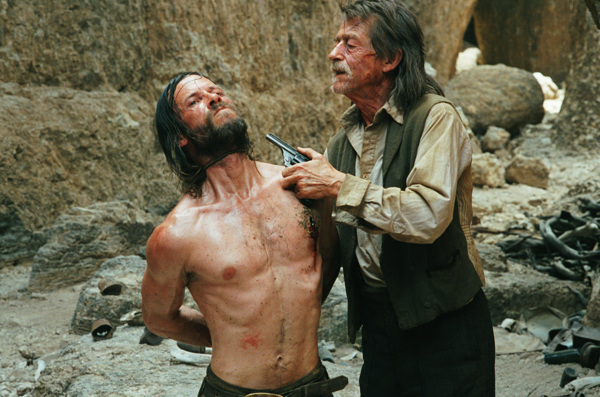
Examples include: The Kangaroo Kid (1950), Raw Deal (1977), Quigley Down Under (1990), The Proposition (2005), Red Hill (2010) From Paella to Spaghetti, the Western genre has a glut of food prefixes and Australia€™s ranch cuisine gave rise to the genre of the Meat Pie Western. It€™s easy to see why Australian filmmakers would gravitate towards the Western. With the colonial invasion, suppression of the indigenous civilisation and pioneering nature on the inhospitable plains, the images reflect Australian history as well as they depict the United States. Where the U.S. had their beloved anti-hero Jesse James, the Australians had the gun-toting bushranger Ned Kelly. As with the US Western, there€™s a good deal of boring escapist Meat Pie Westerns that were simply maximising on a closed audience under the novelty of them being home grown. It is more modernly that the genre has become exciting again, with The Proposition, a revisionist film from John Hillcoat (The Road, Lawless) and written by Nick Cave. The film demonstrates the ugly treatment of the indigenous Australian and the ambivalence towards colonisation. Another recent pick is Red Hill which challenges contemporary Australian history to bear witness to the racism buried in the nation€™s history.

4. Mondo

Examples include: Mondo Cane (1962), Mondo Trasho (1969), Faces of Death (1978), Cannibal Holocaust (1980), Mondomanila (2012) In our internet age, where there€™s something shocking for everyone; the pendulum swinging from The Human Centipede franchise to the collection of dark beheading videos, it can be difficult to know what did cinema present for shock value back in the day? The answer lies in the collection of top shelf Mondo films. A series of shockumentary features that presented real life and death events in shots of foreign cultures meant to repulse and arouse the audience. The word €˜Mondo€™ stems from Mondo Cane (loosely translated as 'A Dog€™s World') which acted as a global travelogue with shots jumping from couples weeping at pet cemeteries to Gurkhas performing rituals dressed in women€™s clothing and decapitating bulls. The result is a kaleidoscopic round-the-world trip which seems to celebrate, mock and criticise our global customs all at once. Hot on the heels of the success of Mondo Cane appeared the imitators and devotees; many using the word €˜Mondo€™ to garner the attention of the audience (such as Mondo Topless) and others in homage to the genre (John Waters€™ Mondo Trasho). After the trend disappeared through much of the 70s, it picked up again in the 80s with the grim Faces of Death, which focussed solely on the grim and gory aspects of the original. Despite being eviscerated by critics, Faces of Death still appears on many rankings for its pioneering grossness, making it on by a narrow margin to Entertainment Weekly€™s list "Top 50 Cult Films of All Time" in 2000.

3. Mockbuster

Examples include: Extra Terrestrial Visitors (1983), Robowar (1988), Pirates of Treasure Island (2006), Transmorphers (2007), Titanic 2 (2010) From Snakes on a Train to Titanic 2; The Mockbuster is nothing but inventive. The cinema equivalent of a knock-off handbag you€™ve bought for your Mother€™s Birthday (Dolce & Banana) or a playful porno (The Hills Have Thighs); the Mockbuster is the piggybacking revision of any successful or big budget production. They often escape the hefty legal battles with larger production houses through releasing their films in countries where there are no licensing restrictions. Another potent justification is the notion that they are simply reinterpreting existing works of art; invoking €˜artistic licence€™ in their remakes, but you know - with CGI instead of art. More recently, the films are often derivatives of the original but the Mockbuster has a long lineage of movies now revered as cult classics, such as Fulci€™s Zombi 2 and the jaw-dropping spoof, Turkish Star Wars. One of the most well-known production houses of the 2000s is The Asylum. Alongside some of their original films (who could forget Sharknado or Nazis at the Centre of the Earth), the studio produced a mockbuster called Snakes on a Train. In the same way as the original was a viral sensation, this also grabbed the internet€™s attention as the poster depicted a pit viper swallowing a the train carriage. This was supposed to be a metaphorical image but as it interested investors, the plot was changed to involve a passenger inexplicably transforming into a gigantic snake and engorging the train. It's certainly an interesting practice. How many films have you seen where you'd like the story to be a little more like the trailer?

2. Kaiju / Kaijin

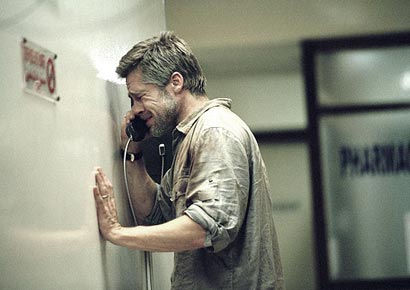
Examples include: Godzilla (1954, 1998, 2014), Rodan (1956), King Kong (1956, 2005), Eight Legged Freaks (2002), The Host (2006) You€™ve probably seen a Kaiju film without even realising it. Pacific Rim? Attack of the Killer Tomatoes? A Kaiju film translates literally from the Japanese €˜Monster,€™ beginning in 1954 with Godzilla, a colossal prehistoric lizard resurrected and overgrown from Nuclear testing in the Pacific, recalling the horrors of atomic warfare suffered by Japan only less than a decade before. Godzilla spawned much odd progeny, some in more humanoid forms (these are called Kaijin or €˜strange person€™ films) such as the Japanese franchise following the exploits of a great demon god, Daimajin. Since apes and large marshmallow creatures are considered humanoid, this is also the correct genre for King Kong and Ghostbusters. While America had focussed its attentions on giant irradiated ants (Them!), spiders (Tarantula!) and amorphous goo (The Blob), Japan continued their monster franchise of bombastic titles and entertaining stories. These attracted the attention of Western audiences, giving the films a cult following (it was watching 1966€™s The War of the Gargantuas that supposedly inspired Brad Pitt to take up acting). Many felt that the destruction of Nagasaki and Hiroshima that flared the inspiration of Godzilla offered a similar reason for the success of Cloverfield following the September 11th attacks where an alien invasion lays waste to New York. This led to a resurgence of the genre with Pacific Rim (where the monsters are literally called Kaiju) and Legendary€™s recent remaking of Godzilla for contemporary audiences.

1. Sea Life Sports Movies

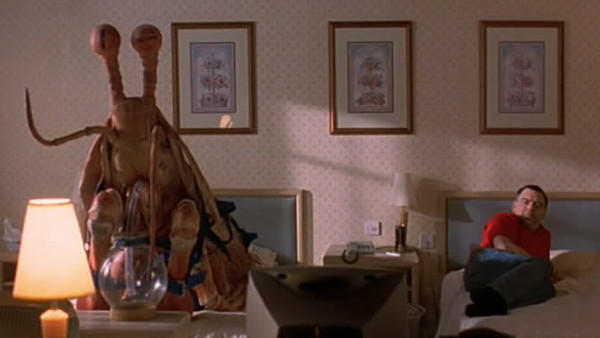
Examples include: Crust (2003), Calamari Wrestler (2004), Crab Goalkeeper (2006) Reading like the €˜Interests€™ section of a Tinder profile for someone that doesn€™t know how to punctuate, Sea Life Sports Movies are a narrative genre where humanoid marine creatures triumph in the face of their obvious adversity and absurdity. The genre began in the UK with €˜Crust,€™ where a pub owner teaches a giant shrimp to box with great success. Starring Kevin Mcnally (Master Gibbs from Pirates of the Caribbean) with a cameo from Ulrika Johnson, the film unfortunately never saw a wide UK release as it came to light that the main investor was using the film as a form of tax avoidance. It did make waves in Japan where audiences loved the premise, seeing it as a twist on the Kaiju genre, producing several other creations such as €˜Crab Goalkeeper€™ which is described by director Minoru Kawasaki as being €˜like Forrest Gump, but with a crab€™. Since these loony creations, Kawasaki has branched out into other species, such as Kabuto-O Beetle, another wrestling movie, this time starring a stag beetle and lastly, Executive Koala which involves a leading financial manager being implicated in the murder of his wife (while also being a tree-climbing marsupial). While these may be the only three fishy films caught in the genre€™s net, a new production starring Colin Farrell and Rachel Weisz is not too dissimilar from the genre. The Greek director Yorgos Lanthimos (who brought us €˜Dogtooth€™) creates a world where single people are given a month to find a mate or be transformed into an animal of their choosing. Farrell, being 'a lover not a fighter,' chooses the lobster, in part because crustaceans mate for life. Shown at Cannes earlier this year, the film received critical acclaim for its Kafkaesque oddness and finding wonder in mad fantasy.

Contributor
Contributor

Jack Lantern is a film reviewer at WhatCulture based in London. His work has been published in Culture Trip, Off/Black and Vice Magazine.