10 Great Movies Where Absolutely Nobody Dies

Movies that prove all this death and destruction in modern cinema is entirely unnecessary.
Throughout human history art has been used as a medium to air our fears, musings and beliefs about death and mortality. As a result, all things artistic are littered with references to people copping it. This trend shows no sign of abating as films, which represent the most popular artistic medium in contemporary culture, are rarely without at least one death; more often than not you'll be lucky if you haven't seen at least a dozen people die by the end credits these days. It can be a difficult task thinking of a list of films which contain no deaths of major characters, let alone movies we would consider to be great. It's all a bit morbid really. The films on this list prove that all this death and destruction is entirely unnecessary. You don't have to touch on the subject to make a film exciting or in some ways bona fide. As a general rule, the films you find here are linked by their optimism and many share the common trait of being driven by amazing dialogue as opposed to action. Without further ado, here are the 10 Greatest Films where absolutely nobody dies:

10. Willy Wonka And The Chocolate Factory (1971)

It's hard to ignore the joys of youthful imagination and flowing rivers of chocolate which permeate Willy Wonka and the Chocolate Factory. In a normal film, four bed-bound pensioners sharing the same decrepit matress would be something deeply harrowing. The world of Willy Wonka completely ignores the sad truth that the various illnesses which confine Charlie's grandparents to their beds will likely soon kill them, particularly with the the unbalanced diet of cabbage soup the Buckets survive off. Upon Charlie's winning of the much coveted golden ticket, his favoured grandparent Joe makes a miraculous recovery in order to accompany Charlie to the factory. The promise of marvelling at the secrets of Willy Wonka's factory restores Grandpa Joe to a child-like state of giddy joy. Chocolate must be the perfect remedy for the Grim Reaper...

9. Before Sunrise (1995)

You could feasibly have chosen any of Richard Linklater's Before Trilogy to occupy this position on the list but Before Sunrise, featuring the couple at their youngest, is the film in which lovers Jesse and Celine are the least conscious of their own mortality. The film, which documents one fortuitous night shared between American Jesse and French Celine, features absolutely no deaths; indeed it would be a big problem if it did as characters other than the central couple are very scarce. Before Sunrise is defined entirely by its tight dialogue between its central couple as they come to know each other on what is essentially stolen time €“ interestingly this theme of dialogue driven films is one which crops up more than once on this list. The films have all been separated by 9-years. If Linklater chooses to return to the world of Jesse and Celine once more it is very likely that death could rear its ugly head.

8. The Truman Show (1998)

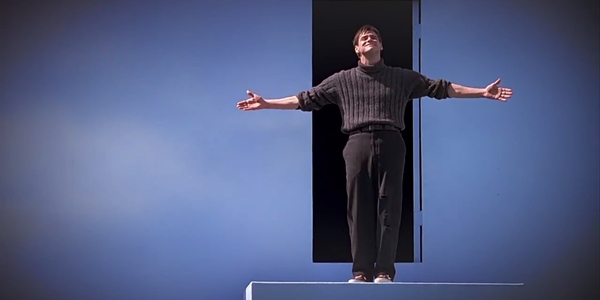
Okay €“ this one might be bending the rules a little. There is no escaping that the fictitious life led by Truman Burbank is heavily influenced from a very young age by the death of his father in a boating accident. However, nobody actually dies. The guy was an actor pretending to be Truman's dad and the accident was staged. It's all a bit meta. The cordoned off arcological dome containing the seaside town of Seahaven is a world €“ much like Willy Wonka's factory €“ which apparently exists without death. Truman is imprisoned in an eeiry microcosm where nothing bad ever seems to happen. No one walks around with their shoe laces undone, alcoholics aren't begging in the streets for your spare change and there is no such thing as an unemployment crisis.

7. The Producers (1968)

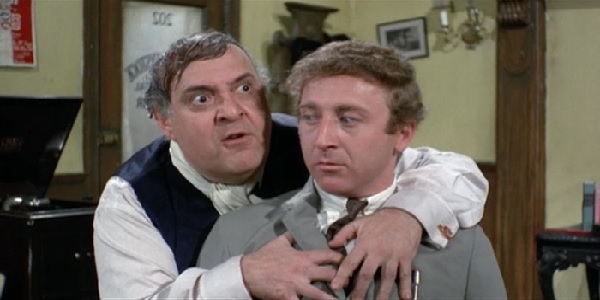
Gene Wilder finds himself on this list of greats once again with his co-starring role in Mel Brooks' irksomely comical The Producers. Though this film does touch on old age it doesn't take itself seriously enough to get involved in any questions of mortality. Much like good ol' Grandpa Joe, Max Bialystock (Zero Mostel) doesn't let his old age deter him from acting as he did in his youth. He seduces women for their money, he still puts on plays and he generally has a zest for life which doesn't permit dwelling on the dull subject of his inevitable death. The producers will ever be remembered as a classic, and for good reason. The death and destruction of the majority of other films gives way to music and hilarity.

6. Ratatouille (2007)

There were a few Pixar films which were jostling for this position. I originally had Toy Story (1995) penned in for this spot but was reminded that an ill-fated toy was ripped apart by Sid's horrid dog, presumably fatally. You would be forgiven for expecting a film which ends with a rat-invasion of a popular Parisian restaurant to contain numerous fatalities. However, as we've come to learn over the past two decades of industry leading animation, this isn't how Pixar roll. Obviously Pixar films do at time deal with death (R.I.P Nemo's siblings x 2000), but there are certainly many which don't and Ratatouille represents the finest of this selection. From the beautiful animation of Paris from a rat's perspective to the hilarious dialogue between Remy and Linguini, this is as good as it gets from Pixar.

5. Lost In Translation (2003)

If you are for some reason yet to have seen Lost In Translation I urge you to rectify this. An interesting trend which links the films on this list is that they predominantly have very small casts and this is also true of Lost In Translation. It's almost as though if you cut back on the gun fights, explosions and killing sprees so prevalent in Hollywood these days and instead do a very focused character portrait you've only got the time in the 90-180 minutes to survey a very small array of characters. This is by no means a complaint however. The characters in Lost In Translation and the loneliness which they share are so well fleshed out that it's impossible not to enjoy this film.

4. The Breakfast Club (1985)

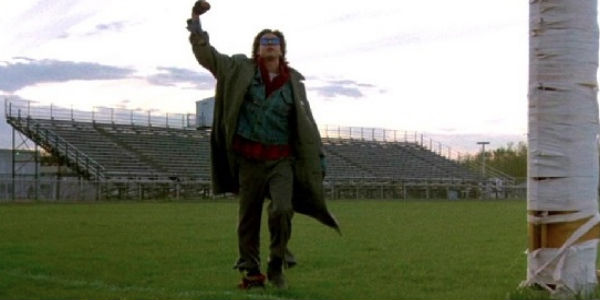
Probably the finest cinematic offering from the late John Hughes, though its director has passed away The Breakfast Club endures and contains zero deaths. Death is a leveler which all humans will some day have to face, so in some ways may be seen as unifying. The Breakfast Club unites its five main characters in a different manner however €“ detention. The radically different characters go in as individuals resentful of the other students who they're being forced to waste their Saturday with. However, being forced to be in close proximity for so long leads to the characters quickly realising that their differences are all trivial despite their occupying different cliques and they in fact face many of the same issues in life. One of cinema's great coming-of-age movies and another film on this list to be crammed with killer dialogue.

3. 25th Hour (2002)

Death plays a peculiar role in Spike Lee's 25th Hour. In many ways it is a motif which underlines the entirety of the film but outwardly it goes unmentioned and certainly doesn't physically occur during the two hour run-time. 9/11 is a subtle, but instrumental theme in this film. It get's the Voldemort treatment from Spike Lee €“ the characters of the film occupy a New York city which is still traumatised by the attacks but aren't willing to actively reflect together. Protagonist Monty's best friend Frank got himself a cut-price apartment in downtown NY overlooking the wasteland of Ground Zero but they never actually discuss its impact on his psyche. In the opening seconds of the film we hear a dog being savagely attacked and dumped on the roadside. Monty takes in this dog and nurses it back to health. This is indicative of the entire film. 25th Hour €“ the first major cinematic release after 9/11 €“ isn't a film about death; it's about regrowth and stoic resilience in the face of tragedy and hurt.

2. Big (1988)

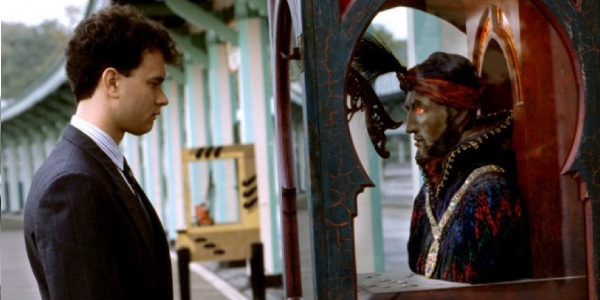
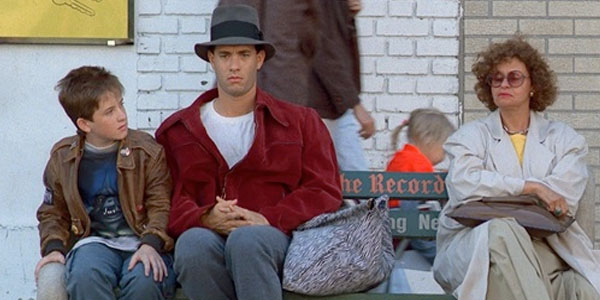
Whether you're watching it for the 100th time or the very first, everyone must agree that watching a youthful Tom Hanks live as a kid in the world of adults is a thoroughly enjoyable experience. It's perhaps unsurprising that the childish perspective Big takes doesn't leave any room to deal with themes like death and mortality. Everything we experience in Big comes through the lens of 12-year-old Josh Baskin who is far more concerned kitting out his very own flat with vending machines, bunk beds and basketball hoops. Perhaps one of you WhatCulture readers could help me out with a concern I've had with the film since I was about 16; if Josh slept with Susan (Elizabeth Perkins) as it is implied does that mean he lost his virginity aged just 12 with a 20-something woman? A strange musing, I know.

1. Sideways (2004)

Let me preface this by saying this is a personal pick for the #1 spot and I fully expect many to query why a film about wine is better than any of these. Alexander Payne is probably one of the finest active directors and for me 2004's Sideways is his finest work. Being a fly-on-the-wall to listen in on friends Miles and Jack's conversations is like witnessing a top-class improvisational jazz band tune up (suitably several smooth jazz instrumentals compose the movie's soundtrack). The dialogue is so flowing and effective that it's impossible not to fall in love with this film. Alexander Payne's films are nearly all linked by their lack of intricate plot (though I haven't yet had chance to see Nebraska) and generally tend to focus on character development and dialogue. This is no truer than in Sideways which just follows the forty-something duo on their getaway trip to Northern California's expansive vineyards. Though it turns out to be far from relaxing, things certainly don't get serious enough for anyone to end up dead.

Contributor
Contributor

Hailing from South East London, Sam Heard is an aspiring writer and recent graduate from the University of Warwick. Sam's favourite things include energy drinks, late nights spent watching the UFC with his girlfriend and annihilating his friends at FIFA.