20 2000s Movies Audiences Loved, But Critics Hated
You can't please all of the people all of the time.

Cinema, like every other art form, is subjective. No matter how good a movie is, it will never be loved by everybody, and conversely, there will always be someone to enjoy a picture even if almost nobody else does.
In some cases, there's a clear line of division in how certain projects are received by mainstream audiences when compared to critics. The latter quite literally being there to critique films, often find far more flaws and reasons to be unhappy with a final product than the general public, who tend to be a little easier to please.
This has always been the case, and of course the 2000s are no exception. It was a fun period for the industry, with goofy comedies, the unprecedented leap in the effects of CGI, and a healthy amount of epic blockbusters, and yet critics were still as picky and pedantic as ever.
While Rotten Tomatoes will never have the final say on an outing's success, it can act as a strong indicator as to how a movie has been received. Again, everyone will have their own opinions on these projects, and while not every single critic will have hated every film on this list, they were all appreciated far more by audiences on a larger, general scale.
20. Transformers
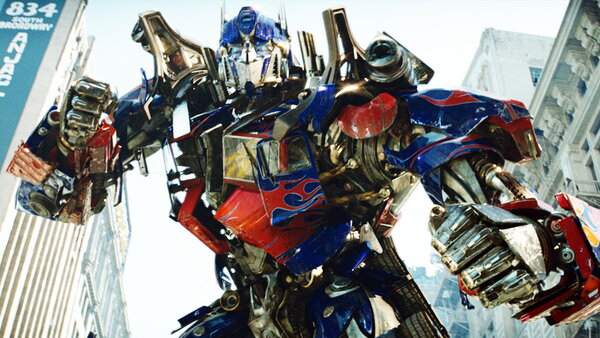
By the late 2000s, the world had certainly seen its fair share of CGI triumphs, the likes of Gollum (Andy Serkis) and Davy Jones (Bill Nighy) in The Lord of the Rings and The Pirates of the Caribbean, respectively, standing at the top of the list.
However, while Transformers may not have been the first true special effects success, it was a game-changer. The visuals to put together the Autobots and the Decepticons were undoubtedly spectacular, and there can be no denying that Michael Bay's 2007 effort looked fantastic.
This, and the sheer weight the Transformers name already carried as a property, were enough to win audiences over immediately. It has easily been the best-received film in the franchise up until Transformers One in 2024. However, critics were always going to need more than the kind of style-over-substance filmmaking the series would ultimately become known for.
The argument was that, past the admittedly impressive and unprecedented robots, and the excitement surrounding a live-action version of such characters, the movie had very little to offer. It's a feeling that has only intensified as the Transformers outings have kept on coming, though even with a fanbase losing faith and patience, it hasn't stopped Transformers from becoming one of the most lucrative franchises in history.
19. The Longest Yard

There was a run through the mid-'90s when everything Adam Sandler touched turned to gold, turning out Billy Madison, Happy Gilmore, The Wedding Singer, The Waterboy, and Big Daddy within a five-year stretch. Those times may have passed by 2005, but the man still had a lot of goodwill left with the mainstream cinema-goer.
Enter, The Longest Yard. It's far from the typical Sandler flick audiences were used to; it was less a goofy comedy and more a genuine sports movie with comedic undertones, and a surprising hit of emotion with the death of Caretaker (Chris Rock).
It may not be Sandler's highest-rated project of all time, but it was nevertheless a fun outing that rarely went any deeper than a game of football. As is often the case, though, critics were expecting a little more.
Certain aspects of the picture certainly haven't aged particularly well, and the characters weren't exactly complex or layered, but arguably one of the biggest things The Longest Yard struggled with was the inevitable comparisons to the original from 1974. Unfortunately, Burt Reynolds' shoes were a little too big for Adam Sandler to fill.
18. Rambo

The law of diminishing returns comes for most franchises that churn out a trilogy or more, but for Rambo it came quicker than most. By the time of the first sequel, the poignant and thought-provoking story told in 1982's First Blood, of John Rambo's (Sylvester Stallone) emotional trauma and manipulation at the hands of the government, was traded in for gratuitous violence and a direct contradiction of the original's powerful message.
By the time of Rambo in 2008 - the series' fourth film - the franchise had devolved further into a mindless shoot 'em up action romp, with the true meaning and message never escaping 1982.
That being said, the action offered in the first and only instalment in the franchise with Stallone in the director's chair was strong. Strong enough certainly to leave audiences happy upon leaving the cinema, but perhaps this was without the thought of what once was in their minds.
If this was a popcorn flick without any ties to First Blood, it may not have offended the critics quite so much as it did, but seeing what had become of an original film so brave in its themes and commentaries was arguably the final nail in the Rambo franchise's coffin.
17. Resident Evil

Bringing to life a film adaptation of a video game can prove difficult to get right, and part of that comes down to the fanbase of the source material. Often a decent enough project can be made, but as was the case with Uncharted, a non-existent connection to the games lets down those already invested in the property. Resident Evil was almost the antithesis of this thinking.
The Resident Evil video game series was incredibly popular when Paul W. S. Anderson's first Resi film released in 2002, but rather than tear the picture apart, like the critics did, audiences and fans of the game found something to be taken from it.
Of course, the casting of Milla Jovovich didn't hurt. In fact, her performance as Alice was one of the standout aspects in a project that relied heavily on her in the absence of any real connection to the games.
That being said, there was enough of Raccoon City present to satisfy audiences, while critics were always going to demand more. Emotions invoked by a tie, no matter how slight, to a source material are never going to be as effective on professionals as they are on mainstream viewers, and thus the latter could not look past the shallow plot, uneven pacing, and gratuitous violence. Maybe Zach Cregger can do a better job later in 2026.
16. Walking Tall
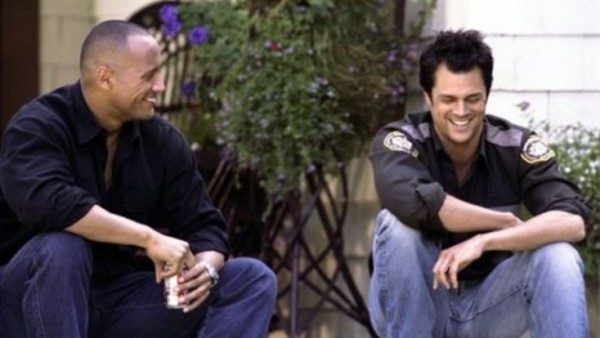
These days, Dwayne Johnson is one of the most lucrative stars in the movie business, he is a self-marketing machine, and amongst the blockbusters like Moana, Jumanji, and the Fast and the Furious franchise, he has recently tried his hand in more dramatic roles.
In 2004, however, the wrestler-turned-actor was still in the infancy of his new career. Walking Tall saw him team up with Johnny Knoxville, a duo both insanely popular for reasons other than their acting chops, and they made a fun film.
It's exactly the type of thing you'd expect, barely going any deeper than showcasing The Rock beating people up for two hours. If this is what an audience was expecting, then it was a fun romp, much like Welcome to the Jungle the year before, but for critics it wasn't enough.
Let's face it, neither Johnson nor Knoxville were strong enough to offer any real emotion or gravitas to their characters, and the entire movie was built purely to make the former look as badass as his wrestling persona. Still, for the right audience, this was a perfectly good popcorn flick.
15. The Punisher

As a character, Marvel's Punisher has struggled to be adapted to any screen, either big or small. It's widely accepted that Jon Bernthal's current iteration of Frank Castle is the best there has ever been, and in the likes of Daredevil and Spider-Man: Brand New Day, he has been fantastic, but even this version has struggled with his own solo projects.
This is a trend that started with Dolph Lundgren in 1990 through to Ray Stevenson in 2008. However, 2004 saw Thomas Jane's take on Castle, and though it was critically reviewed in much the same manner as any other Punisher film, this one was at least more popular with audiences.
No, it certainly didn't go as deep as a Punisher story could and should go in terms of emotional resonance and his anti-hero status, but buoyed by a strong cast, it was a definite improvement on what had come before.
There is something to be said about a comic book movie trying to operate like a comic book story, something that is often going to miss the mark with critics. This is one of a few on this list where strong action alone was enough to satiate audiences' general want to be entertained, but left critics wanting more. A lot more.
14. National Treasure

On the face of it, it's easy to see why critics didn't take too warmly to National Treasure, based on the convoluted plot itself. The story of Benjamin Franklin Gates' mission to find a hidden map on the back of the Declaration of Independence was ludicrous to the point of parody, with enough historical inaccuracies to make getting lost within the narrative tricky at best.
And yet, the 2004 outing had the secret weapon that was Nicolas Cage. It feels that at no point did he take his role or the movie on the whole too seriously, and his popularity and eccentricity worked in his favour, as his presence and Cage-isms alone managed to win over a lot of audiences.
This was no fluke either, as exactly the same thing happened three years later with National Treasure: Book of Secrets, and unsurprisingly, when the property continued on the small screen sans Cage with Edge of History, the audience score fell dramatically to within the same realm as the critics.
National Treasure is almost the definition of a fun, popcorn flick, to be enjoyed almost exclusively without thinking too deeply about anything on the screen, and the smart money would say that, should Cage ever return for a much-demanded third big-screen outing, the audience/critic split would remain exactly the same.
13. Constantine
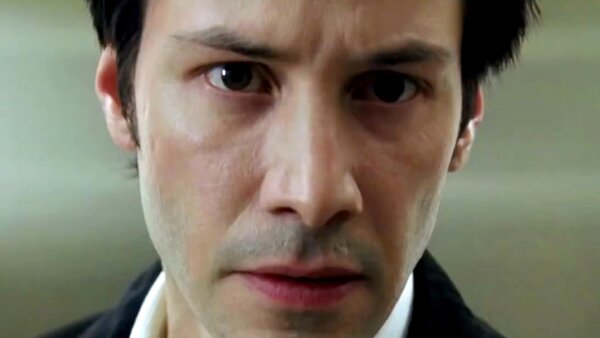
DC Comics' cinematic history is patchy at best, and 2005's Constantine is certainly an interesting study. Though a popular character in his own right, John Constantine did not have the mainstream appeal of a Batman or a Superman, both of which had successful outings in 2005 and 2006, respectively, with Batman Begins and Superman Returns.
However, though facing something of an uphill battle from the start, casting an incredibly passionate Keanu Reeves just two years from what appeared to be the end of the Matrix franchise certainly would have won a percentage of the audience over straight away.
Reeves is without doubt the best aspect of the film, and his take on the grizzled demon hunter was praised to the point of fans still fighting for a sequel today. The darker, other-worldly element lent the effort a unique tone, though while audiences took to the character and the story quickly, the critics did not.
Potentially stacking it against Reeves' last blockbuster adventure in The Matrix, Constantine was criticised as being rather dull, formulaic, and predictable. Reeves' charm and star power can only do so much, it seems, and papering over such cracks enough to please professional movie watchers is not on that list.
12. Lucky Number Slevin

There is only one film on this list that can top the 87% audience score boasted by Lucky Number Slevin on Rotten Tomatoes, which goes to show just how well mainstream cinema-goers took to the movie. For context, this is the same score as The Social Network and Ratatouille, among others.
Of course, any project that can boast Josh Hartnett, Lucy Liu, Ben Kingsley, Morgan Freeman, and Bruce Willis is going to have a decent head start on winning people over, and the mystery thriller brought more on board with its twisting and turning plot, landing on a shocking reveal that was lapped up.
It was the kind of bombshell that can steal all the focus as the cinemas empty, with audiences happy to overlook certain jumps in both logic and reason. Lucky Number Slevin's big twist was very successful in this, as it papered over some of the cracks that appeared throughout the rest of the runtime.
Said cracks were obviously picked up by the critics, the likes of the plot becoming too convoluted for its own good, characters going only skin deep, with even accusations of style over substance leading to a much cooler reception. Though there are certainly films on this list that critics were much harsher on, the gulf between audiences and critics is rarely this wide.
11. The Twilight Saga: New Moon

With the likes of The Hunger Games, Divergent, and The Maze Runner, the years following the 2000s arguably saw some of the biggest Young Adult stories adapted to the big screen, but make no mistake, they were walking the path laid by Harry Potter and, of course, Twilight.
Stephenie Meyer's novel series was first brought to the screen in 2008, and it went on to become a pop culture sensation. The sequel, in particular, 2009's New Moon, sparked the Team Edward vs. Team Jacob debate, as teenagers everywhere were able to think or speak of little else.
Quite unsurprisingly, however, this was not a fanfare shared by the critics. A big factor in this would be the simple fact that, being aimed largely at teenage girls, professional film reviewers were not going to get it. Nor should they have.
This was a coming-of-age story, admittedly built around sexy vampires and sexy werewolves to the point that it pretty much wrecked the genre for a long time afterwards, but it spoke to its key demographic. They weren't supposed to care about the intricacies of the films or the pitfalls in the plots; they cared deeply about Bella (Kristen Stewart), and that was enough.
10. Fast & Furious
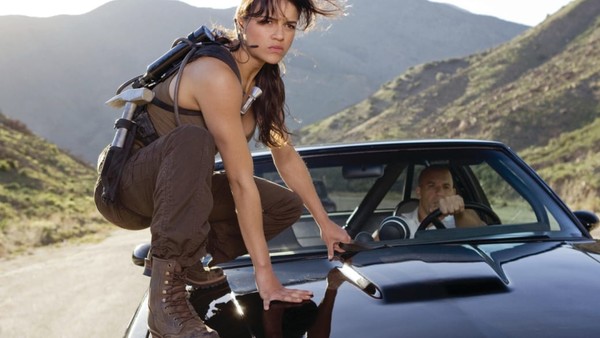
It may be something of a cliché, but the Fast and the Furious franchise truly has been a rollercoaster ride. After starting hot, things began to flag until the injection of Dwayne Johnson's star power presence; a tide that was ridden high, with things now cooling down again as the series comes to a close.
Fast Five was the first film where audiences and critics were even close to the same page, something that seemed unthinkable just two years before with Fast & Furious.
Though offering little new or different aside from doubling down on just how ridiculous and unbelievable the stunts became, and instead bringing the same style of motorised action that fans were used to, there was still an audience for Vin Diesel and his crew after four chapters of the story. Everyone knew what they were getting, and were happy whenever another instalment released in cinemas.
However, what audiences felt as familiar, critics saw as sequel after sequel offering diminished returns for a franchise they weren't particularly crazy about in the first place. The critics' score on Rotten Tomatoes has never outweighed that of the audience score for the franchise (though it came agonisingly close with Furious 7), and Fast & Furious was something of a rock bottom. Had proceedings continued without the introduction of Luke Hobbs (Johnson) at this point, it's fair to say the audience score may well have dropped to match that of the critics.
9. Pirates of the Caribbean: At World's End
When Pirates of the Caribbean: The Curse of the Black Pearl released back in 2003, it was the definition of a summer blockbuster. Critics loved it, audiences loved it, it spawned an instantly iconic character in Captain Jack Sparrow, and it made a load of money.
By the third entry in the franchise, however, critics had tired of the antics of arguably Johnny Depp's greatest character. The charm had worn thin, while the film itself was overstuffed, filled with too many characters both old and new, and a slog of a storyline within a runtime that was way too long.
While anyone would struggle to argue that At World's End didn't need to be nearly three hours, the property still had enough in the tank to entertain audiences. It still had that blockbuster vibe that just can't be bought, and though it was undoubtedly the weaker of the three initial entries, its bombastic eccentricity and downright ridiculousness hadn't yet outstayed its welcome.
Proof that audiences did in fact have their limit on the franchise came four years later, with the disappointing Keira Knightley and Orlando Bloom-less On Stranger Tides. Had Pirates of the Caribbean ended at three films, it likely would have been classed among the mainstream as one of the most entertaining and successful trilogies of all time.
8. The Marine

A similar entry here to Walking Tall earlier in the list. 2004 was merely at the beginning of Dwayne Johnson's rise to superstardom, while two years later, it was the turn of John Cena to step from the wrestling ring to the movie set.
The Marine was the WWE legend's very first feature film, and followed all the same clichés of every other project WWE produced with its stars at the front and centre. Gratuitous violence, little to no story, even less emotional depth, and just one big excuse to try and get John Cena's name out there.
The critical response couldn't be less surprising. The outing was blasted, boasting just 17% on Rotten Tomatoes, with even Dwayne Johnson taking a dig at it during a WWE Hall of Fame speech to induct his father and grandfather.
And yet, there were plenty of fans who enjoyed The Marine. No, Cena was not yet the movie star he would become, but he was more than capable of doing what was necessary here. He fit the bill for a mindless muscle flex that pitted him opposite Robert Patrick, 18 years before the Terminator 2 star would play Cena's father in Peacemaker. It seems that a chord was struck, even if it was just with fans of WWE, thanks to the company's biggest name at the time.
7. Without A Paddle
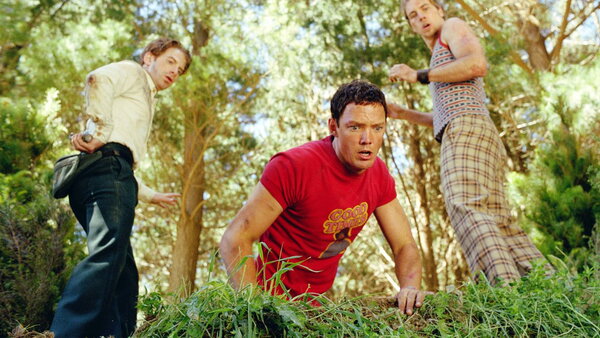
The noughties were a great time for comedies that would become either instant classics or iconic over time. The likes of Anchorman, Dodgeball, Superbad, and The Hangover are arguably the best examples of such films, while Without a Paddle is unfortunately not.
Though unable to boast a truly classic character like a Ron Burgundy (Will Ferrell) or a White Goodman (Ben Stiller), the movie relied heavily on strong chemistry between its three leads of Dax Shepard, Seth Green, and Matthew Lillard. This, and a very goofy comedy style largely propped up by bear attacks and the American Deep South, made this something of a hit-or-miss.
Without a Paddle was largely a hit with audiences, who were able to enjoy the relationship between the threesome, not dissimilar to the key dynamic in The Hangover five years later, and the jokes.
Critics, however, absolutely blasted Without a Paddle, condemning what was perceived to be an unfunny slog, with a formulaic plot and little redemption coming from Shepard, Green, or even Lillard. This represents the biggest RT differential between audience and critics on this list (68% vs 15%), which does offer up the question of whether the latter can often be robbed of just having some easy-going fun.
6. House Of 1000 Corpses
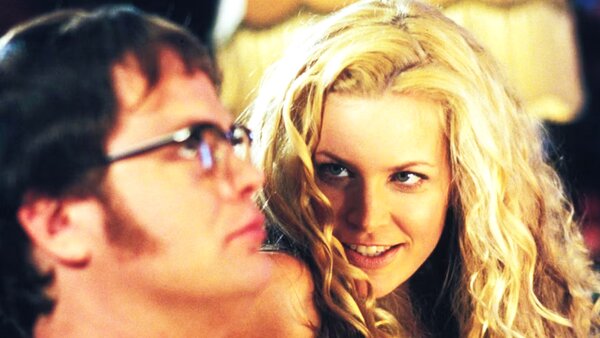
More so than in any other genre, horror has looked to the past for inspiration, homages, and outright rip-offs. 90% of slashers copy the formula laid down by John Carpenter in 1978's Halloween, while the vast majority of zombie flicks can trace their roots back to Night of the Living Dead.
In 2003, with House of 1000 Corpses, Rob Zombie was not exactly hiding his influences. His directing debut, in the eyes of the critics at least, played out like a slasher knockoff with little new or enticing to bring to the table.
However, the clichés and over-the-top gore and torture that critics found played out and gratuitous resonated much more with audiences. Largely, this may be because the mainstream cinema-goer has an easier time accepting certain faults because it's what they are expecting to see, and so without the tropes and the wince-inducing violence, many likely would have been left disappointed.
The film, much like its sequels, plays off as something of a precursor to the ultraviolent types like the Terrifier franchise, taking glee in making the audience feel as uncomfortable as possible. It proves that Rob Zombie is certainly an acquired taste, but one that most critics will never actually acquire.
5. Underworld: Evolution
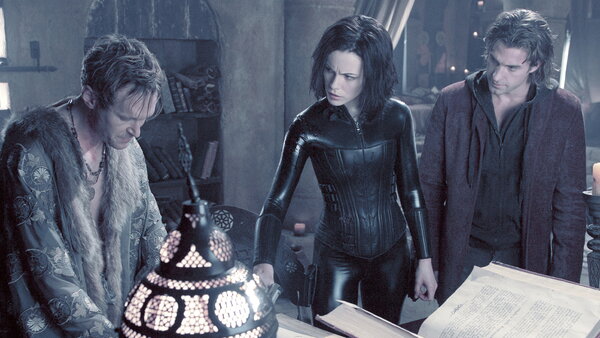
Twilight wasn't the only vampire story going on in the noughties. Five years before the initial Twilight film in 2008 came Underworld, a gritty fantasy outing that also explored the ancient rivalry between the undead and werewolves.
Like the Twilight Saga, the Underworld series was always favoured more by audiences than by critics, and also like the Twilight Saga, the epitome of this came with the sophomore effort. Underworld: Evolution released in 2006, and while largely considered a slight step down from the original, it still earned itself a grateful and loyal following.
It's another case of getting what you are paying for. After the first film, anyone going to see Evolution should have been prepared for more of the flashy style, the plot so convoluted almost to the point of incomprehension, and, on the whole, a dark romp not to be taken too seriously. It seems that the majority of audiences were well prepared and happy to see Evolution. That, and the return of Kate Beckinsale as Selena, certainly didn't hurt.
This wasn't enough to distract from its downfalls for everybody, however, as the flaws far outweighed the fun in the eyes of the critics.
4. Rush Hour 3

You could argue that there aren't many finer combinations of the buddy cop, odd-couple dynamic than Rush Hour. Jackie Chan's quiet and professional Lee, paired with Chris Tucker's loudmouthed Carter, slowly becoming friends and partners is utterly joyous to watch.
The sequel three years later didn't offer too much in the way of evolution or progression for the characters or the story, but it was still a serviceable sequel. The third, though, after a further six years, was the final straw for the critics.
With already two films of the dynamic, critics largely found little to be excited about anymore, as the characters and their relationship had nowhere left to go. The Tomatometer dropped to an all-time low and frankly abysmal 17%.
However, though Rush Hour 3 was the lowest-rated in the trilogy by audiences, there was still entertainment to be found in Lee and Carter's relationship, which has been the lynchpin of the entire franchise to date. Too much of a good thing didn't come into play here, as fans of the series were happy to see the same tricks spun again and again and again.
3. The Butterfly Effect

By the mid 2000s, Ashton Kutcher was largely known only in the comedic world, thanks to That '70s Show, Dude, Where's My Car?, and hosting MTV's Punk'd. It was almost automatically intriguing then, when he starred in a dark and psychological thriller in 2004.
The Butterfly Effect completely played against Kutcher's type, something that simultaneously paid off and fell flat. The film that saw Kutcher's Evan travel back in time to key points in his life in an attempt to change the future did well at the box office, but released to a poor critical reception.
In this regard, the critics saw only a plot that was difficult to get invested in, a confused film that struggled with its own tone, and perhaps unsurprisingly given the time-travelling framing device, rather repetitive. Though even The Butterfly Effect's harshest naysayer would struggle to argue the premise wasn't a strong one, they would argue such an idea holds little weight in the face of poor execution.
The other side of that coin is that the mainstream audience was spellbound by the non-linear storytelling, going from flashback to altered present, as well as the themes of dwelling on the past and the bittersweet ending.
2. The Phantom Of The Opera

There have been virtually countless adaptations of Gaston Leroux's The Phantom of the Opera over the years, from feature films to stage musicals, and even a seven-minute epic Iron Maiden track. Not all of them have been as well received as others, however.
The pick of the movie adaptations is from 1925, and critics may argue that adaptations have only gotten worse since then. The mention on this list goes to Joel Schumacher's 2004 outing, and although it was reviled by said critics, it was instead revered by audiences.
In what may be in part a case of comparing a project against those versions that have come before, this was never going to win over anyone with such lofty expectations. Claiming the movie to be free of mystery and menace, exactly what makes the story and the phantom himself so compelling, there were very few marks to be given here for effort.
Audiences, though, in what may equally be a case of a strong source material and story winning out over other perceived flaws, enjoyed it immensely. Not being weighed down by comparisons to the past allowed for nothing but entertainment from a film of strong performances and fantastic songs.
1. Super Troopers

When you think of spoof comedy films, it's reasonable to think the mind would automatically go to Airplane or The Naked Gun, or even something unrelated to Leslie Nielsen, the likes of Spaceballs or Austin Powers. Super Troopers is without question also a part of that upper echelon.
Released in 2001, the film joined the previously mentioned outings as a ridiculously goofy and over-the-top police story. It is unashamedly and unapologetically silly, and would never for a single second consider taking itself seriously.
It's unsurprising that this was a hit with audiences, so much so that at 90%, it is the only entry on this list with a higher audience score on Rotten Tomatoes than Lucky Number Slevin. It's a straight-up comedy that doesn't offer audiences anything except an hour or two of laughs and escapism.
To that same end, Super Troopers was not a movie made to impress critics. There are no thought-provoking themes, emotional stakes, or character developments to consider, nor is there really much of a plot, in all honesty. And there doesn't need to be. A bunch of stupid jokes was enough to give audiences a great time in the cinema, and the same could be said about its two sequels, though neither quite lived up to the first.