10 Greatest Portrayals Of Monarchs In Movie History

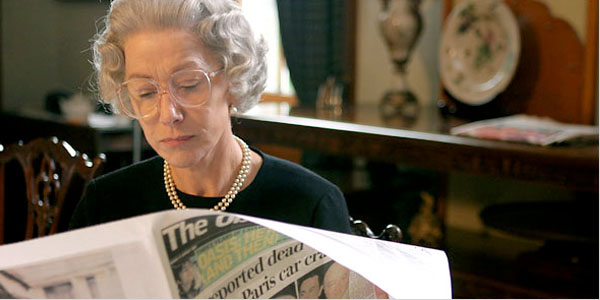
It's too easy to get The Queen and Helen Mirren confused!
Whether you live in a country that has a monarchy or not, the concept of royalty is one that is fascinating for a lot of moviegoers. There's something incredibly interesting about the idea that you can be somehow deemed fit to rule a nation solely based on who your parents were. Also, there's the fact that these people live in a completely different universe from the rest of us. While we're sitting around eating Ramen, they're going on world tours and attending royal functions. And if we feel that way about the monarchs and royal families that are around today who, for the most part, wield very little actual power, imagine the lives of their ancestors, who actually did rule their countries. Royal biopics have always been popular, and anyone playing a king or queen is likely to earn a certain amount of critical acclaim. The ones who are featured on this list really managed to capture the essence of these tremendously interesting historical figures. Regardless of how you feel about the idea of even having a monarchy, you have to admit that the effect that they've had on history is worthy of notice, and the people who bring them to life on film undertake a serious risk of getting it wrong. So it's important to give them credit when they get it right.

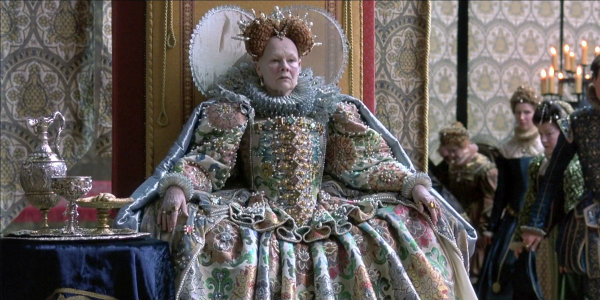
10. Judi Dench - Shakespeare In Love

Queen Elizabeth I is only featured in a small role in Shakespeare in Love, which largely revolves around the exploits of a young William Shakespeare and his muse. Nonetheless, it does an excellent job of capturing the iconic queen's no-nonsense personality of her later years. She is short, to-the-point, and regal -- she does not suffer fools or take kindly to those who are just trying to flatter her. Judi Dench embodies this queen, who was in a nearly impossible position as an unmarried female ruling a nation at a time when most queens ceded power to their husbands. Regardless of what her actual personality was like, she had to present a tough, almost masculine persona to make people believe that she was capable of doing the job. Her interactions with the main characters are brief but priceless, and Judi Dench wrings every bit of humor and poignancy out of the script.

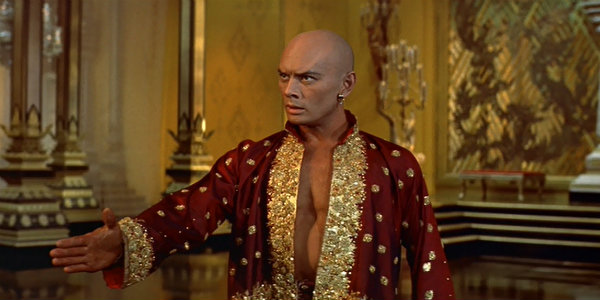
9. Yul Brynner - The King And I

Setting aside Yul Brynner's ethnic background (part Caucasian and part Buryat, the largest aboriginal group in Siberia) and whether or not it was appropriate for him to play a Thai king, he does a great job with the role. He brings to life King Mongkut, ruler of Thailand (then Siam) during the 1860s, a man who was known for his dedication to technical innovations and modernization. Mongkut is a much beloved figure in Thai history, and Brynner's performance befits the king's noble legacy. He brings an endearingly human element to the character -- Mongkut is intelligent and forward thinking, but he can also be a bit imperious and petulant. He comes across as a man who desperately wants to do the right thing for his people, and to prove that Siam could be just as intellectual as any Western power, but is perhaps a bit too proud to accept help easily. He is a dignified figure with a lively sense of humor, even if he does take himself too seriously sometimes. Brynner makes him a three-dimensional character, something very rare for Asian characters in Western films of the time, and indeed for characters in musicals in general.

8. Helen Mirren - The Queen

Helen Mirren pretty much is a queen as far as most of us are concerned, so it's unsurprising that she pulled off a truly magnificent performance as the reigning monarch of the United Kingdom, Queen Elizabeth II. There's a touch of restraint where many other actresses would made a spectacle, which perfectly suits the personality of the dignified woman who was always reluctant to put her emotions on display. This film is very much about a moment in time, rather than a sprawling biopic that details a monarch's whole life, like many of the others on this list. But seeing how a person reacts in one specific situation can tell us as much about them as learning their entire life story. The Queen takes place after the sudden death of Princess Diana, when the public was clamoring for her to make a public statement of grief, something that none of the Windsors have ever been particularly inclined to do. Her reluctance to carry out her family's grieving process in the public eye was accompanied by a certain discontent with the monarchy, which was largely remedied by her televised message honoring the life of Princess Diana.

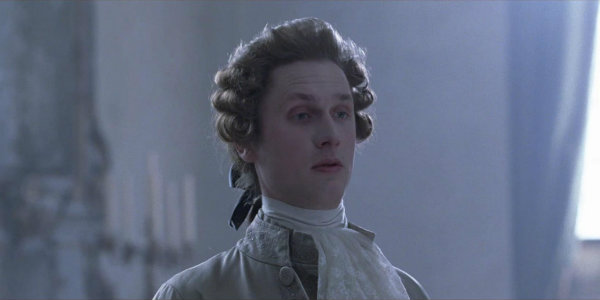
7. Mikkel Følsgaard - A Royal Affair

One of the biggest problems with the notion of keeping your marriages within the same few royal bloodlines throughout Europe is that when there's a hereditary problem, it tends to pop up with more and more frequency, because both parents are likely carriers. Consider the prevalence of hemophilia among the royal descendants of Queen Victoria. The same sort of thing happened with mental illness, which seems to be at least partly linked to a family history. That could explain why you hear of so many mad kings. The reign of Christian VII of Denmark was plagued by periods of mental instability which affected his ability to rule. And it certainly sheds light on the relationship that developed between his wife and his physician, who carried out a lengthy affair. The film A Royal Affair largely focuses on their romantic relationship, but Mikkel Følsgaard's performance as the king is crucial. He manages to strike a chord with audiences -- he avoids the temptation to chew the scenery or to make the character into a true villain. He won the Best Actor award at the Berlin Film Festival, and the film just wouldn't work without him.

6. Cate Blanchett - Elizabeth

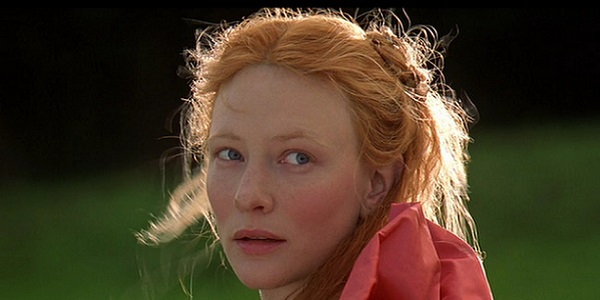
In 1998, two actresses were nominated by the Academy for playing Queen Elizabeth I: Cate Blanchett for her role in Elizabeth, and Judi Dench for her work in Shakespeare in Love. And there's a reason for that, they're both great performances. Dench captures the power and resolve of her as an older woman, while Blanchett brings to life all the struggles and vulnerability of her earlier years. Elizabeth begins with the young princess in the Tower of London, imprisoned by her sister Queen Mary and fearing for her life. It follows her through those dark times, to her eventual ascension to the throne. But even when she was queen, she faced danger at every turn. Many courtiers plotted against her, believing that as a woman she was too weak to rule England. In time, Elizabeth grows from a clever, charming young woman into a queen who understands that in order to keep her throne, she must possess an iron will and act as if she were made of stone. Blanchett proves so adept at playing of Queen Elizabeth that it's no surprise that, when she was a decade or so older, she reprised the role in Elizabeth: The Golden Age (a film which she was also nominated for).

5. Kenneth Branagh - Henry V

Strictly speaking, this isn't so much a portrayal of the actual historical figure Henry V, as it is Shakespeare's heavily fictionalized version of him. But either way, it's top notch. Branagh takes material that would fall flat in the hands of anyone less talented, and makes it exciting and dramatic. The highlight of his performance is, without a doubt, his St Crispin's Day speech. In it, his English troops are vastly outnumbered by the French, and he has to somehow raise their morale. So how does he do it? He tells them that he would rather have it that way, because to be the underdog means that their victory will be all the more honorable. Now obviously, any general would rather have a few thousand more men, but there's nothing to be gained in telling the men that. Instead, he rallies his troops to a fever pitch, with triumphant music soaring in the background and Branagh's confident smile convincing the men that they will win this battle. Branagh has a command of Shakespeare like few others, and this is his masterpiece.

4. Peter O'Toole and Katharine Hepburn - The Lion In Winter
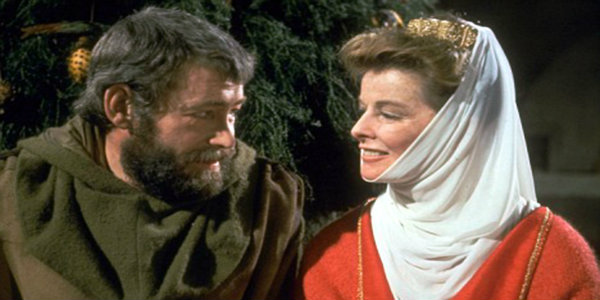
Peter O'Toole and Katharine Hepburn put in magnificent performances as King Henry II and Queen Eleanor of Aquitaine, respectively. There's trouble in paradise for the estranged couple, with Eleanor out of favor with the king and imprisoned in France. They disagree over which of their three sons should inherit the throne -- Eleanor supports her eldest son, Richard the Lionheart (played by Anthony Hopkins in his film debut), while Henry favors his youngest son, John. Henry eventually decides that none of his sons are suitable to inherit (even though both Richard and John would go on to be crowned king), and briefly considers siring a new heir with his mistress. This is one of the quintessential political marriages in history, and both O'Toole and Hepburn showcase the shrewd and calculating intelligence of these two royal powerhouses.

3. The Last Emperor

The Last Emperor is a sweeping epic, detailing the entire life of Puyi, the last emperor of China before the Xinhai Revolution in 1911 forced his abdication. It begins when he was chosen by the dying Empress Dowager Cixi to succeed her, at the young age of two years old. The film goes on to show Puyi's life at the ages of 8 and 15, but the bulk of the significant content takes place when Puyi was an adult, played by Hong Kong-born actor John Lone. He faced a tremendous amount of turmoil in his life, after losing his throne and being imprisoned for ten years as a war criminal. It's never easy to experience a complete upheaval of every aspect of your life, and John Lone brings a sense of quiet resolve that defines the character throughout. The Last Emperor is largely known as a visual masterpiece, with the always stellar Bertolucci behind the camera and the production being granted unprecedented access to the Forbidden City, but Lone's performance as Puyi really brings it all together.

2. Colin Firth - The King's Speech

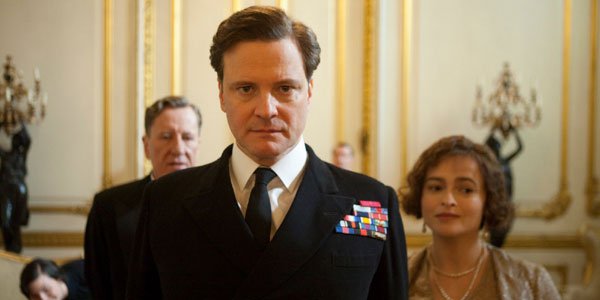
King George VI was an unassuming man, and probably one of the most overlooked English monarchs in history. He's nestled between an older brother who shocked the world by abdicating to be with an American divorcee, and his daughter Elizabeth, who is an icon in her own right as the second longest reigning English monarch (she will need another year or so before she beats Queen Victoria). But King George VI, privately known as Albert, was a quiet, self-conscious individual, a man who never desired or indeed thought it possible to become king. It is this vulnerability, as well as his famous stutter, that Colin Firth manages to capture with his Oscar-winning performance in The King's Speech. The film depicts Albert in the time before he becomes king, when he is meeting with a speech therapist to overcome his stammer. All his worst fears become realized when he suddenly finds himself first in line to the throne, and Firth is so emotionally resonant that we the audience are nervous right along with him while he must deliver a speech to the nation announcing war on Germany.

1. Nigel Hawthorne - The Madness Of King George
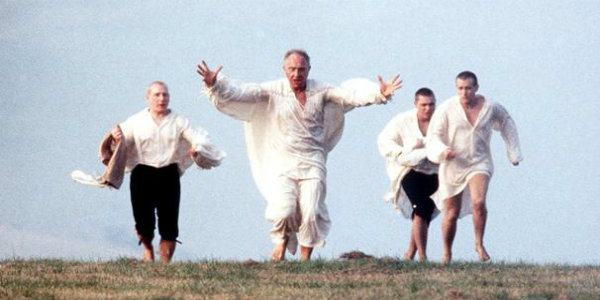
Helen Mirren makes another appearance, this time as Queen Charlotte, but it's her on-screen husband King George III who is the star of this film. It stars Nigel Hawthorne as the titular Mad King George, who spent much of his reign in and out of lucidity, while his son the Prince of Wales (played by Rupert Everett) fought to become Prince Regent, basically the de facto king. Today, most historians believe that George suffered from acute intermittent porphyria, which frequently manifests itself in the form of depression, anxiety, mania, hallucinations, confusion, and psychosis. This films focuses on the beginning of his mental decline, and many of the treatments visited upon the king to attempt to reverse his madness. Hawthorne takes the king and creates an incredibly sympathetic figure, a man trying to overcome his instability while primitive physicians subject him to painful and abusive "medical" procedures. It's one of the biggest shockers in film history that he lost out the Academy Award to Tom Hanks in Forrest Gump.

Contributor
Contributor

Audrey Fox is an ex-film student, which means that she prefers to spend her days in the dark, watching movies and pondering the director's use of diegetic sound. She currently works as an entertainment writer, joyfully rambling about all things film and television related. Add her on Twitter at @audonamission and check out her film blog at 1001moviesandbeyond.com.