10 Horror Films With Terrifying Sound Design
The horror films that made the most out of their sinister sound design.

Have you ever found yourself reaching for the volume button while watching a scary scene in a horror film? Or even muted said scene entirely? The suspense, dread, and atmosphere that had you racing to lower the volume in the first place is completely gone, replaced with voiceless images silently wandering in the dark. And that’s just not scary.
If you’ve ever noticed this, then you’ll have witnessed first-hand the importance of sound design in cinema.
The music, sound effects, ambiance, dialogue, every audial aspect of a film is what renowned film theorist Michel Chion describes as “added value” to give a deeper meaning to the images onscreen. This is true of all audio-visual media (including video games), but nowhere is this phenomenon best observed than in the horror genre.
From the eerie silences that proceed the inevitable loud sting of a jump scare to the dissonant strings that form a foreboding soundscape, all horror films utilise sound design in one way or another to heighten their fear factor. However, some films are better at this than others, with the sound design in some flicks being the main source of the terror.
10. The Ring (2002)

Remakes of horror films often pale in comparison to the original. This is especially true when it comes to western adaptations of J-horrors, with The Eye, One Missed Call, and 2020’s The Grudge all losing the sinister spark of their eastern counterparts. One exception to the rule, though, is Gore Verbinski’s The Ring.
The remake of Hideo Nakata’s J-horror classic Ringu, the American version follows the same general premise: a journalist (Naomi Watts) finds herself investigating a cursed VHS tape linked to a series of strange deaths. However, after watching the tape herself, she has only seven days to break the curse before she’s killed by the malevolent force behind it.
Like the original, the palpable sense of dread lies primarily within its selection of terrifying imagery and unsettling atmosphere, which is greatly amplified by the sound design.
Through adding the peircing screech of television static to the backdrop of Hans Zimmer’s unnerving score, The Ring easily crawls under the viewer's skin.
Throw in clever sound editing that’ll have you jumping out your skin every time a shrill ringing phone interrupts the eerie silence and you have some of the most effective sound design in horror history.
9. The Haunting (1963)

Not to be confused with the rather awful 1999 remake of the same name, the original 1963 version of The Haunting comes to us curtesy of four-time Oscar-winning director Robert Wise and writer Nelson Gidding, Wise's frequent collaborator.
An adaptation of Shirley Jackson’s chilling novel The Haunting Of Hill House, the film follows a group of strangers partake in an experiment led by an esteemed professor (Richard Johnson) to determine whether the supposedly haunted Hill House really is haunted.
During their stay, plenty of strange phenomena is observed around the house as Eleanor (Julie Harris), one of the guests invited to the study, gradually becomes obsessed with the house despite her initial worries. Unlike the 1999 version, the real horror of this film comes from its ambiguity. Is the house as evil as its history suggests, or are these occurrences a result of Eleanor’s deteriorating mental health?
A spine-tingling Gothic marvel, The Haunting utilises its sound design to play on the ambiguous nature of its premise. Pipes rattle and doors bang as if the house is alive. And in one famous scene disembodied whispers and laughter echoes through the night.
Ghosts or not, the effect is chilling either way.
8. The Innkeepers (2011)

Written and directed by Ti West, this little horror gem is a follows the only two employees (Sarah Paxton and Pat Healy) of a century old inn attempt to prove that the establishment is haunted before it's closed down by undertaking their own paranormal investigation.
With the primary tool for their investigation being audio equipment, sound is at the heart of this film's atmosphere. It's clear both West and frequent collaborator and sound designer Graham Reznick know exactly what they're doing when it comes to getting the most terror out of the subtlest of sounds.
Set in one contained location and minimalistic in style, The Innkeepers is as stripped-down as a horror film can get. But instead of coming across as bland and uninspired, this style works to this film’s advantage by amplifying the stillness of the inn’s atmosphere.
Many scenes feature Paxton simply
walking down empty hallways listening for the slightest of sounds which could prove the
establishment’s ghost exists. And, just like the protagonists, viewers will
find themselves listening closely to what the the sound equipment picks up to hear this ghost for themselves.
7. Audition (1999)

Based on the book of the same name by Ryo Murakami and helmed by legendary and prolific filmmaker Takeshi Miike, Audition is one of the films that drew western eyes towards extreme Asian cinema.
Beginning innocently enough, the plot follows widower Shigeharu (Ryo Ishibashi), who is holding fake auditions to find a potential new wife. It’s here he meets the shy Asami (Eihi Shiina), and the pair spark a relationship. But when Asami mysteriously vanishes during a weekend away, Shigeharu begins to search for her, discovering that this woman isn’t who she initially seemed to be.
Taking a swift turn into the macabre, surreal, and outright sickening, events come to a head during a climactic and infamous torture scene whereby Asami drugs and paralyses Shigeharu before inflicting pain with acupuncture needles and piano wire.
Despite it not quite resorting to showing all the blood and gore, this sequence’s manipulation of sound makes it more stomach-churning than any body horror could accomplish.
From the amplified sound of Asami chiming the needles she bore into her victim’s flesh to his cries of helpless agony as the needles and wire are driven in, turning down the volume here is the only way to end your own suffering in this scene.
6. The Babadook (2014)

An acclaimed indie gem from Australian writer-director Jennifer Kent, The Babadook is a menacing monster movie that acts as a chilling metaphor for grief. The plot follows widowed Amelia (Essie Davis) struggle to cope with her troubled and misbehaving son (Noah Wiseman) while still mourning the death of her husband.
Things only go from bad to worse for Amelia when she reads a twisted storybook to her son about a monster called Mister Babadook that she finds in his room. With her son convinced that the creature is real and being unable to dispose of the book, Amelia’s grief manifests itself as the shadowy figure that torments the family.
A story you wouldn’t want to read to young children, Kent establishes the bleak tone of her film with washed-out cinematography that coats the family home in dark shadows. Likewise, the filmmaker masterfully uses sound to crank up the tension, and you likely never even noticed.
Throughout the film, Kent incorporates an unnerving drone in the background of a handful of scenes – the sequence in which Amelia reads the storybook being a standout example. As the scene becomes more disturbing, the volume intensifies.
And then, of course, there’s the gravelly voice of the monster itself.
5. The Shining (1980)

Hailed as one of the greatest horror films ever made, Stanley Kubrick’s adaptation of The Shining still continues to chill audiences to the bone all these years later.
Taking place in the lavish Overlook Hotel during the winter season, the film follows Jack Torrance (Jack Nicholson) and his family take up residence in the hotel when Jack takes the caretaker job. Isolated from the outside world by heavy snowfall, an already unhinged Jack begins to fall apart at the seams as the hotel takes hold of him.
From incorporating impossible corridors and windows into the set design, subtly moving props during shots, and even terrorising actor Shelley Duvall to get the most out of her performance, Kubrick did everything he could to ensure that his Overlook Hotel was as unnerving as possible. Likewise, his implementation of sound design was just as crucial in accomplishing this.
Not including the sensory-shattering cacophony that is its score, Kubrick deploys other subtle tricks within his film to raise the tension without viewers even noticing. One of the most effective of which is the Room 237 scene where Kubrick plants an ominous heartbeat into the soundtrack to build suspense as Jack walks towards the bathroom.
4. A Quiet Place (2018)

Sometimes the absence of sound can be the most effective use of sound design. One film that knows this better than most is John Krasinski’s A Quiet Place.
Set in the aftermath of a world that’s been invaded by alien creatures with super sensitive hearing, this surprisingly heartfelt film follows the Abbott family do what they must to survive while being as quiet as possible.
To immerse audiences in this monster-infested world, the film uses as little sound as required to tell its story. Dialogue and music are kept to an absolute minimum, which creates a noticeable emptiness in this post-apocalyptic world.
And whenever sound does enter the mix - like when a lantern is knocked over or an elderly man screams in anguish - they not only spell danger for the Abbotts, but feel like they're intruding in this silent world.
Moreover, the filmmakers also shift the auditory point of view between characters to help tell the story and build suspense in a unique way. Krasinski has even stated that he views the sound design as its own character, and you can understand what he means watching this film.
3. Alien (1979)
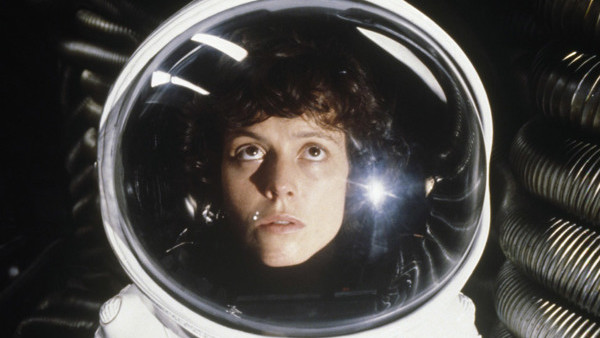
Isolated in the depths of space and trapped with a vicious, acid-blooded killer onboard a claustrophobic ship, Ridley Scott’s Alien is the genre-defining masterpiece of sci-fi horror. Expertly lacing his film with suspense, the film follows the ill-fated crew of the Nostromos as a detour to investigate a destress call leads to the eponymous creature entering their ship via one of their crew’s chest cavity.
An iconic and acclaimed piece of cinema history, many know this film best for its stellar art design. However, this film’s chilling atmosphere wouldn’t be anywhere as brilliant if it weren’t for its disquieting sound design.
Emphasising the stillness and loneliness of its setting, silence is a pivotal part in teasing out the suspense of each scene. We know the Xenomorph is hiding in the shadows somewhere, and every clink of a chain and metallic clank of machinery could be caused by the creature skulking about.
In addition to subtly mixing in Jerry Goldstein’s eerie and ethereal score, Scott plays with plenty of other sonic tricks to keep viewers on edge. Most notably, electronic heartbeat sounds are scattered within the diegetic soundscape to simulate a fear response – and it worked.
2. Berberian Sound Studio (2012)

If you still need proof of how much power sound holds in horror cinema, then Berberian Sound Studio is the film for you.
Set predominately in a sound studio, the film follows mild-mannered English sound engineer Gilderoy (Toby Jones) travel to Italy to work on a film titled The Equestrian Vortex. To Gilderoy’s dismay, however, this project is a visceral and extremely graphic horror leagues away from the tranquil nature documentaries he’s used to working on.
Though viewers never actually get to see any of the footage from this fictional film, they do get the displeasure of hearing the engineers create and record the sound effects to accompany the horrific actions which we can only imagine. And, going by the severe impact that bringing these sickening scenes to life with sound has on the poor Foley Artist, we’d be better off not seeing what’s being projected.
A love letter to old-school Italian horror, film fans will revel in getting a peak at the creativity used in creating some of these horrific sounds. However, there's an uncanny aspect of seeing these sounds being recorded that’s just as weird as it is fascinating. And it's in this uncanniness where the terror of the film lies.
1. Eraserhead (1977)

If you want to see the full effect sound has in cinema, look no further than the works of auteur filmmaker David Lynch. Mullholland Drive, Lost Highway, and Blue Velvet are all equally fantastic examples of how Lynch manipulates sounds to create the dream-like landscapes of his films, but none are arguably as disturbing than Eraserhead, his first feature film.
Shot entirely in black and white and taking a staggering five years to film, to attempt to summarise this film is an impossible task due to its surrealist and abstract nature. Despite describing Eraserhead as his “most spiritual film”, Lynch hasn’t elaborated on its deeper meanings as we watch oddball protagonist Henry's (Jack Nance) descend into a nightmare world.
Now an iconic part of cinema, this film is best known for its menacing soundtrack. Created by Lynch himself, every aspect of the sound design is engineered to create discomfort.
The constant low, industrial drone humming in the background, the inhuman cries of Henry’s child, and the penetrating hiss of a radiator, everything about the soundscape is supposed to sound off. The impact of which is an uncompromisingly unsettling experience from start to finish.
Watch Next
Can You Identify The Cult Horror Movie From A Single Image?
