10 Horror Movies That Got Better YEARS Later
These horror movies got way, way better with age.
While films don't physically change once they've been released, they are forever being measured up against society, which is nothing if not ever-evolving. And so, though the tangible elements of a movie can't get better or worse, how audiences engage with a film can vary wildly over time, one way or another.
This can often result in a classic movie eventually feeling dated to modern viewers, but there are also instances where a picture actually benefits from the passage of time. Certainly, that's never truer than in the horror genre, which has consistently held up a mirror to the anxieties of human existence. So, perhaps it's not terribly surprising that many ahead-of-their-time horror movies only get their full appreciation years, even decades later.
That's absolutely the case with the following 10 horror features. Regardless of how they were received upon their original release, they've since taken on a whole new lease of life in subsequent years as contemporary audiences connected with them in a totally different way.
It's often said that a film doesn't belong to the director once it's released into the world, and the fluid response to these horror movies is surely proof perfect of that.
10. Psycho II
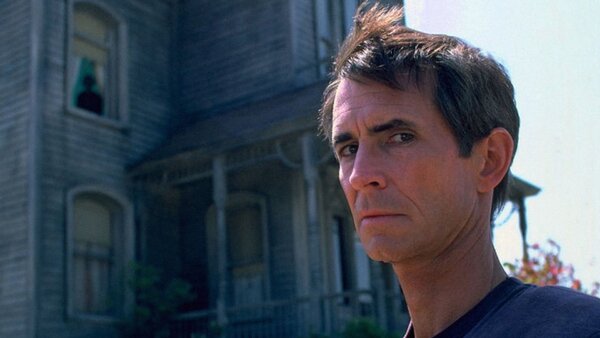
Though Psycho II will always be popularly regarded as an inferior sequel to Alfred Hitchcock's iconic original, it's also a film that got a majorly bad rap for decades.
While many dismissed it out of hand as a belated cash-in coming some 23 years after the first movie, Psycho II has actually been vindicated by time as the first major horror legacy sequel.
Literally, decades before we had Halloween 2018 or Scream 2022, Psycho II saw the murderous Norman Bates (Anthony Perkins) return home after spending 22 years in a mental institution. At the same time, a new killer - or perhaps Norman himself - starts offing some of the locals.
All the typical legacy sequel hallmarks are here - namely, dusting off a couple of O.G. characters to stand alongside a bevy of new ones, while offering up a number of homages to the original movie - and it's a genuinely very well-crafted sequel, even if it unavoidably suffers from being a follow-up to one of the greatest horror movies of all time.
Psycho II's own legacy, however, lies in setting the template - albeit inadvertently - for basically every navel-gazing legacy sequel, good or bad, that followed.
9. Scream 3

Long-time Scream fans will probably remember that the third film was considered a massive disappointment when it was released in 2000, and in fairness, that assessment wasn't really wrong.
Without the razor-sharp pen of franchise creator Kevin Williamson, the script definitely suffered, overloading itself with absurdity that veered a little too close to the very shark-jumping silliness the two previous films gleefully parodied. But Scream 3 has also become a far more interesting film with time, especially in light of the #MeToo movement in 2017.
Now, it's near-impossible to watch the scenes referencing the abuse of Sidney's (Neve Campbell) mother, Maureen, as a young actress in Hollywood without thinking of Harvey Weinstein - all the more so, given that Weinstein executive-produced Scream 3.
Moreover, with everything we now know, the character of abusive producer John Milton (Lance Henriksen) feels like a straight-up stand-in for Weinstein.
Scream 3 is still a film with its many flaws and blemishes, but time has been extremely kind to its darker themes.
8. Misery

Misery is and probably always will be regarded as one of the very best Stephen King adaptations, but this already-great movie has only felt more relevant as time has passed.
Kathy Bates, of course, stars as Annie Wilkes, a deranged super-fan of novelist Paul Sheldon (James Caan) who holds him captive following a brutal car accident. And watched today, it's near-impossible not to look at Annie and think of modern toxic fans of just about anything.
Sure, Annie is an obviously heightened example of entitled fans who've made a given IP their entire personality, and these types of fans have always existed, but in the age of social media, these people are able to be far more vocal on a much more public stage. In an era where creators are regularly harassed and even physically threatened by deranged fans who've developed parasocial relationships with them and their work, Annie feels borderline prophetic.
Misery has always been excellent, but it also reflects modern society in some chillingly unexpected ways.
7. Ghostwatch

Ghostwatch is a mockumentary that was aired on British TV on Halloween 1992, a paranormal investigation film which proved authentic enough that the BBC switchboard was swiftly blown up with phone calls from the panicked British public.
But of course, Ghostwatch was a mere work of fiction - albeit an extremely impressive one, whose production values and low-fi scares allowed it to strike a chord with audiences of the era.
Ghostwatch slid into obscurity in the years that followed, largely due to the BBC never repeating it on British TV, but more recent home video releases have allowed it to find appreciation among younger generations. In effect, time has only made Ghostwatch creepier and more fascinating; while in the 1990s it felt current and of-the-moment, now its dated aesthetics make it feel like a genuine cultural artefact pulled from the TV archives.
With analogue horror being very much in vogue nowadays, Ghostwatch has basically enjoyed a second life as a time capsule of early '90s Britain.
6. Halloween III: Season of the Witch

Halloween III: Season of the Witch really didn't stand a damn chance when it first came out, given that, despite its title, it didn't feature Michael Myers at all. Instead, it was an entirely standalone story about - checks notes - cursed Halloween masks designed by a malevolent corporation to kill children.
Season of the Witch underperformed at the box office and remains a polarising sequel to this very day, though its reputation has absolutely grown over the years as many have come to appreciate it as a rock-solid spooky story with some franchise branding slapped on it.
It also helps considerably that folk horror has enjoyed a major resurgence over the last decade or so, with the acclaimed likes of Kill List, The Witch, Midsommar, and many more. So, there's been a massive uptick of interest in the subgenre, and by extension, many have found themselves drawn to Halloween III's undeniably folksy trimmings.
Its sledgehammer-subtle anti-capitalist messaging probably also helped it strike a chord with younger generations of frustrated horror fans.
5. Black Christmas (1974)

Black Christmas has never really gotten its full due for being one of the genre's first-ever slasher flicks, even predating John Carpenter's Halloween by a full four years. But more than that, Bob Clark's visceral seasonal horror flick has proven itself to be an impressively progressive and timely film with regard to the issue of women's reproductive rights.
A subplot in Black Christmas involves protagonist Jess (Olivia Hussey) informing her boyfriend Peter (Keir Dullea) that she's pregnant and going to have an abortion, much to his anger. Despite that, Jess remains steadfast in her decision, and while the film itself was likely responding to Roe v. Wade establishing a woman's right to an abortion a mere year prior, few could've anticipated how America would change decades later.
In the current American climate, where a woman's right to make her own reproductive choices is being eroded by those in charge, Black Christmas feels ever more relevant in underlining the importance of said right to choose. It's just depressing that a 50-year-old movie paints a more permissive picture of bodily autonomy than the present paradigm.
4. Videodrome

Videodrome rightly remains one of the most celebrated films of David Cronenberg's hallowed filmography, and it's a film that's continued to mutate in unexpectedly grotesque ways as time has marched on. As a commentary on the impact of technology on the human psyche, Videodrome was jolting in 1983 and remains very much so today.
If Cronenberg's original vision was pointed primarily at sensationalist media through TV, today it's easy to see the brain-rewiring nature of social media as the modern equivalent. And as phones become ever-more inextricably linked with our moment-to-moment existence, Videodrome's surreal vision of man and machine becoming fused together seems less and less ridiculous.
Cronenberg obviously didn't see social media coming, but he clearly tapped into a broader vein with regard to the progression of technology, which will only become ever more invasive and entwined with the physical form as the years pass. With that in mind, fully expect Videodrome's body horror vision to remain relevant decades from now.
3. The Wicker Man

The Wicker Man has always been one of the all-time great folk horror films, but it's also a striking example of how a film's strangeness can only grow the further we get from its original release.
Now more than 50 years away from when it was originally released, The Wicker Man truly feels like a window into another world - its remote Hebridean setting and the culture depicted therein so far removed from pretty much anything in the contemporary experience.
This isn't to say that Summerisle and its pagan residents were a representation of "the norm" in 1973, because of course they weren't, but a half-century of distance from everything it depicts lends it an almost otherworldly quality that's probably only going to keep growing as more time passes.
To a younger viewer today, The Wicker Man may as well take place on another planet, and that only makes it that much more intoxicatingly hypnotic.
2. In the Mouth of Madness
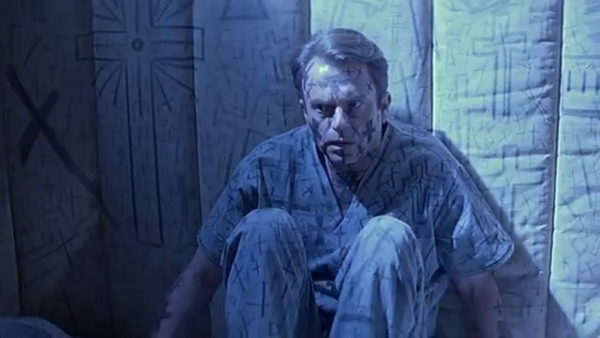
In the Mouth of Madness was a box office flop and critically divisive when it released in 1994, though some three decades later, it's hard not to see John Carpenter's metafictional horror film as incredibly ahead of its time - even if many are only now warming up to it.
For the final entry in his Apocalypse trilogy, Carpenter enthusiastically tears down the fourth wall, as an insurance investigator's (Sam Neill) search for a missing horror author sees the boundary between reality and fiction totally fizzle away. It's fantastically clever and unsettling, and yet mainstream audiences of the mid-'90s seemingly didn't know what to do with it.
Much like Wes Craven's gloriously meta A Nightmare on Elm Street sequel New Nightmare, which released the very same year, In the Mouth of Madness arrived a few years before self-aware horror became in vogue with Scream, and still about two decades before self-reflexive wink-wink cinema truly hit the mainstream.
Watched today, In the Mouth of Madness is far from the jumbled, over-ambitious mess that many dismissed it as back in the day; it's a film that has been vindicated by time as far more ahead of the curve than anyone could've ever anticipated.
1. They Live

They Live is John Carpenter's most outwardly satirical film, a darkly amusing sci-fi horror about a man (Roddy Piper) who discovers that humanity is being secretly manipulated by aliens through subliminal messaging to conform to the status quo.
While They Live has been widely lauded ever since it came out in 1988, it's remained impressively relevant in contemporary society almost four decades later.
Yes, it's hardly a revelatory statement that the mechanisms of capitalism are designed to exploit every single one of us in a conveyor belt of endless consumption, but in the social media era of "Generation Brainrot," its depiction of media manipulation seems more relevant than ever. In a time where algorithms are designed to make us angrier and more divided, all in the pursuit of lucrative "engagement," They Live's account of the media using subconscious tactics to change our behaviour feels terrifyingly pointed.
The medium may have changed from TV to our phones and computers, but as corporations develop ever-more nefarious and underhanded ways to make us do what they want, They Live continues to age like the finest of wines.