10 Legendary Movie Criminals

Who did The Krays better? Tom Hardy or Spandau Ballet.

They say that pretty soon they€™ll all be dead. Just as there are ever fewer people left in Britain who lived through the last World War as adults (as opposed to evacuated children), and the sum of our collective memories will lie in sepia photos and black-and-white film, the generation that followed the war years is starting to thin out. Grannies in leather mini-skirts and granddads in biker jackets remember a post-war boom that brought rock €™n€™ roll; the Pill; the €˜permissive society€™; mods and rockers; the drugs explosion. Still, the way of all flesh beckons. But what of that other cultural explosion that established itself as a true counterculture of the €˜swinging '60s€™? It was a decade where the traditional deference of the British began to fade, and new liberal values ensured that criminals would no longer swing (at least not from the end of a rope). To most of us, British gangsterdom is popular myth. What we know comes from feature films that turn rumour into legend, granting amoral glamour to names that were bywords for thuggish brutality: Ronnie. Reggie. Charlie. Frankie. I€™m just about old enough to have met some of these old miscreants, often in their twilight years. They all had stories to tell, often in contradiction of each other, and the Brit flicks granted just one more layer of legend...


10/9. Ronnie And Reggie - The Krays (1990)/Legend (2015)

I was in a room or a bar with the Kray twins maybe 100 times," one old-school East End thief told me. "And what you€™ve got to remember is there was nothing glamorous about €™em. Nothing at all." You can imagine the bemusement of the ageing underworld when Peter Medak€™s The Krays (1990) featured Gary and Martin Kemp, of '80s New Romantic band Spandau Ballet, as the twins. Not only did the svelte Gary not carry the weighty menace of bisexual thug Ronnie, but the Kemp brothers were neither twins nor anything approaching identical. Bullet-headed thespian and native East Ender Steven Berkoff imbued the character of Ronnie€™s victim George Cornell with a sneering, if hammy, menace. But the peculiar (unintentional?) effect was to pit an older showbiz generation, character actors who played hard men, against well-scrubbed ex-pop stars. Back in the black-and-white world of the '60s - a world away from the bloody Hammer-Horror-meets-Ealing-comedy of The Krays - there was no such generational difference. Cornell was a near contemporary, not much older. The late Tom Bell - who played a cat burglar (based on pro thief Peter Scott of Channel 4€™s The Heist fame) in He Who Rides a Tiger (1965) and vengeful criminal Frank Ross in tough 1970s TV serial Out - gave a memorably seedy performance as the Krays€™ other gangland murder victim, €˜Jack the Hat€™ McVitie. Though Bell was effective as the doomed, drunken, pill-popping Jack, there was a definite incongruity in the casting: he could have been, if not the Kemps€™ father, then a louche and disreputable uncle. In reality, McVitie only had a few years on the Krays; by the account of people who knew him (like my father) he was a more robust, macho figure than the slurring loudmouth incarnated by Bell. The reasons The Krays gave for Jack the Hat€™s stabbing to death immortalises one aspect of the twins€™ personal mythology: their Auntie May is seen whispering about €˜her€™ that Jack pushed from his moving car and left crippled, all because she mentioned his balding pate. It preserves the legend, propagated by the twins themselves, that they were seeking retributive justice and were unofficial policemen who kept moral order in the East End. In reality, no one can put a name to the unfortunate (and possibly mythical) girl victim. Still, The Krays remains an underrated and contentious piece of Brit cinema. While former East End thieves have derided it as €˜b*ll*cks€™, playwright Philip Ridley - who, presumably, was commissioned to write the screenplay on the basis of being a Bethnal Green boy - filled it with his personal folklore, to the extent of having the young twins fascinated by toy crocodiles (the animal is a personal icon of Ridley€™s). The matriarch Vi Kray is given the persona of a steely, vengeful queen out of some tragic drama by the late Billie Whitelaw - nothing like the mumsy figure described by those who knew her. The twins, who believed they had a deal to tell their €˜true€™ story, were bemused by the result and enlisted a documentary team, whose film went straight to video. When Ridley made his own directorial debut with The Reflecting Skin (1991), his gothic vision of the USA€™s Deep South was no less personally mythologized than the way he€™d depicted his local East End underworld in The Krays.
"Let€™s hope the new Krays film is better than the first,"* veteran ex-gangster Freddie Foreman tells me. And more than anyone, he has perhaps the right to judge. A notorious gangland figure who recently turned 83, he served a 10-year sentence for disposing of Jack the Hat€™s body. According to old Fred, McVitie precipitated his own murder by making a lot of wild, drunken threats against the twins. "I read the script by Brian Helgeland," says Foreman. "I€™d taken him down the Punchbowl , had a meal with him because he wanted to do a film with me. But he went back to America and the next thing I know he€™s doing a script on the twins." In the 1990s, Helgeland adapted James Ellroy€™s seedy panorama of a corrupt 1950s Los Angeles, LA Confidential, into a razor-sharp script. Fred Foreman, relatively sanguine about being bumped off the project, shares the general hope that the screewriter/director can perform a similar feat of period moodiness with the Krays€™ story. But, as he sees it, there€™s one slight credibility problem: "He€™s got Reggie at the window saying, 'I love you, Frances,' to , and she€™s saying, 'I love you, Reggie.' It€™s all f*ck*ng Mills and Boon, but the twins were both gay!"* In the intervening years since The Krays, it€™s become more widely known that brother Ronnie was not €˜the gay one€™. In fact both twins were bisexual and, though Reggie was more inclined to women, it€™s now believed that his marriage to the tragic, suicidal Frances was never consummated. *Quoted from Freddie Foreman: The Last Gangster €“ to be published in September 2015, with an introduction by Tom Hardy.

8. Johnny Bannion - The Criminal (1960)

In November 1972, after London Soho figure €˜Italian Albert€™ Dimes€™ death from cancer, his loyal friend actor Stanley Baker would attend his funeral while many stayed away. The most flamboyant wreath was sent by a couple of younger friends, by then unavoidably detained, reading, €˜TO A FINE GENTLEMAN - FROM REG & RON KRAY.€™ It was destroyed by friends of the family, who€™d decided the association could bring only shame by that point. Joseph Losey€™s The Criminal, made at the very onset of the 1960s, is an oft-overlooked classic. Moody and noirish with crisp black and white photography, it stars Baker as pro thief Johnny Bannion, faced in and out of prison with an increasingly corporate organised crime network which wants to either assimilate or destroy him. Hardboiled but European in style, it cemented American expatriate Losey€™s reputation with the French critics and filmmakers at the forefront of the nouvelle vague. For everyone else, The Criminal was an odd but entertaining piece of pulp played with conviction by Stanley Baker. According to Losey, his star based his performance on his friend Italian Albert, who clearly impressed the director as €œa huge, staggeringly handsome man drove around in a smashing, big, white convertible with black leather upholstery€.

7. Paul Clifton - Robbery (1967)

Stanley Baker, who later became €˜Sir Stanley€™ before his untimely death from cancer in the mid-1970s, was a kind of Welsh prototype for Sean Connery in the 1950s/early 1960s. He was also an habitual associate and genuine friend of professional villains, including London €˜godfather€™ Billy Hill, Albert Dimes (whose defence he contributed to during a 1955 razor slashing trial), Eddie Richardson and €˜Mad Frankie€™ Fraser. Baker managed an amateur football team that played for children€™s charities, called the Soho Rangers, whose players included Fraser, Dimes and prison escapist Alfie Hinds. Baker received similar tutoring to that given by Dimes on The Criminal for his role in 1967€™s Robbery, an almost forgotten piece of Brit-pop cinema that wore its inspiration on its sleeve. Its publicity poster tagline €“ €˜Who says crime doesn€™t pay? Three million pounds says it does!€™ €“ made a direct allusion to the Great Train Robbery take of 1963. The biggest robbery in British history up to that point, it was masterminded by one of Baker€™s Marlborough pub drinking companions, Bruce Reynolds €“ then still at liberty and on the run €“ who clearly inspired the central character, Paul Clifton. Completely fictionalised but almost documentary in its presentation of a planned heist, Robbery stands up far better today in its evocation of the great underworld coup than the supposedly €˜official€™ train robber€™s story, sentimentally unconvincing 1980s hagiography Buster. As with the real heist, there was a large conglomerate firm of €˜workers€™ put together to perform with military-style precision, and an earlier robbery as a trial run for the big job; the film€™s target was a night mail train headed for London; the location where it all comes off is a bridge crossing a country lane, like the real-life Bridego Bridge; as in the actuality, the robbers anticipated bagging anything up to £6 million, but were elated to take half that. Those retro points that date the film are, today, also part of its appeal: the clipped way in which the robbers speak, laced with cliché but stripped of profanity, redolent of a more censored age and the British stiff upper lip; the admonition not to use guns because €œthe police don€™t carry them€. But the action scenes were stark and economic, its car-chase sequence a trial run for director Peter Yates working with Steve McQueen on Bullitt the next year.

6. Charlie Bronson - Bronson (2008)

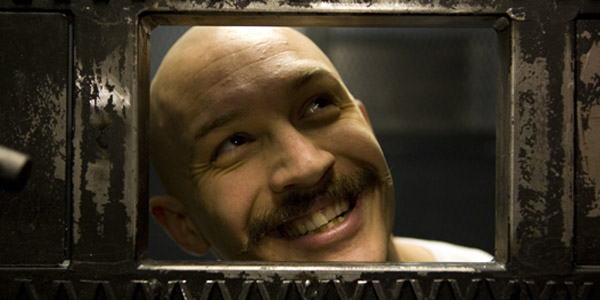
"Why have they made a film about him?" one old-time villain asked me. "As a criminal he€™s nothing!" Taking the former Michael Peterson€™s €˜career€™ into account, you€™d be forced to agree: arrested and sentenced for minor robberies; his terms substantially increased due to dangerous behaviour and nuisance value inside; serving a virtual life sentence after taking hostage the teacher who encouraged his fascinatingly primitive art. A Great Train Robber Charlie Bronson is most definitely not. But this seemingly psychotic prisoner also has an innate sense of the drama of his own life. A naturally violent man, he was given his 70s movie-star nom de guerre by a bareknuckle boxing promoter (€˜Charlie€™ himself hadn€™t seen any of the movie-star Bronson€™s films - not even the sublime Once Upon a Time in the West). Since then, his increasingly deranged antics - often attacking his enemies in a naked wardance-like ritual €“ have added to his notoriety and his jail terms. Freddie Foreman, who served time with Bronson at Her Majesty€™s Prison Full Sutton, in Yorkshire, empathises with the convict€™s sense of psychodrama. "He has to perform to an audience because all the other prisoners are waiting for him to kick off: 'When€™s Charlie gonna start? When€™s he gonna attack a screw or a prisoner? When he€™s gonna get up on the roof and throw all the slates off?' It€™s like showbiz with him." Foreman claims to have pitched the project to Guy Ritchie before it was taken up by Danish crime movie director Nicholas Winding Refn. As with the filmmaker€™s subsequent Drive and Only God Forgives, Bronson skirts a strange line between the crime genre and surrealism - leavened with tragicomedy, as the prisoner becomes a clown in his own mind. While barely shown in US theatres, it€™s a modern cult classic that earned a 76% rating on Rotten Tomatoes. It also opened up a portfolio of true crime-inspired roles for Tom Hardy - leading on to Lawless and Legend, via his terrifying tour de force as 1920s London gangster Alfie Solomons in BBC2€™s blinding Peaky Blinders.

5. Mad Cyril/Mad Frank €“ Performance (1970)/Charlie (2004)

"We were eating eggs in Sammy€™s when the black man drew his knife," drawls rock star Turner, played by Mick Jagger, as the cult classic Performance slips over the cusp from gangster movie to psychedelic psychodrama. "It was Mad Cyril!" contradicts gang boss Harry Flowers (Johnny Shannon) in a trip sequence, as his violent henchman goes crazy on magic mushrooms. Samples from the film€™s soundtrack later provided the backing for 80s €˜Madchester€™ loons Happy Mondays€™ track of the same title (€˜Mad Cyril€™, naturally). But it was also an allusion to one of the London underworld€™s most infamously violent underlings, Mad Frankie Fraser - who died, aged 90, on 26 November 2014. Not the rotund lackey in Performance but an intense, big-headed, little guy with a short fuse, he was played by near-lookalike Chris Curran (not the late Irish actor) in Malcolm Needs€™ ill-received 2004 gang flick Charlie, about the Richardson gang. As one €˜face€™ of the time said to me about the Richardson €˜torture gang€™ trial, "I think Fraser€™s getting a bit of yardage out of it... I think he€™s enhanced it. He€™s built a reputation around it. We€™d never heard of it happenin€™. he probably pulled teeth out an€™ all that,€ he conceded, of a time-honoured gangland tradition that persists to the present day. Charliemovie Charlie, the film, while no masterpiece, does reflect the ambiguity of criminals who strongly protest the charges against them yet build their status upon them - henchman Fraser in particular. In the years before his demise, well into his dotage, the old South London gangster was at it again, hinting that he€™d disposed of people and cremated their bodies for gangland boss Billy Hill. These latter crimes were most likely never committed by Fraser, or indeed by anyone at all.

4. Harry Starks/Charlie Richardson - The Long Firm (2004)/Charlie (2004)
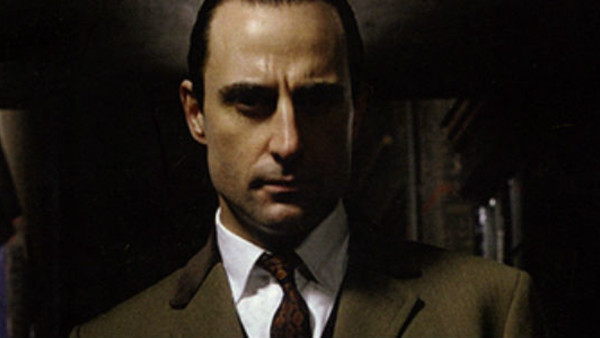
If there was one modern novel it seemed audacious to try to televise, it was Jake Arnott€™s 1999 The Long Firm. A rewriting of 1960s criminal and social history, its ingeniously allusive narrative was sectioned off into four discrete one-hour episodes. It was also a career best for Mark Strong as London gangster Harry Starks, before he took off for a solid career in Hollywood supporting roles. A reader of Charlie Richardson€™s self-serving autobiography (My Manor) would recognise shades of little Charlie in Harry, as he reminisces about joyful times spent tossing unexploded bombs to and fro with his father, an air raid warden. Both South Londoner Richardson and his rivals the Krays provided the framework on which Arnott built his alternative universe, with its allusions to other London figures of the time. (Like the un-businesslike, irrational Ronnie Kray, Harry is gay and a paranoid schizophrenic.) With Arnott€™s post-modern sleight of hand, one episode also draws in record producer and amphetamine psychotic Joe Meek - the Phil Spector of London N7, subject of the great biopic Telstar. One story strand not explored in that film is how, in January 1967, two suitcases were discovered in the village of Tattingstone, Suffolk, containing the dismembered body of teenager Bernard Oliver. Bernard was a rent boy and a friend of Meek€™s. Meek felt the walls closing in when Scotland Yard announced they would be interviewing all known gays in London (a very tall order). Then, on February 3, he shot dead his landlady and turned the single barrel on himself. Whether he was guilty or not, after his death no one was charged with the murder of Bernard Oliver. In The Long Firm, the murder of disintegrating Meek€™s rent-boy friend is revealed as an act of sadism by a member of the aristocracy: Lord Thursby (Derek Jacobi), who owns a country pile in Tattingstone, scene of the 1967 crime. Thursby, a corrupt and clandestine gay in the pocket of Harry Starks, is such an obvious caricature of Lord Boothby, Ronnie Kray€™s tame MP, that some have assumed the Krays somehow imposed themselves into the life of Joe Meek. Such associations exist only in the imagination of Arnott, but avenging the boy€™s death allows Strong, as Starks, to get righteously medieval with a red-hot poker. When he comes to trial, Harry is labelled with the Fleet Street title of €˜Torture Gang Boss€™, just like Charlie Richardson. But no such mitigation exists for the Richardson gang€™s alleged deeds. According to A Criminal History of Mankind by Colin Wilson, fellow crooked businessmen who€™d fallen foul could expect the following treatment: €˜At these torture sessions, Charles Richardson dressed himself up in judge€™s robes, and conducted a mock trial. Then the victim was stripped naked, and a device known as €œthe box€ was produced... Buckets of cold water were thrown over the victim to lower his electrical resistance. Teeth would be pulled out with pliers, and cigarettes would be stubbed out on the bare flesh.€
Charlie, in which 80s pop star Luke Goss is leeringly effective as the title character, features vivid glimpses of the torture; at the same time, a case is made for the gang€™s claims that most of it never occurred. (€˜The box€™ was certainly never found, with a substitute rigged up for court.) It€™s an ambiguity that led reviewers to accuse director Malcolm Needs of wanting to have his cake and eat it. €œThey did tend to put cases together in them days to make dramas out of €™em, the police, didn€™t they?€ my sceptical underworld interviewee told me. €œThey worked their story to a great height.€ But John McVicar, the writer and ex-armed robber (himself the subject of a biopic with Roger Daltrey), claims Richardson€™s crony Roy Hall told him of how he€™d seen torture crush a man€™s resistance. According to McVicar, the Richardsons, Hall and Fraser had descended to a level of profound evil.

3. Jack Carter - Get Carter (1971)

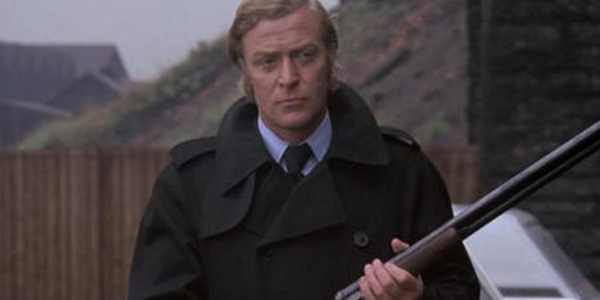
The hardboiled classic, with Michael Caine as an amoral gunman moved to vegeance by his family€™s suffering, was inspired by true events in England€™s Northeast. In 1967, at the height of the €˜one-armed bandit€™ gambling machine craze, a supplier named Angus Sibbet was shot dead in his car in Newcastle. The motive was believed to be his skimming off the top of takings, and involvement by the Kray twins (who had an interest in the business) was suspected. Of the two men charged and convicted of the crime, one of them, Dennis Stafford, was an East London crook and playboy known to the twins. Stafford and his co-accused, Michael Luvaglio, went down on very little evidence and have spent much of their subsequent time trying to get their convictions overturned post-release. The case inspired crime novelist Ted Lewis to write Jack€™s Return Home, which became the basis of former documentary maker Mike Hodges€™ grittily realistic feature, Get Carter. While the more emotionally-driven storyline centred on Jack Carter€™s investigation of his brother€™s seemingly accidental death, and violent revenge for his underage niece€™s coercion into pornography, allusions to the €˜one-armed band murder€™ cropped up in the movie. €˜Gaming Wars€™ reads one newspaper headline; the house chosen as location for the home of one of Jack€™s sleazy targets was actually that of gaming entrepeneur Vince Landa - Luvaglio€™s brother, who left the country after Sibbet€™s shooting. The campaign to overturn the real-life convictions continues into the present day. But Stafford, now 81, has behaved with classic ambiguity: on release in 1980 he confessed the shooting to the News of the World, swiftly followed by a retraction in the Sunday People, claiming he€™d only done it for the £10,000 fee. Neither is he averse to conflating himself with the vengeful killer Carter in the film. €˜Do you know,€™ he once told me in a phone conversation on the subject, €˜they even made a black gangster film about me?€™ He was referring to Hitman, the 1972 blaxploitation remake of Get Carter.

2. Chas Devlin - Performance (1970)

For years, it was speculated on as to who inspired the sharp-suited, homicidal gunman played by James Fox in the €˜gangster movie€™ half of Donald Cammell and Nicolas Roeg€™s cult classic. It was only towards the end of his life that Cammell, who committed suicide by gun, identified Jimmy Evans: a pro thief and gunman who protected Mick Jagger€™s friend, art dealer Robert Fraser, when he was in prison after the Rolling Stones€™ 1967 drugs bust. It was little wonder the underworld was slow to credit Evans: Performance was regarded with bemusement, starting as a crime story but turning into a hallucinogenic clash between the rock and crime subcultures. And then there was Evans€™ problematic reputation: in The Profession of Violence, John Pearson€™s classic work on the Krays, he€™s described unnamed as a "London villain who... had started an underworld vendetta by firing a sawn-off shotgun into the groin of his young wife€™s lover. The wounded man was the brother of an important London gangster who was an ally of the twins." The €˜important London gangster€™ was the feared and formidable Freddie Foreman (see below). The Krays€™ outlandish scheme to kill Evans - with a cyanide injection on a spring - on Foreman€™s behalf contributed to their final arrests. It was after this that East London safecracker Evans instructed Cammell, Anita Pallenberg and the Stones€™ set in the ways of the underworld. But it wasn€™t until the early noughties (over 30 years later) that his biographer, Martin Short, told him Performance had actually been made. When I interviewed him about his biography, The Survivor, he was perplexed by the film. €œAnyway,€ he reflected on scenes where the epithet €˜poof€™ is painted on a wall before Chas shoots a treacherous friend, and becomes sexually ambiguous under the influence of mushrooms, €œPerformance is a load of b*ll*cks - I ain€™t a poof!€ Jimmy Evans (now deceased) spoke of his wish to create a film screenplay based on The Survivor. Among the multiple scenarios was a false accusation that Evans was €˜Jack the Stripper€™ (the London serial killer who inspired Hitchcock€™s Frenzy), countered by his own fantastic theory that €˜the Stripper€™ was Superintendent Tommy Butler, who caught the Great Train Robbers. I suggested that, as his was such a phantasmagorical view of the 1960s, the film should have an animated backdrop like Sin City. €œThat€™s a cartoon,€ he reflected disapprovingly, €œthis is a true story.€ But then that was the old-school underworld: every story was true to the person telling it. The movies only introduced one more layer of legend.

1. Harold Shand - The Long Good Friday (1980)

When George Harrison€™s Handmade Films rescued screenwriter Barrie Keefe and director John Mackenzie€™s film from heavy cutting and TV broadcast, they must have known they were getting a bargain from the hard edge of the television industry. As for the inspiration behind Bob Hoskins€™ bullet-headed, pugnacious gang boss, it€™s been said more than once that it was bullet-headed, pugnacious ex-gang boss Freddie Foreman €“ not least by the man himself. In recent conversations with me for a forthcoming book of photographic anecdotes about him and the Krays, he described the parallels between the film and his own criminal career:
Hoskins€™ Harold Shand is a prototype 80s yuppie, dreaming of developing the then derelict docklands for a future Olympics; Foreman had sailed up the Thames to raise money for the Olympic boxing team. Both the movie gangster and the real-life criminal entrepeneur owned casinos; in the film, Shand€™s is blown to pieces by a bomb; in reality some of Freddie€™s betting shops had been targeted by arsonists. When Harold is trying to find out who€™s been taking such €œdiabolical liberties€, he hangs a load of crims up in the cold storage of a meat market €“ Foreman€™s workplace when he was young.
Even the film€™s most supposedly far-fetched plot device (all-out war between the IRA and London gangland, which never actually occurred) may have its basis in fact: Fred Foreman and his firm of robbers were arrested in Ireland and sent to Mountjoy Prison, after going to raid a bank that had been €˜put up€™ by the Provisional IRA; in the film, Harold€™s partner€™s double-cross over a similar deal, and the killing of several IRA men, leads to carnage on the streets of London. "Someone was really feeding them information about me for the character," opines 83-year-old Freddie, once the €˜godfather of British crime€™. "All of those things came together. I think it€™s the best fim they€™ve ever done about the gangster life." Enjoyed this article? Share any thoughts down in the comments.

Contributor
Contributor

Writer/editor/ghost-writer transfixed by crime, cinema and the serrated edges of popular culture. Those similarly afflicted are invited to make contact.