10 Brilliant Movie Plot Twists That Don't Actually Make Sense
Orphan's big reveal is ridiculous, but who cares?
Sometimes, it's great to be fooled. A well-executed plot twist is such a satisfying thing, and there's a very good reason movies with successful twists are so over-represented on IMDb's Top 250. Plot twists - we love 'em!
Interestingly, though, plot twists are rarely foolproof. In order to hoodwink the audience, such storylines will usually go down some outlandish narrative paths (such as a villain carrying out an unrealistically over-complicated plan), and when taken literally, they won't necessarily make complete sense. Honestly, that's the case with most plot twists, even all-time greats like The Usual Suspects, Fight Club, and Seven.
The key is just how blatant the logic issues are. For example, twists like those of High Tension, The Village, and Now You See Me are so in-your-face stupid that it's nigh-on impossible to accept them, whereas the better ones are contrived in more subtle ways and are great enough that it's easy to forget any such issues.
The following ten movies are great examples of this. Their twists don't necessarily make complete sense, but they're so brilliant and unpredictable that, honestly, who cares? Besides, suspension of disbelief is a fundamental part of the moviegoing experience.
Kicking off with something from the MCU...
10. Thor: The Dark World - Loki Has Taken Over Asgard

Though Thor: The Dark World is widely agreed to be a creative nadir for the Marvel Cinematic Universe, it does still have its positives. Perhaps most notably, it does have this cracking final twist - Loki (Tom Hiddleston), who appeared to have sacrificed himself for Thor (Chris Hemsworth) earlier on, is actually still alive and has taken over Asgard by impersonating their father Odin (Anthony Hopkins).
When Loki reveals himself sitting on his father's throne like the absolute boss that he undeniably is, it's such a satisfying display of power from one of the all-time great MCU characters. He was here to stay after all, and even when stuck in a weaker film he was just as powerful, clever and disarmingly lovable as ever.
Because it's such a great moment in such a disappointing movie, it's considerably easier to overlook the logic holes in this ending. However ingenious and crafty Loki undeniably is, it does seem a little far-fetched that he was able to sneak past everyone and whisk the all-powerful king of Asgard away without anybody noticing. Like, doesn't Odin have any security?
Furthermore, when Thor next returns home in Thor: Ragnarok, he finds his 'father' lounging around and watching theatre instead of actually ruling. Didn't anyone else think this was a bit out-of-character for Odin?
9. Death On The Nile (Both Versions) - The Killer's Plan

Both adaptations of one of Agatha Christie's best books - the wonderful 1970s edition starring Peter Ustinov as Hercule Poirot, and the rock-solid 2022 version directed by and starring Kenneth Branagh - are emblematic of a common thing you just have to go with when it comes to Dame Agatha's work. The solutions to her mysteries are essentially elaborate puzzles for the detective and the reader to solve, and this means that the murder plots are often unrealistically over-complicated. Death on the Nile is no exception.
This one tells the story of an unlikable heiress named Linnet (Lois Chiles/Gal Gadot) while on a River Nile cruise. It eventually turns out that Linnet's new husband Simon (Simon MacCorkindale/Armie Hammer) is the killer, and he's working with Jacqueline (Mia Farrow/Emma Mackey), Simon's supposed ex-lover.
The pair partake in a thoroughly convoluted plan involving Jacqueline pretending to shoot Simon, who then rushes off to kill his wife before returning to where he was 'shot' and shooting himself for real. There was so much that could've gone wrong with this plan - for example, there was no guarantee Simon was going to be alone after being 'shot' - and there would've been many simpler ways to steal Linnet's fortune, but that's just something you have to go with.
Christie's brilliant murder mysteries are designed to be gripping puzzles and not supposed to be taken too literally, so the abundance of coincidences is more than forgivable here.
8. Gone Girl - Amy Did It

In Gone Girl, Amy Dunne (Rosamund Pike) vanishes without a trace, and her husband Nick (Ben Affleck) is accused of murdering her. As the mid-film twist reveals, Nick is innocent and Amy has faked her death and framed him in order to get revenge on him for cheating on her and being a terrible husband.
Gone Girl is a movie that's so stylishly directed and persuasively performed that it becomes easy to forget that it does get quite silly at times. Amy's plan hinged on police incompetence at every turn, with them failing to investigate obvious clues that pointed to Nick's innocence. To be fair, a key theme of Gone Girl seemed to be how such investigations are mishandled, and perhaps this was the picture's way of exploring that, but it still wasn't terribly smart of Amy to rely so heavily on other people's mistakes.
Things get even stranger later on. After Amy decides to return, she pretends an unstable ex-boyfriend named Desi (Neil Patrick Harris) had kidnapped her and, after killing him, she escapes. Again, everyone just believes her story, and they conveniently forget to check Desi's CCTV and phone, which would've revealed Amy entered his house as a guest and that he was somewhere else when she disappeared. They also don't notice her self-inflicted wounds while examining her.
Again, perhaps the stupidity of the investigators was deliberate, but this was still distracting, and Amy really wasn't quite as smart as she thought she was. Rather, she was exceptionally lucky.
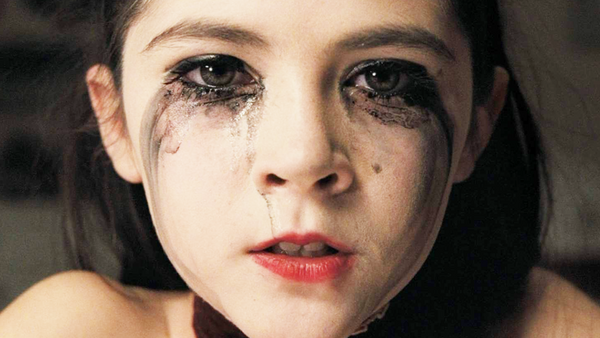
7. Orphan - Esther Is A Grown Woman

Some plot twists are so entertaining and so delightfully unhinged that many will accept them, however ridiculous they undeniably are. Case in point: Orphan, which is arguably one of the best studio horror films of the 2000s.
Kate (Vera Farmiga) and John (Peter Sarsgaard) are a couple traumatized by the stillbirth of their third child, and so they decide to adopt a child. They choose a seemingly delightful Eastern European girl named Esther (Isabelle Fuhrman, giving one of horror's best child actor performances) who slowly but surely turns out to be a very dangerous figure who threatens the lives of Kate and John's other two children.
An increasingly suspicious Kate tries to work out who Esther really is, and eventually, a doctor who used to look after Esther phones Kate to drop one of the barmiest horror movie twists ever. Esther isn't a child, she's a 33-year-old woman with a rare form of dwarfism. She passes as a little girl in order to murder the families who adopt her.
Sure, it's completely ridiculous, and it's difficult to believe that Esther has managed to keep this quiet. In an earlier scene, Esther broke her arm and had an X-ray, so the doctors should've noticed she had the bone structure of an adult, but once again, it's such an original, twisted and entertaining rug-pull that it's damn-near impossible to resist.
6. Harry Potter And The Goblet Of Fire - Barty Crouch Jr's Plan

Harry Potter and the Goblet of Fire is a tremendous fantasy blockbuster that's arguably the best Harry Potter film to date (or certainly near the top of the list, anyhow), and one of the many reasons for this is its twisty, endlessly entertaining mystery storyline. Who entered Harry Potter (Daniel Radcliffe) into a dangerous magical tournament, and why?
Well, it eventually turns out to be a villainous Death Eater named Barty Crouch Jr (a pre-Doctor Who David Tennant), who's disguised himself as Hogwarts professor Mad-Eye Moody (Brendan Gleeson). The whole time, Crouch has been using a potion to disguise himself and has kept the real Mad-Eye imprisoned in his office.
Crouch ensured that Harry ended up in the tournament and also ensured that he won each game so that he'd get the prize cup... which had been replaced with a magic device that teleports Harry to a remote graveyard. There, Harry is used in a ritual that resurrects franchise antagonist Lord Voldemort (Ralph Fiennes), and he barely escapes with his life.
As is the case with much of the Harry Potter series, it's a fantastically fun storyline filled with clever plot twists. And yet... there are plot holes, there's no getting away from that. The whole idea of several schools taking part in a potentially deadly tournament is pretty bonkers to begin with, and if Harry had died during any of the games it would all have been for nothing. Furthermore, wasn't there a simpler way to get Harry out of Hogwarts?
5. Star Wars Episode III: Revenge Of The Sith - Palpatine Is The Sith Lord

Emperor Palpatine (Ian McDiarmid) is pretty much the greatest character in the Star Wars Prequels, as well as arguably the best Star Wars villain of them all (sorry, Vader). He's a terrifying yet deliriously entertaining super-villain who completely wins in his plan to decimate the Jedi and turn the Republic into a dictatorship, and he does this through some Game of Thrones-level political manoeuvring.
The Star Wars Prequels are hit-or-miss in terms of their characters, and the acting is almost uniformly abysmal, so Palpatine was a breath of fresh air, in that he completely works and is beautifully played by McDiarmid. As such, it can be easy to forget that, regarldess of how awesome Palpatine is, the logic issues that plagued the rest of the trilogy are still present.
However powerful Palpatine undeniably is, is it really plausible that not a single Jedi detected a Sith Lord right under their noses? Not even Yoda, the most powerful Jedi ever, sensed anything and this is a bit ludicrous. To be fair, perhaps George Lucas' intent here was to highlight the arrogance and folly of the Jedi and how they partly caused their own downfall but even taking that into account, surely someone would've caught on?
4. Saw - Jigsaw Was In The Bathroom The Whole Time

Saw is a very good horror film indeed, and while many things cemented its notoriety, it was perhaps the movie's legendary twist ending that really made it such a cult classic.
The first Saw tells the story of a demented death game being overseen by the mysterious Jigsaw Killer, and although the killer initially seems to be a creepy guy named Zepp (Michael Emerson), it's not actually him at all. Instead, the real Jigsaw Killer was the apparently dead man who was in the bathroom with them the entire time. As secondary lead Adam (Leigh Whannel) plays the tape left for Zepp, the franchise's iconic theme begins to play, and Jigsaw (Tobin Bell) gets to his feet and locks the door, leaving Adam to die. So, so badass.
The many sequels have all had their own plot twists, although none of them ever matched this. There's no shame in that, for this ending is so great that matching it was always going to be a Herculean task. It is also another ending that's so good, many are unlikely to question its logic.
It is a bit odd that Jigsaw chose to be in the bathroom instead of simply monitoring the whole thing from outside, where he could've stayed in control more. In order to play dead, he'd taken a drug that relaxed his muscles, meaning that it would've been difficult to intervene had anything gone wrong.
Once again, it's a little illogical yet still brilliant. Besides, Jigsaw has always been one for complicated schemes.
3. The Wicker Man - Lord Summerisle's Scheme

The real Wicker Man (i.e., not the one with Nic Cage!) is a horror masterpiece without question, and perhaps the greatest folk horror of them all. It tells the chilling story of a pagan cult luring a policeman to their remote island via a faked disappearance, and then sacrificing him to their Gods, hoping to revive their failing harvests. Poor Sergeant Howie (Edward Woodward) is burned alive in a giant wicker man, which makes for a harrowing conclusion, a fitting coda to such an unsettling, thematically rich horror story.
Such is the power and craftsmanship of The Wicker Man that it's much easier to forgive the abundance of contrivances. As with some other twists on this list, an awful lot could've gone wrong with this plan. The whole thing relied on whether or not Howie would be foolish enough to come on his own without any sort of backup, and once he arrives, they start claiming the girl never existed. He might've simply left, which would've screwed their whole plan up.
A key reason why Howie was chosen is that he came willingly, he has the 'power of the king' (being an authority figure), and he's also a virgin, as he's a devout Christian saving himself for marriage. Given how isolated the island community is, how could they have found that out for sure? Also, there was no garuantee that Howie would be the policeman sent.
2. Us - Adelaide Is Red

Jordan Peele's Us is great in some ways, but it doesn't make any sense whatsoever.
Us revolves around an army of doppelgangers mounting an attack on their counterparts across the USA. They are revealed to be clones created in a scientific experiment that was long abandoned, and they're led by Red (Lupita Nyong'o), a clone of protagonist Adelaide (also Nyong'o). What follows is a thrilling, visually brilliant horror that deftly blends action, black comedy, and supernatural terror, and it also ends with a killer plot twist that few will have seen coming.
Adelaide is actually a clone. Years earlier, the version of her from the surface world wandered into the facility and the clone incapacitated her and then took her place. The fact that Red could speak when none of the other clones do might've had some confused, but otherwise, the hints of this are few and far between, and it comes out of nowhere in the best possible way.
It's such an effective surprise that viewers might not question it until later on. Namely, why the hell didn't the real Adelaide just return to the surface world once she'd freed herself? If there was anything stopping her from doing this, it's not explained. That's not even mentioning Us' many other plot holes, such as all those millions of clones somehow surviving in underground tunnels with nothing but an apparently infinite supply of rabbit meat for food.
Us is a well-made and well-acted movie, but is it smart? Not in the slightest.
1. Incendies - 1 + 1 = 1

Nothing can prepare you for Incendies' big twist. The movie revolves around two Canadian twins searching for their father and brother after their mother, Nawal, dies. Their investigation takes them to the war-torn Middle Eastern country where the mother grew up. They discover she had another child who she was forced to give up, and that their father was a prison guard who r*ped their mother.
Years later, once she had emigrated to Canada, the mother recognizes her son at a swimming pool, able to identify him by a tattoo he got as a baby, but when he turns around... she sees the face of the man who assaulted her. This shock gave her a fatal stroke, and the horrified twins discover that their father and their brother are one and the same.
It's an amazing twist, though some did criticize the movie's final act for the avalanche of coincidences - the meeting at the swimming pool was particularly unlikely, for example - and taken in a literal sense, the revelations and coincidental meetings are pretty improbable, but it does still work in the context of the movie itself.
Incendies evidently takes a lot of inspiration from Ancient Greek Tragedy, specifically the myth of Oedipus, where a man ends up killing his father and marrying his mother through a series of terrible coincidences. It's not realistic, but recognizing the film as more of a mythical piece, it absolutely works. Besides, what are a few coincidences when a twist is this powerful?