10 Most Awkward Instances Of Hollywood Whitewashing

Because we've come too far for this, surely?
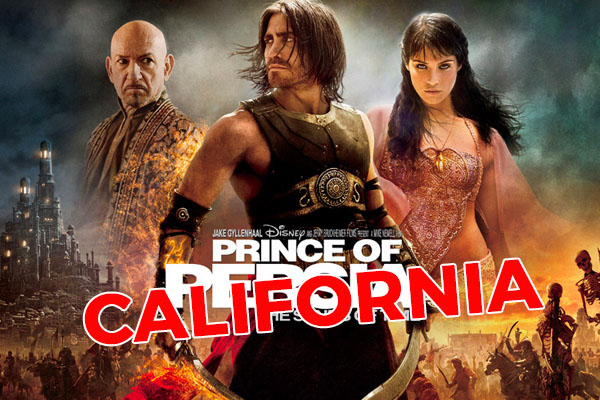
Whitewashing has always been prevalent in Hollywood, but nowadays people are taking it a lot more seriously than they used to - and rightly so. Back in the day a white actor being cast in the part of an ethic character wasn't even frowned upon, though; audiences took it as inevitable and moved past it with little concern. If a white actor turned up playing an Asian or black character, it was the norm. It was often played for laughs. Few felt like it was a problem because of the attitudes of the time. Times have changed, of course, but that doesn't mean whitewashing has died away as a concept (or an issue); it's still happening in all kinds of motion pictures. Some Hollywood whitewashing is so subtle that people don't tend to notice it, even. Those movie-goers who never read The Hunger Games books probably thought Jennifer Lawrence made for a wonderful Katniss Everdeen, and - to an extent - she did. It's just that, in the source material, Katniss is clearly described as having "dark hair and olive skin," which suggests she isn't white. Hollywood, however, casually ignored this description of the central protagonist and opted for Lawrence - and in the process destroyed a lot of what made the The Hunger Games' great in book form: its explorations of race. Whitewashing can be a whole lot more insulting or awkward than that, however; there are times when an ill-judged moment of blatant whitewashing is enough to make you want to curl up and die. Here are 10 such examples from across the span of Hollywood history...

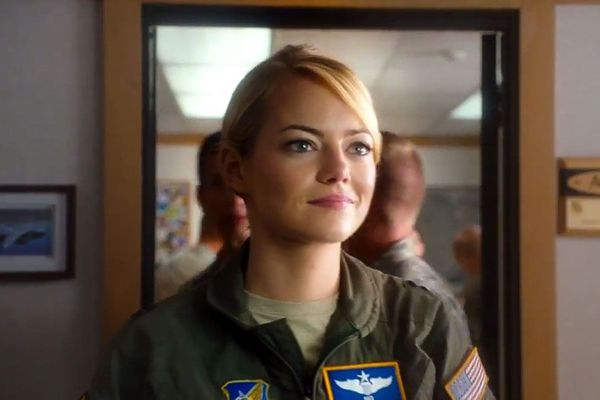
10. Emma Stone - Allison Ng - Aloha

Perhaps the biggest outcry with regards to Hollywood whitewashing in more recent times, it's Emma Stone as the "half Asian, half white" Allison Ng in Cameron Crowe's Aloha. Aloha wasn't a particularly great movie, but aside from its critical and commercial failings, the movie - which also confirmed Crowe as a director who has officially lost his mojo - was accused of whitewashing in its decision to cast Stone, an white American, in the part of a character who claimed to be partly Chinese and party Hawaiian. The casting decision resulted in huge controversy, with Crowe eventually apologising for his oversight in choosing Stone; the actress, on the other hand, later admitted that she had been "miscast." She also added that it had "ignited a conversation that€™s very important." Whilst that might be true, the ordeal was more than a tad awkward for everyone involved.

9. Jake Gyllenhaal - Dastan - Prince Of Persia: The Sands Of Time
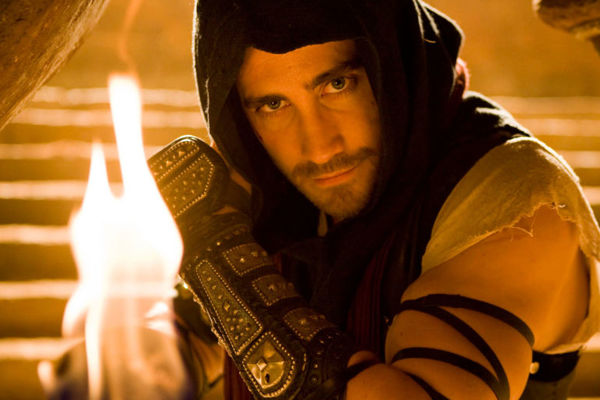
Jake Gyllenhaal isn't Persian. That has always been fairly obvious. Why, then, was he hired to play Dastan, the titular royal in the filmic adaptation of video game Prince of Persia: The Sands of Time? Even Mike Newell said during the lead up to the film's release that he was worried it was "a little homogeneous" - and he's the director! It's not really surprising that there was a backlash with regards to Prince of Persia: The Sands of Time, because Jake Gyllenhaal - great actor as he is - doesn't even come close to being the right for Dastan. And neither do the rest of the cast, though admittedly Alfred Molina and Ben Kingsley are of mixed ancestry. Gemma Arterton, on the other hand, who plays the film's female lead - a Persian Princess - is white and very English indeed. Once you release you're watching a film set in Persia, with Persia in its title, and no Persian actors in the main roles... well, it all gets a little awkward, to say the least.

8. John Wayne - Genghis Khan - The Conqueror
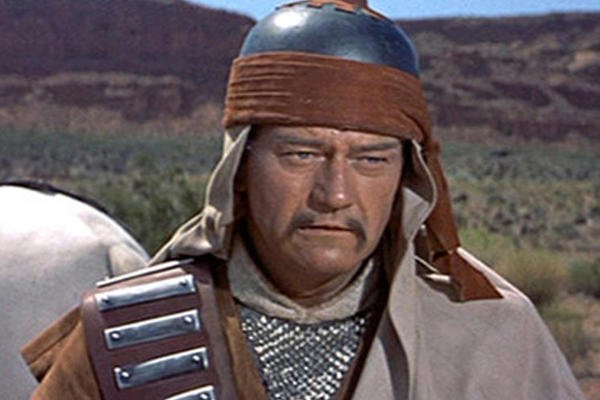
One of Hollywood's most notably clumsy examples of whitewashing can be glimpsed in the 1956 film The Conqueror, in which John Wayne - yes, the John Wayne of countless western pictures - took it upon himself to play Genghis Khan in a super ill-judged biopic. The results, as one might imagine, were horrific. Not only does Wayne imbue the Mongol conqueror with the same mannerisms he pretty much inflicted upon every other character he ever played across the span of his career (read as: very few), he's clad in awkward "yellowface" make-up which ensures that watching this movie is just about the most uncomfortable cinematic experience imaginable. What's worse is that, in 1956, Wayne was at the height of his career and could have pretty much mounted any project he wanted; why he choose this malarky is anybody's business. To add an even darker turn to proceedings, The Conqueror was also shot on a nuclear testing ground and many of the cast and crew later died from cancer as a result.

7. Rooney Mara - Tiger Lily - Pan

Joe Wright's recent take on the Peter Pan mythology, Pan, was just about the most shambolic Hollywood venture one could possibly imagine in this day and age. It also came under fire for its opting to cast actress Rooney Mara as the "native" Tiger Lily. When the casting decision was first announced, Mara defended her decision to take on the role, and insisted that people would "understand" when they saw the film. That never happened, of course, and more recently - in the wake of more conversations about whitewashing in the industry - Mara refused to defend her part in it all any longer:
"It was never my intention to play a Native American girl. It was Joe pure desire to make the natives a conglomeration of many different cultures and indigenous people. He wanted them to be natives of planet Earth. I thought that was a really beautiful intention. That being said, I understand the anger, and I agree with it."
Well, you can't knock Mara for at least admitting to the fact that the whole Tiger Lily thing was completely misjudged, even if they initially failed to see the whitewashing.

6. Marlon Brando - Sakini - The Teahouse Of The August Moon

Sometimes you come face to face with a motion picture and end up wondering how in the name of all that is good it actually ended up happening; The Teahouse of the August Moon is one such movie, which sees arguably the greatest actor of all-time - Marlon Brando - adopting "yellowface" make-up for an entire film to play a Japanese guy called Sakini. A comedy of sorts, which was never the actor's strong suit, the film saw Brando reportedly travel to Japan and spend the sum of two whole months learning to act Japanese in order to properly play his role as an interpreter to a United States Captain. It's a very, very odd picture. Made in 1956, The Teahouse of the August Moon has since fallen into obscurity, which is probably a good thing given what Brando is up to here. Is it admirable that the method actor spent a lot of time at least trying to bring an authenticity to the part, or an ill-judged goof? The broken English his speaks throughout the movie would suggest the latter.

5. Laurence Olivier - Othello - Othello
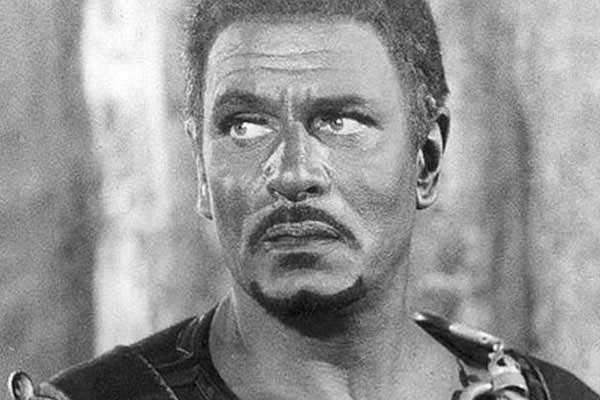
Laurence Olivier's attempt at Othello stemmed from his love of the source material, of course, but in retrospect the great actor's turn as the Moor of Venice is uncomfortable to watch - performance aside, the fact that Olivier spends the entire length of Stuart Burge's otherwise fantastic movie covered in black face paint is rather awkward. Then there's the performance itself, which Olivier plays in a rather campy fashion, all things considered, talking in a strange exotic accent that can't really be linked to any particular race or region. It seems fashioned out of nowhere - fantastical, even. It's not a bad performance from the British icon, exactly, and many critics of the time actually deemed it to be rather wonderful; it's just that, everything considered, it's hard to "enjoy" what's happening here due to the blatant whitewashing on show.

4. Christian Bale - Moses - Exodus: Gods And Kings
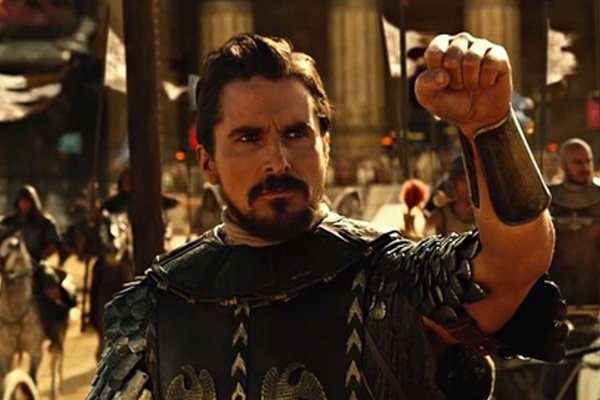
Christian Bale is one of Hollywood's biggest actors, so it's no surprise that Ridley Scott sought him out for the lead role of Moses in Exodus: Gods and Kings. Problem is, of course, that Hollywood has conditioned us to forget that Moses wouldn't have looked anything like a white guy born in England (nor would Ramesses II, the Prince of Egypt, have looked anything like Joel Edgerton - even with a shaved head and patronising eye make-up). What made this particular instance of whitewashing even more controversial, however, stemmed from what director Ridley Scott had to say on the matter - words which kind of came out sounding like thinly-veiled racism on the filmmaker's part:
"I can't mount a film of this budget, where I have to rely on tax rebates in Spain, and say that my lead actor is Mohammad so-and-so from such-and-such. I'm just not going to get it financed. So the question doesn't even come up."
Scott's poorly chosen words made the whole Exodus: Gods and Kings thing even more awkward. Seriously, Ridley Scott: was there not a better way for you to get your point across without plucking "Mohammand so-and-so and such-and-such" out of the air?

3. Johnny Depp - Tonto - The Lone Ranger
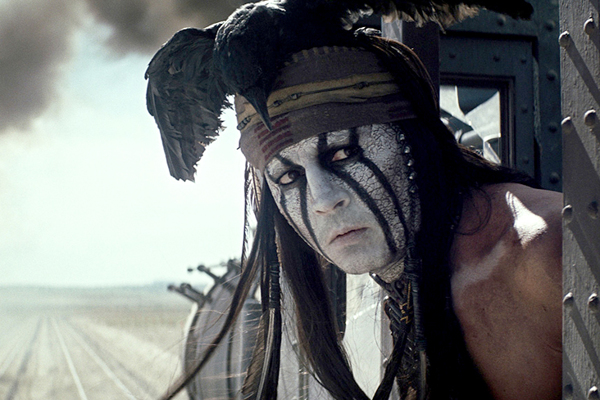
Despite Johnny Depp's insisting that he's part Native American - Cherokee, in fact - and therefore well in his right to pay the character of Tonto on the big screen (a "fact" that has never been verified, by the way), his casting as the character in Disney's blockbuster reboot of The Lone Ranger irked a lot of people - and for good reason. The character of Tonto has always been seen by real Native Americans as patronising and racist; Gore Verbinski's film had the opportunity to reinterpret Tonto and put things right, of course, but instead the director - or Disney, to be more precise - decided that what the role really needed was Depp wearing a hat and doing another one of his funny voices. You don't get the sense that Depp intended any harm in taking on Tonto, but that doesn't mean that it still doesn't come over as kind of offensive and a bit embarrassing to watch. Whether the actor is part Native American or not (and there is no proof as to whether he is), this remains a prominent example of Hollywood whitewashing.

2. Mickey Rooney - I.Y. Yunioshi - Breakfast At Tiffany's

This might just been the most unforgivable moment of Hollywood whitewashing on the whole list, purely because it's contained in one of the most beloved romantic comedies of all-time and consistently spoils what is an otherwise perfect film. Why, oh, why did Hollywood decide that - of all people - Mickey Rooney needed to play Holly Golightly's Japanese neighbour in Breakfast at Tiffany's? Watching Rooney in the role makes for some of the most outrageously uncomfortable moments in cinema history, as the former child actor - playing one I.Y. Yunioshi - enters on multiple occasions to shout at Audrey Hepburn in the guise of a "stereotypical" (?) Japanese man, complete with "yellowface" make-up, buck teeth and racist accent. Breakfast At Tiffany's always felt like a film to take you back to another time, and I.Y. Yunioshi does exactly that - but not at all in a good way.

1. Pretty Much Everyone - The Last Airbender

The weirdest thing about the abhorrent whitewashing in The Last Airbender, perhaps, is that the director - M. Night Shyamalan of The Sixth Sense fame - is of Asian heritage himself. Was he not deemed to be a suitable choice of director for this particular source material for exactly that reason? As a person who would be able to embrace The Last Airbender's obvious Asian influences and render them on screen in a wholly suitable way? That didn't happen, of course: instead, the film adaptation of the popular - and immensely more interesting and brilliant - anime series wound up as one of the worst movies of all-time. Then you throw in the fact that all of the Asian characters from the series were changed to be "white" for the movie... Texan Noah Ringer as Aang? No freakin' way! Shyamalan tried to talk his way out of it by saying that the characters in the anime series were "racially ambiguous," but c'mon - that's just a lame cop-out. Only an idiot could watch The Last Airbender and not realise that the characters were of Asian decent - it's sign-posted at pretty much every point, through the costumes, the culture and the traditions. Rather tellingly, it's the villains of the movie who remain Asian or dark-skinned here. Dev Patel turns up, but - guess what? - he's there to play a bad guy. Ugh. Like this article? Let us know all your thoughts on Hollywood and its obsession with whitewashing. Who do you think is ultimately to blame? The studios or the audiences?

Contributor

Sam Hill is an ardent cinephile and has been writing about film professionally since 2008. He harbours a particular fondness for western and sci-fi movies.