10 Most Disturbing Films Of 2012
 Films tend to mean different things to different people. For example, you've probably seen a movie that you hated but your friends loved, or vice versa. However, here's another thing that can mean different things depending on the circumstance: "disturbing." Sure, the first film culture association to come to mind is likely along the lines of The Human Centipede or the continuation of horrendous shows like Glee. The term can apply to several contexts with different implications and different justifications for its association. "Disturbing" is not all blood, guts, and poor acting attempts. With that range of application in mind, here are the ten most disturbing films of 2012.
10. The Three Stooges
 I grew up with The Three Stooges not, of course, because of any new episodes from this 1934-1959 series premiering on television during my lifetime, but because of my dad frequently playing Stooges tapes for my family to watch together. Once I developed to be almost as much of a fan of the series' classic humour as my dad is, the mutual dream was indeed that the series would sometime return as a modern revival. However, I would have never wished for the Three Stooges movie that came out in 2012. The reason that this film makes the list of most disturbing films of the past year is because it is a disappointing, yes, disturbing misrepresentation of a classic. Instead of embodying the physical, silly humour of the original series, the movie takes a wrong turn by seeming to make a joke out of the humour style itself -- not the desired kind of joke we would hope for. The movie insults the source material by turning the original series' genuine entertainment into poor imitation that emits blatant disrespect. The disrespect comes not from portraying light-hearted humour, but from treating the foundation of the humour itself like an infantile idea. The film should be keeping the humour within its plot as Moe puts down Larry and Curly as usual, not extending this behaviour by insolently teasing itself and putting down its legacy. I would not call this film a tribute, but a taunt. It's enough that this film is bad by failing to add to or bring back the charm of its legacy (which is the point of making a film like this in the first place), but for biting the hand that fed its concept, this film goes beyond misrepresenting its predecessor to mock it. Such an embarrassing and even offensive portrayal makes this film disturbing, not just unsatisfactory.
9. The Guilt Trip
 The reason this movie is disturbing is because, as the lead example for 2012, it represents the waste of good actors on a bad film. Barbara Streisand is legendary - Glee's Rachel Berry is not the only one to recognise this status. Seth Rogen has performed well in likable roles in the past, such as in his recent portrayal of Joseph Gordon-Levitt's best friend in 50/50. Both Rogen and Streisand have talent of much higher potential than the screenplay for The Guilt Trip offers them. What were their agents thinking? Seth, who is still relatively on the rise in contrast to Streisand's well-established reverence, risks suffering a slight blow to his career based on following a respectable filmography with this lower-grade project. However, Streisand's widely-known fame and acclaim create a problem in themselves; her role as a modest mother of simple means becomes that much less believable. The meagre diluted humour the screenplay offers does not suit Seth Rogen in terms of his strength and reputation in comedy. The film tires of its entertainment value more quickly than a family sing-along of "99 Bottles of Beer," and our desire for it to just end already is the visual equivalent of the exasperated road trip whine, "are we there yet?" As unimaginative as The Guilt Trip is, even worse must be the career-oriented guilt trips Seth and Barbara personally face in regret of ever taking these unambitious roles. It's disturbing - mostly in terms of it being disheartening - to see such great actors have their talent wasted by an unambitious project that does not offer them appropriate fulfilment.
8, 7, & 6. That's My Boy, Ted, and The Dictator
 Crude humour can be disturbing just by definition. Crude - it's in the name. Though many viewers (your teenage little brother, maybe) out there surely appreciate such humour I consider the humour of That's My Boy, Ted, and The Dictator to tread on offence to the point of being disturbing. Think about it: did you really pay to see misogyny in Ted? Xenophobia in The Dictator? Homophobia in That's My Boy? You may say it's all in good fun, and as for the Dictator, yes, it's an intetionally provocative satire. However, humour can be achieved sans the tastelessness of these three summer teen-targeters. Their wide release availability amidst unfavourable critical reception and general lack of sensitivity is disturbing enough to make the list of most disturbing films. The across-the-board list qualification for these films is a no-brainer, much like Adam Sandler's recent approach to characters (there's no need to relive Jack and Jill). Before you loyal Sacha Baron Cohen fans protest (and I, indeed, am a big fan myself), let me explain a few clarifications behind what it means (or doesn't mean) for something to be termed "disturbing." For some films, particularly comedies, "disturbing" can be the ultimate goal through raunchy sorts of humour meant to provoke people. Therefore, though I do classify these three films amongst the most disturbing of the year, "disturbing" should not always be assumed a synonym for poor reception amongst audiences or one for failure. I do believe that all three of these films sought some sort of disturbing quality to their humour in a way that, to them, reads as success when achieved. Do I dislike the humour used and find offence in it? Yes. Do I find it disturbing (for me, in a personally negative reception) and the films themselves equally so? Yes. Does this mean these films are inherently bad? No. To me, the films were bad because that kind of humour does not sit well with my own tastes. To others, this kind of humour might be ideal and appreciable because of it, in fact, being disturbing; to them, this humour holds great entertainment value and is commendable. Let this be understood in approaching the implications beyond surface meanings of the term "disturbing" so as not to mistake a description (the titular adjective at hand) for a value judgement (which is not the aim or implication here).
5. To Rome with Love
 I know. You look at this still and think, how in the world could such an adorable couple (seriously, I'm keeping my fingers crossed for these two kids) have any relation whatsoever to a list of disturbing films? The culprit is not Alec Baldwin, as much as I dislike his acting, but rather is Woody Allen himself. The reason To Rome with Love makes the list of most disturbing films of the year is because this film is the cringe-worthy downfall of who I consider to be a great director. Midnight in Paris was a cozy charm, and Whatever Works was hilarious in only a way Woody Allen can pull off. The director has had a handsome track record in his recent filmography, despite the films of his past here and there that earn him a strongly reputed love-or-hate status amongst viewers. However, in the public eye, Woody Allen is hitting an intersection of rising self-value crossing paths with declining originality. His films are being reduced to same story, different city, and viewers are losing hope in Allen's redemption. His new films are sampling too heavily from his early films, making them expected and the direction tired - though not as tired as fed-up audiences. To Rome with Love makes the "disturbing films" list because I am a straggler who still believes in Woody Allen, but one who is disturbed to see such an honourable director take such a great fall with this latest re--...er, I mean...production.
4 & 3. Argo and The Dark Knight Rises
 The two films Argo and The Dark Knight Rises rank amongst the most disturbing films of the year not so much for the political distress in the former or the villain-fighting violence in the latter, but instead for the one inconvenience that unifies them both: circumstance, or put otherwise, bad timing. Though I have my qualms about The Dark Knight Rises, I think both are high-quality films and applaud Ben Affleck on his recent Golden Globes win for Argo. However, each was unfortunate enough to be associated with a current event that plagued the film, and these unfortunate relations between a movie and its respective current event are what give each film its disturbing factor. Of course, The Dark Knight's related event that added an even thicker cloud of disturbance over Gotham was the Aurora, Colorado, theatre shooting on the highly anticipated, highly attended night of the movie's wide-release premiere. Though the film still garnered much success at the box office, the positioning of police officers in and around theatres for a long while thereafter is enough to distract us now and then from the bad guys on screen to look around all too vividly at what villains our own real world is smattered with. Though the public reaction to the theatre shooting has since died down some, The Dark Knight Rises is unlikely to successfully disaffiliate itself from this tragedy and will presumably carry the baggage with it all the way through to the marked-down DVD bins in the years ahead. The Argo controversy is not as obvious, nor as talked about, as the disturbance regarding The Dark Knight Rises. The release date for Argo was October 12 of last year. That date was only one month after the U.S. ambassador to Libya was murdered in a terror strike by armed militants on the U.S. consulate during the September 11th anniversary. The reason the film release's proximity to this event in Libya is disturbing is because of the event's relation to the film's content. The film, based on real historic events, begins with enraged militants in 1979 besieging the U.S. embassy in Tehran as they take hostages and wreak havoc. Therefore, the unfortunate similarity between Argo and the recent Libya upset is that both matters face the issue of harm to U.S. officials positioned abroad. Argo, having been released not long after the Libya event, thereby comes off as even eerier, darker, and, all in all, more disturbing than it otherwise may have seemed. The circumstances of the Aurora shooting and the Libya ambassador assassination tinge both The Dark Knight Rises and Argo, respectively, with the tension brought on by the weight of heavy hearts. There results a disturbing aura that goes beyond film, beyond art, beyond the screen, but rather into the emotions we saddened sympathizers inject into the films themselves. The burden is not one the best actors can show us, the best directors can construct, the best cinematographer can capture, nor the best screenwriter can describe, but one that we as touched humans must see for ourselves.
2. Django Unchained
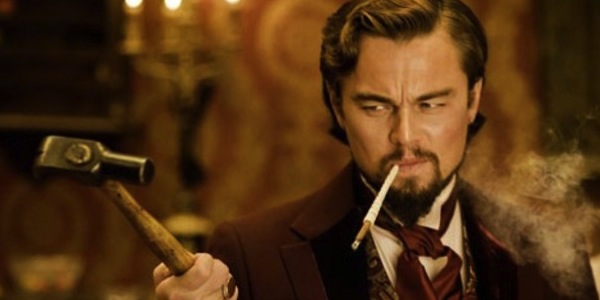 Django Unchained epitomizes the standard understanding of "disturbing." That is to say, it embodies violence, racial provocation, testy language, and for some, sensitive baggage. In fact, one of the many whirlwinds in this film's storm of controversy was esteemed director Spike Lee publicly stating in an interview with Vibe that he would refuse to see the movie because of it being insulting to his ancestors. Regardless of where one stands regarding Lee's views, it is no secret that Quentin Tarantino likes to push buttons and stir audiences with his uniquely characterised films, and Django Unchained does not disappoint. You will either love it because it's disturbing (violent, bloody, potentially offensive in an array of ways), in which case you are likely a loyal Tarantino fan, or you will hate it for the same reason (predictably, in this situation, having to do with offence).
1. The Master
 The Master is one of the most genuine and worst types of "disturbing" that transcends wince-worthy violence as it penetrates soul-shaking psychology to challenge our vulnerable mental and emotional stabilities. The questionable talk o' the tabloids was of this movie alluding to the Church of Scientology, thereby adding a religious polish to the film's disturbances. However, the real roots of disturbance hold personal seeds, not religious, social, or institutional ones. Isolation, desperation, clinginess, obsession - these are the pressures the film rains upon us, uprooting personal convictions to plant ideas that prosper in the light of the art. Personality and philosophy come into question; matters of doubt and self-control are a Master key. You will likely leave this movie, as I did, feeling confused and, more so, violated. When it comes to the construction of something complexly - almost inexplicably - disturbing, this film is the Master.