15 Sci-Fi Movie Endings That Would Have Changed Everything
The death, the glory, the drama – you know how it ended. But what if it didn't?

Science fiction has always been the place to explore an infinite universe (or, universes) of possibilities, wowing generations of filmgoers from as far back as Georges Méliès’ Le Voyage dans la Lune (1902) through to present-day marvels, like Denis Villeneuve’s Dune or anything Christopher Nolan puts his budget behind. And, so often, the concluding scenes are used to fit in one last trick, plant doubt in our minds or levy a devastating final commentary against society.
But the endings we know and love (mostly) are not always what the filmmakers, actors or studios wanted. Sometimes grand finales leak and have to be tweaked, sometimes test audiences get their teeth into things and tear it apart, and sometimes directors decide that whatever they were aiming for in the first place just isn’t working anymore.
Could you imagine an MCU in which Loki bites it early doors? A Terminator universe cut off at the root by a happy ending? Or a Star Trek without Spock? Well, you almost didn’t have to.
These are ten story-changing endings that were scripted – and in most cases actually filmed – but which either the filmmakers opted not to use, audiences rejected, studios nixed, or which were simply superseded by better options.
15. Arrival (2016)

Arrival arrived in Denis Villeneuve’s transitional period, when he had the artistic capital to attract big stars and command midweight budgets, but was still on his journey to becoming a household name. And it has all the hallmarks that define the director’s recent career, namely: philosophical and complex human stories set against a backdrop of grand, jaw-dropping spectacle.
Amy Adams and Jeremy Renner are linguist Louise Banks and theoretical physicist Ian Donnelly, called in to investigate and attempt to communicate with the extraterrestrial inhabitants of gigantic hovering spacecraft that have mysteriously arrived on Earth. The pair get up close and personal with the so-called Heptapods, researching and attempting to decode their complex written language.
The original script for the film had the Heptapods communicate blueprints to an interstellar ship that would provide a way to leave Earth in the face of imminent, planet-threatening disaster. And then Christopher Nolan’s Interstellar dropped.
Shaken by the similarity of the films, screenwriter Eric Heisserer had to re-tool his script to ensure Arrival remained its own thing, digging deeper into the language aspect instead. Thus, the film as we know it ends with Louise using the aliens’ language to experience memories of the future (just go with it), which allow her to prevent humanity from descending into devastating conflict and achieve global unity. And, at least on the macro scale, all is well.
14. The Astronaut's Wife (1999)

Trading on the vibe and visuals of Gattaca and Contact, but without any of the substance to back it up, Rand Ravich’s only feature film The Astronaut’s Wife is a sci-fi flick that time has all but forgotten.
Charlize Theron stars as Jillian Armacost, the titular wife to Johnny Depp’s NASA pilot Spencer. When Spencer goes off-radar for several minutes in space, Jillian fears the worst, and yet he makes it home in one piece. But the weeks and months after Spencer’s return are fraught with strange occurrences and a distinct personality shift from Jillian’s once-loving husband that, along with the rantings of an off-the-rails NASA representative, leaves her questioning what happened up in space.
Pregnant with his twins, Jillian confronts Spencer in the final act and outs him as an alien. She fries him using a house full of water and an electric cord, but the massive, protoplasmic being leaps from his body into hers, and she goes on to raise two sinister kids in the most X-Files ending to the most X-Files-feeling film.
But there is another finale, a more nuanced and compelling one. Throughout the film we see the unborn twins’ ability to influence Jillian’s actions, and Ravich uses this in his scrapped ending, which has Jillian manipulated by her children into moving to the countryside and bringing them to term – leaving us on tenterhooks about what happens when she delivers them and is no longer under their control.
13. Scott Pilgrim vs the World (2010)

Edgar Wright’s first and finest US-based film, Scott Pilgrim vs the World, captures the essence of the director’s style, Bryan Lee O'Malley graphic novels and late-noughties indie films, and rolls ‘em all up in one bright, loud, star-powered and infinitely rewatchable package. Michael Cera stars as Scott, a twenty-something whose life is lacking definition, but who believes a chance encounter with rollerblading delivery girl Ramona Flowers (Mary Elizabeth Winstead) could be the answer to his ennui.
After ditching his current flame Knives Chau (Ellen Wong) and battling his way through Ramona’s seven evil exes, Scott faces his dark alter, Nega-Scott, and comes up trumps. The film ends in the snow on a deserted Toronto street, with Scott, the woman he has been fighting for, and the girl he ditched to get her. And in the original ending, he chooses Knives.
Sure, Scott reckons with his asinine behaviour and does right by Knives, but this ending doesn’t respect her autonomy, as Scott is able to just flip flop between girls without consequence. Plus it bails on the promise of the film – what’s the point of seven evil exes if you don’t get the girl at the end??
And test audiences felt the same. After a mixed-to-negative reaction to this scene, Wright and O’Malley rewrote the ending and reshot it just months before the film’s theatrical release. As a result, Scott chooses Ramona, with the pair absconding through a mysterious portal together, hand in hand.
12. Limitless (2011)

Neil Burger’s sci-fi thriller Limitless gave us a different look at Bradley Cooper in the early tens, as the star worked to transition away from comedy and into action and drama. Cooper plays Eddie Morra, a struggling NYC author trying and failing to get where he needs to be – until he cops a sample of the latest nootropic compound, NZT-48, a drug which promises to supercharge his life, focus and abilities.
NZT-48 enhances Eddie’s brain function to superhuman level, combining the rabid speed of the cokehead with the time dilating analytical abilities of Guy Ritchie’s Sherlock Holmes. But with great reward comes the usual monkey’s paw consequences, including extensive blackouts and withdrawals. Now, with the choice to either get off the drug or die, it seems Eddie only has one choice – ditch the pills and make it on his own. And this is the ending the theatrical version gives us.
But there is another, darker ending that Burger actually filmed but didn’t use. In this version, Eddie is still hooked on the pills by the film’s conclusion, using them to perpetuate his rising political career. He signs off by saying he’ll use the pills to get off the pills, but he’s clearly caught in the same addict’s cycle he has been all along, and any chance of salvation looks slim.
11. Blade Runner (1982)

Despite now being regarded as one of the greatest sci-fi films of all time, Ridley Scott’s Blade Runner was not a hit on release. The film, which follows retired blade runner Rick Deckard (Harrison Ford) as he is pulled back into service to hunt down a gang of humanoid replicants, flopped at the box office and was almost consigned to the back shelf of movie history. Although audiences enjoyed the darker tone of Alien, they struggled to connect with Blade Runner, not least because it starred one of Star Wars’ leads and explored philosophical concepts – like what it means to be human – that weren’t easily digested with popcorn.
There are few popular films that have had as many versions as Blade Runner, with Scott’s tinkering embarrassing even George Lucas, but over the years two key versions have emerged in opposition. The Final Cut is widely regarded as the definitive version, and its opposite is the original theatrical cut. And the biggest difference between the two? The ending, of course.
Warner Bros. made Scott add a terrible voiceover narration that overexplained the world and plot, alongside a happy ending scene showing Deckard and replicant Rachel (Sean Young) driving away from future LA into their carefree new life. Audiences hated it, and eventually the director got to put out his own ending: a cryptic visual metaphor of an origami unicorn outside Deckard’s apartment, throwing into question his humanity and the possibility of a happy life with Rachel.
10. Happy Death Day (2017)
Christopher Landon’s Happy Death Day didn’t reinvent the reel, but it did revitalise meta horror for a new generation, taking the self-awareness of Scream and throwing in a Groundhog Day-style sci-fi twist.
College student Tree Gelbman (Jessica Rothe) finds herself repeating her birthday over and over again following her murder. Each time she comes back from the dead she inches closer to who is behind the plot to kill her and why, circling a baby-faced killer. This all comes to a head in a conclusion that sees her take on her bitter housemate Lori Spengler (Ruby Modine) – who wants to get rid of Tree so she can have the lecherous professor Gregory Butler (Charles Aitken) all to herself. Tree comes out on top, the time loop is broken, and all is well.
In the film’s original ending, however, Gregory’s wife Stephanie (Laura Clifton) catches up with Tree at the hospital, once she’s “safely” out of the original time loop, and kills her with a drip injection. Perhaps this time it’s for good, or perhaps it’s the beginning of a new time loop – but whatever the truth, test audiences hated it, so Landon reshot the ending.
But that didn’t stop him plunging Tree back into the thick of it in 2019’s Happy Death Day 2U…
9. Little Shop of Horrors (1986)

Little Shop of Horrors rivals Rocky Horror as the offbeat musical of the late twentieth century, with the same brand of camp and deadly carrying a rickety cast of characters and unusual tunes into the culture. And who better to direct it than The Muppets’ Frank Oz, complete with the puppeteering and animatronic technology that made his name.
Rick Moranis plays Seymour Krelborn, a good-hearted fella working at a flower shop on skid row. Seymour wants nothing more than to catch the eye of his co-worker Audrey (Ellen Greene), and how better to get her – and the city’s – attention than with the unusual predatory plant (“Audrey II”, voiced by Levi Stubbs), which he bought in Chinatown during an eclipse.
The plant grows, the tunes flow and the creature’s thirst for blood leads the shop and its workers down a dark path. Much of this grisly content is carried across from the stage musical, but test screening audiences (again!) couldn’t handle the original ending. As per the musical, Seymour and Audrey are eaten by Audrey II, the plant spawns many children, they grow to an enormous size, and take over the world. Epic, but not what the first line of viewers wanted to see.
As a result, Oz replaced this ending, instead having Seymour kill the plant, wed Audrey and move to the suburbs, where, a sprouting remnant of Audrey II lurks in their garden… Well, it ain't called the American Dream for nothing.
8. Thor: The Dark World (2013)

The original run of the Marvel Cinematic Universe, now known as the Infinity Saga, is looked back upon with a wistful fondness, not least because of the scattershot attempts at continuing the franchise that fans have been subjected to by Kevin Feige and co since Endgame’s credits rolled. But it wasn’t all as shiny as we remember – at the bottom of the pile of these films are lacklustre features like Iron Man 2, The Incredible Hulk and, of course, the eminently forgettable Thor: The Dark World.
Treading water between Avengers films, The Dark World explores Loki’s (Tom Hiddleston) inheritance as a frost giant, and his reluctant alliance with Thor (Chris Hemsworth) to prevent the dark elves from destroying the universe or whatnot. In a heroic final act, Loki sacrifices himself and has a touching moment with his brother – before this is undone a couple scenes later.
But the film almost had stakes: the original plan was to have Loki die for good. And this would have had deep and lasting ramifications for the MCU. If Loki had died here, Thor would have struggled to escape Sakaar, defeat Hela (Cate Blanchett) and get the heck out of Asgard before Ragnarok went down, and thus not have been around to help defeat Thanos.
Alas, audiences for this original ending simply didn’t believe he was actually dead, lessening the impact and forcing Feige and director Alan Taylor into an about-face.
7. Army of Darkness (1992)

As far as Evil Dead films go, third entry Army of Darkness is an outlier. Sam Raimi’s original trilogy all have a good sense of humour, but Army of Darkness jettisons many of the classic horror elements in favour of a time-hopping horror/sci-fi romp that makes Bruce Campbell’s wacky personality the star of the show.
Campbell plays evil dead survivor Ash Williams, who is thrust back in time to the Middle Ages, where he must adjust to a world of knights, princesses, doppelgangers and reanimated skeletons. He loses his shotgun and chainsaw, but makes best use of his 1973 Oldsmobile Delta 88 in the fight against the Deadites, as he defeats evil once again and returns to the present day.
Raimi’s original ending, however, has Ash overshoot his own time by a century, and land in a post-apocalyptic wasteland. The Universal executives hated it, reckoning that the downbeat and depressing ending didn’t do the character, film or series justice, and ordered reshoots with something more like a happy ending. And, for once, it’s difficult to say that they weren’t right – indeed, if Raimi has his way in Army of Darkness, we might never have had Ash vs Evil Dead.
6. I Am Legend (2007)

Based on Richard Matheson’s ‘50s sci-fi horror novel, Francis Lawrence’s I Am Legend punts Will Smith into the midst of a zombie(-ish) ravaged New York City, where it’s just him and his dog struggling to survive.
Smith is Doctor Robert Neville, a US army virologist who finds himself the sole human inhabitant of Manhattan after a virus that was supposed to cure cancer wiped out the species. Locking himself in at night and curling up with his German shepherd Sam in the tub, Robert hides from the nocturnal mutant “Darkseekers” that hunt the streets at night – the section of the population who survived the virus, if only technically.
Human survivors Anna and Ethan (Alice Braga and Charlie Tahan) give Robert hope for a new future, and his trials with a Darkseeker subject prove fruitful. After working for years on a solution, Robert manages to cure one of the Darkseekers, but her companions descend on his home, and the theatrical version of the film has him sacrifice himself to save Anna and Ethan and preserve the cure.
The alternate ending, however, turns the tables, allowing Robert to survive, but revealing that the Darkseekers are actually intelligent beings whose interest is self-preservation against Robert, who has been hunting and experimenting on them. But nobody wanted to see Will Smith as the villain of his own story.
5. The Butterfly Effect (2004)
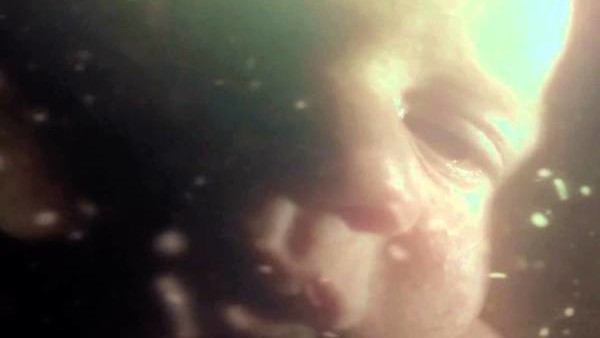
Eric Bress and J Mackye Gruber’s The Butterfly Effect is not tremendously well regarded within the world of science fiction cinema, but you’d be lying if you said you didn’t enjoy its wacky twists and turns at least the first time round.
Ashton Kutcher plays Evan Treborn, who has a history of blackouts and memory loss, and discovers in his later twenties that he can travel in time. The blackouts are flux moments during which Evan inhabits and controls his past selves, changing their future based on his altered decisions. Unfortunately for him, each change he makes brings with it unintended and increasingly dire consequences, as he tries and fails to make his life great and put himself on a romantic collision course with his childhood friend Kayleigh Miller (Amy Smart).
This may sound like the setup to a classic Kutcher comedy, but boy how it’s not. Butterfly Effect goes hard on the consequences, playing fast and loose with chaos theory in order to plunge Evan into various nightmare realities. And Bress and Gruber were more than willing to ride this vibe out to its worst conclusion, completing a devastating ending that sees Evan strangle himself with the umbilical cord in his mother’s womb, saving Kayleigh and his friends from all the possible miseries he has caused.
Thankfully, the studio intervened and course corrected to give us a theatrical ending that has Evan push Kayleigh away as a child and then stop time travelling altogether. Phew.
4. Star Trek II: The Wrath of Khan (1980)

Star Trek II: The Wrath of Khan is the most beloved big screen adaptation not just of the original series, but of any Star Trek property to date. And it’s not hard to see why: Nicholas Meyer assembled the old gang – including William Shatner’s Captain Kirk and Leonard Nimoy’s Spock – to board the starship USS Enterprise once again, but this time facing their deadliest enemy yet, genetically enhanced superhuman Khan Noonien Singh (Ricardo Montalbán).
Khan has a history with Kirk, after the Captain exiled him and his people to Ceti Alpha V fifteen years prior, and leads the Enterprise into a carefully engineered trap, all while trying to get his hands on the Genesis Device, a technology capable of reorganising dead matter and terraforming worlds. Famously, Spock sacrifices himself in the film’s final sequence, entering the Enterprise’s irradiated engine room to restore warp power and save the crew. A funeral is held and his body is jettisoned out into space. And, in the original cut of the film, that was that.
But news of Spock’s untimely death got out ahead of the film, and a massive fan campaign twisted Paramount’s arm, who twisted Meyer’s, who in turn twisted Nimoy’s – who had wanted his character dead for good. As such, a new scene was shot and tacked onto the end, showing Spock’s casket landing on the planet revitalised by Khan’s activation of the Genesis machine, with a voiceover from Nimoy, all but promising the character’s return.
3. 28 Days Later (2002)

Danny Boyle’s 28 series has rocketed back onto our screens after being MIA for nearly two decades. Beaten and left for dead by the non-Boyle directed sequel 28 Weeks Later (2007), the franchise almost didn’t make it back, but thanks to the same ingenuity the director showed the first time round we now have a massive, zombie(-ish) infected world to explore.
And what a first time round it was. 28 Days Later arrived when new technology had been embraced by most movie houses, and yet it shot exclusively on digital, giving it a homemade feel that makes the story of Jim (Cilian Murphy) – a bicycle courier who awakens from a coma to find the deadly rage virus has decimated his world – all the more real. We journey with him as he experiences the best and worst of humanity’s remnants, and in the final sequence he takes a bullet in the stomach from the evil Major Henry West (Christopher Eccleston). Thankfully, Jim survives, and 28 days later he’s on the mend in a remote cottage with his companions Selena and Hannah (Naomie Harris and Megan Burns).
But another ending was filmed, in which Jim dies from his wounds and the women are left to fend for themselves – throwing not just the gains of the film, but Jim’s potentially pivotal future in the franchise out the window. And, perplexingly, the US distributors (Fox) opted to add this on as a post-credits “what if” to their theatrical release…
2. Terminator 2: Judgment Day (1991)

The best film of James Cameron’s time travelling, killer robot franchise, Terminator 2: Judgment Day goes bigger and harder than the first instalment, swinging the series away from horror into booms-and-bullets action territory.
Arnold Schwarzenegger returns as the T-800, the same model of nigh-indestructible, Skynet-brand killing machine from the future as in Terminator, except now he’s swinging shotguns for the good guys. Sent back in time by human resistance leader John Connor, the T-800 must save young John (Edward Furlong) and his mother Sarah (Linda Hamilton) from one of the scariest villains of sci-fi, Robert Patrick’s liquid metal T-1000. And it all goes to plan, with both models of terminator melted down, the building blocks of Skynet destroyed, and Sarah and John left to forge their own future.
However, the ending from the original script, which was filmed but never used, goes one step further. It depicts a future in which Sarah is old, John is grown up with his own family, and Skynet was never created. The end.
Cameron and co opted not to use this version, and while it does feel a bit too maudlin for the series, the jury’s out on whether this was a good thing. The open ending has afforded the franchise numerous iffy sequels, and given where Dark Fate (2019) takes things, killing young John in its 1998 opening, it may have been better for the fans if Cameron had killed it while he still could…
1. Brazil (1985)

Terry Gilliam’s Brazil takes the humour of the director’s other work and twists it into a film that’s part British work caper and part Kafkan nightmare, teetering between hilarious and disturbing from beginning to end.
Jonathan Pryce is Sam Lowry, a downtrodden white-collar worker whose position within the bureaucracy seems simultaneously precarious and inescapable. Sam dreams of soaring on angel’s wings and finding love with a mysterious woman – a far cry from the drudgery of his daily life, working under the fist of an inefficient, yet all-seeing system, ruled by the hollow wants of hyper-consumerism. A chance encounter with freelance air-con engineer Harry Tuttle (Robert De Niro), and the literal woman of his dreams, truck driver Jill Layton (Kim Greist), lead Sam ever-deeper into the world he’s been skating the surface of, to the point he can no longer escape.
Gilliam’s final tongue-in-cheek blow is to present us with Sam’s liberation. Caught by the government and tortured, he’s saved by Tuttle, and swept away by Jill, driving off into the sunset, until… we discover he’s still in the government facility, and has been driven insane. It’s a brutal one-two, and US distributor Universal did their best to make sure it didn’t happen, battling Gilliam to release their version, in which the happy ending is real.
A lengthy dispute between director and studio prevented the film’s release for some time, before Universal relented, using the publicity generated in the interim to sell the film, even without a Hollywood ending.