10 Most Pointless Horror Movies Ever Made
What is the point of the horror movie? Don't ask Rob Zombie, David R Ellis or Gus Van Sant.

Some horror films basically don't need, deserve or have any good reason to exist. But we don't need to tell you that.
For decades now, horror as a genre has been plagued with unworthy offerings, when directors, producers and financiers put their heads together and come up with something so inessential they might as well not make it. But make it they do. They couldn't stop making Final Destinations, they re-made Hitchcock's Psycho shot-for-shot, and they let Rob Zombie make absolutely anything he wanted.
That is not to say that some of these films aren't rather enjoyable in their own right. Hell, some of them are technically good. But there is a great, gaping chasm between what we are willing to watch and whether or not it has a point to it. Some films remake sacred properties, some end right back where they start, and others have their characters tread water like we won't notice.
And we have collected the worst offenders here for you. Yes, these are the most meaningless productions ever mounted, the 10 most pointless horror movies ever made. Don't just take our word for it...
10. Invaders From Mars (1986)

Tobe Hooper (of Poltergeist fame) brought us sci-fi horror Invaders from Mars in the mid-'80s, in which a flying saucer lands in young David Gardner's (Hunter Carson) garden, and the boy is forced to prevent the alien invaders from taking over his hometown - and possibly the world.
The action is fun, the aliens look good, and the scares are authentic, so why is this such a pointless endeavour? The reasons are twofold. First of all, Invaders From Mars is a remake of the already warmly regarded 1953 film of the same name. Like most remakes, we simply didn't need it, and not enough is changed between the two productions to justify it. Which leads onto the second reason: it is all a dream!
Suffering from the same dysfunction as the original movie, Hooper's picture ends with David awakening safe in his bed, the preceding adventure a literal nightmare. Sure, there's a modicum of doubt instilled in us when David once again sees the alien ship land in his backyard - but this only occurs after his parents have been in to reassure him, and he has lain down to sleep again. And we all know what that means.
9. The Haunting (1999)

Mike Flanagan may have delivered a pitch-perfect miniseries of The Haunting of Hill House seven short years ago, but even this couldn't make up for the number of far from complimentary adaptations this iconic horror property has had over the years. And the worst offender of all is Jan de Bont's The Haunting, which despite its cosy '90s aesthetic proves to be not just unnecessary but night unbearable.
Dr David Marrow (Liam Neeson) takes a group of subjects to the secluded Hill House for a study on fear masquerading as a study on insomnia. He does his best to frighten and mess with the already sleep-deprived crew he has assembled (Catherine Zeta-Jones and Owen Wilson among them), but the fact of the manor actually being haunted for real kind of gets in the way.
As mentioned, Mike Flanagan created the definitive adaptation of the original Shirley Jackson novel, but even if he hadn't, the film that this one was based on - Mid-Century movie icon Robert Wise's 1963 The Haunting - had already wowed and terrified audiences and secured its rightful place in horror history. De Bont's version is riddled with CG, and a betrayal of everything its sources are known for, while adding absolutely nothing to the mythos or story.
8. Hellraiser: Revelations (2011)

A late entry to a tired and worn franchise, Hellraiser: Revelations neither distinguishes itself from the other Pinhead movies, nor contributes any new material. But there is good reason for this.
Dimension Films all but demolished the franchise with their lazy, forgettable and increasingly absurd straight-to-video Hellraiser sequels, and let the series stagnate for a while. Unfortunately - for them - this set the clock ticking on the rights, and in order for them not to lapse, they were obligated to put out a new film.
And that film is Revelations, which had a miniscule budget, limited shooting schedule, and a script so dire original Pinhead Doug Bradley refused to have anything to do with it. In it, a couple of college buds unwittingly release pinheads while on a jaunt in Mexico, and hell descends. Their friends and family go looking for them, and hell descends once again. It focuses way too much on these nothing-characters, and not enough on the Cenobites. But maybe that's for the best, as they are poorly realised in this sloppy, silly and pointless outing.
Thankfully now the rights are back where they ought to be - in creator Clive Barker's hands - and while he has only really used this power so far to remake the first movie and kick-start an as-yet unrealised TV series, anything is better than the likes of Revelations.
7. Psycho (1998)

On the surface of it, there's not much wrong with Gus Van Sant's Psycho. It is a good film. The problem is, it's not his film.
The director has spent his career alternating between large, award-winning productions like Good Will Hunting, and quirky, avant-garde passion projects like Gerry and Elephant, and in the late '90s, he got the opportunity to conduct a high-profile piece of experimental filmmaking, when he remade Alfred Hitchcock's horror classic Psycho.
Rather than mount a new perspective on the material, Van Sant put his $60 million budget and impressive cast (Vince Vaughn, Julianne Moore, Viggo Mortensen, William H Macy) to work on remaking the original movie shot for shot. The result is undeniably interesting, but just not as good as the original - and thoroughly pointless to boot. After all, following initial curiosity, why would anyone watch an inferior version of exactly the same movie when given the choice? Psycho was ravaged by the critics and has faded into obscurity as a result, with even Van Sant himself reasoning that the end result probably wasn't worth the effort.
6. The Devil Inside (2012)

William Brent Bell's micro-budget exorcism horror The Devil Inside has all the trappings of a great indie horror flick - found footage documentary style, handheld cameras, exorcisms, bloody crime scenes, scary nuns - but it all goes to waste on a film that feels not just inessential but pointless.
Two decades after Maria (Suzan Crowley) conducts a brutal triple murder out of the blue, her daughter Isabella (Fernanda Andrade) seeks the truth of what seems an inexplicable horror. With two exorcists in tow (Simon Quarterman and Evan Helmuth), she engages four demons in an all-out battle over her mother's spirit.
Rather than The Blair Witch Project meets Ken Russell's The Devils (as any avid horror fan might have expected from the promotional material), The Devil Inside is one plodding detour after another, stringing together exorcisms which, once you've seen one you've seen them all. But it's the ending that makes the film truly, unforgivably futile, because it concludes on a website link which purports to provide further information on the ‘case’. This isn’t Dorothy waking up in Kansas, this is putting a works sign on the yellow brick road and sending everyone home.
5. The Final Destination (2009)

In an already pointless series, in which every film follows the basic formula, The Final Destination strikes out on its own as an even more meaningless addition to the franchise, positioning itself as yet another cookie cutter sequel to the preceding three films, while supposedly offering up a definitive end. This was something of a last-ditch attempt to lure people back into cinemas, but forgets one important aspect - death never ends.
The formula for a Final Destination movie is clear: a group of ornery folks miraculously escape their fate before being killed off one by one in evermore dramatic fashion until death is square again. And audiences loved it... the first couple goes round. By the time number four arrived in 2009, the franchise had been going for nearly a decade and interest was dwindling.
Thus, director David R Ellis sent us to the races, with a group of folks who escape a fatal accident at the speedway, and - you guessed it - death spends the next 90 minutes making them pay the price. The original characters are all dead, and these new ones are as forgettable as their contrived deaths. What should be a grand series finale feels flaccid and wholly irrelevant.
4. The Crow (2024)
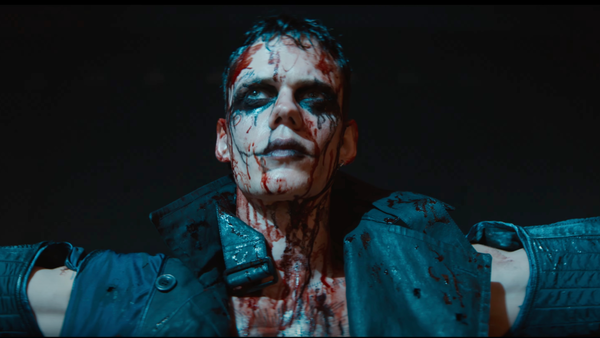
Of all the remakes we did not need, The Crow may be at the very top of the list. The film that took Brandon Lee's life, the 1994 adaptation of James O'Barr's comics is rightly considered the ultimate version, with a slightly corny pulp vibe; an impeccable gothic aesthetic; a hard rock soundtrack featuring NIN, Pantera and Rage; and more leather than Hulk Hogan's face.
Fans were right to be sceptical when Bill Skarsgard first appeared on posters, then, sporting a neo-mullet, SoundCloud rapper tats and a matching girlfriend. As Eric Draven, brought back from the dead to avenge his beloved, Skarsgard does his best to fill out the trench coat, but Rupert Sanders' film fails to match the original on all fronts, feeling closer in style, tone and production value to one of the straight-to-video sequels.
No matter how much Skarsgard put into his performance, and no matter how good the film could have been in different hands, the bare fact remains that this film has no right to exist. We know the characters, we know the story, and the tweak in this version's ending, which has Eric trade his soul for his Shelly's (FKA Twigs), serves only to make us ask once again: what's the point?
3. Resident Evil: Retribution (2012)

One has to assume that when Paul WS Anderson started the Resident Evil series he had a genuine passion for the material, and did not simply intend to churn out any old thing. And, while imperfect, the first couple of films do seem to support this idea, with interesting casting choices, coherent plotlines and big, sexy action sequences.
By the time Resident Evil: Retribution arrived, however, the fire had clearly gone out behind Anderson's eyes (we all know that feeling, huh?). The studio was obviously keen on making these things until the day the director died, and who was he to turn down a steady payday - no matter the toll it took?
Zombie-hunting Alice (Milla Jovovich) returns for the umpteenth time in what amounts to the same movie as the film's two predecessors, forgiving some minor plot points. There are Alice clones, there are zombies, a lot of slow-mo gun fights, a super-powered evil version of a previous friend (Michelle Rodriguez's Rain) and a hulking monster (a licker, as seen in prior instalments). And Wesker is back again, having somehow survived being shot in the head and blown up. What's the point? Well, there isn't one. The films all bleed into a single formless blob, retconning as they go, meaning little to any supposed overarching narrative.
2. Hobgoblins (1988)

What do you do when you fancy making a Gremlins movie but don't have IP rights, the budget, or any actor of note willing to work with you? You make Hobgoblins. At least that's what Rick Sloane did.
A big fan of both grindhouse cinema and Joe Dante, Sloane combined his passions with Hobgoblins, in which the titular demonic alien creatures go on a bloodthirsty rampage after escaping from an old movie studio vault. Now, that could suggest a decent send-up of Gremlins and its contemporaries, but rather than mine this angle, the film entertains itself by attempting to mount a script that makes Killer Klowns from Outer Space look like Citizen Kane, with a cast of actors Tommy Wiseau would turn down.
Hobgoblins arrived after a glut of Gremlins rip-offs, with Troll, Critters and Ghoulies already on the platter, and the Gremlin trend having worn thin with audiences everywhere. Why, then, did Sloane decide to make something far inferior with all the basic hallmarks of the original film and none of the style, flair or effects? We may never know. What we do know is that Hobgoblins has nothing to contribute, nothing to say, and would be better off never having existed.
1. 3 From Hell (2019)

While Rob Zombie's Halloween remake could easily have found a place on this list, it is at least enjoyable. No, instead we look to the director's closing statement on the Firefly Family trilogy, 3 From Hell, as the most egregious example of pointless horror filmmaking.
14 real-world years after he killed his wacko band of redneck murderers Baby Firefly (Sheri Moon Zombie), Otis Driftwood (Bill Moseley) and Captain Spalding (Sid Haig) offscreen in an end-of-the-movie shootout (The Devils Reject), Zombie made his duology a trilogy. 3 From Hell has the gang break out of prison and head to Mexico, holing up in a rathole and only coming out to drink booze and do battle with the local mafiosos.
Zombie couldn’t leave well enough alone the first time around - as, let's be honest, House of 1000 Corpses didn't need a sequel - but 3 From Hell is a new low. A sign of being absolutely, totally out of new ideas in order to retreat into this old and rotten chestnut, the film is unbearably dull, with no actual scenes or plot to speak of, just a barely coherent string of happenings. There is no narrative, no character development and no reason to care offered up across two (two!) whole hours. What's even worse is the film ends with the Firefly family still out there, leaving space for Zombie to make another one...