10 Utterly Devastating Horror Movie Endings You Didn't See Coming
No happy endings here.
It's important to know what you are letting yourself in for when watching a movie. Though we all like to be surprised on a wider level, watch a comedy for a laugh, an action film for some adrenaline-fuelled thrills, and so forth.
In that same regard, horror movies by and large are designed specifically to make an audience feel scared and uncomfortable, and in some cases, genuinely scar them for life. Some things simply cannot be unseen, but even going into a film with this attitude doesn't always save a viewer from feeling utterly inconsolable afterwards.
This is where a solid ending can change the game. It doesn't matter how gruesome, gory, or bleak a story has been, a good horror flick can always shift gears right at the end, with no one able to see what was coming.
Characters have died, have been revealed to be dead for some time, monstrosities have quite literally been born, and happy endings have been cruelly snatched away. Yes, the genre isn't exactly known for leaving an audience with sunshine, lollipops, and rainbows on their minds by the end, but some take things way beyond that to the point of genuine devastation.
10. Midsommar

Such is the tragedy of Dani's (Florence Pugh) life within the story of Midsommar, the opening scenes that see the fallout from her sister's murder of their parents and subsequent suicide only scratch the surface of the ordeal she is about to go through.
While a horror film removing its cast of characters to a rather claustrophobic and isolated setting of the Swedish woods was never going to end well, you'd still be hard-pressed to find someone who could telegraph how the thing was going to end.
On a vacation fuelled more by grief than anything, with a boyfriend who simply couldn't be bothered with her emotions, Dani's downward spiral was as rapid as it was shocking. The festival turned out to be a cultist community, with sacrificial elders, murder, and humiliation rituals aplenty, and Dani managed to be the sole survivor from her visiting group.
Though this may be the case, it's a hard ending to read. Dani survived, but now, as the May Queen of the community, she's almost trapped there. She may have gotten some sort of revenge on her boyfriend Christian (Jack Reynor) by all but ordering his death by fire, but the fact that this is where her life led her is utterly heartbreaking, so much so that Florence Pugh quit the horror genre altogether.
9. Night Of The Living Dead

Inspired by Robert Matheson's novel I Am Legend, long before the disappointing Will Smith-led adaptation of 2007, Night of the Living Dead quickly became one of the most iconic and influential horror films of all time. Just about every zombie movie can trace its roots back to 1968.
As may be expected, one of the biggest things at play is the sheer hopelessness of the protagonists against the titular living dead. There were plenty of different escape routes tried, with all of them resulting in death all the same.
Ben (Duane Jones), the character who had argued against cowering and hiding, ultimately survived by cowering and hiding. However, as a posse went around in the daylight of the next morning, essentially cleaning up and picking off any zombies they could see, Ben was mistaken for a ghoul through the window of the house he'd made his hiding place, and was shot clean in the head.
Even in the world of horror, audiences will generally expect a win for the good guys, but that certainly wasn't the case with Ben, and how poignant and poetic that it was a group of living humans that killed him rather than the dead. Clearly, George A. Romero understood Matheson's novel better than the 2007 film version ever did.
8. Scream

With the entire genre falling into a pit of formula and predictability, Wes Craven took the slasher film in 1996, much like he did with A Nightmare on Elm Street 12 years earlier, and rejuvenated it with Scream.
The movie that would spawn a franchise that is still relevant 30 years later actively played on the expected tropes and called them out beautifully while still employing them, bringing a whole new meta dynamic to the screen.
However, not everything was played by the rules so eloquently laid out by Randy Meeks (Jamie Kennedy) throughout Scream. The first shocking twist came early on, as Drew Barrymore's Casey Becker, the heavily advertised lead character, was killed off within 12 minutes to be replaced by Neve Campbell's Sidney Prescott, and the second shocker came with the killer reveal at the end.
Having Sidney's boyfriend be the man behind the mask wasn't exactly a huge surprise, but having multiple killers, with Stu Macher (Matthew Lillard) joining Billy Loomis (Skeet Ulrich), and both being so close to Sidney, was a gut punch. The double killer is something that has been utilised by the franchise in almost every film since, all because of how well this first one was executed.
7. Fall
Having an unreliable narrator in a film can open so many doors to play with an audience's collective mind, especially so with a reveal that a character on screen was never really there.
This worked to perfection with The Sixth Sense and The Others, and heck, there was even the heart-stopping episode of Scrubs in which Dr. Cox's (John C. McGinley) best friend was revealed to have died at the beginning of the episode. Then there is Fall.
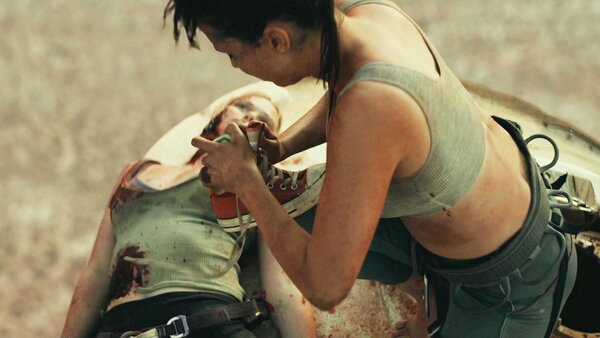
The story revolves around two friends who climb a decommissioned TV tower and get stranded with no way down, having to try and find some way to alert anybody to their situation. At one point, Hunter (Virginia Gardner) falls, and though at first it seems that she managed to save herself, it is ultimately revealed that she did not, and that Becky (Grace Caroline Currey) has been hallucinating her friend thanks to dehydration and exhaustion.
In reality, Hunter's body lay on a dish an upsettingly long way down. In order to finally save herself, Becky abseils down to her friend's corpse and, after pressing send on an SOS text to her dad, shoves the phone into a shoe, pushes the shoe inside Hunter, and throws Hunter hurtling to the ground. Her body protected the phone in the fall, and allowed the message to send once out of range of the tower's radio interference. It's an ending as dark and disgusting as it is shocking.
6. Martyrs (2008)

Not too long after the release of the first two Hostel movies came a French effort from Pascal Laugier that toyed with similar themes of torture against seemingly random victims, but Martyrs was both far bleaker and brought further meaning to the story.
After trying to help her friend on something of a short-lived hunt for revenge against her torturers from years earlier, Anna (Morjana Alaoui) found herself being tortured, this time by a cult who were essentially trying to push their victims close enough to the afterlife in order for them to report back what they had seen.
The torture itself is grim and almost impossible to watch, while scenes of Lucie (Mylène Jampanoï) hurting herself don't bare thinking about. The finale, however, provides something of a talking point of Martyrs, in which there is no real answer given.
Anna, the group's most successful subject ever, whispers something into the ear of the cult's leader, who proceeds to tell her followers to keep doubting, before taking her own life. There are so many ways this could be taken. Was the woman desperate to find the afterlife based on what she had been told? Was what she was told so devastating that she saw no point in continuing? Or did it truly not matter what Anna said, because, regardless, it spelled the end of the woman's hunt for knowledge and thus her purpose in life? Either way, there aren't many positives to take from it.
5. Sinners
Sinners really is the poster-child for just how good 2025 was to horror fans, and while there was a lot of buzz surrounding Ryan Coogler's vampiric story before release, no one could have been expecting it to break the all-time record for Oscar nominations (16).
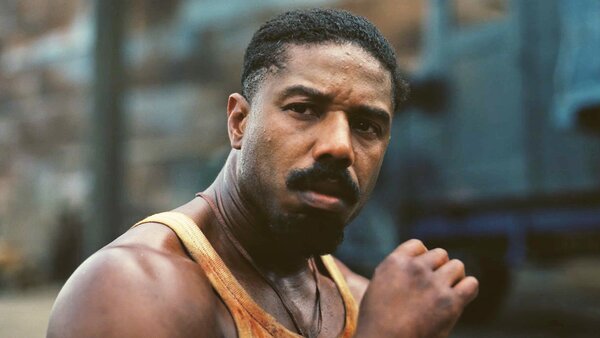
It was more than just a vampire flick, and while it was spurred forward by every single cast member - from Miles Caton's debut to Michael B. Jordan's career-best effort - knocking it out of the park, there were more poignant and deeply emotional themes at play.
To this point, while Remmick's (Jack O'Connell) brood sank their teeth into the bulk of the core group of characters, one of the last remaining protagonists, Smoke, the elder of Jordan's twins, was killed by an unnamed and largely unseen member of the KKK.
With the bulk of the story surrounding vampires, and Smoke having to first see his brother taken, and then having to fight him off, to have the character killed off in this way was completely unexpected and heartbreaking. At least he got to be with Annie (Wunmi Mosaku), but honestly, this only stood to make the ending even more devastating.
4. Alien: Romulus

Like just about every franchise that throws too many sequels out into the world, Alien suffered from diminished returns with each one, and was not helped by what could have, and perhaps should have, been a great prequel and a huge crossover.
This didn't change until 45 years (and 20 in-universe years) later, when Rain (Cailee Spaeny), Andy (David Jonsson), and their group got caught up in the Weyland-Yutani Company's plans to bring in the Xenomorph that destroyed the Nostromo. Alien: Romulus was a triumph as it once again returned the franchise to a claustrophobic monster movie, while upping the alien ante right at the very end.
Though referenced several times throughout the story, Kay's (Isabela Merced) pregnancy didn't truly come into play until the dying moments of the movie. After being savagely and potentially fatally attacked by a Xenomorph, in a desperate attempt to save herself, Kay injected herself with an experimental serum that fused the DNA of her unborn baby with that of the famous alien.
What followed was nothing short of horrific. After freeing itself from her body, in much the same way as any other young Xenomorph would, the human/alien hybrid grew into one of the most discomforting images the franchise has ever shown, as it feasted upon its mother and tried to do the same to Rain.
3. The Long Walk
By the very definition of the game from which The Long Walk's title was taken, in a similar way to The Hunger Games, there was only going to be one young man left breathing at the end, at most. However, while Katniss and Peeta found a way to both survive, Ray and Pete (Cooper Hoffman and David Jonsson) didn't.
In a dystopian world in which the economy has collapsed, 50 boys, one from each US State, participate in the Long Walk. It is literally last man standing, where those who cannot maintain a speed of 3 mph are killed off, until there is a winner who is showered with riches and has one wish granted.
Ray wanted to kill the Major (Mark Hamill), the authority figure watching over the 49 murders, while Pete, who managed to befriend Ray in the face of one or both of their imminent deaths, tried his very hardest to talk him out of it, telling him of the beauty of the world, and how sad it would be if he became the kind of person who could kill a man.
When all was said and done, though, throwing Stephen King's 1979 ending out the window, Pete used his winning wish to become that person and kill the Major. No making the world a brighter place, no two winners in the future Walks; just cold revenge that ultimately meant nothing in an already bleak world.
2. In The Mouth Of Madness
John Carpenter is one of the greatest legends of the entire horror genre, and so it is not that surprising that a movie as good as In the Mouth of Madness could fall into relative obscurity against some of his better-known titles. It may not be a mainstream favourite, but Carpenter's 1994 effort is a fantastic play on reality and nihilism.
In a similar way to Night of the Living Dead, you'd be forgiven for thinking a win for the protagonist (in this case, Sam Neill's John Trent) was coming, but that's never what this film was about.
Blurring the lines between reality and fiction, and living in the world of an author who could rewrite the world as he saw fit, there was never going to be a win for John, but that still doesn't make it any less devastating when it finally comes.
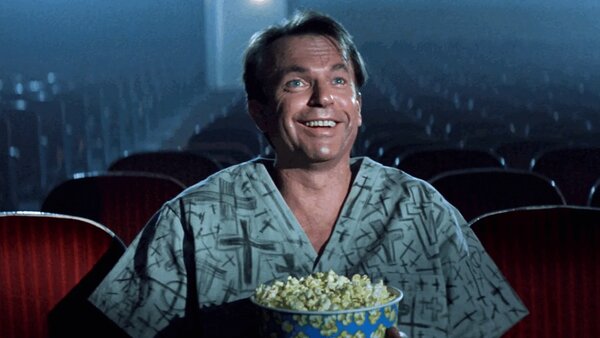
Sutter Cane (Jürgen Prochnow), the godlike author, wrote the world into an epidemic of violence and hysteria, while John could do nothing but sit back in the cinema with a bag of popcorn and a smile, watching the film adaptation of his own life. Realising there was never anything he could have done, this was as happy an ending as he could have hoped for, which is both brilliant and a little depressing.
1. Eden Lake

While most stories will have an audience rooting for the protagonist, there are those that present villains in such a way that more important than seeing the good guy win is seeing the bad guy lose. A good comeuppance can do wonders at a film's conclusion.
Such was the case with Eden Lake. Almost two decades before bringing to life both Remmick and Lord Sir Jimmy Crystal in Sinners and 28 Years Later: The Bone Temple, respectively, Jack O'Connell played the truly detestable, unmitigated psychopath Brett to perfection.
The story revolves around Brett and his gang terrorising a holiday-making couple. Things began as antisocial behaviour, before Steve and Jenny (Michael Fassbender and Kelly Reilly) became targeted by the group, escalating to the point of showing exactly how evil Brett was. He wasn't just a young trouble-maker crying out for attention, or the victim of a broken childhood; he was deranged and psychotic.
If you were to watch Eden Lake waiting on the edge of your seat for the young man to finally get what was coming to him, you would have left the cinema brutally disappointed, as things wrapped up with Brett receiving not an ounce of deserved and justified retribution.