10 Most Shocking James Bond Movie Moments
Startling scenes from the world's greatest cinematic spy series.

The James Bond movies have been two things in their long history. First, Ian Fleming’s master spy has been featured in thrilling movies that have succeeded far more often than they’ve failed, and second, the Bond films have become a cultural institution.
Since Bond's first movie, Dr. No, the series has been successful, spawning 22 more films, with another due out late this year. Any long-running series of stories runs the risk of falling into predictable patterns and losing its edge. The Bond franchise has had periods of formulaic storytelling, yet always seems to change with the times, if just enough to inject freshness when on the verge of becoming stale.
Even after more than fifty years, a Bond movie can surprise viewers with a scene that comes out of the blue and shocks even the most jaded of fans. Let’s look at some Bond moments that surprised or shocked the audience, made us gasp, punched us in the gut, and maybe even broke our hearts.
Some are from long ago, but must have made quite an impact on those who saw them when they first came along. Others are from the most recent 007 adventures, proving the world’s most famous spy and those who script his silver screen exploits still have the capacity to take us out of our comfort zone and blow predictability away like a bullet from a Walther PPK.
10. Clever Little Ways To Die

Interesting assassinations and executions have long been a staple of the Bond films. One of the best examples of this, and a shocking little scene that must have made watchers cringe and smile with morbid delight at the same time occurs in From Russia With Love.
Though the evil organization SPECTRE was mentioned in Dr. No, it took the second Bond movie to show more of its working and agents and even give us a glimpse (but just a glimpse) of its leader, called “Number 1.” When Number 1 is displeased with the performance of one of his minions, Kronsteen, he summons the underling and has him quickly and mercilessly killed thanks to a quick kick from a poisoned shoe worn by another agent.
The Bond series was still in its infancy at the time and this is one of the earliest of the multitude of clever methods of dealing death that would become one of the many trademarks of the world's greatest spy franchise.
9. Some Heads Are Gonna Roll

One of the most memorable henchmen in the Bond films was Oddjob, Goldfinger’s Korean manservant. Silent except for the occasional grunt, and massively strong, Oddjob’s deadly weapon is his razor-brimmed bowler hat, which he uses in a scene early in the movie to decapitate a statue. By introducing the hazardous hat in such a dramatic manner, the film leaves viewers dreading its eventual use against a human target.
Later, those fears are realized when Bond and Tilly Masterson (sister of the girl Goldfinger had killed earlier in the movie) are fleeing into some woods outside Goldfinger’s compound. In a cringe-inducing instant, Oddjob takes off the hat and throws it at poor Tilly. Due to the shadows of the nighttime scene, the specific damage the bladed bowler does is mercilessly veiled, but it's hard not to think of the unfortunate piece of sculpture from a previous part of the film as poor Tilly meets her doom.
The scene is a brilliant piece of work that shows a devastating death without having to resort to actually showing the injuries caused by a brutal stroke from one of the most famous (or infamous) minions to work for the classic Bond villains.
8. Goodbye, M

In Skyfall, Bond’s boss was killed off rather beautifully after seven outings. She was wounded in battle with the movie’s main villain, Silva (Javier Bardem) and later died of the injury.
This moment should have been truly powerful and probably was to those who didn’t know it was coming. After all, the worst that had ever happened to M before, no matter who was playing her/him, was being captured for a brief time in The World Is Not Enough.
Unfortunately, news was leaked months earlier that it would be Dench’s last time in a Bond movie, and one major US newspaper had even let slip that the character was being killed off in Skyfall. Rampant spoilers are one of the downsides of the modern age of instantly available information. If not for that leak, this moment would have ranked higher on the list.
The first three films in the rebooted series starring Daniel Craig all seemed to be gradually setting up the character’s becoming the fully formed, more experienced Bond we knew from the previous 20 instalments. The death of Dench’s M was the final cutting of the umbilical cord as the traditional Bond pieces (a male M, Moneypenny, and Q) were put onto the chessboard for future films.
7. He’s Alive!

While most of the Bond movies’ most shocking moments have to do with violence and death, there are some scenes that have surprised viewers with delight and even sentimental joy.
When the Bond franchise returned to the big screen in 1995 with Goldeneye, it was after the longest gap in the series’ history, six years since License To Kill. Many features of the series had changed. The Cold War had come to an end and the political attitudes of the film were different than in previous instalments. Pierce Brosnan had stepped into the role. Bond’s boss, M, was now played by Judi Dench, a big change in a part previously occupied by men.
As moviegoers watched Goldeneye, though, many were delighted to see that one old, familiar face had returned for yet another 007 adventure.
Desmond Llewellyn was back as Q, maker of Bond’s weapons and gadgets! Audiences in some theatres applauded when Q appeared on screen. For Llewellyn, it was his fifteenth time playing Q. In total, he was in seventeen Bond movies, more than any other actor, first appearing in the second, From Russia With Love, and showing up in every Bond movie from 1963 to 1999, with the exception of Live and Let Die, which he missed due to another acting commitment.
6. A Good Swift Kick

By the time of his fifth Bond film, For Your Eyes Only, audiences were used to the over-the-top, semi-comedic movies of Roger Moore. They kept getting bigger and more ridiculous, with the goofiness and gadgetry reaching a peak with Moonraker, where they went so far as to launch 007 into space. But the reins were pulled back with For Your Eyes Only, which was a much more stripped down spy movie, closer in tone in many ways to the earliest Bond instalments.
In one scene, Bond waits on a mountaintop as a henchman drives toward him. Standing under a stone arch — in a pose reminiscent of the gun barrel opening sequence — Bond fires at the car, causing it to careen out of control. When the car stops, it’s hanging halfway off the edge of a high cliff.
Bond calmly walks over and kicks the car, sending the vehicle and its occupant crashing down to their doom, then delivers the line, “Had no head for heights.” It’s a scene of merciless justice, with a sharp, ruthless tone too often missing from the Moore era. If some had forgotten, due to the silliness of some of the Moore movies, how deadly Bond could be, this moment was sure to remind them.
5. Zero Hesitation
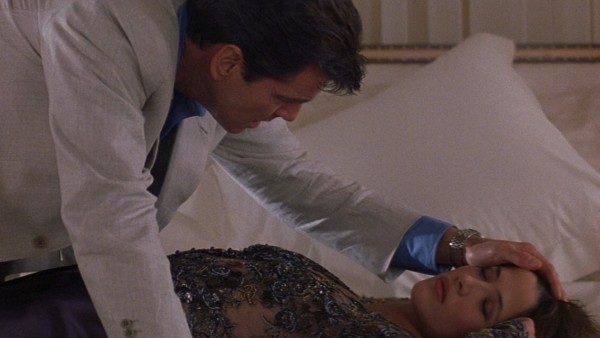
The job of a double-o agent is to kill, and specifically to kill those who . We’ve seen him send dozen of enemy agents and treacherous megalomaniacs to their deaths. But it’s rare that we see Bond mercilessly dispatch a beautiful woman.
In The World Is Not Enough (1999), Sophie Marceau plays Elektra King, a former kidnap victim who Brosnan's Bond is assigned to guard. Exactly what part Elektra plays in the story seems to change as the film progresses. Is she an innocent victim? Will she be Bond’s romantic interest in the movie? Or has she actually turned against her country and become part of the other side? As it turns out, she’s working with the main villain, Renard, and goes so far as to kidnap M.
Bond frees M and confronts Elektra, holding her at gunpoint, and instructing her to call off Renard. “I won’t ask again,” he says. When Elektra tries to shout other orders, Bond, without hesitation, shoots her in mid-syllable. As her dead body falls backwards onto the bed, Bond mutters, “I never miss.”
Bond shows a moment of regret afterwards, leaning over the body and stroking Elektra’s hair, but only after one of the quickest, coldest close-range kills in Bond’s long movie history.
4. A Painted Lady
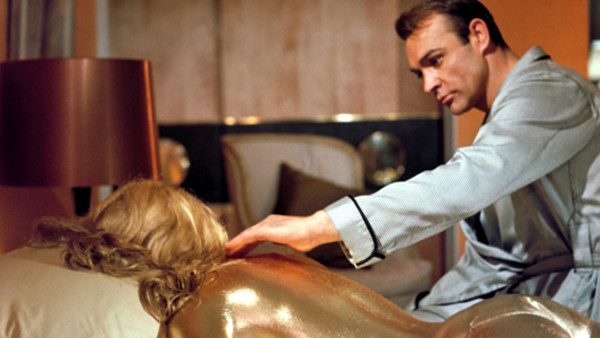
Goldfinger is probably the most famous and iconic of the Bond movies, and some of its images have been so etched into the collected consciousness that it may now, more than half a century after the film’s debut, be difficult to see them as shocking. Yet, a few scenes from Goldfinger are still incredibly potent and must have been even more dramatic when audiences first saw them in 1964.
Early in the movie, as Connery's Bond is just beginning his investigation into the doings of the evil Auric Goldfinger, he encounters and seduces Jill Masterson, a young woman who has been working for Goldfinger. During a passionate night in a hotel room, Bond leaves Jill alone for a moment to fetch more champagne. As he reaches for the bottle, he’s hit from behind and knocked unconscious. When he wakes, he returns to the bedroom to find the young woman dead, naked on the bed, her entire body covered in gold paint.
The image of the woman painted gold has become one of the most iconic pictures not only from Bond films, but in all movies, yet the scene still packs a powerful punch.
3. He Disagreed With Something That Ate Him
We know James Bond is not going to die or suffer lasting physical harm in one of his movies, that much is guaranteed. We can also be reasonably sure the traditional supporting cast is safe.
M, Q, and Miss Moneypenny are the three constants in the Bond cast, but the next most frequently appearing supporting character is Bond’s friend from the CIA, Felix Leiter. Originally played by Jack Lord, Leiter has changed faces, ages, and even race more times than Bond and has appeared in nine of the official Bond movies.
Since he’s a constant ally of Bond, it must have come as a brutal surprise to some audience members when, in License To Kill (1989), poor Felix, just after getting married, is attacked by the ruthless drug lord Sanchez, who kills Mrs. Leiter and feeds Felix to a shark. He survives, but loses a leg. The incident enrages Bond (Timothy Dalton) and sends him off on a quest for revenge.
Although Leiter’s shark-inflicted injuries occurred way back in the second of Ian Fleming’s novels, Live And Let Die (published in 1954), it took Eon Productions 27 years and 16 movies to include this shocking event in the films.
2. Every Man’s Worst Nightmare

When the Bond franchise was rebooted for Daniel Craig in 2006, it was obvious from the opening scene that this was going to be a harsher, more brutal sort of Bond movie than had been seen during the Pierce Brosnan years. But it was a certain scene, played almost exactly as it was in the novel upon which the film was based, that really drove home the extent to which things had been darkened for the reboot.
In a part of the movie that must have made almost very male audience member squirm in his seat, Bond, having been captured by Le Chiffre, is tortured in a way far worse than anything he’d endured in the twenty original series movies. Naked, Bond is tied to a chair from which the seat has been cut out. Le Chiffre then whips Bond’s genitals from underneath.
Bond’s facial expressions and howls of agony show 007 experiencing more pain that had ever before been portrayed in a Bond movie. It is only the sudden appearance of another villain, Mr. White, who kills Le Chiffre, which saves Bond from permanent damage.
Any illusion that the rebooted Bond was still the same nearly-invincible semi-superman he'd been in the past was quickly blown away by this scene.
1. All The Time In The World
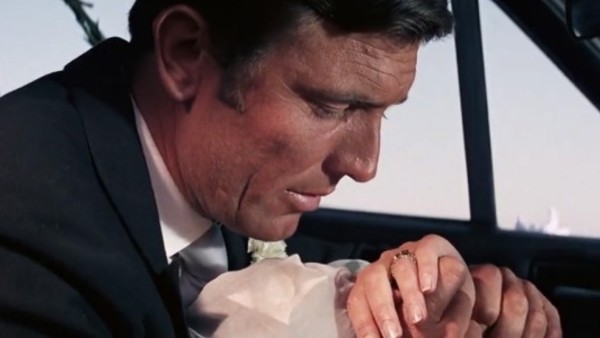
1969's On Her Majesty's Secret Service marked a big change in the Bond series, as George Lazenby replaced Sean Connery as Bond and the story broke the tone of previous Bond films.
The main villain, Blofeld, did not meet a gruesome end in the final scenes of the film, and Bond got married. Yes, the world’s smoothest spy tied the knot, falling in love and exchanging vows with Contessa Teresa di Vicenzo (Diana Rigg), or Tracy, as Bond called her.
Of course, audiences knew the marriage couldn’t last, but the way it ended must have stunned moviegoers. After the wedding, as Bond and his bride drive off, Blofeld and his henchwoman reappear and riddle the car with bullets, one of which strikes Tracy in the head. The movie ends somberly, as Bond, cradles his dead wife. A policeman stops to check on the parked car.
Bond looks up at him and heartbreakingly says, “It’s alright. It’s quite alright, really. She’s having a rest. We’ll be going on soon. There’s no hurry, you see. We have all the time in the world.” And he cries.
At that moment, despite all the times he’s narrowly escaped death, despite the diabolical villains he’s removed from the world, despite his seeming invincibility, James Bond is suddenly, tragically human, and that may have been the most stunning moment of all.