10 Most Shocking Jump Cuts In Film History
Editing at its most brilliantly jarring.
Editing is of course one of the most vitally important aspects of making a movie, and within that discipline, cutting is surely the most crucial cornerstone of all.
Without it, the visual language of cinema itself wouldn't exist, and as we all know, a fantastic cut can create incredible meaning and poignant emotion, while a bad cut can similarly derail a beautiful shot or great acting moment.
There are many different types of cut, and one of the most contentious is surely the jump cut.
The traditional rules of editing dictate that it should smoothly transition audiences from one image to the next, typically without drawing attention to its own construction.
But jump cuts deliberately violate this rule, highlighting their own jarring abruptness to emphasise an image or an idea.
While jump cuts can certainly be used in ways that are unintentionally offputting, they're typically used to dictate the passage of time or wilfully unsettle the viewer.
As a result, they tend to be used often in horror films, though naturally, creating a truly memorable jump cut which embeds itself deep in the audience's mind is easier said than done.
And so, we have 10 jump cuts which, whatever their utility, have stunned audiences with their precision, their innovation, and their emotion.
Whether attempts from the annals of early cinema or more recent feats of editing ingenuity, each gave audiences a supreme jolt in the most fittingly startling way...
10. Samara Kills Noah - The Ring

It's fair to say that American horror films have a tendency to rely on lazy jump scares, created by way of quick-cut images and loud sound effects, and that typically goes double for cynical state-side remakes of foreign language horror hits.
But Gore Verbinski's surprisingly stylish and moody 2002 remake of The Ring makes clever use of jump cuts during a pivotal climactic scene to fully hammer home the terror of the film's spectral, black-haired antagonist Samara Morgan (Daveigh Chase).
After protagonist Rachel (Naomi Watts) learns that her ex-boyfriend Noah (Martin Henderson) is about to be slain by Samara, the scene cuts to Samara emerging from Noah's TV and stalking him.
Ingeniously, Gerbinski has Samara, still flashing with TV static, literally "jump cut" in front of Noah, startling him and causing him to fall over.
And when it comes to the horrifying moment where she murders Noah, Verbinski makes use of three rapid-fire jump cuts into Samara's cloudy eye, ensuring the audience feels the same fear that Noah himself does.
After an entire film's worth of surprisingly subtle build-up, it's a fantastically creative and terrifying payoff that couldn't be further from the basement-low expectations U.S. horror remakes generally invite.
9. Dan's Corpse - The Birds
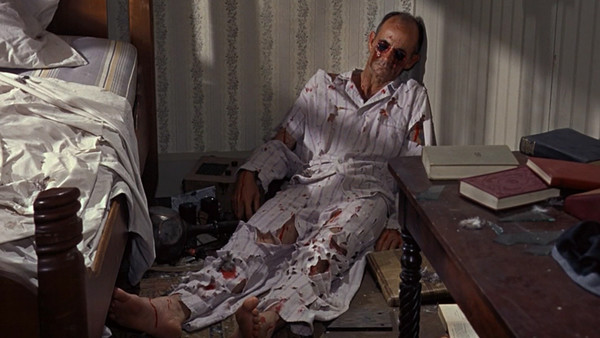
Though the jump cut is a fairly elementary editing technique by contemporary standards, it was decidedly less common in decades past, as evidenced by its brilliantly jarring use in Alfred Hitchcock's masterful 1963 horror classic The Birds.
The scene in question sees Lydia Brenner (Jessica Tandy) stumble upon the corpse of poor Dan Fawcett, whose eyes have been pecked out by the crazed birds.
Rather than show the audience Dan's mutilated face in a single cut or even zoom into it, Hitch decides to employ two jump cuts, each inching us closer into Fawcett's face.
It's a simple but startling effect when viewed today, but back in 1963 it was surely positively terrifying.
Better still, the scene doesn't employ a bombastic musical score to emphasise the horror for the cheap seats: Hitch only uses diegetic sound, which makes it that much more believably unsettling in all of its quiet "banality."
As for why Hitch opted for an unconventional jump cut? It was simply another of his many conscious decisions to break with cinematic tradition. In his own words, "I wanted a change from the zooming in."
8. Taking A Ride - Breathless
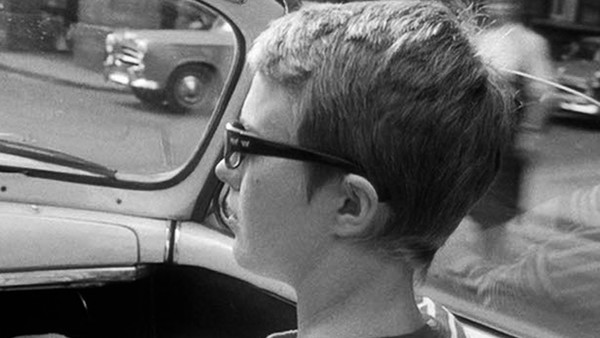
Not every film which employs striking and surprising use of a jump cut need be from the horror genre, and in fact there's arguably no film more noted for its boundary-pushing use of the jump cut than Jean-Luc Godard's 1960 crime masterpiece Breathless.
The film, a French New Wave riff on Bonnie and Clyde of-sorts, received considerable acclaim for its bold - and at the time, controversial - visual style, underpinned by Godard's unprecedented use of jump cuts to break the established cinematic language of the time.
This most memorably occurs when protagonists Michel (Jean-Paul Belmondo) and Patricia (Jean Seberg) are riding around in their car, and Godard jumps between similar shots of Patricia during the ride, depicting the passage of time while also enhancing the urgency of the film's couple-on-the-run narrative.
Though it seems positively rudimentary today, the legacy of this sequence is that it broke down conventions of how a scene could be constructed.
While much meaning has been conferred onto the scene in the decades since, assistant director Pierre Rissient amusingly confessed that it was largely a decision of storytelling economy, to cut out unwanted material in the middle of a continuous take.
Either way, modern filmmaking wouldn't have quite the same fluidity had Breathless not destroyed one of editing's most well-regimented formal rules.
7. Charlie's Head - Hereditary

Ari Aster's Hereditary is one of the most haunting and expertly composed horror films of the decade, if not the entire 21st century. And its brilliance is really defined by one spectacularly executed sequence mid-way through the film.
After Annie's (Toni Collette) daughter Charlie (Milly Shapiro) is decapitated in a traffic accident involving her son Peter (Alex Wolff), a traumatised Peter drives the car home, with his sister's headless corpse inside, parks it up and climbs into bed.
Aster then focuses on Peter as he stares into the distance at the precise moment that Annie can be heard wailing in anguish, having discovered Charlie's body in the garage.
Aster then jump cuts directly from Peter's face to Charlie's severed, mutilated head on the side of the road as it's being consumed by ants, all while Annie's screaming can still be heard.
Aster then cuts back to the house, but this time we're focused on Annie as she sobs uncontrollably at her daughter's death.
It's one of the most startling and genuinely disturbing jump cuts in recent memory, and one that certainly earns its shockingly detailed display of gore.
6. "Happy New Year!" - Citizen Kane
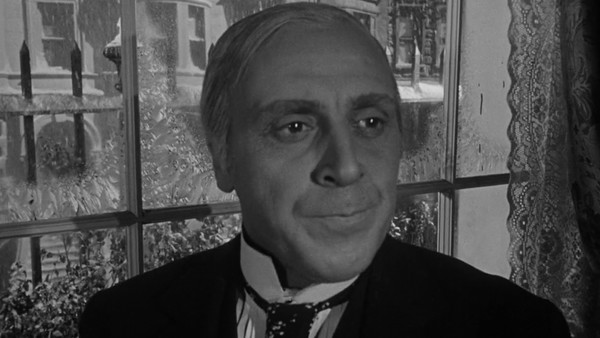
Some 20+ years before Breathless invented a new cinematic language, Orson Welles' Citizen Kane delivered one of the most brilliantly unexpected jump cuts in movie history, and one that remains highly celebrated almost 80 years later.
In an early scene, Charles Foster Kane's (Welles) guardian Mr. Thatcher (George Coulouris) wishes a six-year-old Kane a Merry Christmas, to which Kane begrudgingly replies with an elliptical "Merry Christmas..."
Immediately after this, we cut 15 years into the future, where in the very same room a now-old Thatcher concludes with "...and a Happy New Year," while reading aloud a stern letter he's written to a 21-year-old Kane.
While it's a simple cut by modern standards, to so smoothly demonstrate the passage of time with just one cut was a major achievement - and a major surprise - when Welles' masterful drama first hit screens.
And crucially, it's lost little of its precise excellence in the decades since.
5. Carter's Death - The Parallax View
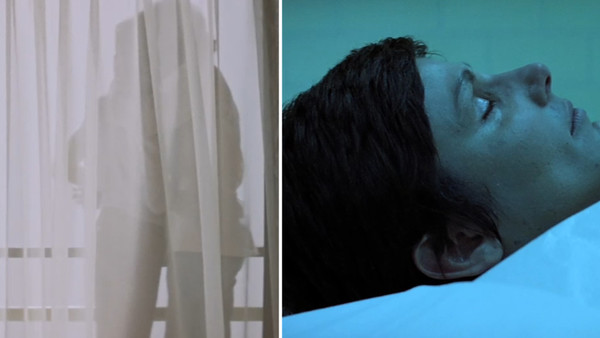
The Warren Beatty-starring 1974 political thriller The Parallax View follows newspaper reporter Joe Frady (Beatty) as he investigates a shady corporation which specialises in political assassinations.
An early sequence sees Frady visited by his TV reporter ex-girlfriend Lee Carter (Paula Prentiss), who tearfully explains that she witnessed the assassination of a presidential candidate years prior, and with numerous other witnesses turning up dead, fears she'll be next.
Joe doesn't take her seriously, and instead comforts her with a hug, after which we immediately jump cut to Lee's corpse in the morgue, having died of an apparent drug overdose (though we as the audience know better).
Given how much the thriller genre loves to leer on every grisly detail of a character's death, this was fantastically effective in how jarringly it got to the point: Joe didn't believe her, and she ended up dead.
A more conventional film would've actually depicted Lee's demise in some form, but in leaping from life to death so abruptly, director Alan J. Pakula was able to achieve maximum unsettling paranoia.
4. Human Evolution In A Single Cut - 2001: A Space Odyssey
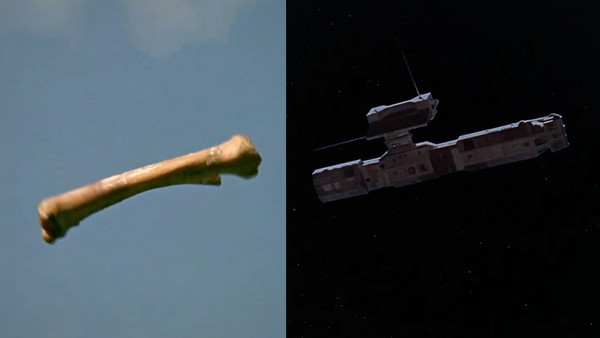
2001: A Space Odyssey is a technically innovative masterwork above all else, but it also features one of the most iconic and creative jump cuts in the history of cinema.
At the end of the film's opening Dawn of Man sequence, an ape learns how to use a bone as a weapon, catapulting another bone into the air, and as it rotates in the sky, Kubrick ingeniously cuts to a spaceship of a similar shape.
Though this is technically more of a match cut than a jump cut, the fact that the film literally jumps forward millions of years in time, leaping from one evolutionary epoch to another far-flung one, nevertheless makes it fit.
As a wordless commentary on human progress from early adoption of tools to flying through space, it's as unexpected as it is breathtaking, and hasn't lost any of its entrancing majesty over 50 years later.
3. Kate Winslet's Death - Contagion

Steven Soderbergh's Contagion is a frighteningly plausible look at how a pandemic might unfold in the modern world, taking a refreshingly unsentimental approach to depicting the ravaging effects of a seemingly unstoppable virus.
Dr. Erin Mears (Kate Winslet) is one of the scientists dispatched to try and stem the pandemic, but for her efforts she ends up infected herself.
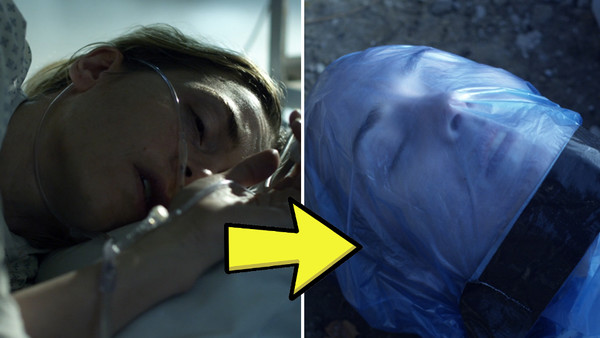
In one agonising moment, we see a deeply ill Erin laying on a hospital gurney, and Soderbergh then jump cuts to her corpse wrapped in plastic, dumped in a mass grave.
It's completely ruthless and, considering that Winslet's such a huge star, absolutely jaw-dropping in its abruptness. There's no overwrought death scene where she gets a dignified final moment with a loved one: she goes from living to dead in a flash.
2. The Jump Cut As A Special Effect - The Haunted Castle
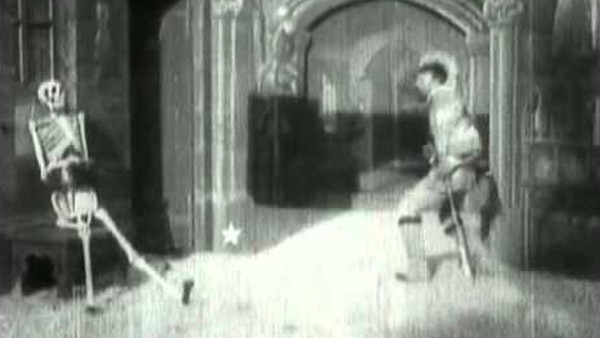
Not a single one of these jump cuts would exist without the pioneering work of early filmmaker Georges Méliès, often dubbed the father of the jump cut after accidentally discovering it when his camera got jammed and skipped through a segment of footage.
Méliès put the jump cut to more intentional use in his 1896 short film The Haunted Castle, which provides a fascinatingly creative example of how even "basic" editing can startle the audience.
In the film, Méliès utilises extensive jump cuts during a seemingly continuous camera shot to create "illusions," with characters appearing, disappearing, and transforming into other objects to shockingly seamless effect.
Considering it's over 120 years old, it holds up relatively well accepting the technical limitations of the day, and it's easy to appreciate how utterly mind-melting this must've been to audiences of the era.
After all, the Lumiere brothers' famous short Train Pulling into a Station, released the year prior, terrified audiences who believed a train was literally about to careen through the cinema screen. As such, Méliès' film must've seemed like literal magic at the time.
1. Alice's Cell Phone Footage - Lake Mungo

First things first - if you haven't seen this bone-shaking 2008 horror mockumentary yet, go watch it. Like, now.
Despite being produced for a pittance, Aussie horror flick Lake Mungo is one of the scariest films of the 21st century, revolving around a family struggling to come to terms with the drowning death of their daughter, Alice (Talia Zucker), while suspecting that her ghost may be haunting them.
The film has a palpably eerie mood throughout, largely thanks to clever editing and a convincing application of the mockumentary format, which makes its climactic reveal that much more terrifying.
At the end of the movie, Alice's phone is recovered from Lake Mungo by her family, and they view a blurry video clip which reveals she encountered a corpse-like doppelganger of herself foreshadowing her own impending demise.
Director Joel Anderson makes extremely shrewd use of his low budget here, using blurry phone footage to keep the doppelganger concealed until the camera is extremely close.
Better still, Anderson periodically trims frames out of the phone footage as the camera approaches, these cuts resembling "dropped frames," as was common on earlier mobile phone cameras due to technical limitations.
This results in several subtle but anxiety-inducing jump cuts moments before the doppelganger's face finally appears in horrifying close-up.
It's one of the primary reasons why the scene works so well, and why Lake Mungo continues to be one of the most acclaimed indie horror films of the 21st century.