10 Most Successful Film Directors In History
Spielberg, Hitchcock, Wilder... The best film-makers rise to the top.

When it comes to creating a film, there are often hundreds, if not thousands of people involved. It's not just the actors on the screen and a guy with a camera, there are people behind the scenes working to bring a story to life. Of all the people involved, the most important of them all is the director.
The film director is the person who literally directs the action, set creation, script adaptation, and everything else in-between to bring a story to life. Without the director, there really is no movie because it is the director whose principal vision unfolds on screen.
There have been thousands of talented directors over the years, many of which deserve a place on a list like this one. Sadly, not everyone can be included, which is why the likes of George Lucas, Jean-Pierre Jeunet, James Cameron, and countless others barely missed the cut.
In determining whose talent and skills could afford them placement on a list of the ten most successful directors of all time, their life's body of work was analyzed along with another key factor that makes them stand above their peers: influence. Directors whose work influenced others stand as the most important and successful to ever sit in a director's chair and yell the one word they all live for, "Action!"
10. Peter Jackson

When it comes to pinpointing a director who is able to weave a narrative over a long series of films, there's no need to look any further than Peter Jackson. The New Zealand director got his start in the late '70s working on low-budget splatter comedies, but soon became a household name thanks to a book he adapted into a major film franchise.
Jackson is probably best known for his work on the Lord of the Rings trilogy and The Hobbit, but he has contributed his vision to cinematic history with a number of big-budget, high-octane, special effects-laden films that opened up new worlds to viewers.
Movies like King Kong and Heavenly Creatures quickly showed Jackson's ability to create immersive worlds within worlds, which may be why he is one of the world's greatest fantasy film directors.
Following The Hobbit trilogy, Jackson restored century-old film reels from the Great War for preservation in a documentary titled, They Shall Not Grow Old. His upcoming project, Mortal Engines, based on the book of the same name and set for release in late 2018, will likely open a new franchise opportunity for the director as he sets his sights on expanding into new worlds and new ideas.
9. Billy Wilder

Younger readers may not know his name as readily as some of the others on this list, but Billy Wilder's work in film was not only important for the medium, it was legendary.
As a filmmaker, Billy Wilder worked on the film noir era's titles most widely recognized as classics. Films like Some Like it Hot, The Apartment, The Seven Year Itch, Sunset Boulevard, and Double Indemnity not only helped establish the comedic genre for film, they pushed the envelope of acceptable subject matter in film, which had a lasting effect on the industry.
Like many of the other directors on this list, Wilder was also an accomplished screenwriter whose words were recognized by the Academy of Motion Pictures with a record 12 Academy Award nominations for screenwriting. That record held until 1997 when another director on this list surpassed Wilder in that category.
Wilder passed away in 1995, but his influence was so widespread in the field of comedy, he is still thanked by people who were inspired by his work. In his 2012 acceptance speech for the Best Picture award for The Artist, Michael Hazanavicius said, "I would like to thank the following three people, I would like to thank Billy Wilder, I would like to thank Billy Wilder, and I would like to thank Billy Wilder."
8. Woody Allen

Forget what you may have heard about Woody Allen's personal life and take a moment to appreciate a man whose contributions to the world of cinema include more than 50 feature films spanning a six-decade career across multiple genres.
Allen began his career writing comedy for television and eventually made his way to the theater and finally, the director's chair where he has written, directed, and starred in some of the most critically-acclaimed works of all time.
His most notable films include Annie Hall, Manhattan, Crimes and Misdemeanors, The Purple Rose of Cairo, Bullets Over Broadway, Match Point, Midnight in Paris, and countless others.
Allen is well known for his work with former partners Diane Keaton and Mia Farrow, but he also helped to solidify the careers of other notable actors including Scarlett Johansson and many more. While his personal life has clouded public opinion of him, Allen's work in film is legendary and he has proven himself time and time again as one of the greatest writers and directors to ever work in film.
7. Francis Ford Coppola

Francis Ford Coppola began working in 1962 as a screenwriter before moving into the role of producer and director. He has worked on some of the most important films ever made including Patton, The Godfather, and Apocalypse Now.
Coppola has been repeatedly honored for his work and made him the second director, after Billy Wilder, to three Academy Awards for a single film. He was recognized with Best Adapted Screen play, Best Director, and the Best Picture win for The Godfather Part II, which is widely recognized as one of the best movies ever made.
Coppola's work in film has long been the subject of film schools around the world and his work is easily recognized for his incredibly lengthy and meticulous depictions of the detailed minutia of his subjects.
While other filmmakers might lose an audience with so much detail, Coppola's work only serves to encapsulate his audience within his narrative for as long as he feels necessary. His work stands as a testament to his professionalism and ability to tell a story in innovative and alluring ways.
6. Quentin Tarantino

Quentin Tarantino is a director with a unique vision whose work is easily identifiable through his nonlinear storytelling and satirical view of criminality in the United States. His work often details overt acts of violence depicted in over-the-top ways while framed within an intensive dialogue only he could have written.
His words often break through the fourth wall and suck the audience in to become one with the film they are watching. Since he first came on the scene in the early 1990s, Tarantino has produced hit after hit after hit.
His first critical success, Reservoir Dogs was praised as the "Greatest Independent Film of All Time" by Empire and Pulp Fiction established him as a director the industry needed to take seriously.
Since the '90s, he has continued to write and direct critically acclaimed movies including Inglorious Basterds, Django Unchained, and The Hateful Eight. Tarantino is an example of a man who studied films so closely his whole life, he effectively taught himself to be an amazing filmmaker. In many ways, he is a fan who pushed himself into the industry he loved and his work often features homages to his greatest influences.
5. Martin Scorsese

Martin Scorsese began working in the film industry in the early '60s and found his creative voice featuring works involving deep concepts including Sicilian-American identity, Catholocism, crime, gang conflict, and the use of violence to tell a story.
As a member of the New Hollywood wave of filmmaking, Scorsese quickly established himself as one of the greatest and most influential filmmakers in cinematic history. He founded the Film Foundation in 1990 and began work to preserve film for appreciation and historical preservation.
He has been recognized for his contributions to film by the American Film Institute, which awarded him with the Life Achievement Award, but that's hardly the only award he has received. Scorsese's large body of work has earned him an Academy Award, Palme d'Or, Cannes Film Festival Best Director Award, and many more.
His most notable work includes Mean Streets, Taxi Driver, Raging Bull, The Last Temptation of Christ, Goodfellas, Cape Fear, Gangs of New York, The Wolf of Wall Street, and the Departed. He often works with some of the industry's best actors and has directed numerous films starring Robert De Niro and Leonardo DiCaprio.
4. Alfred Hitchcock

Sir Alfred Hitchcock was an English director and producer whose work is often included on lists of the greatest movies ever made. His work has been highly influential to just about every other director on this list and his work earned him the title of "Master of Suspense."
Over the course of his 61-year-career, Hitchcock directed more than 50 feature films including some that are regarded as the best works ever made.
Some of his most famous and notable works include Rebecca, Shadow of a Doubt, Rear Window, Vertigo, North by Northwest, and Psycho. His films garnered a total of 46 Academy Award nominations and his technique has been recognized as uniquely Hitchcockian due to his ability to use the camera to mimic a person's gaze.
Hitchcock's work is studied by film students and fans across the world due to his ability to manipulate a camera and form a shot. Film critic Robin Wood once described the style and meaning of a Hitchcock film "is there in the method, in the progression from shot to shot. A Hitchcock film is an organism, with the whole implied in every detail and every detail related to the whole."
3. Steven Spielberg

Across the thousands of men and women who have directed movies over the years, only one name truly stands out as the King of the Summer Blockbuster: Steven Spielberg.
In 1975, Spielberg directed Jaws, which made his a household name and created the very concept of a Summer Blockbuster due to its overwhelming success. From that point forward, his work in cinema amassed a filmography consisting of some of the most entertaining and financially successful film franchises of all time.
Movies like the Indiana Jones series, Close Encounters of the Third Kind, E.T.: The Extra Terrestrial, and the Color Purple built a career that continued across various genre and styles of filmmaking. Some of his most critically acclaimed work includes later films like Amistad, Munich, Lincoln, Saving Private Ryan, and Schindler's List.
For his work in film, Spielberg has been recognized numerous times and his success has amassed a personal fortune estimated to be worth more than $3.7 billion dollars. He is also the highest-grossing film director of all time with numerous hits throughout his career.
Spielberg is, by far, one of the most successful filmmakers in history, but it's all due to his ability to capture substance with style in a way that engrosses his audience and entertains all of humanity.
2. Stanley Kubrick

Stanley Kubrick is widely recognized as being one of the most influential directors in cinematic history. His long career spanned decades, but he often spent years between projects preparing their production in minuscule ways that resulted in unique uses of cinematography, amazing set-design, and intense uses of music that often feels like a character in his films.
His films crossed genres, but always managed to maintain the edgy depictions unique to his style. Some of his most notable films are often included at the top of lists of the greatest genre films of all time and he was recognized with numerous awards for his efforts.
Dr. Strangelove Or How I Learned To Stop Worrying And Love The Bomb was a brilliant satirical look at the ongoing issues of the Cold War during the 1960s while films like The Shining, Lolita, Barry Lyndon, and Spartacus examined the nuances of humanity in ways few directors could hope to capture.
He is probably best known for A Clockwork Orange and 2001: A Space Odyssey, two films that typically are called out as the greatest in their respective genres. He is studied by anyone who takes the art seriously and is remembered as one of the greatest filmmakers and artists to ever create in the world of cinema.
1. Akira Kurosawa
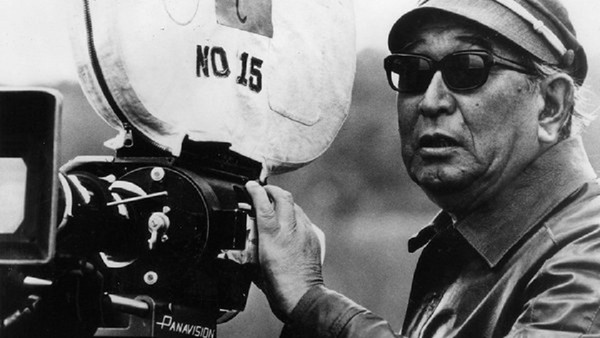
If you ask any aspiring filmmaker which director they studied the most in film school, odds are you will hear the name, Akira Kurosawa. Over the course of his 57-year-career, Kurosawa explored filmmaking in ways nobody had ever attempted previously.
Kurosawa was able to break through the international film industry in Japan and become one of the principal influencers to each and every director who followed due to his ability to portray a story in an epic, yet detailed light. His work includes some of the most amazing stories ever put to film.
Movies like the Seven Samurai, Rashomon, and Yojimbo told stories unique to Japan, but easily appreciated and beloved by people who had never set foot in the country. As a filmmaker, his unique style and ability to convey imagery on screen was, to put it simply, beautiful.
Kurosawa has been honored time and time again for his contributions to the history of cinema. He won the Academy Award for Lifetime Achievement in 1990 and was posthumously named "Asian of the Century" in the "Arts, Literature, and Culture" category by AsianWeek Magazine and CNN. His contributions to cinema have been widely recognized as some of the most important and influential in history, which is why he takes the top spot on this list.