10 Movie Cliches That Need To Die
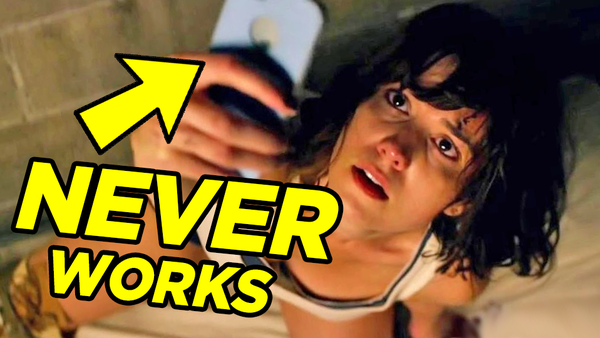
Smartphones are a screenwriter's biggest enemy.
Originality in Hollywood is overrated. For years filmmakers have been ripping each other off or, if you're being generous, 'paying homage' or 'being inspired' by previous works, and that's not necessarily a bad thing.
Filmmakers know what works and what doesn't, and the best directors and writers can take tried and tested narratives and genres to deliver something genuinely special within those frameworks, or use the familiarity to subvert audience expectations in jaw-dropping ways.
However, there are some tropes that seem to jump from film to film that have overstayed their welcome. For every filmmaker that can take an established idea and bend it into something new, there are ten more content to simply recreate it wholesale, lazily relying on cliches to craft a story.
Sometimes these can be little more than an annoyance and easily shrugged off, but other times they're so prevalent that they break the illusion entirely, even if it's just for a moment.
10. Characters Who Say "I'll Tell You Later" Are Doomed To Die
Some cliches aren't inherently bad, it's just that once you pick up on them you can't help but notice every time they're used. In that way it's almost better to live in ignorance, so sorry if this entry ruins your life before the list has even properly kicked off.
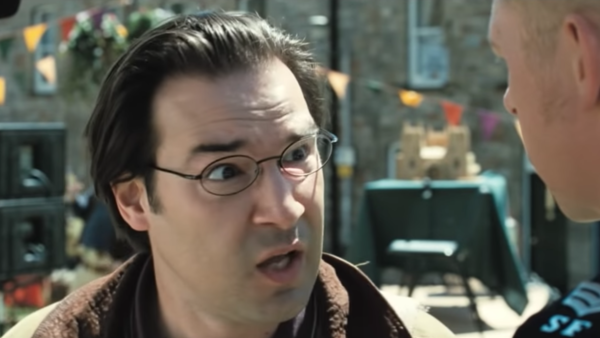
The general idea with this storytelling trope is that, if a character in a thriller or drama has uncovered some vital information that could help our hero in their quest, and they don't tell them on the spot, they're pretty much signing their own death sentence. If they say something along the lines of "we can't talk here, meet me behind the Murder Cult church at midnight under the light of a full moon", then they're absolutely dying before this meeting can take place.
It's especially prevalent in crime movies, to the point where Hot Fuzz parodied it by crushing the victim's head (who's literally called Tim Messenger) via a falling church steeple. Nasty way to go.
9. The Biopic Villain Always Being A Gay Music Manager
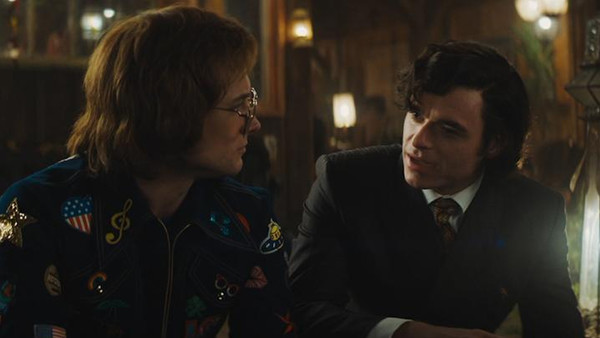
At this point, the music biopic is the most cliche-ridden sub genre in Hollywood. No matter whether the movies are focused on Queen or Elton John, they manage to make the life stories of each subject feel so familiar, to the point where it seems like there's a template each one has to colour between the lines of.
From playing in rundown pubs to the angry music executive who initially thinks the band/artist is terrible, there are so many familiar beats and characters covered in each new release.
Perhaps the most grating, though, is the evil manager who tempts the hero to a world of drugs, parties and, gasp, homosexuality. This fits in with the larger trope of villains in general being coded as non-straight, but it's particularly strange and frustrating to see some of the only supporting gay characters depicted as villains in movies about the lives of LGBT artists.
I have no doubt that in the shady world of music superstardom there will have been abusive, sleazy managers taking advantage of troubled prodigies, but the issue is they're so moustache-twirlingly one note in these films.
8. Token Scenes Purely For Chinese Audiences

In general, Hollywood movies tend to make way more money internationally than they do at the domestic box-office (bar a few exceptions), and Chinese moviegoers now have the power to dictate whether a movie is a success or failure.
The MCU has always benefited from a global market, and major appeal in China has seen it soar where another Disney franchise, Star Wars, has never been a hit in the country and struggled to hit the same ceiling.
With the Chinese box-office being the second biggest in the world, it's meant that Hollywood has become shamelessly transparent about courting those international moviegoers. Iron Man 3 went so far as to create a 'Chinese version' released exclusively for that market, which included four minutes of extra footage where Dr. Wu tells Tony that his country has his back on live TV.
When that didn't work as planned (it turns out Chinese audiences aren't dumb and can tell when sub-plots are crammed in to pander to them), Hollywood became a bit more subtle about including region-specific alterations in movies, and sometimes opts for a full US-China co-production like The Meg.
Representation is always good, but in a lot of cases the money-making machine behind these decisions are so transparent they're hard to ignore.
7. Destroying The Queen To Defeat An Entire Army

When action movies graduated from climaxing with fights between tens of bad guys to literal armies, they ran into a bit of a problem. War is messy, and when it's a handful of heroes versus thousands of goons, the battle needs to end in a neat victory that isn't just every single bad guy getting killed one by one.
The first Independence Day came up with a rather savvy solution: the human race didn't have to fend off an entire alien invasion, but simply take down the main headquarters, which would eliminate the rest of the hive mind. It was the 2010s where this trope really become overdone though, partly thanks to The Avengers inspiring so many imitators.
Following superhero and action movies tried to ape the same sense of spectacle, but also directly cribbed the climax of destroying the queen bee to win the battle. Justice League, Avengers: Age of Ultron, even the final season of Game of Thrones all gave us variations on this idea, and it became increasingly groan-worthy.
Oh, and bonus points if there's a random sky beam thrown in as well, though that thankfully seems to be a feature exclusive to action movies from 2012 and 2013.
6. Romantic Dramas About Dying Teens

Stories about young people dealing with life-changing medical diagnoses, disabilities or terminal illnesses can be extremely vital, not only in furthering empathy towards the lives of so many young people, but in educating moviegoers about their day-to-day reality.
They're capable of being incredibly moving, and like The Fault in Our Stars, can come from a raw, personal, semi-autobiographical history, but the issue arises when these stories become a genre in their own right.
Romantic young adult movies about teens with debilitating afflictions are incredibly popular, and that popularity has inspired critics and audiences to wonder who these movies are for, and what their purpose is. As mentioned, movies exploring the lives of these young people can be beneficial, but as Hollywood monetises that relationship the whole thing can only end up feeling a bit icky, tone-deaf and romanticised.
2019's Five Feet Apart, a romantic drama about two in-love teens living with cystic fibrosis, inspired a whole host of critics to again ponder the effect of these cinematic stories, with many likening them to what activist Stella Young called 'inspiration porn', which is essentially "objectifying disabled people for the benefit of nondisabled people."
There's a way to make these movies, but not with the romanticised, simplified approach so many adopt.
5. Solving The Problem By Nuking The Town

It's not easy to get rid of a bunch of aliens/Godzilla-like monsters/a killer virus sweeping a city, and consequently a lot of films built around these elements end with the government or military deciding that the only course of action is to strike down with a nuclear bomb, no matter whether the city is evacuated or not (it almost always isn't).
Films like Cloverfield, Alien vs Predator: Requiem and The Avengers all introduced the last-minute threat of the military launching a nuke directly towards the city our heroes are still fighting in, and while it does immediately raise the stakes, the sub-plot almost always follows the same tired old beats.
And yeah it might not always be a nuclear bomb, but it'll still be a bombing run that's guaranteed to wipe out the entire city. Also, it never works, and only ever makes things worse.
4. Cell Phones Never Having Any Signal

Smartphones have kind of ruined horror movies. Not because people can't go five minutes without refreshing Twitter even when they're in the cinema (though there is that), but because just about everyone has access to the entire world at the push of a button, it's hard to make a situation where heroes feel truly terrified and cut off from society.
As a result, most movies based on concepts that would be immediately broken if the character could just whip out a phone and call the cops need to shoehorn in a line about the reception being so bad that the convenience can't be relied on.
Admittedly, this cliche has evolved slightly over the past few years now that audiences have gotten familiar with it, and phones will now be conveniently broken or destroyed rather than simply cut off. Even then, a scene where these items are put out of order always needs to feature at some point to make the story work, and there are few films that manage to do it in an organic way.
3. Nostalgia-Bait Sequels

The most premium currency at the moment in Hollywood is nostalgia. In general, the past five years or so have seen a huge uptick in 80s-inspired films, whether it's the setting and coming-of-age themes in movies like IT: Chapter One or the ultra-violent throwback spectacle of Upgrade.
Movie franchises also rely on nostalgia more than ever before. Instead of pushing for creativity and moving forward, series are jumping back into the past. With a disregard for continuity, the likes of Halloween, Terminator and now Ghostbusters are returning to the origins of their respective narratives and creating direct sequels to the first one or two instalments. You know, the ones people like.
In many cases though, these films don't succeed because of the new things they bring to the table, but because they remind audiences of the originals they already have affection for. That can be fine for one comeback effort, but it's not an approach that can sustain future follow ups.
Now, can you believe I got through this entire section without mentioning The Movie Franchise That Cannot Be Named? Me neither.
2. Making EVERYTHING A Shared Universe

For a while in the 2010s, it felt like every blockbuster was just an advert for future movies and spin-offs. When Marvel proved how lucrative shared universes could be, studios scrambled to assemble their own, using disconnected scenes in tentpoles like Batman v Superman and The Amazing Spider-Man 2 to set up characters and plots that wouldn't become important for years.
Even though it might have seemed as though the blatant imitators had a quick rise and fall - after all those two movies resulted in subsequent reboots - they've simply changed tactics. Instead of rushing straight in and expediting the Marvel formula, studios have taken a step back and started to go movie by movie to keep their options open, but still plan for grand crossovers further down the line.
Even Star Wars seems to be rebuilding to follow the MCU mould if rumours are true. The appointment of Kevin Feige alone suggests as much, so don't expect this trend to go away as long as Disney keeps raking in money.
1. Hacking Into The Mainframe (Somehow)

It's always been a running joke that Hollywood doesn't understand computers. The early 2000s especially featured an embarrassing amount of 'terrifying' internet movies about killer MySpace pages (probably), and they all came across like they were designed by an actual dinosaur.
Of course, it's computer whizzes hacking into the mainframe that's remained a constant cliche in movies. The dork hacker is an overused archetype (replaced recently by the cool hipster hacker), but it's the way Hollywood visualises the process that's the worst.
Hacking in real life - from what I've gleaned from this great Wired YouTube video anyway - isn't sexy or all that interesting to watch. In the movies though, it's all cool visuals, sci-fi nodes and fingers moving faster than light hammering into keyboards.
It's at the point where it's almost become a self-aware cliche, and there's a race to see which movie can be the most ridiculous with their hacking scenes.