10 Movies Disowned By Their Screenwriters
They started by writing scripts... and ended by writing apologies.
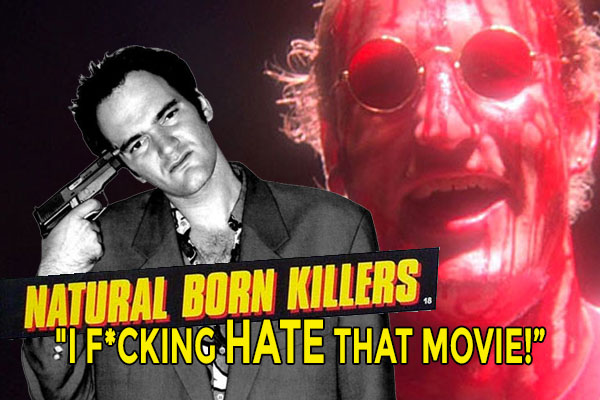
While directors are often thought of as the "authors" of movies, its important to recognise the importance of screenwriters when it comes to the film production process. A good screenwriter can turn almost any concept into a must-see movie, and big name screenwriters can draw movie fans to theatres almost as much as famous actors and directors can.
However, because screenwriters do most of their work very early in the production process, what ends up on screen isnt always what was on the page. In some instances rewrites of the script by other screenwriters changed the material entirely, or the director departed significantly from the script while making the movie.
Naturally, sometimes screenwriters have tried to distance themselves from movies that they originally wrote if the movie didn't reflect what they originally intended. Some have even gone as far as to ask to have their names removed from movies they had developed, though those requests are not always granted. Others screenwriters have actually spoken out about how bad the movies turned out in order to let moviegoers know that they dont approve of what their scripts inspired.
Because of those reasons, the following ten screenwriters each disowned their contributions to these movies and prefer you forget that they ever had anything to do with bringing them to theatres.
10. Kelly Marcel - Fifty Shades Of Grey

Saving Mr. Banks screenwriter Kelly Marcel had the daunting task of adapting one of the most popular books in recent years as a screenplay. Marcel wrote her adaptation of the erotica novel as a nonlinear script and pushed for an NC-17 rating for the film in order to do the novel's sexual content justice. E.L. James, the author of the novel, was highly critical of Marcel's script and insisted that it had to be reworked.
Though Marcel is the only credited writer of the film, at least two additional writers shaped the script into the straightforward, R-rated movie it ended up being. Months after Fifty Shades Of Grey was released and became a massive box office hit, Marcel said on the podcast of fellow writer Bret Easton Ellis (who incidentally had campaigned to write the Fifty Shades Of Grey script himself) that she had never watched the movie and had no plans of doing so because of how different it turned to be from what she had written.
The screenplay for the sequel Fifty Shades Darker was written by someone who was more agreeable to James -- her husband, television writer Niall Leonard.
9. The Wachowskis - Assassins
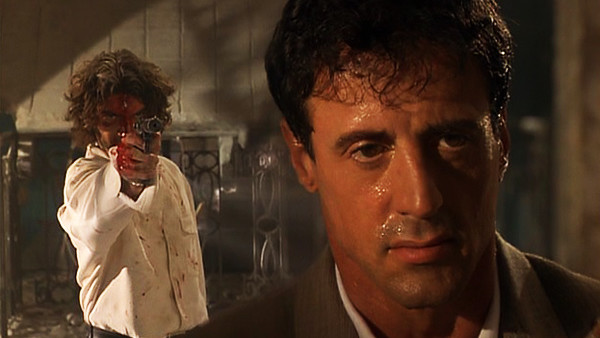
The first produced screenplay by the Matrix writers/directors the Wachowskis was Assassins, a 1995 action film starring Sylvester Stallone, Antonio Banderas, and Julianne Moore that was directed by Lethal Weapon director Richard Donner. Nonetheless, they'd prefer you'd forget all about it.
The Wachowskis had sold the script to Assassins to Warner Bros. in 1994 as a package deal with their scripts for Bound and The Matrix. However, before Assassins went into production the movie was completely rewritten by screenwriter Brian Helgeland to make it more of a traditional action movie and to develop a love story between Stallone and Moore's characters.
The Wachowskis were so unhappy with Assassins that they actually asked the Writers Guild of America to remove their names from the movie. However, the WGA denied the request and the Wachowskis (and not Helegeland) are credited with writing Assassins.
Luckily the Wachowskis had much more success with Bound and The Matrix, which they both directed themselves.
8. Kurt Sutter - Punisher: War Zone

After working on The Shield but before creating Sons Of Anarchy, Kurt Sutter wrote a screenplay for a sequel to 2004's The Punisher, which starred Thomas Jane as the gun-toting Marvel antihero. However, during preproduction the movie became a reboot rather than a sequel after Jane dropped out and was replaced by Ray Stevenson.
This required significant reworking of Sutter's script by new writers to distance it from the previous movie. According to Sutter, the rewrites made his script more "comic book style." When Punisher: War Zone was released in 2008, all that remained from Sutter's script in the movie was the origin of Jigsaw, the film's villain.
As a result, he voluntarily removed his name from the movie, which allowed the rewriters to get all the credit for the script. Incidentally, Sutter never said that Punisher: War Zone was a bad film, he just didn't think he deserved onscreen credit for a movie that reflected very little of his actual work and that overall did not fit his vision of the Punisher character.
7. Paul Rudnick - Sister Act

According to the credits of the 1992 Whoopi Goldberg comedy Sister Act, a writer named Joseph Howard wrote the screenplay. In actuality, there is no Joseph Howard. Playwright and novelist Paul Rudnick initially developed Sister Act in the late 1980s as a satire of wholesome 1960s musicals like The Singing Nun.
Disney bought Rudnick's treatment and both Rudnick and Disney envisioned the movie as a vehicle for Bette Midler. When Midler passed on starring in the movie, Disney executives had the script reworked by over a half-dozen screenwriters, including Carrie Fisher. Over time, the screenplay (and eventually the film itself) became the very type of movie it was supposed to satirise.
Because the movie was so dramatically different from his original screenplay, Rudnick asked the Writers Guild of America to credit him under a pseudonym. Since he saw the movie as a product of Disney's saccharine rewriting, he asked to be credited as "Goofy."
When that pseudonym was denied, he instead came up with the intentionally very fake-sounding "Joseph Howard." In a 2009 article he wrote for The New Yorker, Rudnick said he had never watched the movie.
6. John Steinbeck - Lifeboat

American writer John Steinbeck is far better known for novels like East Of Eden, The Grapes Of Wrath, and Of Mice And Men than for his screenwriting, and he would have liked to keep it that way. Although many films have been based on Steinbeck's work, one of the few original screenplays he worked on was the script for Alfred Hitchcock's 1944 movie Lifeboat, a drama about a handful of people who are forced to depend on one another while floating in the Atlantic Ocean on a lifeboat in the aftermath of a World War II naval battle.
While Hitchcock came up with the initial concept, he asked Steinbeck to write a novel based on the premise that Hitchcock could then film. Though the story was never published as Steinbeck wrote it, screenwriter Jo Swerling adapted Steinbeck's story as a screenplay. After watching the movie, Steinbeck thought that the lone black character, Joe (played by Canada Lee), was depicted as an offensive stereotype even though he did not write the character that way. He even told his agent he thought the portrayal was "dangerous to the American war effort."
Steinbeck asked 20th Century Fox to remove his name from the movie, but his request was denied because his name was a major selling point for the movie. Despite his dislike of the movie, Lifeboat actually resulted in Steinbeck's first Oscar nomination for Best Original Story.
5. Gore Vidal - Caligula

Gore Vidal had long been a respected writer by the time Penthouse magazine founder Bob Guccione agreed to finance production of Vidal's script about the infamously indulgent Roman Emperor Caligula. Guccione's intention was to make a "porn epic" with Penthouse Pet models and respected actors, including Malcolm McDowell as Caligula, Peter O'Toole, and Helen Mirren. Vidal's script contained too much homosexual content for Guccione's taste, so director Tinto Brass tossed out much of Vidal's work and had the writer removed from the set even though the film's working title was "Gore Vidal's Caligula."
Ultimately Caligula has no credited screenwriters -- its sole writing credit is "Adapted from a Screenplay by Gore Vidal," though Vidal sued to try to have his name removed entirely because it had strayed so far from his original script. Brass was also eventually kicked off the film during editing because Guccione wanted to include more sex scenes in the movie.
Though Caligula was initially successful at the box office despite outraged critical reviews, its massive budget and legal fights that stopped its release in some territories on moral grounds prevented it from making a profit.
4. Paddy Chayefsky - Altered States

When the movie adaptation of writer Paddy Chayefsky's lone novel Altered States was being filmed by Tommy director Ken Russell, Chayefsky was a highly-respected three-time Oscar winner for the scripts of 1955's Marty, 1971's The Hospital, and 1976's Network. He also wrote the screenplay adaptation of Altered States, his own sci-fi thriller novel about the effects of isolation therapy.
The original director, Arthur Penn, left the movie after he found it impossible to work with Chayefsky and Russell faced similar problems. Though Russell disliked the script, Chayefsky insisted that Russell follow every line of dialogue.
While on set Chayefsky expressed displeasure at the dark tone of Russell's film, and in particular he didn't like how the actors delivered his dialogue. Russell claimed he tried everything he could to adhere to Chayefsky's demands even to the determent to the film, but Chayefsky still demanded that his name be removed from the movie when it was released in 1980. He was credited as "Sidney Aaron.]
Though the movie was critically praised, it performed poorly at the box office. Chayefsky died less than a year after the release and never made another movie.
3. Ring Lardner - MASH

Officially Ring Lardner, Jr. is credited for writing the screenplay for the classic 1970 Korean War comedy MASH based on the novel by Richard Hooker about a medical unit that uses humour to shield themselves from the horrors of the battlefield.
In truth, while Lardner did write the screenplay, it largely went unused. You see, when then little-known director Robert Altman was hired to direct MASH, he told his cast to ignore the script's dialogue and allowed them to improvise much of the movie. While Altman stuck to Lardner's plot, most of the movie's hilarious banter can largely be credited to the cast. MASH was not only a major box office success, but it also inspired a long-running hit television series.
Lardner was furious that the film had strayed so far from his words and denounced the film, but nonetheless he still accepted the Oscar for Best Adapted Screenplay when he won. Ironically, it was the only Oscar the movie won.
2. Quentin Tarantino - Natural Born Killers
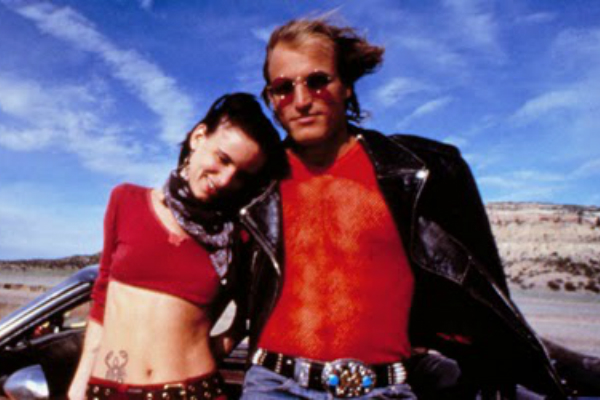
Before he became a writer/director in his own right, Quentin Tarantino was a struggling scriptwriter. When he was unable to raise money to direct Natural Born Killers, his script about a husband and wife who commit a murder spree and become media superstars, Tarantino sold the screenplay for $10,000.
Controversial filmmaker Oliver Stone decided to make the movie his next project, but he entirely rewrote the script with David Veloz and Richard Rutowski. Stone focused much more on the media-driven aspects of the story to comment on the way the media glorifies and exploits violence in the quest for ratings.
Because the script had changed so much, when the movie was released in 1994, Tarantino asked to only be given a "Story by" credit rather than a "Screenplay by" credit, which Stone shared with the other two writers.
Tarantino disliked the finished film and later claimed that he had walked out of the theatre when he went to see it. Tarantino's original script was later published in book form, but other than that he has tried to distance himself from Natural Born Killers ever since.
1. J.D. Shapiro - Battlefield Earth

Not many screenwriters can say they have written one of the worst movies of all time, and even fewer would bask in that negative glow. Robin Hood: Men In Tights writer J.D. Shapiro became acquainted with Scientology because he heard it was good place to meet women. He never joined the organisation, but he was hired by producers, including John Travolta, to adapt L. Ron Hubbard's novel as a screenplay.
Shapiro departed significantly from Hubbard's 1000-plus page tome, and when he was asked to rewrite his script to be more faithful he refused and was replaced by screenwriter Corey Madell. Both Shapiro and Madell received credit for the screenplay. The former was completely unhappy with the finished movie and asked to be credited as "Sir Nick Knack," which was denied. His agent told him it would be a bad idea to remove his name entirely (in hindsight, it wasn't).
Clearly he got over it, or at least accepted his role in the disaster - Shapiro has the distinction of accepting two Razzie Awards for Battlefield Earth in person: in 2001 for Worst Screenplay and in 2010 for Worst Picture of the Decade.
To "celebrate" Battlefield Earth's ten anniversary, he even wrote an apology for the movie in the New York Post.