10 Movies That Are Nothing More Than Feature Length Commercials

Man Of Steel? More like Man Of Sears...
As much as it might make the artistically minded cinephiles among us uncomfortable, the cold hard fact is that movie industry is all about the money. Product placement, a marketing strategy that involves the inclusion of a product into a film for advertising purposes, has been a cinematic tradition since the inception of the medium. Before films began to include narratives, motion pictures were seen by the general public as nothing more than sideshow attractions to gawk at; filmgoers went to fairgrounds to see industry-funded short films for their visual effects. Essentially, cinema was born from advertising. Product placement continued throughout cinema€™s evolution, showing up in notable classics like the first winner of the Academy Award for best picture Wings (1927), Fritz Lang€™s M (1931) and It€™s a Wonderful Life (1946). The inclusion of everyday products can lend a movie a greater air of realism, and if everyone can make a little money by increasing brand awareness then so be it. Problems arise when advertisers and filmmakers take it too far at the expense of credibility. Audience can get turned off if they suspect that a film is more interested in peddling a product than telling a story. Worse still, the companies who wanted to get some exposure via cinematic marketing might leave themselves open for ridicule for their shameless self promotion. In the age of massive budgets for summer blockbusters, the film industry has come to rely on advertising subsidies to help ease the financial burden. Studios have become more and more flagrant in their shilling; movies that are more commercial than film like The Internship (2013) have started popping up in theatres. With filmmakers having to appease their corporate overlords more than ever, audiences are starting to pay tickets to attend feature length advertisements. There€™s nothing wrong with trying to make a buck but the line has to be drawn somewhere. For your consideration, we have compiled a list of films that are guilty of crossing the line from movie to ad campaign. Follow us as we investigate the worst cases of cinematic selling-out.

10. Mini Coopers To The Rescue - The Italian Job (2003)
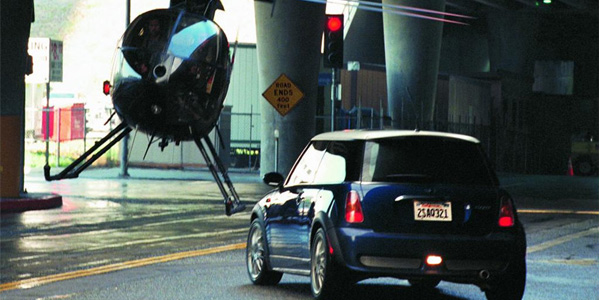
Product placement and automobiles go hand in hand. Everyone needs to get from point A to point B and fictional characters are no different. Automobile product placement is one of the most common forms of cinematic advertising, from James Bond€™s love of Aston Martins to the Fast & Furious relentless car fetishisation. The first entry of on list managed to integrate an automobile product placement so thoroughly into its plot that its climax turned into a glorified car commercial. 1969 caper film The Italian Job tells the tale of how a cockney gangster, played by Michael Caine, devises a plan to rob an armoured car full of gold. The ingenious caper involved the use of three Mini Cooper Ss to navigate gridlocked Turin streets and transport the stolen booty. Upon its release, the Italian Job earned critical and commercial success, going on to enjoy lasting popularity in the UK. The 2003 remake of the Italian Job decided to pay homage to the original by again casting the Mini Cooper, now manufactured by BMW, in a starring role. Cinematographer Wally Pfister and director F. Gary Gray went so far as to study car commercials to help develop the visual style of the film and maximise the cool factor of BMW€™s new retro line of Minis. BMW provided 32 Minis for the production and its investment paid off in spades. During the climatic heist, the Mini Coopers become the stars of the show, combining speed, reliable steering, and ruggedness to help the film€™s hero thwart Ed Norton€™s dastardly villain. The 2003 Italian job enjoyed a warm critical reception with many critics and business analyst citing it as a prime example of successful brand integration. Sales of the Mini Cooper increased by a whopping 22% after the film€™s theatrical run. As far as car commercials go, this is probably one of the most entertaining ever created.

9. Wilson Loves You €“ Castaway (2000)

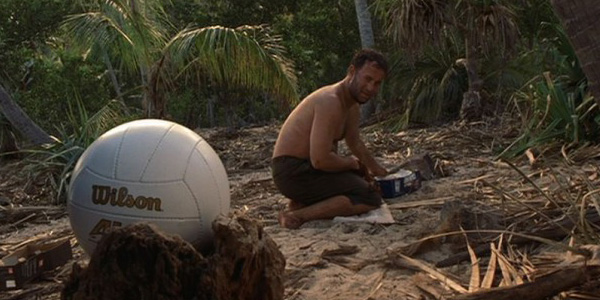
In 2000, Tom Hanks brought his massive star power and everyman charm to play the world€™s most dedicated and hyper-competent FedEx employee, Chuck Noland, in the adventure drama Castaway. When a plane crash thwarts Noland€™s mission to ensure FedEx continues to provide the world class services its clients depend on, Noland washes ashore on an uninhabited island. A few FedEx packages come along for the ride, ensuring that the FedEx logo will still feature prominently in the movie despite Noland being hundred of miles away from civilization. Noland€™s sole companion on the island is a Wilson Volleyball that Noland names €˜Wilson€™. Noland converses with the Volleyball regularly, pouring out his thoughts and feelings, which gives him the opportunity to repeat the brand name 'Wilson€™ ad nauseam. In the film€™s most famous scene, Noland attempts to escape the island using a makeshift raft only to have Wilson fall into the water. The heartbroken Noland is so devastated at the loss of his volleyball that cries out €œWilson!€ at the top of his lung repeatedly. Castaway's corporate benefactors reaped huge rewards. Wilson Sporting Goods launched an ad campaign that highlighted the fact its products co-starred with Hanks in the feature; while FedEx cited Zemeckis and Hank€™s shameless plugging of its service for increasing brand awareness in Asia and Europe. Castaway€™s product placement remains a standout for making a particular brand of volleyball one of the most memorable supporting characters of the 2000s.

8. GMC Saves The Planet €“ Transformers (2007)

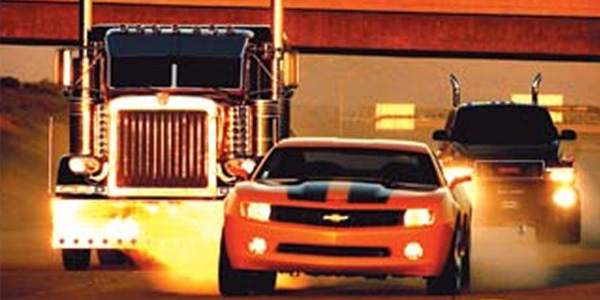
The Transformers franchise has always been nothing more than a means for selling toys. Hasbro and the Japanese toy company Takara Tomy launched the animated series in 1984 to help increase brand awareness. Children everywhere lapped up the idea of robots who can transforms themselves into various kinds of automobiles and an enduring franchise was born. In 2007, executive producer Steven Spielberg decided to bring the Transformers to the big screen in a live action film adaptation. Spielberg tapped Michael Bay for directing duties. As a former commercial director, Bay was the perfect choice to adapt what was essentially a massive car commercial. In fact, Bay€™s previous directorial effort, The Island, drew critical ire because of its excessive product placement. Bay kept the spirit of Transformers€™ wanton commercialism alive. The profiteering filmmaker personally directed Transformers tie-in commercials for General Motors, Burger King and Pepsi. General Motors had a previously established relationship with Bay, having provided all the vehicles in Bay's 2003 feature Bad Boys II; Bay decided to keep the mutually beneficial relationship going and cast all of his transformers as GM vehicles. The Transformers went on to save the world, prominently displaying their GM logos and forever associating the brand with heroic humanity-saving robots.

7. Navy SEALs Are Just Like Frat Boys - Navy SEALs (1990)

Since the turn of the century, the medium of film has been used as a tool for propaganda. Film€™s unique ability to reach across broad segments of the population make it ideal for drumming up national support against foreign enemies. Recent examples include the 2012 action film Act of Valor, which tried to pass off a glorified Navy SEALs recruitment video as a legitimate action picture. While Act of Valor attempted to make its action scenes as real as possible by using real Navy SEALs, 1990€™s glorified recruitment video Navy SEALs took a different approach; instead of realism, the filmmakers tried to make a tour of duty with the Navy seem like a super awesome action movie. The movie goes out of its way to depict the SEALs as fun-loving regular guys who just happen to be elite military killing machines. Here is a clip of the SEALs enjoying some much-deserved R&R: https://www.youtube.com/watch?v=TlCW90DaJHY The SEALS engage in the kind of over the top action lunacy you can only find in late 80s and 90s action cinema, transforming them into larger than life action stars. The fun-loving heroes make sure to reverentially expound on ideals of brotherhood and duty while engaging in frat boy shenanigans. At one point in the film, Michael Biehn€™s character drops into a real Navy SEALS training centre and the SEALs show off some of their skills. Although it was a commercial failure upon its release, Navy SEALS enjoys a healthy cult following today and has probably inspired more than one young person to try his or her hand at becoming a SEAL.

6. Google Is The Happiest Place On Earth - The Internship (2014)

In 2005, Vince Vaughn and Owen Wilson teamed up to bring the world the uproarious comedy, The Wedding Crashers. Audiences turned out in droves to watch Wilson and Vaughn€™s hilarious onscreen chemistry. Wilson€™s laconic southern drawl and Vaughn€™s rapid-fire delivery proved to be a perfect match and helped propel the feature to a worldwide box office tally north of 200 million dollars. Nearly a decade later, ubiquitous Internet search engine Google tapped the duo to help spread brand awareness via a largely laugh-less comedy entitled The Internship. The Internship€™s plot concerns two down on their luck salesmen, played by Wilson and Vaughn, who attempt to land a job at the hugely successful corporation. Filmed on location at Google€™s headquarters and featuring a hundred real-life Google employees as extras, the Internship plays out like an infomercial unapologetically celebrating Google€™s business model. The plot involves Wilson and Vaughn trying to prove their €œGooglieness€ to the powers that be at Google. The usually irreverent duo heap nothing but praise on the company throughout the run time, referring to it as the €œGarden of Eden€ and a place that€™s €œa million times€ better than any amusement park. Google itself had creative input on the feature, vetoing a gag in the script that called for a Google designed self-driving car to crash because it would paint their product in a negative light. Critics revolted against this thinly disguised feature length ad for Google, giving the film 35% on Rottentomatoes.com.

5. It€™s A Bird, It€™s A Plane, No, It€™s Sears - Man Of Steel

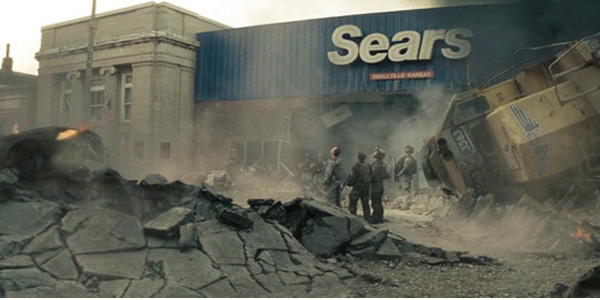
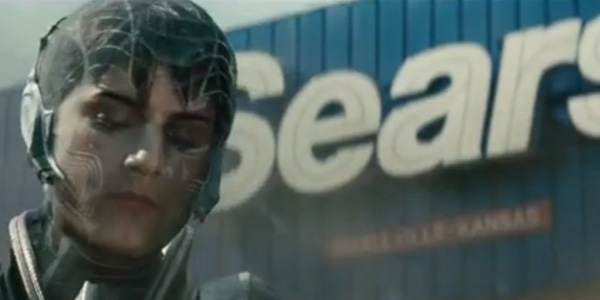
In 2011, Warner Bros attempted to imitate Marvel€™s superhero crossover successes by launching its own wave of DC superhero adaptations, starting with the Green Lantern. Warner Bros took a bath on the legendary flop that failed to recoup its massive budget. Not wanting to get left in the dust, Warner Bros took another swing at franchise dividends by bringing DC€™s most popular character, Superman, back to the big screen with 2013€™s Man of Steel. This time, the venerable studio hedged its bet to ensure Man of Steel would turn a profit no matter what by setting a new record for product placement. Over a 100 companies contributed approximately 160 million dollars in ad revenue to the feature. Some of Man of Steels corporate sponsors feature prominently in the plot. For example: Supes saves a boy from drowning so he can become the manager of a IHOPs, a fact the movie highlights obnoxiously by having several scenes take place in the restaurant. When renegade Kryptonians attempt to destroy Superman's hometown, Smallville, Superman engages in a city-destroying brawl, most of which takes place in front of the local Sears franchise. The retail outlet's logo features prominently in the background. Warner Bros unprecedented ad campaign skyrocketed Man of Steel to a global box office of nearly 700 million dollars and paved the way for the upcoming Batman/Superman feature film crossover.

4. LEGO® Is The Best Outlet For Creativity - THE LEGO MOVIE (2014)

Usually, films that heavily promote a particular brand meet with skepticism from audiences and critics alike but this year€™s The LEGO Movie proved that a feature length advertisement could enjoy both critical and commercial success. The majority of the movie takes place in a world constructed from LEGO brand building blocks and the heroes and villains are sentient LEGO products. LEGO€™s affiliation with other corporate entities allowed for cross-promotional cameos from characters like Batman, Chewbacca, Milhouse, Michelangelo of the Teenage Mutant Ninja Turtles and Flash. Ironically, the story concerns the attempts of these corporate tie-ins to thwart a villain named €˜Lord Business€™. (Spoilers) In a twist of sorts, it€™s revealed that events taking place in the LEGO world are actually the result of a child playing with his father€™s Lego sets. The stuffy father disapproves of his son using his LEGO in such a creative fashion. By the end of the feature, the business-obsessed father, played by Will Ferrell, learns to lighten up and joins his son in some LEGO-brand playtime. This moment is a touching example of massive corporate entities encouraging everyone to take some time to enjoy the finer things in life, like LEGO. Audiences and critics praised the film's promotion of creativity and free play via the use of LEGO brand products. This brazen act of feature length advertising proved to be a massive international hit earning 457 million dollars at the worldwide box office.

3. Image is Everything - Bratz (2007)

2007€™s Bratz tried to emulate the Transformers model of turning a cartoon series based off a toy line into box office gold. When the Bratz line of fashion dolls was released in the early 2000s they proved to be a huge hit, eventually reaching 2 billion in worldwide sales by 2005. Despite Bratz success, controversy over the dolls' provocative clothing began to tarnish the brand name. The American Psychological Association's Task Force on the Sexualization of Girls voiced their concerns that the dolls were portrayed in an inappropriately sexualized manner. Not letting the bad buzz get in the way of business, a Bratz feature film found its way into theatres in 2007. Unlike the other toy line-turned feature film series, Transformers, that debuted the same year and went on to become one of the top grossing film series of all time, Bratz flopped at the box office. The picture tried and failed to restore some lustre to the tarnished Bratz brand name by making its story an ode to friendship and acceptance. Despite its feints at instilling the franchise with some heart, Critics claimed the feature promoted a shallow, image-obsessed worldview. The Bratz brand power has steadily declined over the years, with parent company MGA recently announcing a total brand overhaul.

2. Playing Nintendo Is Your Ticket To Glory - The Wizard (1989)

Since the birth of video game technology, video game manufacturers have created videogame tie-ins to simultaneously cash in on and promote feature films. Sometimes this results in high profile failures, like the legendarily awful Atari video game tie-in for E.T. The Extra-Terrestrial, and other times it results in genre redefining masterpieces like Nintendo 64€™s GoldenEye. The number 2 spot on our list goes to a movie that flipped the video game tie-in concept on its head by making a feature length movie that was nothing more than a tie-in for a video game release. The Wizard chronicles the cross-country journey of a trio of children who want to compete in a Nintendo tournament. Much like Dustin Hoffman in Rain Man, the hero of The Wizard is a savant of sorts but, instead of having the highly lucrative ability to count cards, our hero has a latent genius at kicking arse at Nintendo games. When the borderline autistic child asks to go to California to compete in a Nintendo tournament, his friend do their best to make his wish come true. The heartwarming story of friendship and loyalty at the heart of the Wizard wasn't enough to distract critics from the fact that the movie's climax centered on the release of Nintendo's Super Mario Brothers 3 video game. Many pundits lambasted the feature for being little more than a flagrant and shameless video game commercial. Despite the critical hate,The Wizard remains a cult curiosity.

1. Coke Has Can Bring Back The Dead - Mac And Me (1988)

Steven Spielberg brought the world the highest grossing Reese Pieces commercial of all time with 1984€™s E.T. the Extra-Terrestrial, a film that proved that the delicious taste of Reese Pieces transcends time and space. In the feature, lonely child of divorce Elliot befriends an alien marooned on earth by coaxing him out of hiding with the delicious taste of Reese Pieces. Inspired by Spielberg€™s expert marriage of cynical corporate plugging and popcorn entertainment, McDonald€™s and Coke decided to follow in the legendary filmmakers footsteps. The 1988 feature Mac and Me is a flagrant rip-off of E.T. in every respect, down to a child befriending an earthbound alien through sugary snacks. Scene after scene depicts the titular alien Mac, played by a hideous puppet that looks like an H.R Giger abortion, going crazy for Coke and McDonald's products. An inexplicable dance number in a McDonald's franchise restaurant even includes a cameo by Ronald McDonald. In one particularly egregious moment, the miraculous properties of Coke bring Mac's family back from the dead. Mac and Me remains the high water mark for cinematic selling out and has gone on to be the stuff of legend among bad movie aficionados. There€™s our list. Any notable examples we missed? Let us know in the comments below. And, please, remember to disable AdBlock when visiting Whatculture. We need to get paid too.

Contributor
Contributor

I'm YA writer who loves pulp and art house films. I admire films that try to do something interesting.