10 Movies So Good They Ruined Genres
The Dark Knight still reigns supreme.

We've all seen movies so breathtakingly brilliant and staggeringly well-executed that they live on for years in our minds as a towering benchmark for their respective genres. Their peerless craft and ingenuity ensure that most successors and imitators feel positively mediocre by comparison, and for all intents and purposes, their inscrutable excellence has pretty much ruined the genre.
After all, why sit through year after year of failed attempts to capitalise on the success of one incredible original film when you can just re-visit that classic original itself?
From a business standpoint, at least you can see why studios would want to use them as blueprints for the genre, admittedly, but if you feel these genres are long overdue some innovation, you can pretty much blame these films for being so bloody brilliant...
10. Jaws

Steven Speilberg's 1975 suspense classic didn't just ruin the shark movie for everybody else, it also practically invented it. Jaws famously left an entire generation terrified of the water, and four decades on, its esteem is still so strong that there haven't really been any serious attempts to top it.
The shark movie is almost exclusively defined by B-movie schlock like Deep Blue Sea, Sharknado and The Meg, with 2016's The Shallows being the only major attempt at a straight-faced shark thriller that was even remotely decent.
It's as though filmmakers appreciate that Jaws had the first and the last word on the genre straight out of the gate, and to be honest, how much more can you really do with such a simple, elemental premise?
Spielberg's film annihilated the box office and scooped a Best Picture Oscar nomination, setting an impossibly high bar for the genre and providing little incentive for filmmakers to bother trying to outdo it.
The most telling fact of all is that almost every single shark movie released over the last 40+ years contains at least one nod to Spielberg's white-knuckle masterpiece.
9. Scream

Though the slasher genre was enormously successful throughout the 1980s, its favour with audiences had begun to sputter out by the mid-1990s, as even the most ardent gore-hounds became tired of the genre's tropes.
Box office grosses for slasher films declined heavily at this point, causing the straight-to-video horror market to become a dumping ground for low-rent offerings with few theatrical prospects. In 1996, however, Wes Craven provided the unmistakable killing blow to the already-flagging genre with his glorious meta-horror Scream.
Melding a tongue-in-cheek mockery of the genre with genuinely tantalising thrills, Scream managed to have its cake and eat it too. It drew attention to slasher fare's lack of creativity and basically ruined the party for anyone intending to deliver a serious-minded slasher flick in its wake.
While slasher films have periodically shown up since - I Know What You Did Last Summer alongside new entries into the Texas Chainsaw, Halloween, Friday the 13th and A Nightmare on Elm Street franchises - they rarely pull big business anymore.
While audience over-saturation is the primary culprit, Scream nevertheless made it incredibly difficult to take these films even half-way seriously, and no doubt contributed significantly to the tail-end of the genre's decisive downfall.
By the mid-to-late 2000s, the most successful horror movies were "torture porn" films such as Saw and Hostel, alongside the found footage franchise Paranormal Activity. Post-Scream, slasher films have meanwhile been relegated to cult curio status for those who enjoy a no-nonsense throwback, and have long lost their Friday night multiplex appeal.
8. Mad Max: Fury Road

Whenever a promising new action film comes out, it sooner or later ends up compared to the current yardstick for the genre: George Miller's Oscar-winning extravaganza Mad Max: Fury Road.
With its impeccable blend of practical stunt-work, seamless CGI, relentless action and terrific performances, Fury Road quickly picked up esteem as one of the greatest action movies ever made, and with damn good reason.
The film delivered a $150 million R-rated experience like nothing else, and practically ever single tentpole action flick since has had to live in its shadow. Even something as brilliantly crafted as Mission: Impossible - Fallout pales in comparison to the fearlessness of Miller's vision.
With such a uniquely weird tone for such an expensive movie, to say nothing of its feminist leanings and astonishing world-building, it's a singular effort that makes the safe comfort of most big-budget blockbusters seem positively boring, no matter how well-crafted they might be.
Granted, few studios would dare trust a filmmaker to build a movie this ambitious with this much money anyway, but even the precious few directors with carte blanche - Christopher Nolan and Steven Spielberg, basically - are left in the dust by Miller's uncompromising approach.
7. Goodfellas

The Godfather may be the most iconic gangster film of all time, but its slower-paced, character-driven approach also means it'll never be as accessible or widely-imitated as Martin Scorsese's 1990 classic Goodfellas.
It's a film so staggeringly influential on the gangster genre that, if you watched it for the time today without knowledge of its lineage, you'd probably think it was actually a bit hackneyed and over-familiar.
The uncommonly charming depiction of the gangsters, the voiceover narration, the freeze-frames, the music: it all adds up to a bewilderingly entertaining cocktail, and one that basically became the standard-bearer for studio gangster flicks ever since.
Period mob movies rarely stray too far from Scorsese's formula because it's such an easy recipe for success, even if it's also left the genre pretty stagnant. After all, why bother doing anything new with the mob movie when you can just dine out on the brilliance of a master filmmaker?
That's not to say there haven't been great gangster movies since, but when was the last time anyone did anything remotely unique or interesting with the genre? Instead, the DNA of Scorsese's film has cross-pollinated practically every major gangster film of the last 30 years.
6. Rocky

Much like Goodfellas, Rocky built the template for a genre - a successful, feel-good underdog boxing movie - and more than four decades later, its basic formula is still being repeated with little innovation.
With its gritty setting, iconic star, unforgettable music and poignant closing message ("winning isn't everything"), Rocky went on to win the Best Picture Oscar and be imitated by a glut of less-than boxing films.
Pre-Rocky, sports films in general had a far greater emphasis on the protagonist winning, while Rocky defied expectations and explored the virtues of moral victory and proving one's self-worth, which has been repeated in countless underdog sports films ever since, from the earnest to the comedic.
Unless you pull a Scorsese and go far darker with something like Raging Bull, the character-driven sports film generally doesn't stray too far from the beats of Rocky. It's caused the sub-genre to feel tired and repetitive over the years, though if the hero is charming enough and the direction potent enough, it can still be fairly effective.
But if you're on the hunt for unique, vibrant boxing movies post-Rocky, you're sadly going to find precious few.
5. Superbad
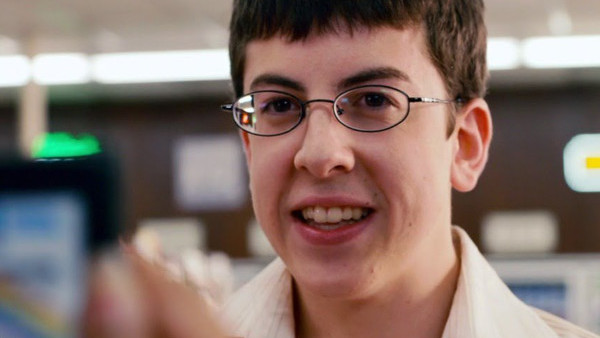
2007's Superbad is frequently cited as the greatest teen comedy of the 21st century, and it's incredibly hard to argue with that.
It's a perfect storm of capturing the early-millennial zeitgeist and featuring a largely unknown cast of on-the-rise actors, while melding boundary-pushing R-rated humour with a uniquely affectionate attitude to its characters. In a period where gross-out sex comedy reigned supreme, it was something incredibly fresh and different.
The result was immediately iconic and remains shockingly watchable today, but in the decade since, every single teen comedy to hit cinemas - even good ones such as Easy A and Love, Simon - feels positively pallid by comparison.
Love, Simon might be a wonderful step for inclusion in studio comedies, but will anyone be remembering it with the same reverence as Superbad in another decade? Unlikely.
It's clear nobody expected Superbad to strike as powerful a chord as it did or remain this relevant and quotable in 2018, but the movie's gain is an unfortunate loss for every subsequent teen movie imitation that's followed.
4. Dawn Of The Dead

The late, great George A. Romero is widely credited with popularising the zombie genre with 1968's Night of the Living Dead and especially his astonishing 1978 follow-up Dawn of the Dead.
With its brutal violence, colourful band of survivors and stunning social commentary, it's still held up today as the ultimate zombie movie, and justifiably so. It proved that the genre could be more than mindless blood-letting, using the zombie apocalypse as a platform to say anything important about contemporary society (namely our enslavement to consumerism).
Though the zombie genre has remained popular for the last four decades, it's followed a similar trajectory to shark movies, with filmmakers knowing they can't compete with Romero's towering achievement and not even bothering to try.
There's a reason why the genre tends towards either shameless shlock or comedy these days, because the specific tone of Romero's classic is so incredibly difficult to replicate successfully.
As such, we're either lumped with Resident Evil and World War Z, or something like (the admittedly stellar) Zombieland, none of which really want to be taken seriously as thoughtful works of zombie media.
It's certainly a compliment that Dawn remains an enduring influence on almost every zombie movie you'll ever see, but its success also killed most filmmakers' interest in doing anything other than paying easy homage to it. And that ultimately even goes for Romero himself, whose subsequent films never reached this peak again.
3. Unforgiven

From the late 1930s onwards, the western genre was a reliable Hollywood stalwart, driven to terrific success primarily by filmmakers John Ford and Howard Hawks, and of course venerable star John Wayne.
The genre eventually evolved into the spaghetti western, fronted most iconically by Sergio Leone and Clint Eastwood, before its steam began to run out in the 1980s as, like the slasher genre, fans became over-saturated with too many over-familiar offerings.
Eastwood offered up the last word on the traditional western, then, with his 1992 Best Picture and Best Director Oscar winner Unforgiven, a movie which wrapped classic western tropes around a fiercely unique engagement with the notions of violence and revenge.
Almost three decades on, Unforgiven remains very much the quintessential western to many, for so brilliantly planting one foot in westerns of old while taking a more contemporary, thoughtful approach to its characters.
Unforgiven really does feel like the exclamation point for the classic Hollywood western, and today, the genre is basically dead, at least in its original form.
Aside from the odd throwback like 3:10 to Yuma or True Grit - both remakes, admittedly - the western has largely been reconfigured within the neo-noir sub-genre in films like No Country for Old Men and Hell or High Water, or more comedic efforts like the upcoming The Ballad of Buster Scruggs.
Eastwood's film did such a splendid job encapsulating everything people love about the genre and dressing-down everything people hate, that there really wasn't anywhere else to go.
2. The Dark Knight
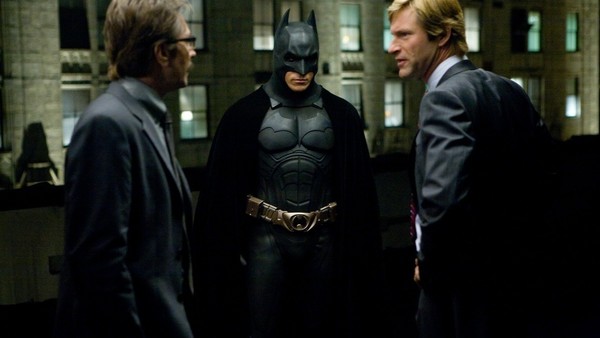
Christopher Nolan's The Dark Knight totally reinvented what a superhero movie could be: with its gritty, operatic tone, superb direction and Oscar-winning villain, it was perhaps the first superhero movie that could ever be taken totally seriously as a genre film in its own right. As much as it still revolved around a man dressing up as a bat and punching people, it was shot through with all the tenacious seriousness of a Michael Mann movie.
The film inspired many imitators in both the superhero genre and blockbuster films as a whole, though only Logan has come even remotely close to successfully nailing a similarly audacious, genre-bending tone.
There's a reason why serious superhero movies aren't really in vogue anymore: Marvel Studios realised they could have a far easier time - and make more money - with lightly enjoyable, family-friendly superhero films, and avoid the Dark Knight comparisons at the same time.
Nolan managed to strike an incredibly delicate tonal balance with his film, and practically every comic book film that's tried to ape his mature tone hasn't stuck the landing anywhere near as well. Nobody has more aggressively attempted to follow Nolan's lead than Zack Snyder, and Watchmen turned out an ambitious mess, while Man of Steel was a tonal car crash.
If you look at the highest-grossing superhero movies of all time, they're almost exclusively MCU movies and sillier, lighter comic book films like Wonder Woman and Deadpool, because why risk alienating audiences with "grimdark" stylings when you can just play it broad and fun?
There were of course serious attempts at superhero films before The Dark Knight, but Nolan's film is unarguably the zenith of that style, and continues to embarrass pretty much any movie that attempts to follow its lead.
1. The Lord Of The Rings Trilogy

Considering how popular and beloved fantasy books are, it's surprising how few genuinely unique and original fantasy film franchises actually exist.
Then we remember that The Lord of the Rings did pretty much everything a fantasy movie could do: it delivered an epic, emotionally resonant three-movie saga culminating in its Best Picture Oscar victory for the climactic The Return of the King.
In both mainstream books and movies, the fantasy genre tends to pull from a pretty narrow assemblage of tropes, and given the legendary stature of J.R.R. Tolkein's source material, it's not terribly surprising that the vast majority of modern fantasy films are heavily indebted to his work.
The result, then, is that practically every "hard-fantasy" movie released since 2003 has felt like an inferior rehash of LOTR, recycling the same fundamental ideas albeit without Peter Jackson's passion or the rich detail of Tolkein's writing.
When the world has something as inscrutable as these movies - which are arguably even better when viewed in their extended form - can anything else really compete?
As such, the genre's most recent success has instead been found in the world of TV, with Game of Thrones of course becoming the successor to LOTR's claim of pop-culture fantasy phenom.
Did these classic movies ruin genres for you? Got any other suggestions? Shout them out in the comments!