10 Movies That Started A Huge Cinematic Trend

Those movies we loved... and then were forced to endure lesser versions of for years to come.
Hollywood loves to jump on a bandwagon. In an industry designed to generate the highest amount of revenue possible, studios will always be more inclined to hedge their bets on something that has already proven successful before. This is why original movies are becoming more and more scarce, with studios continually taking the safe option of making sequels, reboots, remakes and adaptations. For example, when Michael Bay's Transformers spawned a $2.7bn franchise the likes of GI Joe and Battleship were fast-tracked to the big screen. Similarly, the success of Quentin Tarantino's Pulp Fiction a decade previously saw the mid-90s become filled with pop culture referencing movies with fractured timelines. Whether it be a great high-concept pitch that spawned a dozen inferior rip-offs, a long dormant genre that was reinvigorated by one critical and commercial hit, or a cost-effective way of making and marketing movies, this article will look at ten movies that inadvertently started a huge cinematic trend. Do you agree that these movies started a cinematic trend? Are there any other movies that you would have included? As always, sound off in the comments below.

10. Harry Potter And The Deathly Hallows Part 1 (2010)
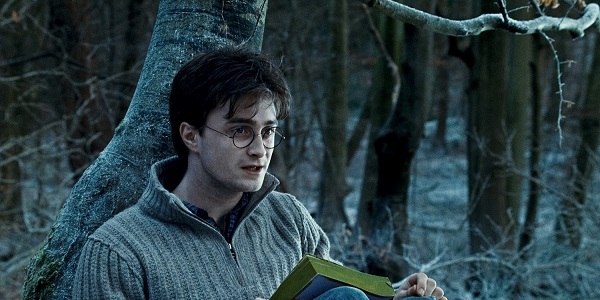
The Trend: Splitting the adaptation of a final book into two movies, and making big bucks in the process. The unprecedented success of the Harry Potter series has inspired a generation of franchises for better and for worse, and splitting The Deathly Hallows into two movies directly influenced its closest peers at the box office. The other two massively profitable literary franchises, The Twilight Saga and The Hunger Games, followed the precedent set by Deathly Hallows Part 1 and released (or will release, in Mockingjay's case) their final installments in two parts. From a financial standpoint, it's a no-brainer. Deathly Hallows Part 1 grossed almost $960m on its own, and by the time Part 2 had finished its theatrical run the two-part finale had earned almost $2.3bn at the box office. Four months after the end of cinema's biggest franchise, The Twilight Saga: Breaking Dawn - Part 1 was released and became the highest earner in the series yet with over $712m in the coffers. A year later, Part 2 smashed the franchise record by over $100m and when the dust had settled the final two movies had combined for well over $1.5bn, almost 50% of the series' total gross. By splitting the final chapter into two movies, both franchises allowed anticipation to reach fever pitch before releasing the last movie, in both cases securing record grosses in the process. With Catching Fire grossing almost $170m more than its predecessor thanks to an expanded international audience, it's almost a guarantee that it will follow the path set by Harry Potter and the Deathly Hallows and finish the series with a record box office total by the time Mockingjay Part 2 hits in November 2015. Hell, even the 300 page Hobbit was stretched out to three movies and looks set to trouble the $3bn mark with combined profits.

9. Alice In Wonderland (2010)

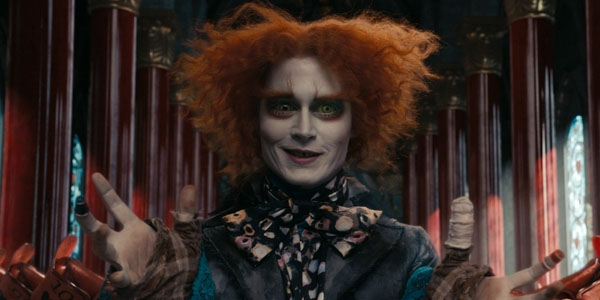
The Trend: Live-action revisionist updates of classic fairy tales. Tim Burton's adaptation of Lewis Carroll's seminal 19th Century fantasy novels Alice's Adventures In Wonderland and Through The Looking Glass shocked many box office analysts when it opened to a massive $116.1m domestically on its way to a worldwide gross of $1.025bn, becoming only the sixth movie in history to pass the ten-figure milestone. Of course, being the first high-profile 3D release following the game-changing Avatar surely helped, as critical opinion on the final product was decidedly mixed. Since then, a number of revisionist fairy tales have made their way to the big screen with varying results. Twilight director Catherine Hardwicke's 2011 take on Red Riding Hood was slaughtered by critics and failed to make an impression at the box office, while last year Brian Singer's $185m Jack the Giant Slayer barely clawed back its budget. The summer of 2012 saw competing Snow White movies released just two months apart, with Tarsem Singh's Mirror Mirror grossing less than half of Snow White and the Huntsman's $396m total, with the response to both movies being decidedly lukewarm. Sam Raimi's Oz the Great and Powerful fared a lot better both critically and commercially and nearly cracked the $500m mark, while the modestly-budgeted Hansel and Gretel: Witch Hunters was a disappointment at the domestic box office but still grossed over $220m worldwide. Despite the patchy track record of these fairy tale adaptations, the trend shows no sign of abetting. This year Angelina Jolie will play the title character in Robert Stromberg's Maleficent, which promises 'the untold story' of one of Disney's most iconic villains. Next year, Lily James will play Cinderella in Kenneth Branagh's retelling of the famous tale while there are also sequels to Alice in Wonderland and Oz the Great and Powerful in active development.

8. Iron Man (2008)

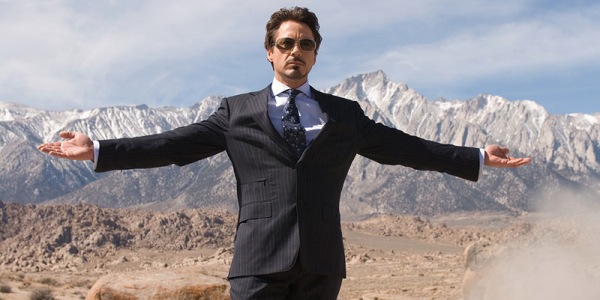
The Trend: Having multiple franchises exist in a shared cinematic universe. From the moment that Samuel L Jackson's Nick Fury popped up at the end of Iron Man and mentioned the 'Avengers Initiative', fans around the world rejoiced. After two Iron Man movies, and the cinematic introductions of Thor and Captain America, this groundbreaking cinematic world-building culminated in The Avengers, which smashed box office records around the globe on its way to becoming the third-biggest movie in history. Of course, other studios took notice of this practice and decided to jump on the bandwagon. DC are trying to play catch-up in the superhero stakes after the end of Christopher Nolan's Dark Knight trilogy and poor response to Green Lantern, but it still came as a surprise when it was announced that Zack Snyder's follow-up to Man of Steel would not only introduce a new cinematic iteration of Batman, but the big-screen debut of Wonder Woman as well. Over at Fox, X-Men: Days of Future Past unites the casts of both the original trilogy and First Class to create a unifying X-Men cinematic universe after 14 years and 7 movies, with Simon Kinberg on board to integrate the rebooted Fantastic Four into the mix as well. Even the Spider-Man universe will be rapidly expanding on-screen, with Columbia hiring a 'brain trust' that includes Roberto Orci, Alex Kurtzman, Ed Solomon and Drew Goddard to create spin-off movies that focus on Venom and The Sinister Six, as well as the already-announced Amazing Spider-Man 3 and 4. Given the continuing popularity of the superhero movie and the huge success of Marvel's Phase 1, it was only a matter of time before other studios starting following suit. It seems as though DC are rushing their universe together by cramming Batman and Wonder Woman into Snyder's movie, with rumors indicating that Justice League is up next. It remains to be seen how well these shared universes will fare, but Marvel will always be the ones to beat. The Avengers was in development as far back as 2006, with Kevin Feige indicating he has the slate of upcoming releases planned out until 2021. With Phase 2 already well under way, and Avengers: Age of Ultron set for release next year, the Marvel Cinematic Universe will show the pretenders how its done.

7. Avatar (2009)

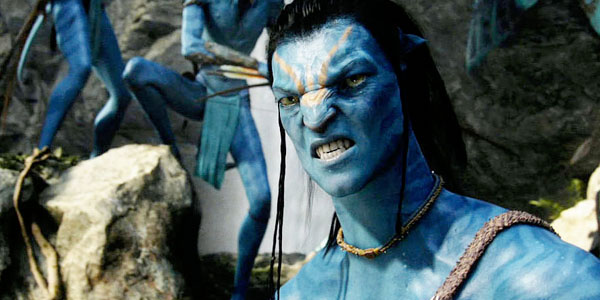
The Trend: The huge resurgence in 3D. James Cameron is a director that has always pushed the boundaries of filmmaking technology, and after a decade away from the big-screen Avatar showed that he hadn't lost his touch. Yes the narrative side of things leaves a lot to be desired, but as a visual spectacle it was one of, if not the, most immersive experience to be found in theaters. The $2.78bn box office juggernaut also caused a huge resurgence in 3D, with each lovingly-crafted native 3D movie made since being heavily outnumbered by shoddy post-conversions designed to make a quick buck. Shot on a massive performance capture stage known as 'The Volume', six times larger than any other of its kind, Cameron used the 3D Fusion Camera System that he had helped develop and a virtual camera system that allowed him to view the digital version of the actors and their surroundings in real-time, a technique that the director said was 'a form of pure creation'. Little did he realize that almost every major studio release from then on would be released in the third dimension, with varying degrees of quality. As the first major 3D release post-Avatar, Tim Burton's Alice in Wonderland made over a billion dollars, while Clash of the Titans raked in almost $500m thanks in part to the financial boost from the awful post-conversion that was tacked on a few weeks before release. Since then, directors as high-profile as Steven Spielberg, Martin Scorsese, Ridley Scott, Peter Jackson and even Michael Bay have made good use of native 3D, although it remains a tool for studios to squeeze some extra cash from audiences. 8 of last year's top 10 biggest movies were 3D releases, so it doesn't seem like the trend will be ending anytime soon.

6. Die Hard (1988)

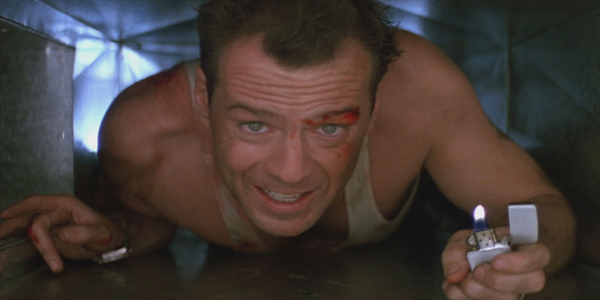
The Trend: The 'Die Hard on a (insert mode of transport/location here)' sub-genre of action movies. Despite Bruce Willis being content to sully the reputation of the first movie by cranking out lackluster sequels, Die Hard remains one of the greatest action movies ever made. As well as launching its star into the Hollywood A-list and ushering in a new type of action hero after the 1980s were dominated by musclebound supermen, it also spawned countless thinly-veiled imitations, although many of them are pretty good in their own right. Thanks to the increasing popularity of the high-concept blockbuster, movies could now be easily marketed in the space of a single sentence. With a premise as brilliant as Die Hard's 'ordinary cop in extraordinary circumstances in a single location', it was only a matter of time before it became the go-to pitch for the action genre. Whether it be a boat (Under Siege), a bus (Speed), a plane (Passenger 57) or even Alcatraz (The Rock), the fingerprints of John McTiernan's classic are all over 1990s action cinema. The trend continues to this day, with Olympus has Fallen and White House Down providing 2013 with two movies that were billed as 'Die Hard in the White House'. Over 25 years later Die Hard remains one of the most influential action movies ever made, which is ironic considering how little resemblance last year's awful A Good Day To Die Hard bears to the timeless original.

5. Batman Begins (2005)

The Trend: Realistic, grittier reboots and reimaginings. After the disastrous Batman and Robin practically sounded the death-knell for the franchise in 1997, Christopher Nolan picked up the reins and delivered one of the best superhero movies ever made, one that is now frequently cited as a direct inspiration by countless movies that roll off the Hollywood production line. Bruce Wayne's transformation into the Caped Crusader is one of the most well-known origin stories in popular culture, but this was the first time it had unfolded onscreen and it is to Nolan's credit that the audience remains engrossed in the story despite it taking an hour for Batman to show up in costume. About as far away from the high camp of Joel Schumacher's movies as it is possible to get, Batman Begins is an altogether darker, more cerebral take on the Dark Knight. As well as being a critical and commercial success, it also inadvertently became one of the most influential movies of the decade. There are countless movies that have named Nolan's origin story as an influence in taking an established property and updating it for a modern audience; Casino Royale, Terminator Salvation and next year's Terminator: Genesis, Star Trek, Sherlock Holmes, Rise of the Planet of the Apes, the G.I. Joe franchise and the upcoming Robocop and Godzilla, to name but a few.

4. Gladiator (2000)

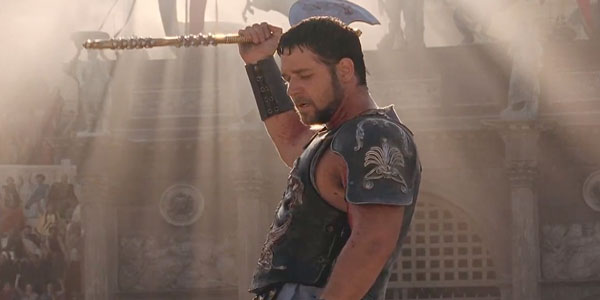
The Trend: Big-budget historical epics. Ridley Scott's Roman epic was both a critical and commercial smash-hit, winning five Academy Awards including Best Picture and Best Actor and grossing over $450m at the box office. As well as rekindling the career of its director and making Russel Crowe one of the biggest movie stars on the planet, Gladiator was also indirectly responsible for the slew of big-budget historical movies that followed in its wake. Despite the success following its release, the production was a difficult one. The $100m budget was a huge gamble given that the genre had seen little success in recent times, anchored by a director that hadn't had a hit movie since Thelma & Louise in 1991 and a star who had never led a movie of this scale. There were also numerous problems with the script that forced constant rewrites, and of course the death of supporting player Oliver Reed that forced the production to spend a further $3.2m to complete his performance digitally. Of course, all of this was quickly forgotten when Gladiator became one of the biggest hits of the year and just like that, the historical epic was all the rage again. Within five years, a number of big-budget historical movies clearly inspired by Gladiator's success made their way to theaters. Out of all of these, only Wolfgang Petersen's Troy in 2004 found any real success and grossed almost $500m despite mixed reviews. That same year, The Alamo became one of the biggest box office flops in history, the story of King Arthur was given the Jerry Bruckheimer treatment and Oliver Stone released the first of several versions of his passion project Alexander, which barely made back its $155m budget. Even Ridley Scott tried to repeat the trick with Kingdom of Heaven in 2005 and Robin Hood in 2010, neither of which found a similar audience to Gladiator.

3. Paranormal Activity (2009)

The Trend: Low-budget found footage horror. Although the first hugely successful found footage horror was The Blair Witch Project in 1999, it wasn't until the release of Paranormal Activity a decade later that studio executives realized that these low-cost, high-reward movies were an basically a license to print cash. One of the most profitable movies ever made, Oren Peli's supernatural thriller grossed almost $195m worldwide on a budget of just $15,000 and soon the market became saturated with similar offerings. The Spanish REC franchise and its US counterpart Quarantine, The Last Exorcism, Apollo 18, The Devil Inside and many, many more have followed the Paranormal Activity template and reaped huge financial rewards comparative to their miniscule budgets. Even outside of the horror genre the higher-budgeted likes of Cloverfield, Chronicle and Project X have all grossed upwards of $100m. Going back to Paranormal Activity; so far the five movies in the franchise have cost a combined $18m to produce, and have grossed over $800m. With figures like that, the found footage genre won't be going away anytime soon. Even established directors such as George A. Romero and Barry Levinson have dabbled in the genre, with the lower production costs offering a greater deal of creative freedom, with found footage alumni Matt Reeves and Josh Trank quickly making the leap to blockbuster material. With Paranormal Activity 5 back in the franchise's Halloween release slot and almost guaranteed to do solid business, studios will continue churning out these low-budget offerings, as the horror genre usually guarantees a strong opening weekend that covers the tiny budget.

2. Harry Potter And The Philosopher's Stone (2001)
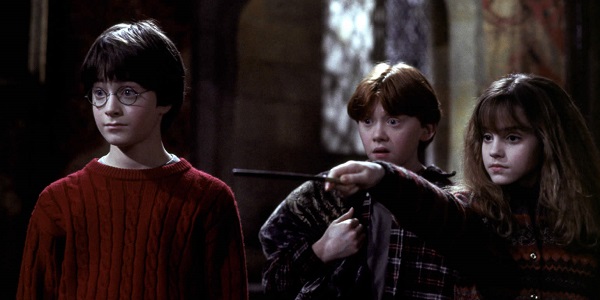
The Trend: Adapting popular fantasy books for the big-screen. It's the Harry Potter franchise again! Damn that boy wizard and his far-reaching influence on the modern blockbuster. Over ten years, the series became the most lucrative in Hollywood history with worldwide grosses of over $7.7bn with all eight of the adaptations among the top 50 biggest movies of all time. Since then, studios have tried desperately to find the next literary adaptation to generate big box office and bar The Twilight Saga and The Hunger Games, most have failed miserably. In the last decade alone we have seen Beautiful Creatures, Cirque de Freak: The Vampire's Assistant, City of Ember, Eragon, The Golden Compass, The Host, I Am Number Four, Inkheart, Lemony Snicket's A Series of Unfortunate Events, The Mortal Instruments: City of Bones, Seeker: The Dark Is Rising, Stormbreaker, and Vampire Academy fail to make it past one movie. Out of this huge number of adaptations, Percy Jackson managed to get a sequel and The Chronicles of Narnia made it to three movies before middling box office grosses put both franchises on hold, with none even coming close to matching the commercial success of 'the big three'. Nonetheless, the adaptations keep coming thick and fast. Next month sees the release of Divergent, with the $80m budgeted movie so confident in its chances of success that sequels have already been announced for 2015 and 2016. The Maze Runner also gets its chance to make an impact when it hits theaters in September, before The Hunger Games: Mockingjay Part 1 arrives in November to devour the box office once again.

1. X-Men (2000)

The Trend: The comic-book movie adaptation. Although Richard Donner's Superman in 1978 and Tim Burton's Batman in 1989 were critically and commercially successful superhero movies (with the latter spawning three sequels of ever-declining quality), it wasn't until the turn of the century that the genre really began to gain traction. Although many cite 1998's Blade as the beginning of the superhero boom, that was a stylized and violent R-rated movie based on a more obscure character. The near $300m gross of Bryan Singer's X-Men proved that there was a market for blockbuster adaptations of comic book heroes, and Hollywood's latest obsession was born. Following the critical and commercial success of X-Men, the studios scrambled to adapt any comic book property they could get their hands on. Just five years later we had an X-Men sequel, two Blade sequels, two Spider-Man movies, Daredevil, The League of Extraordinary Gentlemen, Hulk, Catwoman, Hellboy, The Punisher, The Fantastic Four, Elektra and Batman Begins. 14 years after the release of X-Men the superhero bubble shows no signs of bursting with Days of Future Past, Captain America: The Winter Soldier, Guardians of the Galaxy and The Amazing Spider-Man 2 all set to do big business over the summer. Since X-Men hit theaters we have seen Hugh Jackman play Wolverine seven times, three actors play The Incredible Hulk, Christopher Nolan's Dark Knight trilogy, reboots of The Punisher, Spider-Man and Superman with new iterations of Batman and The Fantastic Four on the way, while Marvel Studios have changed franchise filmmaking forever with their shared cinematic universe and the $1.5bn success of The Avengers. 15 years ago a superhero movie would be one of the toughest projects to get made in Hollywood, now thanks to the trail blazed by Bryan Singer's X-Men they are almost ubiquitous at the multiplex.

Contributor

I don't do social media, so like or follow me in person but please maintain a safe distance or the authorities will be notified. Don't snap me though, I'll probably break. I was once labelled a misogynist on this very site in a twenty paragraph-long rant for daring to speak ill of the Twilight franchise. I stand by what I said, it's crap.