10 Movies That Completely Missed The Point
Whatever these films are, they’re not the films they’re supposed to be.

Whatever proponents of the auteur theory will tell you, filmmaking is a collaborative process. Even if you’re the writer and the director, you’ll rely on an endless succession of money men, artists and craftspeople to bring your movie to the cinema.
Unfortunately, not all of those many voices are always singing the same tune. Novelists and comic book creators find that their property has been stripped for parts after being optioned by movie studios, their influence kept at arms length. Meanwhile, Hollywood is also egendary for allowing studio interference to scupper otherwise worthwhile projects, and hack directors are notorious for butchering the screenplays of idealistic young writers.
Actors find themselves contractually obligated to finish films they’ve only realised too late are headless turkeys; special effects houses find themselves having to bet their reputations on hastily reshot endings with no time or money to finish them properly. Good films, where everything went perfectly, are remade only a few years later into worthless travesties which crap all over the originals.
There are any number of movie productions in cinema history that have, through trial and error - mostly error - completely failed to get the point of the movie that they were supposed to be producing. Here’s ten of the worst offenders… and remember, here be spoilers.
10. The Karate Kid (2010)

One of those remakes of a popular classic that makes you wonder who it’s for and why they bothered, The Karate Kid is that rare and exotic movie with an answer: it was selected and carefully assembled as a vehicle for Will Smith’s son Jaden to ride all the way to stardom.
As a manufactured prop to propel Fresh Prince II, the film actually works really well: Jaden Smith is a surprisingly nuanced actor, and with Taraji P. Henson and Jackie Chan playing his mother and martial arts mentor, respectively, he’s got solid support behind him.
The problem? Well, there are two. First, the 2010 film follows the plot and major narrative beats of the 1984 original: new kid comes to town, attracts the attention of bullies who know martial arts, and receives training to defend himself, going on to take on and best his enemies in a martial arts tournament.
That’s not a problem in and of itself - it’s a remake, after all - but here Jaden Smith is eleven years old, as are his kiddie love interest and his quick-tempered kung fu rival for her affections.
The original sailed close enough to the wind in depicting teen on teen violence, especially with near-psychotic Kobra Kai villain Kreese intimidating and pummelling his students into becoming merciless bullies. Here, it’s Master Li, but the principle remains the same - and the kids in question are actual kids, pre-teens, not teenagers.
A plot sparked by a love triangle between little kids is inappropriate, to say the least. When Chan defends Smith from his nemesis and his friends, he’s beating up a group of little kids. When Smith’s character has his leg broken at the climax of the tournament, it’s a twelve-year-old breaking the leg of a twelve-year-old.
The other issue? It’s a fairly significant one: there’s no karate in this version of The Karate Kid. The original movie’s hero moves from east to west coast and learns karate from his Japanese mentor, as it’s a Japanese martial art. Here, the hero moves to Beijing from Detroit and is taught a variation of kung fu, a Chinese discipline.
Apparently, the film was only called The Karate Kid in the western world to riff on the fondness people still feel for the original film - in China, the title was Kung Fu Dream, and in Japan and Korea, simply Best Kid. That’s some cynical marketing bullsh*t, right there.
9. Fifty Shades Of Grey (2015)

One of the worst movies of recent years, Fifty Shades Of Grey swept the board of this year’s Razzies (aka ‘the Golden Raspberries’). The film ‘won’ worst film, worst actor and actress, worst screenplay and - most damning of all for a film whose whole raison d'etre is the sparks that fly between the two main characters - worst screen combo.
While no one expected the movie to be a proper award contender - or even really to be any good, given the appallingly written bestseller it was being adapted from - it was pretty much assumed that it would deliver on the kinky sex and simmering sexual tension front.
After all, the premise is that there is an built-in audience for this film that wanted to see a faithful adaptation of the terrible, terrible book that they inexplicably helped make such a runaway hit. This is a film which should be setting fire to people’s eyes, and instead it’s the cinematic equivalent of a cup of cold tea: the most restrained R-rated movie based on an allegedly torrid affair that you’ll ever see.
The first sex scene is so redolent of a 1990s softcore ‘erotic thriller’ that it feels like a parody. It even pans away at the end (fortunately not to an open window or a roaring fireplace), while Sia croons wistfully in the background about letting go and giving your heart away.
That’s when you realise that someone, somewhere thinks that this story is an epic romance, not an awkward contemporary bodice-ripper with appalling sexual politics. Whoever that someone is, they need a tall, cold glass of wake the hell up juice.
8. The Shining (1980)

From his very first scene in Stanley Kubrick’s movie adaptation of Stephen King’s The Shining, you can tell there’s something wrong with Jack Torrance. In the interview for the job of winter caretaker of the Overlook Hotel, and on the drive to the Hotel with his family, Jack’s got the arched eyebrows and manic grin of someone who disposes of his victims by eating them.
And that’s because Kubrick cast Jack Nicholson to play Torrance - a family man with a troubled past he’s hoping to put behind him. You see, he’s supposed to be a normal guy. He’s supposed to be sympathetic. In point of fact, Jack Torrance is the human tragedy in The Shining: a recovering alcoholic beset by ghosts, both supernatural and psychological, who just wants to stop screwing up and make the most of the second chance he’s been given to be a good husband and father.
That’s the Jack Torrance in the novel, of course. The Jack Torrance in Kubrick’s celebrated horror masterpiece is already madder than trousers… more than that, whether a function of the script or Nicholson’s frightening, grimacing performance, Kubrick’s Torrance barely ever shows any sign of affection or love towards his son Danny or his wife Wendy.
It’s a tricky one, this - Kubrick apologists have sneered at this argument for decades, arguing that the movie is sheer brilliance at work (it is), a masterclass in sustained, grand guignol dread (damn straight), and that this is just the perennial snobbery that fans of classic literature have for the inevitable cinematic adaptations.
But the argument here isn’t that Kubrick’s cut too much from the novel, or changed the tack of the story: it’s that Jack Torrance no longer has a narrative arc, sane to insane, family man to axe-murderer. You just don’t care about him or his family.
In the book, you don’t want the Overlook to possess Torrance - it’s the true horror of the story, that a man you like could descend into a madness so total that he’d hack his wife and son to pieces, and his redemption comes when he kills himself at the climax to avoid
In the film, you can see it’s going to happen in the first ten minutes… and with Mad Jack capering around, all manic eyebrows, devilish grin and pub psycho inflection, it’s only only a matter of before he picks up an axe.
7. XXX: State Of The Union (2005)

It’s not like the original XXX movie is a stone cold classic - it’s one of those hi-octane post-Bond action flicks that attempted to steal the outlandish spy movie genre out from under 007 back when the franchise was running out of creative steam, starring Vin Diesel back when he was believable as an action hero.
And that’s just it - Vin Diesel was the film’s selling point, playing Xander Cage, an anarchic TV star and extreme sports adrenaline junkie with the world’s dodgiest fake tattoos, who’s co-opted into taking part in an NSA black ops mission, failing which he’ll be sent to jail. The ‘XXX’ referred to the ink on the back of his neck, which became a nickname, which directly referenced the whole 007 thing.
Fast forward to 2005, and XXX: State Of The Union is a direct sequel… not starring XXX. Diesel took a look at the script and opted out, saying that it didn’t feel like an XXX movie to him - an odd statement, given that there’d only been one film in the franchise so far.
When Vin ‘Chronicles Of Riddick’ Diesel backs out of your film due to quality control issues, that should be enough of a warning sign to have the production quietly shelved. Not here: the producers had such overwhelming faith in the sequel that they hired scowling human sandwich Ice Cube to replace Diesel instead.
Cube’s Darius Stone is an ex-Navy SEAL with no ties to anything extreme sports related, and no ‘X’ in his name - the only thing he has in common with Diesel’s character is that whole criminal-given-a-chance deal, as he’s serving twenty years for… ah, no one cares.
So why is this film still called XXX? Because apparently now, XXX is the name of the deep cover black ops project that used to run Cage, and now runs Stone. Their secret underground headquarters even has giant scarlet ‘XXX’ logos all over the blast doors… in the exact same shape as Cage’s ‘XXX’ tattoo.
An agency that brands itself on sh*tbox skater ink is bad enough… but not quite as bad as a movie studio that hires hires tubby frown merchant Ice Cube to be the new new James Bond.
6. Terminator: Genisys (2015)

Aping the plot of the first Terminator film in a quasi-reboot/sequel to the killer cyborg/time travel franchise, Terminator: Genisys opts to both nod back to the past and take things to the next next level by bringing back some old favourites as well introducing all-new Terminators.
It might not have been that bad, really - there are some half-decent moments sprinkled in amongst the half-baked ideas and half-cocked attempts at comedy. Essentially, the film creates the plot of the first Terminator movie, sending Kyle Reese from 2029 to 1984 to save Sarah Connor from the T-800 that’s just been sent to kill her. That is, until a member of the Resistance in 2029 attacks the middle-aged John Connor, revealing itself to be a massively advanced T-5000: Skynet incarnate.
This assault on adult John Connor allows for the creation of an alternate timeline, which is the timeline the remainder of this film takes place in, as it gleefully craps all over events that have already taken place in other, better instalments in the Terminator franchise.
The trouble is that, since 1984, the entire point of the Terminator franchise has been that history can be changed. Using time travel, the franchise states that it’s possible to rewrite the past to make a better future… or present, depending on when you are when you’re finishing this sentence.
Alternate timelines, however, belong to the ‘many worlds’ theory of time travel, which posits an infinite number of parallel worlds where every possibility has been explored. Since your own timeline is only one of those infinite parallel worlds, engaging in time travel to change the past is an exercise in futility: and a Terminator film where you can’t change the past is a waste of bloody time.
5. Trainwreck (2015)

Amy Schumer’s almost autobiographical comedy, directed by Judd Apatow, eviscerates the usual cliches and assumptions of romantic comedies in subversive and witty style. At least, it does right up until the ending.
Throughout the film Schumer’s character has no intention of apologising for her ‘trainwreck’ lifestyle… right up until the moment that the film decides it’s time for her to apologise for it, by initiating events that don’t logically follow on from one another. High-functioning alcoholics, binge drinkers and alcohol dependents often hold down steady, well-paid jobs, and Amy has clearly been doing so fairly successfully for a long time.
After that, it’s just the icing on the cake to have her stage a climactic Drew Barrymore style gauche but appealing stunt with a pro cheerleading routine, making a numpty out of herself in public and thereby winning back the guy she likes.
It’s cute and awkward, ending the film with - unbelievably - a mutual declaration of love, a kiss, applause from the virtual strangers all around them, and a pan-away-and-pull-back crane shot to reveal that their kiss is being displayed on all the big screens at courtside
It’s as though Apatow realised how many established Hollywood tropes he was slapping in the kisser, and panicked, asserting the Tinseltown motifs at the last minute to prove that he was a team player after all.
4. Guess Who (2005)

There may be no more offensively stupid misstep in the history of remakes than the decision to recast 1967’s seminal comedy-drama Guess Who’s Coming To Dinner - one of the most culturally and politically important films in history - as a Saturday Night Live style dumbass culture clash sitcom.
In the original, Spencer Tracy and Katharine Hepburn are upper class liberals who believe they’ve instilled in their daughter their own respect for race and equality. That is, until she brings her new fiancé home to meet her parents: a black man, played by Sidney Poitier - and they’re confronted with uncomfortable prejudices they didn’t realise they had.
At the time, the civil rights movement was the hot topic of the decade. Prior to shooting the film, seventeen US states still held interracial marriage to be illegal, and those anti-miscegenation laws wouldn’t be overturned until six months before the film’s release: the film was considered so important by the cast that they agreed to star in it without even seeing a script. In 1968, the film was nominated for ten Academy Awards: Hepburn won the Oscar for Best Actress, and the screenplay won for Best Original Screenplay.
Guess Who, by contrast, tries to wring belly laughs from the idea that the late Bernie Mac is unhappy that his daughter has brought home a white dude to meet her family. To hammer this unhappy point home, the white dude is the whitest white dude in all of Caucasia: the incomparably f*ckheaded Ashton Kutcher.
That’s literally everything that director Kevin Rodney Sullivan brought to the table. It’s a disservice to the struggle that inspired the original, and to the stellar cast that thought that film was so important to sixties America. It’s even a disservice to Bernie Mac, and that fella was in House Party 3.
3. Howard The Duck (1986)

One of the most infamous what-the-hell flops in cinema history, the what-the-hell doesn’t come from trying to figure out how Howard The Duck wasn’t a hit. It’s a goofball adult sci-fi fantasy about a wisecracking duck facing down evil. There’s no built in audience for that.
No, what’s amazing is that this bad, listless soup was greenlit to be adapted from the cult favourite Marvel comic book in the first place, never mind that it was shot, finished and released for real live people to look at.
Sure, plenty of people have pulled the ‘so bad it’s good’ card here (it's not), including the screenwriter, one Gloria Katz, who expressed her frustration with poor reviews by saying,
"It's a film about a duck from outer space... It's not supposed to be an existential experience... We're supposed to have fun with this concept, but for some reason reviewers weren't able to get over that problem."
Well, unfortunately for Katz, that’s exactly what the source material was: an existential experience. Howard The Duck creator, the late Steve Gerber,
“Howard the Duck was never a "humor" comic in the traditional sense. Howard wasn't even a comedic character. He was frequently depressed, congenitally rude, and had a bad tendency to waddle all over other people's feelings. The humor in the series derived from the absurdity of his situation – a sentient duck from another dimension, trapped in a world of what he called "talking hairless apes" – and from Howard's mordant observations on the world around him…”
The comic book was bitingly sharp satire; the film recast the premise as a crappy sitcom. One paints with a fine brush; the other with a roller, and in the wrong colour. There may be no other adaptation of a comic book in history that’s this wilfully tone deaf.
2. I Am Legend (2007)
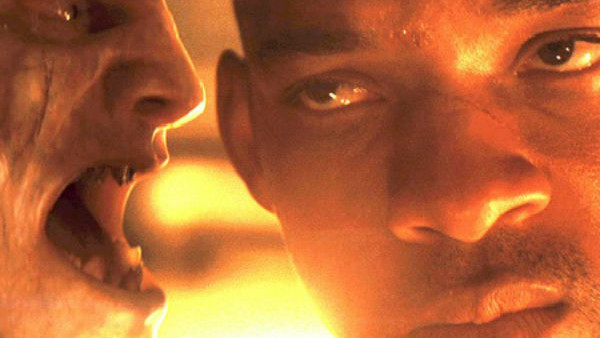
The third adaptation of Richard Matheson’s classic post-apocalyptic novel of the same name, Francis Lawrence’s 2007 Will Smith vehicle followed 1964’s The Last Man On Earth, starring Vincent Price, and 1971’s The Omega Man, starring Charlton Heston. In all of the iterations of the story, a virus kills the majority of the world’s population, turning the majority of the survivors into ravening, vampire-like monsters. Only one man - supposedly - remains alive...
The pedigree is important, because Lawrence’s original climax to the film played as far closer to the ending of the book. In the novel, the protagonist is captured by the creatures, but comes to realise that the infected monsters he’s been destroying throughout aren’t the ravening, mindless beasts he thought they were, but are just as sentient and feeling as his own lost race.
Moreover, by taking on the aspect of unstoppable vampire slayer, he’s become to this new race, the inheritors of this new earth, exactly what myths of vampires and werewolves were to humanity. He’s become the monster in the night, the boogeyman, a mass murdering nightmare. He is legend.
The Last Man On Earth follows that ending, just without the protagonist’s peaceful acceptance of his death - he’s half-mad from years of loneliness and violence, and gets hunted down and impaled. In The Omega Man, the creatures are simply mutated humans. Heston’s protagonist finds a cure, but is killed before he can live to see it administered.
Lawrence’s film returns to the idea of the creatures as vampiric monsters, but makes them unable to speak. Without the ability to communicate, Smith’s Dr. Robert Neville sees them as inhuman, and therefore has no compunction about destroying them, or experimenting on them to find a cure.
In the original ending to Lawrence’s film, Dr. Neville finds out he’s wrong about the infected creatures - that he’s a torturer and a mass murderer - as he finds a cure for their condition. It’s an ending with hope, and at least a semblance of the point of the original story… but it didn’t test well, and the reshot ending had Neville sacrifice himself to save a woman and child from the mindless monsters, the cure being taken to the last few survivors to begin rebuilding their world.
Apparently the original ending - the one that didn’t miss the entire point of the story or the title - remained intact on the film’s release in certain other worldwide markets. Only western audiences were considered so stupid that we couldn’t handle the downbeat ambiguity of the real ending. What a crying shame.
1. Jem & The Holograms (2015)

Last year’s live action adaptation of the 1980s cult classic cartoon and toy phenomenon Jem & The Holograms rewrote the lead character as a teenage pop wannabe whose songs become YouTube sensations, and who’s offered a massive major label record deal as a result.
Faced with fame, wealth and stardom, she must come to terms with how her new life corrupts and destroys her relationships with her sister and childhood friends, and rediscover what it means to just Be Herself.
By contrast, Christy Marx’ original 1980s cartoon followed adult record company owner Jerrica Benton, who used a state-of-the-art audio-visual synthesiser named Synergy - a computer that creates incredibly lifelike holograms - to lead a double life as Jem, fronting pop sensations the Holograms.
As well as a hugely successful businesswoman who saved her deceased father’s record label from bankruptcy, Benton’s also a philanthropist who runs a foster home for disadvantaged young teenage girls, and Synergy’s avatar was programmed by her father to resemble her lost mother. The whole show is a paean to empowered women, and Jem/Jerrica are written to be role models to the impressionable little girls who buy the dolls and watch the show.
Contrast that with the belated movie version, and it’s vague, compromised declarations of ‘girl power’. It’s just yet another story of how girls can’t be trusted not to be swayed and misled by money and status, and have to be led back to the right path - in this case, by some witness scavenger hunt set up posthumously by Jerrica’s father.
It’s leftover storyline scraps of every craptastic Disney Club story of pop stardom, retaining none of the vital, empowering subtext of the original and singing yet another cover version of the tired old sexist standard, ‘when women become successful, they turn into bitches, amirite?’ 2015 Jerrica is thrilled to be signed to the biggest record company in the world; 1985 Jerrica owned that company.