10 Movies That Got Better YEARS Later
These movies all got better with the passage of time.
Movies sure are fascinating beasts, because while they don't physically change once they've been released, it can be argued that they don't really "belong" to the filmmaker once they're out in the wild - at least on a philosophical level.
At that point films become something unwieldy to be dissected and discussed ad nauseum over years, even decades, and the public perception of a given movie can vary wildly over time.
And so it's not uncommon for films to enjoy an uptick or downturn in perceived quality as the years pass, and in the case of these 10 films, each of them seemed to actually get better years after they were originally released.
Quality is of course completely subjective, but it's easy to argue that these movies have all enjoyed a whole new lease of life more recently.
Perhaps another entry into the franchise retroactively made them feel more relevant, they benefited from an unexpected parallel with real life, or they've managed to remain maddeningly prophetic far beyond anyone's expectations.
Whatever the reason, it truly does feel like each of these movies got better years after they came out...
10. Rogue One: A Star Wars Story

Though the release reception to Rogue One: A Star Wars Story was relatively solid, it was far from universally loved, with many feeling that it was ultimately pretty thin in the character development department, and a two-hour canvas simply wasn't enough to deliver a fully satisfying lead-in to Star Wars: Episode IV - A New Hope.
But it's difficult not to view Rogue One in something of a different light today with the recent conclusion of the brilliant Disney+ series Andor, whose two-season story arc leads directly into Rogue One.
Across these two seasons, Andor significantly fleshes out the morally complex plight of the rebellion and especially deepens the character of Cassian (Diego Luna), even enough that Rogue One's real protagonist, Jyn Erso (Felicity Jones), seems rather one-note by comparison.
Andor also makes characters like Saw Gerrera (Forest Whitaker) and Orson Krennic (Ben Mendelhson) considerably more interesting, and expands the world-building of Star Wars as a whole in a rich, meaningful way.
As a result, the journey from Andor to Rogue One to A New Hope ends up feeling like one of the strongest arcs in the entire franchise to date.
Considering how many rolled their eyes when Andor was first announced, convinced that it'd be yet another piece of disposable Content in the Star Wars sausage factory, what an outcome this was.
9. Contagion

Steven Soderbergh's Contagion was always a brilliantly chilling, unsentimental thriller about a world-ravaging pandemic, but up until 2020 we as viewers had a certain healthy, comfortable distance from it - that it was something we simply couldn't imagine actually living through.
And while the COVID-19 pandemic was ultimately nowhere near as severe as the one depicted in Contagion - which had a mortality rate of 25-30% compared to COVID's 2-3% - it nevertheless made rewatching Contagion a wholly more haunting and relatable experience.
Ultimately so much of Scott Z. Burns' impeccably well-researched script turned out to be true - especially the state of global panic a pandemic would cause, and the conspiracy theory grifters who swiftly emerged from the woodwork.
When Contagion came out, some reviews felt that Jude Law's conspiracy theorist character was a bit too outlandish, yet in light of everything we've seen for ourselves in the pandemic, that hardly seems the case now.
Contagion probably isn't a film you'll watch for comfort, but loaded with the first-hand knowledge we all now have of a real-life pandemic, it's even more bracingly effective.
8. Falling Down

Joel Schumacher's 1993 thriller Falling Down is a fascinating, at times darkly comedic film about a supposedly everyday man, William Foster (Michael Douglas), who snaps on an especially hot day in Los Angeles and embarks on a violent rampage while trying to reach his family.
Schumacher's film has always been praised for its script and the performances of Douglas and Robert Duvall in particular, though some consider the film "dated" today due to its central character's blatant racism and the perception that many of his vigilante actions are depicted quasi-heroically, or at least humourously.
Yet the discomfort of watching Falling Down in 2025 is precisely what makes it such an interesting, surprisingly well-aged film.
While Foster absolutely has some legitimate gripes with society which make him sympathetic to a point - the whole false advertising in fast food debacle, for one - he's also an emotionally stunted, mediocre white man who is clearly struggling to accept his own diminishing relevance in modern society.
It's easy to see Foster as an analogue for the domestic terrorists and incels who routinely make headlines today, ensuring Falling Down feels more stingingly relevant than ever.
7. Twin Peaks: Fire Walk with Me
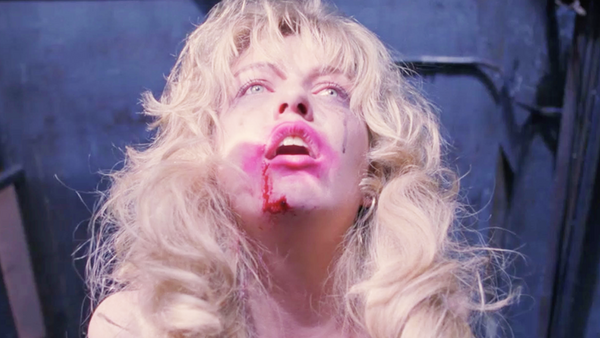
Twin Peaks: Fire Walk with Me has been a polarising movie ever since it released in 1992, with even die-hard David Lynch fans battling over its perceived merits.
Some found this prequel to the TV show excessively bleak while also refusing to provide the answers they might've expected to get, while others have always flown the flag for it as a devastating pre-script to Lynch's series, topped by a magnificent performance from Sheryl Lee.
No matter where you come down on it, though, Fire Walk with Me became a very different viewing experience in light of 2017's belated third season of Twin Peaks, The Return
As surprised many, the events of Fire Walk with Me were explicitly referenced during The Return and made to feel like a major part of the series' mythology, in turn only enhancing the deep well of sadness at its core.
If once upon a time it was easy to nudge Fire Walk with Me into a corner and treat it like added value for only the most hardcore Twin Peaks fans, The Return made it feel positively vital and all the better for it.
6. Office Space
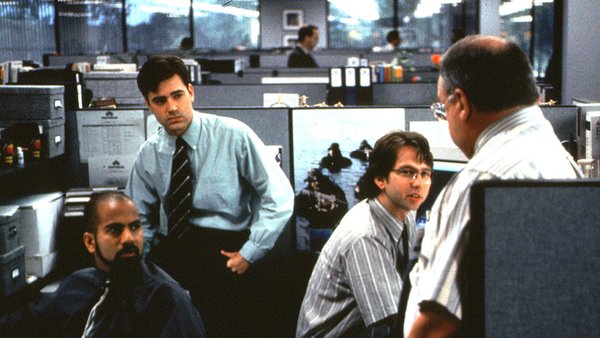
Though Mike Judge's workplace satire Office Space was a box office flop upon release, it quickly became a word-of-mouth hit in the years that followed, and more than 25 (!) years later remains one of the most distinctive cult comedies of the '90s.
And while one might've assumed that the film's relevance would decrease in a post-pandemic world where remote work policies are commonplace globally, that's not quite the case.
For starters, Office Space wasn't just a comedy for white-collar office workers - it operated as a broader satire of the absurdity of work itself, that we give so much of our free time to an employer in order to simply exist.
But even accepting the prevalence of work-from-home initiatives today, Office Space's sentiments about the soulless drudgery of office life feel more timely than ever in an era where many companies around the world are attempting to force employees to return to the office, even if their jobs can be done just as efficiently from home.
And so, even as the world has changed in unexpected ways, Judge's film still feels as firmly, hilariously on-the-pulse as it did over a quarter-century ago.
5. Spectre

Spectre released in 2015 to rather underwhelming reviews, many feeling that it was a disappointing follow-up to Skyfall, suffering from a needlessly convoluted narrative while failing to make the most of legacy villain Ernst Stavro Blofeld (Christoph Waltz).
While follow-up No Time to Die could've quite easily left Spectre in its rear-view and moved forward with another standalone story, it actually did the trickier, bolder thing and went about smoothing over Spectre's rough edges.
First and foremost, No Time to Die massively deepens the rather rushed relationship between 007 (Daniel Craig) and Madeleine Swann (Lea Seydoux) from Spectre, paying it off in an unexpectedly emotional manner by way of their child, Mathilde (Lisa-Dorah Sonnet), and Bond's ultimate sacrifice to save them both.
Elsewhere, it also does a much better job with Blofeld, who while only appearing in a supporting capacity casts a far more menacing and unsettling presence, carrying his beef with Bond to a satisfying conclusion.
Make no mistake, Spectre is still a low-point for the Craig era, but No Time to Die made it matter more and feel like a genuienly consequential entry into this run of Bond movies.
4. Freddy Got Fingered
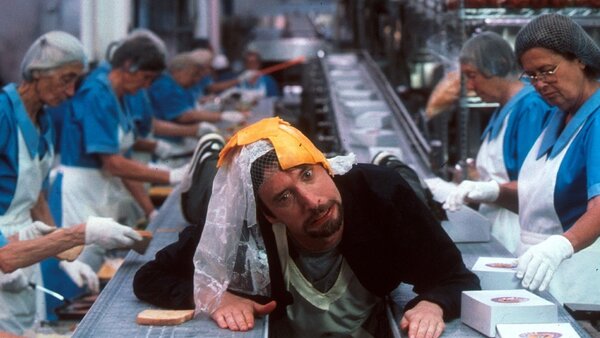
When it released in 2001, Tom Green's surreal black comedy Freddy Got Fingered was near-universally panned by critics, some of whom called it the worst film they'd ever seen, before it went on to win five Razzie Awards, including Worst Picture.
Yet even on original release, there were those precious few who saw something.
Critic Roger Ebert, who panned the film, nevertheless had an inkling that it might be re-evaluated some day, semi-jokingly saying, "The day may come when Freddy Got Fingered is seen as a milestone of neo-surrealism."
And while Freddy Got Fingered is still highly contested, it has enjoyed something of a wider appreciation in more recent years, as the art of anti-comedy has become decidedly more popular in the mainstream.
The film's defenders argue that its relentless vulgarity is itself an act of absurdist rebellion, and that Green is basically mocking the very fact that a studio gave him $14 million to make it in the first place.
At the time of its release, Freddy Got Fingered was so far away from the glossy, big budget comedies critics and audiences expected to see, but as comedy itself has changed over the decades, Green's film has morphed into a beguiling curiosity, even if many might understandably still detest it.
3. Network
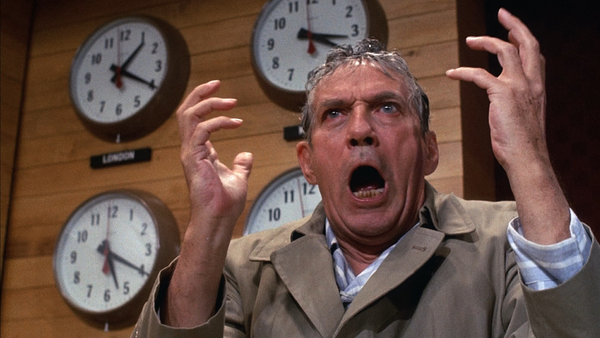
Sidney Lumet's Oscar-winning 1976 masterpiece Network is quite arguably one of the greatest films of all time - a deliciously clever and prophetic satire which foresaw the trend of news transforming into entertainment and lampooned media corporations' tireless pursuit of ratings at whatever cost.
Network has remained impressively relevant for almost an entire half-century, no matter that the world has been reshaped by the Internet in the interim.
The news delivery system itself may have changed, but Network's themes about messaging, power, and groupthink have only become more insidious in the era of social media.
Network's savage depiction of outrage content feels more topical than ever at a time where algorithms reward negativity and vocal ire over positivity and grounded, considered analysis.
And of course, there's the fact that social media has made the reliability of information so terrifyingly muddy - something Network itself explores through the lens of linear TV.
The more that media itself shapeshifts and develops more nefarious ways to manipulate viewers, Network is only likely to feel even more ahead of its time.
2. Jennifer's Body

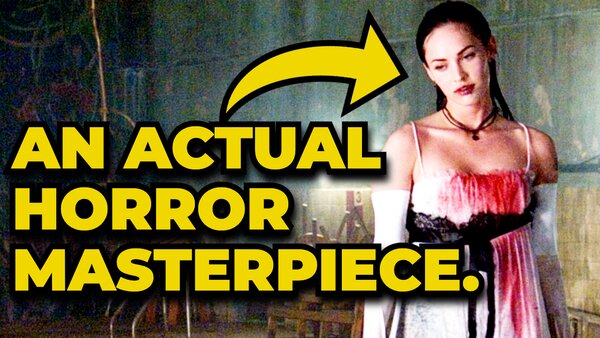
When the Diablo Cody-penned horror comedy Jennifer's Body was released in 2009, it received predominantly mixed reviews, with many dismissing it as a shallow, trashy romp soon to be forgotten.
But the Megan Fox-starring film refused to go away, and ended up enjoying something of a major re-evaluation in the years since its release, with authors praising the film for its distinctly queer, feminist themes, given the relationship between Fox and Amanda Seyrfied's characters, and also that Jennifer spends most of the movie violently lashing out against violent, abusive men.
Now of course, Jennifer's Body has always been about these things, but the film ultimately had to wait for the world to mature a little, to pay closer attention and catch up to what it was saying all along - a process galvanised in the wake of 2017's MeToo movement.
Given that it came and went without much fuss upon original release, it's fascinating to observe the second life it's had in more recent years - particularly as it pertains to the recontextualisation of Fox's career during the late 2000s.
1. American Graffiti
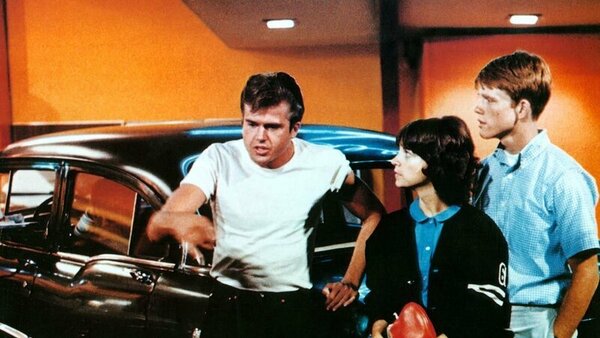
And finally we have 1973's American Graffiti, the second film helmed by George Lucas and his only self-directed project that wasn't a sci-fi movie.
Rather, American Graffiti is a coming-of-age comedy set in 1960s California, focusing on a group of teenagers and their shenanigans over the course of a single night.
Though extremely well-received at the time of its release, even landing Lucas his first of two Best Director Oscar nominations, there's an argument to be made that American Graffiti has only become an even better movie with age.
In a 2022 review of the film, none other than Quentin Tarantino very persuasively argued that, like many movies rooted in nostalgia for a bygone era, Lucas' film has actually only gotten better as more time has passed from its 1973 release.
Basically, with each passing year the era it depicts feels ever more dreamlike and unknowable to most of the people watching - namely those who weren't alive in the 1960s, who on a long enough timeline will eventually be everyone.