10 Movies That Start At The End
Where to begin? The beginning? No that’s too obvious.
If somebody asked you to detail an average day in your life, it would be somewhat unusual for you to start from the moment you crept into bed at night and then explain how you got there. That's because it is. The traditional structure for a story to follow is in chronological order; to start at the beginning and finish at the end. That's difficult to dispute. Ever since storytelling began, through folk tales and mythology, this has been the natural course to take as it parallels the chronology of real life. This method takes the form of a journey, and just as events do in reality, they unfold until a conclusion is reached (or not). In Christopher Booker's 'The Seven Basic Plots', which analyses everything from 'The Iliad' to 'Star Wars' and beyond, each of these seven plots initially follow these rules. Rules of course, were meant to be broken. History has always produced the avant-garde, but in recent years there has been a growing admiration of those who are willing to break through these restraints of conformity. With the rise in popularity of psychological blockbusters such as 'Inception', the audience, it would seem, increasingly want more from their movies (and plots) in general. These films are examples of how juggling the chronology of a story can create something truly special.
10. Crash
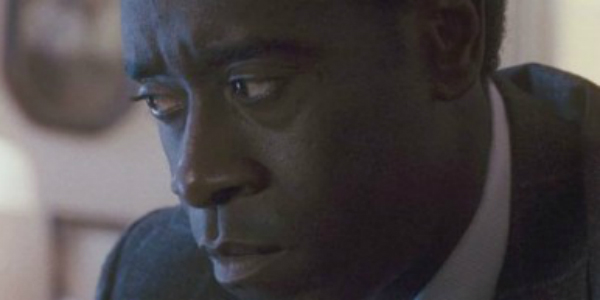
'Crash' is one of the most culturally significant movies of the 21st Century. Set against a backdrop of modern day Los Angeles, the film follows a number of characters in various situations and explores the social and racial dilemmas involved with each.
The Start The film rather appropriately begins with a crash; a car crash to be more specific. The two drivers, both female and both from contrasting racial backgrounds, hurl abuse at one another whilst a black detective attempts to calm the situation down. Whilst doing this, he discovers a body by the side of the road.
The End The identity of the body is revealed as the detective's criminal brother at the end of the film. He is shot by his white criminal associate when he mistakes him reaching for a religious statuette in his pocket for reaching for his weapon. The action was intended to be a humorous comparison to his matching dashboard ornament, but one that he pays for with his life. The killer panics at his error and dumps the body at the side of the road.
9. American Beauty

'American Beauty' stars Kevin Spacey as Lester Burnham: a man in the centre of a serious midlife crisis. He despises his job, his marriage is falling apart and to top it off, he develops an obsession with Angela, his teenage daughter's best friend; an obsession that clearly cannot materialise.
The Start The film begins with a home video of Lester's daughter and her boyfriend. His daughter claims that she wishes her father was dead, an act that her boyfriend gladly offers his services for. Lester then begins the narration of the film himself; a narration that evidently takes place from beyond the grave, as he states immediately that he will die soon. At first, knowing Lester's fate adds to his character's personality. His attitude towards everything grows more and more nonchalant and he notably states he has nothing to lose.
The End At the end of the film however, the fact that we know this simply augments the sympathy we feel towards Lester. Just when the temptation to act upon his sexual desires begins to consume him, Angela confesses she is a virgin, stopping him dead in his tracks. This is the moment his feelings for Angela cease to be anything other than like that of a father. He thinks about his actions and smiles at a family photograph. The camera pans and he is shot.
8. Pan's Labyrinth

Guillermo Del Toro's morbid yet visually stunning fairy-tale, set amongst the ashes of the Spanish Civil War and the rise of the Francoist regime, tells the story of a young girl named Ofelia, enamoured by a mythical faun and his position as guardian over a nearby abandoned labyrinth.
The Start The first shot we see is of a dying Ofelia, struggling for breath, with blood streaming down her face; a haunting (and rather tone-setting) opening shot you might say, especially as Ofelia is just eleven years old at the time. The story is then told in the form of a flashback following the tasks that Ofelia undertakes to prove to the mysterious faun that she is worthy to reign over his magical world, whilst her vicious stepfather and his army fight back at the republican insurgents rebelling against the new regime.
The End In the breath-taking conclusion to the film, Ofelia, clutching her new-born stepsister, runs from her gun wielding stepfather into the depths of the labyrinth. When she reaches the centre she is met by the faun, who requires the blood of her innocent stepsister to open the door to the underworld. She refuses and is shot by her stepfather. As the blood drips from her face and into the opening to the underworld, she is seen as the queen of her kingdom, proving that her last task was a trick to ensure she would rather her own life is taken than the life of an innocent.
7. Quadrophenia
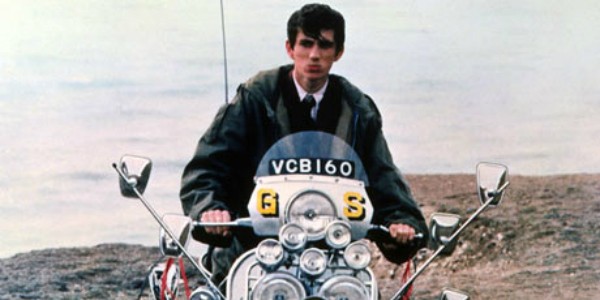
In this seminal 1979 film (based on The Who's rock opera of the same name), which tackles the issues and disillusionment of growing up, Phil Daniels plays Jimmy, a young mod. Jimmy enjoys nothing more than popping pills and riding his scooter, but he soon starts to see through the veil of the mod culture that has surrounded him.
The Start The film begins with a shot of Jimmy walking back from the edge of a cliff; a shot that is completely unexplained until the very end of the film.
The End When Jimmy discovers his idol, The Face (Sting), working as a bell-boy in a local hotel he comes to a realisation: the ideologies his brethren hold and their contempt for the conformist way of living are fraudulent. He steals The Face's scooter and rides it off a cliff in a scene that divided an audience. Did Jimmy jump or did he not? The answer of course can be found in that very opening shot.
6. Forrest Gump
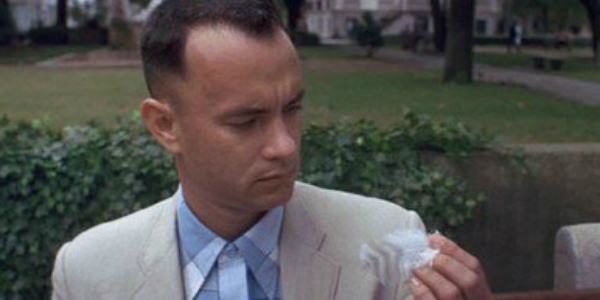
'Forrest Gump' is arguably Tom Hanks' finest performance. In Robert Zemeckis' Academy Award winning fictional biopic, the loveable Forrest tells the fascinating story of his life to various people that join him at a bus-stop in Georgia. The film is primarily made up of flashbacks, interspersed with conversations between Forrest and various consenting strangers. This is how the film differs from the way in which others may approach the use of flashbacks. Whereas most of these films may subtly use flashbacks and reveal this technique at the end of the film, 'Forrest Gump' is quite overt in its use of them and they are simply used to express Forrest's anecdotal approach to conversation.
The Start The film both starts and ends with a single feather, and in the opening scene the feather drifts down to a lonesome Forrest sitting on a bench. Whilst he waits for his bus, he begins telling his life story to a number of different people.
The End When his life story eventually reaches his current situation, he sets off to reunite with Jenny, the subject of his lifelong infatuation and the central character to pretty much all of his anecdotes. She reveals they have a son together and that she has developed an incurable illness. They marry, but she unfortunately passes away soon after due to an infection brought on by her illness, leaving Forrest to care for their child. Tears flow and the feather takes us slowly back up into the clouds again.
5. The Prestige
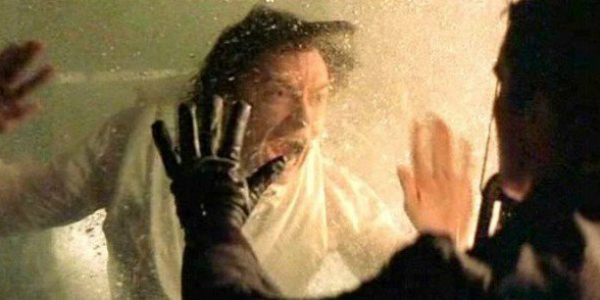
'The Prestige' is another of Christopher Nolan's mind bending psychological thrillers, telling of the jealous conflict between two rival magicians: The Professor, Alfred Borden (Christian Bale) and The Great Danton, Robert Angier (Hugh Jackman), in 19th Century London.
The Start The opening of the film sees Hugh Jackman's character drown in a tank of water as a trick goes horribly wrong. As the result of this, Alfred Borden is sentenced to death for his murder. The story then unfolds in the form of flashbacks, explaining how this came to be. When Alfred performs his newest trick, The Transported Man, it blows Robert's mind. He makes it his ambition to find out how he does it no matter what it takes. This ambition drives him to the laboratory of a certain Nikola Tesla (David Bowie), who he employs to build him a transportation device. What he gets in return for his money however, is much more than he bargained for.
The End In the closing scenes, numerous copies of The Great Danton are found by Alfred's twin brother (this is how Alfred had managed his version of the trick by the way!) in multiple tanks of water; a by-product of Tesla's transportation device. He soon realises the murder that Alfred was framed for was just nothing but the sacrifice of one of these duplications.
4. Eternal Sunshine Of The Spotless Mind
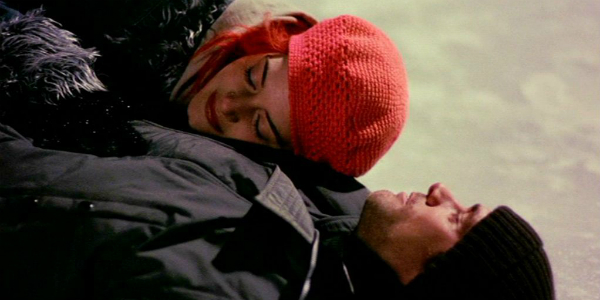
'Eternal Sunshine Of The Spotless Mind' is a romantic sci-fi comedy drama; not a genre that has been often explored in the past. Through the use of dark yet comical characters and scenarios, on top of his use of a meta-narrative plot, Michel Gondry succeeds in creating an unsettling atmosphere whilst still producing a truly moving picture. The film follows Joel Barish (Jim Carrey) and his unusual relationship with Clementine (Kate Winslet).
The Start The film begins as sparks fly between the pair of them on a Long Island Rail Road. They immediately connect in a series of conversations that unfold in an almost fate-like manner.
The End As the non-linear narrative unfolds, it is discovered that this is not their first meeting; they had in fact already been through a two year relationship together. As the result of extreme difficulties in the relationship, Clementine had undertaken a new technological procedure in which the memories of Joel are removed from her mind. When Joel finds this out he also undertakes the same procedure. This becomes apparent at the end of the film, to the complete horror of both parties, when they discover documents and records detailing everything. They do, however, vow to give their relationship another try regardless.
3. Memento

Christopher Nolan's psychological thriller, 'Memento', has established itself in many eyes as one of the best films of the 21st Century. Since its release in 2000, it has received many accolades and has propelled Nolan's career to much higher places; most notably to his 'Dark Knight Trilogy' fame.
The Start The first scene of the film is completely in reverse, beginning with the protagonist, Leonard, holding a Polaroid photograph of a dead body. The Polaroid returns to its undeveloped state and is placed back into his pocket. A bullet is then sucked from the floor back into the barrel of his gun and a glimpse of his victim is shown; Teddy, a prominent character in the series of flashbacks that lead up to this moment.
The End Teddy explains that he is a cop who worked on the case that resulted in Leonard's loss of memory. Whether this explanation is to be believed is questionable and the more that Teddy 'helps' Leonard in his investigation, the more Leonard discovers that inevitably puts Teddy directly in the firing line.
2. Sunset Boulevard

'Sunset Boulevard' is the story of Joe Gillis (William Holden), a screenwriter who is dragged into the warped world of a faded silent movie star: Norma Desmond. Living a fabricated take on reality, aided by the deceptions of her trusty servant, Max, Norma Desmond clings to her former past with everything she has whilst sinking deeper and deeper into insanity.
The Start The film begins with the voice of Joe Gillis, narrating his current (and certainly not ideal) situation: lying face first, dead in a swimming pool. What both proceeds, (in terms of visual narrative) and precedes (in historical chronology) this event is the story of how this came to be.
The End As Miss. Desmond's feelings toward Joe turn from purely business to a twisted obsession and his secret affection towards his new co-writer, Betty, comes to light, her craziness hits an all-time high and she shoots Joe dead. This very act fulfils her desires and despite sacrificing her sanity in the process, Norma Desmond is famous once more.
1. Pulp Fiction
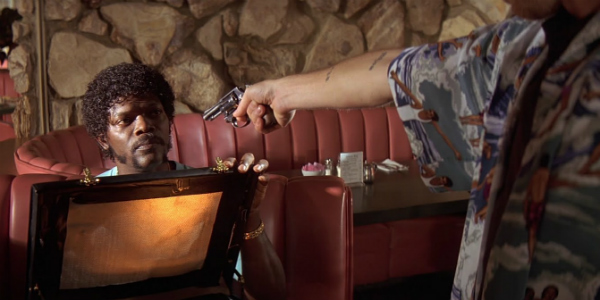
'Pulp Fiction' is Quentin Tarantino's undoubted masterpiece. The film is a black comedy based around the criminal underworld of Los Angeles. It weaves several stories together and presents them in a non-linear story arc. This film differs in its use of backwards chronology, as where the film may start and end with the same scene, the story does not. This use of, not reverse chronology, but rather a muddled chronology was one of the reasons that this film was almost never financed, but was also a defining factor in its stylisation and eventually its status as a cult classic.
The Start The opening scene takes place in a diner, in which a couple are discussing their business of robbery over food. They come to the conclusion that the very diner they are sitting in would be the perfect backdrop to their next escapade; a conclusion that doesn't play out until the very end of the film.
The End The couple's attempted robbery of the diner is brought to a halt when they request that Jules hands over a briefcase he is guarding at his table. Of course, the importance (and un-hand-over-able-ness) of this briefcase is highlighted throughout the whole film, resulting in an intense finale between Jules, Vincent and the marauding couple. Suffice it to say, the couple do not leave with the briefcase, but they do leave with their lives. And some money.