10 Movies That Were Great Until Their Final Scene
You were doing so well...

Nobody likes bad movies. They're boring, difficult to watch and, worse, they take up precious cultural space where much better movies could go.
There's potentially nothing more frustrating, though, than standing by a great film to the end only to find the director couldn't stick the landing. Not every great movie has the perfect ending - there are even some classics that don't entirely satisfy at the close (No Country For Old Men's anti-climactic non-showdown, for one, still manages to bother some fans).
In some instances, however, a poor or just awkwardly-fitted ending can be so detrimental to the rest of the film that it actively spoils everything you've seen before it. What faith you put into the movie and what enjoyment you had can be dashed away in an instant of bad judgement, and that great movie you were watching suddenly becomes another run-of-the-mill one.
Often, such off-kilter endings come with the filmmaker's desire to wrap things neatly up, or from studio meddling forcing the film to swerve into a different kind of movie right at the very end. When the effect is so jarring, it can make you question everything that's been before and dismiss a movie that could have been great.
10. (500) Days Of Summer

The Film: A twist on the romantic comedy, where the boy, Tom (Joseph Gordon-Levitt), doesn't end up with the girl of his dreams (Zooey Deschanel) after finding out they're simply not compatible. After that revelation, you'd assume (500) Days Of Summer has its bittersweet ending, with Tom starting over by trying to break into the architecture field and begin his dream job, and without him feeling the need to validate himself by entering a new relationship. Besides, by this late stage it seems he feels fairly ambivalent about relationships anyway.
Where It All Goes Wrong: Tom meets a girl at his interview who he asks on a date, gets her name - she's called Autumn (ugh) - and smugly winks at the camera, suggesting a whole new relationship is on the cards. This entire scene feels tacked-on, miles away from the smart, subversive movie that came before it and a sudden descent into generic rom-com territory. It's also a bit of an about-face to suggest the shy, awkward Tom, who's just been devastated by 500 days of romantic agony, is about to jump headfirst into another relationship with a girl whose name symbolically represents a step forward from his last girlfriend.
9. Love Is Strange

The Film: When long-term partners Ben (John Lithgow) and George (Alfred Molina) marry, George is fired from his job and the pair are forced to live with friends at opposite sides of New York to make ends meet while they search for a smaller apartment. Ira Sachs' film is sweetly romantic, and it becomes achingly so as the feature moves along - as Ben and George spend more time apart, the desire to see them back together again grows. Finally, they get their apartment.
Where It All Goes Wrong: Ben dies off-screen, meaning the audience is not just denied the possibility of seeing him and George together again, or of seeing them attain that thing the couple waited so long to attain, but Sachs kills one of his leads off so callously the viewer doesn't even get a last glimpse of him. It feels oddly harsh to end with George alone in the apartment he wanted to share with his husband, almost as though the director was hoping to wring those last few tears out of the viewer just because he could.
8. The Village
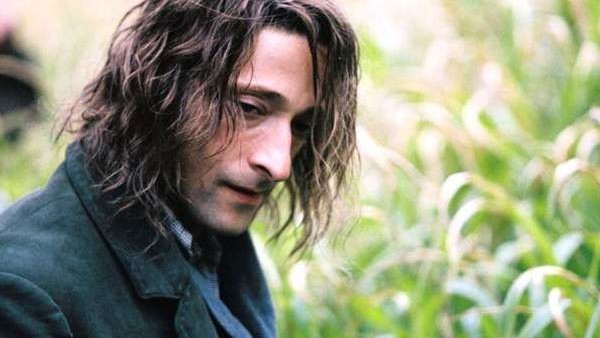
The Film: M Night Shyamalan's period horror, set in 19th century Pennsylvania, about a small village apparently terrorised by a monster that lives in the surrounding woods. Ivy Walker (Bryce Dallas Howard), the blind daughter of one of the village elders, decides to tackle the creature head-on by venturing into the forest to confront it, after hearing that the 'monster' may be a ruse to keep people from leaving the village.
Where It All Goes Wrong: A poorly-handled, ill-advised twist reveals the monster was Adrien Brody in a costume all along and that the villagers are living a 19th century life in a 21st century world, with modern world existing just beyond the forest. The double twist renders everything we've already seen utterly pointless. After Signs, which also ended on a sour note (extraterrestrials, which are apparently made out of bad CGI, can be destroyed by Joaquin Phoenix with a baseball bat and glasses of water left lying around a house by his little sister), The Village marks the moment at which audiences began turning away from Shyamalan, so bad was the ending.
7. I Am Legend

The Film: Sci-fi blockbuster about the last man on Earth (Will Smith), living out his days in New York dodging vampires as he tries to come up with a cure. The film is a canny thriller and surprising character study, focused on a lead you never in a million years expected to see in a blockbuster: a completely isolated, emotionally wrecked, possibly insane (watch the way he talks to those mannequins) Will Smith, giving one of his great performances precisely because he has no one to bounce off and he's forced to channel his charisma in other ways.
Where It All Goes Wrong: The film admittedly doesn't all work before it reaches the end: the needlessly CGI'd vampires - done using actors in makeup and latex on-set, who were later painted over with pixels in post-production - threaten to undermine the whole affair. But that's nothing compared to the climax, in which Smith's scientist sacrifices himself in order to allow two survivors to escape to a human colony that was waiting just a few miles away the whole time.
6. The Wolverine
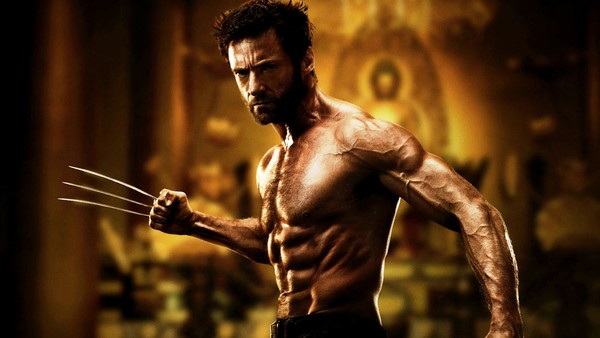
The Film: Mature, heartfelt and finely-acted (thanks for that go to quality actors'-director James Mangold) for the best part of the film, this is the standalone Wolverine film fans wanted - it's not just about spectacle, special effects or relentless badassery, but character. And most importantly the one character that's arguably best-loved of all the X-Men. It's not perfect, but this X-Men spin-off - adapted from one of the great Wolverine stories - is the best anyone could have hoped for from a PG-13 follow-up to the widely-lambasted Origins movie.
Where It All Goes Wrong: The old friend of Wolverine's that lured him to Japan fights Wolverine inside giant, samurai-styled end boss armour in order to trap the mutant and absorb his immortality - something the character could have done earlier in the film with less difficulty, and without involving so much brainless destruction. A quieter showdown between would've been more fitting with the overall tone, but this lame, loud finale has no regard for what's come before it, and wastes what potential placing lone wolf Wolverine in a land of honour had.
5. Kill Bill Vol. 2

The Film: Part two of Quentin Tarantino's east-to-west revenge epic, Kill Bill Volume 2 is the movie in which wronged antihero The Bride (Uma Thurman) finishes off the last of head honcho Bill's (David Carradine) goons in her quest to finally reach the main man himself. At the end of the second part, which is chock-full of trademark QT dialogue and a major action set-piece set in a trailer, The Bride discovers her true identity, tracks down Bill, and faces off against him in one final duel.
Where It All Goes Wrong: The people on The Bride's hit list die like this: O-Ren Ishii has the top of her head sliced off, Vernita Green is beaten and has a knife thrown at her heart, Budd is deceived and bitten to death by a snake, Elle Driver is left blind and at the mercy of a black mamba, and Bill, the number one target in the whole film, is prodded to death. After four hours of waiting, there is no great battle, nothing that even tries to reach the heights of Volume 1's House of Blue Leaves sequence - The Bride simply uses a special technique and pokes Bill five times in the chest, giving him a heart attack. Talk about anti-climax.
4. Fury

The Film: Fury is a grim war-as-horror film, in which a tank crew led by Brad Pitt's cynical Wardaddy must navigate through German territory at the tail-end of WWII, with Hitler's declaration of Total War seeing every man, woman and child in the country become a potential threat to invading Allied troops. David Ayer's film is unsparingly brutal, right up until its last scenes, when the crew of the Fury face down an elite unit of German soldiers alone, in a hellish standoff full of fire and blood.
Where It All Goes Wrong: With every member of the crew dead except for Wardaddy and Logan Lerman's Norman, and with enemy troops approaching the tank to finish off whoever's been decimating their comrades, it doesn't look good for the last two survivors. Then Wardaddy reveals there's a secret hatch underneath the tank that you never knew about - just as a German grenade is thrown into the Fury to finish Wardaddy off, Norman escapes. When Norman's discovered below the vehicle by an enemy soldier, the soldier simply keeps quiet and lets Norman off. It feels like a Hollywoodised ending to a perfectly nasty film.
3. The Prestige

The Film: Mystery thriller and riveting study of obsession from Christopher Nolan, about warring magicians Alfred Borden (Christian Bale) and Robert Angier (Hugh Jackman) trying to get one up on each other in 19th century London. Having travelled to his American homeland to perfect his new trick, Angier returns to England to show off his 'Real Transported Man', whereby he appears to be transported from one end of the theatre to the other in no time at all.
Where It All Goes Wrong: Nolan chooses to leave no doubt in the audience's mind with The Prestige (also see: The Dark Knight Rises, in which the director intriguingly implies Bruce Wayne may still be alive, before he can't take it any longer and just straight-up shows the guy), spelling everything out and switching the film from a mystery thriller into science fiction with the very last scene. At the end, you discover Angier has been cloning himself all along in order to pull off his new trick, meaning all the hints that the truth behind the trick is something more explicable than 'real magic' comes to nothing.
2. The Lord Of The Rings: The Return Of The King

The Film: The third chapter in Peter Jackson's The Lord Of The Rings saga, the Oscar-winning fantasy epic to end all fantasy epics, The Return Of The King is an appropriately bombastic, action-heavy trilogy-capper. Having journeyed from one end of Middle-Earth to the other, the group of heroes that the audience has come to love carry out their various missions, ridding the land of Sauron and his armies of darkness by ultimately destroying the One Ring.
Where It All Goes Wrong: It's not the one ending - it's the series of endings that's the problem. Almost as if Peter Jackson can't bear to say goodbye to the universe he's created, The Return Of The King's post-battle climax seems to go on forever, giving a breakdown of almost every character's fate after the Ring's destruction and then carrying on until it feels like you're watching a supercut of several movies ending at once.
1. A.I. Artificial Intelligence

The Film: Steven Spielberg's dystopian science fiction take on Pinocchio features Haley Joel Osment as a robotic humanoid named David, who finds himself adopted by a family grieving for their comatose son. When the son awakes and David is rejected, he goes on a dark, fairytale-like journey across an America changed by global warming and class division, with the fairytale finally coming to an end when David becomes trapped underwater, asking wishes of a statue of the Blue Fairy as his power source runs down.
Where It All Goes Wrong: The film cuts to 2,000 years later, when advanced 'mechas' come to rescue David and grant him his wish of bringing his 'mother' back to life for one day, so she, David and his walking, talking teddy bear can spend one joyous moment together. Spielberg has argued that the ending on show in this film is the one that original director Stanley Kubrick wanted, but it's hard to believe when Spielberg has so often fallen victim to shoddy ending syndrome (see also: Schindler's List, Saving Private Ryan, Minority - the list goes on). Truly, Spielberg's biggest flaw stops his own film from becoming a masterpiece.
Which great films do you think turned in their final scene? Let us know in the comments below.