10 Obscure Background Movie Clues That Explain Everything
Titanic offered a perfectly good explanation as to why Jack didn't climb on the door.

Perhaps now more than ever, movies come under intense, painstaking and obsessive scrutiny. There are pages online dedicated solely to finding plot holes and pointing out aspects of films that don't work or don't make sense.
These things are going to happen, simply because no movie can be perfect and in some cases any potential 'mistake' is judged not to be a major distraction. This also means that it's not uncommon for an audience to be left with an unanswered question or two, or a real headscratcher of a moment once the credits start rolling.
Film narratives can vary greatly in their intricacy or their simplicity, however, there is always room for a detail that doesn't get noticed. Even if this detail turns out to be vitally important with regards to answering questions come the end of the story.
Characters' whereabouts and motivations, the truth behind a certain decades-old mystery, and even one of the most famous perceived plot holes in cinematic history were all explained at the time with something that most people completely missed.
10. Electro Knew Who Spider-Man Was - Spider-Man: No Way Home

One of the criticisms that have been made of Spider-Man: No Way Home since its release in 2021 is that there were too many villains - and there were. The story could have done without any one of Lizard (Rhys Ifans), Sandman (Thomas Haden Church), or Electro (Jamie Foxx), particularly when it seemed as though the latter had no right being there anyway.
The way that Doctor Strange's (Benedict Cumberbatch) spell worked was that it brought villains from across the multiverse who knew Spider-Man's true identity to Earth-616. Four of the villains in No Way Home learned that Peter Parker was Spider-Man before their deaths in their respective franchises, but not Electro.
Max Dillon died in The Amazing Spider-Man 2 before learning his rival's secret, but there is one line of dialogue that arguably explains why he was brought over by the spell. As he told it, he was stuck in the grid absorbing data when he was pulled to a different universe, which could have come in the form of just about anything.
Within the unlimited realms of the internet, there could have been the slightest bit of proof that Spider-Man's name was Peter Parker, whether it was a snippet of footage, or maybe the fact that Gwen Stacey (Emma Stone) called Spider-Man Peter pretty damn loudly during the final battle with Electro. He didn't need to know who Peter Parker was, which is why he could still be surprised when Peter took his mask off, all he needed to know was Spider-Man's name. If Tony Stark (Robert Downey Jr.) could figure it out, so could a guy living in the grid.
9. Mr. Pink Was Caught - Reservoir Dogs

There aren't many better directorial debut outings than Quentin Tarantino's Reservoir Dogs. What's more impressive is that arguably the most important event of the movie, the heist that informs the rest of the story, doesn't even happen on screen.
Everything that happens from the opening scene in the diner onward is because of the diamond robbery orchestrated by Joe Cabot (Lawrence Tierney), but this isn't the only important thing that Tarantino didn't show his audience.
The fate of almost every character is cut and dry, in that they all die, other than Mr. Pink. After the shootout between Joe, Eddie (Chris Penn), and Mr. White (Harvey Keitel), Steve Buscemi's character grabs the diamonds and gets out of dodge. What happened to him next is seemingly a mystery until you watch the movie with the subtitles on or with the volume turned way up.
After Mr. Pink leaves, in the background of Mr. White cradling a dying Mr. Orange (Tim Roth), police sirens can be heard, as well as very faint gunshots only really confirmed by the subtitles. It would seem that none of the men who came together to rob the diamonds in the first place got to keep them, as it's highly suggested by this that Mr. Pink was caught red-handed.
8. Peter Quill's Translator Implant - Guardians Of The Galaxy

Throughout the vastness of the Marvel Cinematic Universe, there have been multiple different worlds and races introduced across the galaxy. One thing the majority of them seem to have in common is the use of the English language, no matter how far from Earth they are.
Naturally, it's something that makes communication easier for the purposes of the audience watching the movie, but what about an explanation within the context of the narrative? Why exactly do most places throughout the galaxy speak English as if they were on Earth?
There is a blink-and-you'll-miss-it detail in Guardians of the Galaxy that may go some way to explaining this. When the future Guardians are arrested on Xandar, they each have something of a wrap sheet come up with some key details about them. One of Peter Quill's (Chris Pratt) is that he has a translator implant, suggesting that those around him aren't necessarily speaking English, but rather he has a device in his neck that automatically translates it into English for him.
Though this is just one character, it opens the door for countless others to potentially have one fitted, allowing for almost universal communication. It doesn't quite explain why Quill wasn't able to understand the animal creatures on the High Evolutionary's (Chukwudi Iwuji) Counter-Earth, but it may be something as simple as theirs being a language that wasn't compatible with the implant.
7. Buddy's Unreliable Memory - The Incredibles

Part of the reason why The Incredibles is so enjoyable is the villain. Though Syndrome's (Jason Lee) ultimate plan was to destroy all superheroes in a bid for adoration and control, he was spurred on by a very personal hatred of arguably the greatest superhero of all, Mr. Incredible (Craig T. Nelson).
What did Mr. Incredible do that was worth such a grudge? When Syndrome was a child, back when he went by Buddy, he wanted to be Mr. Incredible's sidekick, but he was not allowed. He was told to go home, something that stuck with him for many, many years.
Though he could have handled the situation better, Mr. Incredible was really trying to keep the young Buddy out of danger. At the time he was attempting to foil supervillain Bomb Voyage, who aptly liked to blow things up, and the longer Buddy was there, the more danger he was in. It's a very reasonable explanation for having his request to become Incrediboy rejected, so why did Buddy still hold such a grudge decades later? Wouldn't he have eventually grown out of such resentment?
Simply put, that's not how Syndrome remembered the conversation. Though Mr. Incredible had Bomb Voyage in his hands when he told Buddy to go home, when he looked back at that moment, the villain was nowhere to be seen. This suggests that Buddy never truly realised or understood the danger that he was in, even as an adult. All he remembered was the rejection, rather than the fact that he could have been killed at any moment.
6. Will's Quarantine - Dawn Of The Planet Of The Apes

With Rise of the Planet of the Apes, director Rupert Wyatt kicked off an exceptional trilogy and introduced an incredibly iconic and memorable character in Caesar (Andy Serkis). The three movies tell Caesar's story from birth through to his death, with one of the most important characters along the way being James Franco's Will Rodman.
It was Will's experiments that ultimately kicked off the Simian Flu virus that wiped out the majority of humanity. After he said goodbye to Caesar at the end of Rise, there was absolutely no mention of him in Dawn of the Planet of the Apes. Caesar visited his house, and he was seen in a picture frame, but outside of that, his fate went completely unaddressed.
Was he one of the many who contracted and died of Simian Flu? Was he one of the few humans that managed to survive this long? Did he get out of San Francisco quickly, unaware of the global scale of the outbreak?
Only real eagle-eyed viewers would have picked up the only hint given in the film as to what happened to Will. During the scenes set at his abandoned house, a yellow X can be seen by the door, which would seemingly point to a quarantine, heavily suggesting that he succumbed to the virus he played such a vital role in creating.
5. Anton Chigurh Found The Money - No Country For Old Men

No Country For Old Men is incredibly unique in that the majority of the events that take place aren't actually what the film is ultimately about. The bulk of the narrative is based around Anton Chigurh's (Javier Bardem) hunt for Lewellyn Moss (Josh Brolin) and the two million dollars he found at a drug deal gone wrong, but the real point of the story lies with Tommy Lee Jones' Sheriff Bell.
However, that doesn't mean that the chase between Chigurh and Moss is meaningless. It's something that is easy to get invested in, particularly when Javier Bardem portrays one of the most iconic and terrifying cinema villains of all time with his Academy Award-winning performance.
By the end of the film, there is rather a large thread left dangling, in that the bag of money that started the entire sequence of events isn't found. Moss threw it over a fence with plans to retrieve it later, but didn't live long enough to follow through with the plan. So, what happened to all that money?
Though it isn't explicitly confirmed, there is a scene right at the end of the film that suggests Chigurh found it. When he is in a rough car accident, he breaks his arm. Not wanting to go to the hospital, he pays a nearby kid $100 for his shirt to use as a makeshift sling. There aren't many people who would, or who could, pay $100 for a shirt on the spot like that, but a man who has just come into two million dollars cash certainly fits the bill.
4. The Sneaky T-Rex - Jurassic Park

In the original Jurassic Park, there were two main threats to the visitors on Isla Nublar. These were the Tyrannosaurus Rex and the Velociraptors, both of which would have ripped any human to shreds that they could get their claws into.
In one of the most iconic shots of the entire movie however, the T-Rex burst onto the scene in the Visitors Centre, and saved Alan Grant (Sam Neill) and co. from the Velociraptors. It's an incredible moment, but this Deus Rex Machina has raised two major questions. How did she get into the Visitor's Centre in the first place, and how did no one hear her?
There are however answers to both questions, you just have to know where to look. During the raptors' pursuit toward the end of the film, at 1:38 in the below video, one of them comes through a polythene sheet hanging from the scaffolding in the Visitor's Center. During the T-Rex attack just seconds later (2:10), that same sheeting can be seen torn and flapping in the wind in front of a gap in the wall to the outside more than big enough for the Rex to walk through.
Then there is how quiet the behemoth was. Earlier in the movie, the water in the cup rippled at the T-Rex's movements before she was even visible, but she also proved that she could be quiet when necessary. As Alan and the kids watched the herd of Gallimimus run past them, the Rex came out of nowhere without any of them knowing she was there. Using this same skill in the Visitor's Centre, it would seem she could in fact be sneaky when hunting her prey.
3. Charles Foster Kane Wasn't Alone - Citizen Kane

Regardless of how well it is revered, it's a widely held belief that the entire premise of Citizen Kane is built on a plot hole. The story revolves around a reporter digging to find out what Charles Foster Kane's (Orson Welles) last word before he died meant, but there's an apparent issue.
It doesn't appear that there was anyone with him when he died, so how would anyone have known what he said? It's easy to see why such a misconception has been born.
Kane's death is shown in the opening scene of the movie, where he drops a snow globe and whispers "Rosebud", the word that begins the entire mystery, but there is no one else shown in the scene with him. The shots were really only close-ups of his mouth and the snow globe before a nurse entered to find him dead. However, although this suggests that he was alone, it is far from concrete evidence.
In fact, during an interview with reporter Jerry Thompson (William Alland), Kane's butler Raymond (Paul Stewart) recounts the events of his death exactly. After he said Rosebud and dropped the snow globe, he said nothing more and Raymond knew he was dead. It's made perfectly clear from this brief conversation that Kane's final word was heard by his butler, even if he wasn't shown in the scene himself.
2. It Was About Buoyancy, Not Space - Titanic

Titanic is one of the biggest movies ever made, making more money than almost every other picture ever released, and having an impact on pop culture like few others. It also boasts one of the most infamous perceived plot holes of all time. Namely, Jack (Leonardo DiCaprio) totally could have fit on the floating door next to Rose (Kate Winslet) and saved himself.
However, those who point out such a supposed flaw must have missed an important moment in the build-up that proves the size of the door isn't the issue Jack and Rose are facing, but rather their buoyancy on it together.
With Rose already on, what many seem to miss is that Jack tried to climb on too, but the door started to flip in the water, and would have knocked Rose off if he had followed through with the idea. He valiantly told her to stay on, while he stayed in the freezing water to save her.
Ultimately, it doesn't matter how much space there is if it can't carry the weight of two people. If he had climbed on, they both would have fallen straight off, so he decided to make the ultimate sacrifice.
1. Deckard's Eyes - Blade Runner
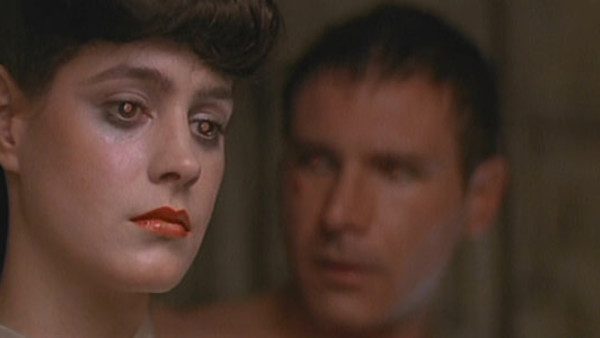
One of the biggest ever-lasting questions in cinema has been whether Harrison Ford's Rick Deckard was a replicant or not in 1982's Blade Runner. Even after Blade Runner 2049 came out 35 years later, there was seemingly no confirmation within the context of the movies themselves, but there have been clues.
Deleted scenes have pointed to Deckard's true status as a replicant, as well as both Ridley Scott and Harrison Ford going on record to say that he is. But you don't need to watch anything other than the theatrical release to realise that he was a replicant all along.
There was an ambiguity hovering over Deckard throughout Blade Runner, from his feelings towards replicants to Rachael (Sean Young), the replicant he ultimately fell in love with, outright asking if he had taken the Voight-Kampff test that helps sniff them out. The fact that he didn't even answer the question was highly suspect, but the key to it all is in the eyes.
There is next to nothing to visually tell apart a replicant from a human, which was kind of the point, however, the eyes can be a giveaway. Throughout the film, the eyes of several replicants glowed an unmistakable golden glow, as did Deckard's in one particular scene. It is a blink-and-you'll-miss-it moment, but once you see it there is no mistaking it. Deckard undeniably has the eyes of a replicant.