10 Perfect Movies With One Glaring Flaw
"We really need to make the audience think Frodo's died again." - Peter Jackson.

One of the most maligned parts of the Star Wars prequels is the inclusion of Jar Jar Binks, a ham-fisted attempt at injecting comic relief into a franchise that was fun enough already thank you very much. Getting more screen-time than Darth Vader, his tiresome slapstick is often pointed at as the central problem that stops The Phantom Menace being awesome. Of course, while the Star Wars prequels aren't the abhorrent skidmarks on cinema some would claim them to be, their problems couldn't be fixed by simply removing everyone's least-favourite Gungan.
There are plenty of films out there, however, that are perfect, bar a handful of irritating problems. Film is, when done right, an artist's medium and that naturally brings with it problems; whether it's an idea that won't stand up to close scrutiny or goofs from human error there's always going to be an issue that slips through. If a film's good enough it can end up not really mattering, but that can't unwrite the truth that it's there.
Today we're going to look at ten movies that are, by all intents and purposes, perfect, but still have a central glaring flaw that, while not really damaging them, is unavoidably there. Tread carefully: you may never look at your favourite movies in the same way again.
10. Human Batteries Are Completely Inefficient - The Matrix

For a brief period in 1999 everyone thought trench coats were incredibly cool and that our world wasn't real. The Matrix's most enduring legacy may be the popularisation of bullet time, which quickly became tired after every movie in the early-naughties parodied it, but it offered more than relentlessly creative action.
Set in the distant future where humans have lost a war with machines and have been turned into batteries, farmed for energy and deceived by a complex computer program to think they're actually in the late-20th Century, The Matrix gave audiences a unique story that, while utterly bonkers, felt logically grounded. Now, The Wachowski's have stated the whole human battery concept was merely a plot device to get the Matrix up and running, but that shouldn't distract from the fact that the idea doesn't make any sense.
Most of the energy humans take in goes into keeping us alive, with the little waste expelled as heat. This should make it clear that, even in a totally vegetive state, a human wouldn't be a viable energy source. In fact (and sorry for going sciency), using the Second Law of Thermodynamics at best the machines could only ever get out the same as what they put in. They'd have been best wiping humans out and dealing with that scorched sky.
The original draft of the script had humans used as part of a neural network, with their brains adding more computing power, rather than as a source of energy, which would have made a little more sense (if being a little complex by 1999 standards).
9. The Joker Is A Man With A Plan - The Dark Knight

In The Dark Knight the Joker confronts a scarred Harvey Dent and exonerates himself from blame for the D.A.'s disfigurement by asking "do I look like a guy with a plan?" That line is treated as a succinct summary of the Clown Prince of Crime's character, but in fact it's the total opposite; to pull of all the destruction he reaps on Gotham Joker would have had to plan so meticulously it'd make John Doe's murders look off the cuff.
Throughout the run of the film the Joker's motivation meanders back and forth - first he wants to kill Batman, then he wants to have him unmasked, then he wants to keep him alive - making him appear to fit his self-described title as "an agent of chaos". But closer examination of some of his schemes reveals meticulous planning.
His master-plan to turn Harvey Dent into his wildcard relies on so many factors; getting caught by the police, getting locked in the MCU with his man-bomb, giving the location of the kidnapped Dent and Rachel Dawes at the right time and, most intricately, having Batman manage to get to Harvey Dent before he's blown sky high, but for the police to miss saving Rachel.
It's chaotic, sure, but the logistics of it show a Joker far from being "a dog chasing cars"; for vast swathes of the film he knows exactly what he's doing.
8. Buzz Goes Still When Andy's About - Toy Story
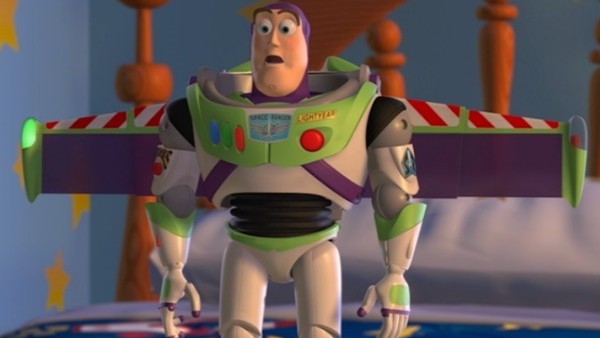
Toy Story takes the idea that toys come alive when people aren't around and runs with it. Building little communities within children's bedrooms who primarily desire attention, it's exemplar of how Pixar take well known concepts and turn them into something completely novel.
The first film in the animation giant's signature trilogy sees Buzz Lightyear, a new space action figure, destroy the status quo among six year old Andy's toys. Displacing the gangs de facto leader Woody as their owner's favourite toy, the confrontation is amped up by Buzz being totally unaware he's a child's play thing. It's such a strong idea that the series went back to it in some form in both sequels.
Unfortunately it doesn't stand up to scrutiny; if Buzz doesn't believe he's a toy, then why does he go still when Andy's around? We know toys are capable of moving in front of humans (Woody torments Sid later in the movie), so what's to stop the deluded space ranger from trying to make contact with the big alien/Andy? And while we're on that note, why does Buzz gag when Woody first removes his helmet; are we to believe the hyper-active Andy didn't try out every function on his new toy within five minutes of opening the box?
7. Obi-Wans Lies - Star Wars

Star Wars is a film so good it literally changed the entire way we made movies. In its creator's eye, however, it wasn't good enough. In the years since its ground-breaking release George Lucas has tinkered with the film and its sequels repeatedly in an attempt to 'fix' problems and move the movies closer to his ideal vision. His fixes tend to be rather cosmetic, consisting of quick-to-date CGI interspersed with the much more realistic models of the time, while some actual issues get left totally unchecked.
We're not in anyway endorsing any more changes to the Star Wars Trilogy (please no), but if Lucas was actually out to improve the movies, rather than just add a new gloss to justify a rerelease, there's bigger things he could have dealt with, like the massive logic cluster-fodder of everything Obi-Wan says in A New Hope.
When he first doles out the story of Luke's father it has Anakin "betrayed and murdered" by Darth Vader. Subsequent films introduce the concept of Darth Vader actually being Anakin, which makes the whole scene nonsensical. There's a vague attempt to logically explain the lies, but that's only buyable if you take it from a certain, very abstract, point of view; Obi-Wan lied, although not really because he chose certain words.
To be fair this is less a flaw with the film by itself and more the effect of having the story of Star Wars diverge from the original plan mid-way through the trilogy. That doesn't stop the scene in A New Hope being a bit of a cringer.
6. The Explanation - Psycho

Even by modern standards Psycho isn't for the faint of heart. Featuring a mentally deranged killer who converses with his mother's taxidermied corpse and 'becomes' her to murder his victims, it's a unsettling watch that makes taking a quick shower a tense experience.
Naturally it had the censors a little on edge. At the time there were strong restrictions on what films could show (if a man and woman were to share a bed there needed to be a certain number of feet on the floor), with scenes like the shower murder and, gasp, flushing a toilet, being particularly controversial. One scene that seems to exist just to appease the censors is the final explanation of what's been going on, with a psychiatrist breaking down Norman's psychological state.
It's as competently directed as the rest of the film, but there's no escaping that it's a sudden info-dump there just in case audience's didn't understand what was going on; tlhe scene is present in Robert Bloch's source novel, but it was included in the film on the insistence from the studio who were worried about the sexual connotations of a man dressing up in women's clothing.
5. Death Fake-Outs - The Lord Of The Rings

You can't kill your protagonist. It's one of those unwritten laws of blockbuster cinema. Sure, feel free to have them die at the very end if you're wanting to neuter any chance of a sequel, but otherwise they have to make it through events pretty unscathed.
This poses a big problem when a film tries to create some kind of tension; if your characters are in mortal peril there's no actual question of whether they'll get out alive. That's why modern superhero movies have made their heroes borderline indestructible - if the audience know you can't kill your characters you might as well have some fun with it.
Peter Jackson, however, hasn't got the memo. Throughout all his films, but most predominantly in The Lord Of The Rings, he throws in scenes where the main characters are at death's door despite there being no chance they'll actually die (unless they're Sean Bean). In The Fellowship Of The Ring Frodo is stabbed twice within a couple of hours and both times it's played as if his survival is actually in doubt. Heck, Jackson even added a subplot into The Two Towers were Aragorn was thrown off a cliff just to add some tension to that character's journey.
There's nothing inherently wrong with a death fake-out, but in The Lord Of The Rings it's so prevalent and thinly veiled that it quickly becomes tiresome.
4. The Guards Would Have Noticed Andy's Shoes - The Shawshank Redemption
In 1966, Andy Dufresne escaped from Shawshank prison. Shuffling through a tunnel he'd been digging for the past twenty years before crawling through half a mile of literal s**t, it's one of the most undeniably feel-good moments in movie history.
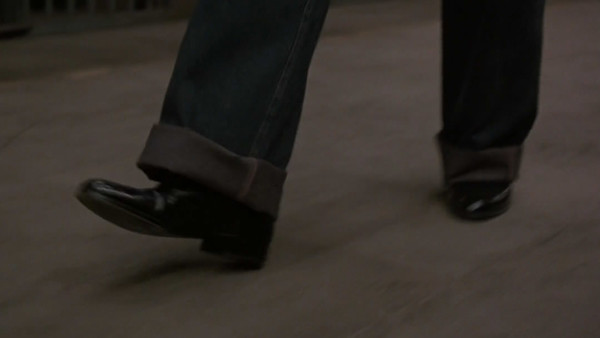
This is no ordinary escape, however. Andy, a banker in the real world, has been playing a long con; the escape isn't just him gaining his much deserved freedom, but also a massive f**k you to the prison itself. During his time locked up Andy's been helping the prison's warden launder vast sums of money and with his escape he blows the case right open, taking the money for himself and reporting the dodgy dealing to the police. Best of all, in a symbolic middle finger (and to give him a smart, non-prisoner look once he's out) he takes the wardens shoes. To do so, however, is the biggest risk of the whole escape, with Andy having to actually wear the freshly polished boots back to his cell, right past the guards.
The film explains away the out-of-character footwear in a one simple line - "how often do you really look at a mans shoes" - but it doesn't really work. You don't need to "really look" at someone's feet to notice something about their footwear's off. Wear out-of-place shoes in any situation and it'll stand out. For the guards to not spot Andy wasn't wearing his ragged ones is incredibly unlikely.
3. Keyser Söze Gives Away His Identity - The Usual Suspects
Because movie twists rely heavily on deception there's always a danger they can end up unravelling with obsessive rewatch of a film. While The Usual Suspect's final reveal (spoiler) that Verbal Kint is Keyser Söze is pretty airtight in this regard, it doesn't really make that much sense when you think about it.
The film kicks off in the aftermath of a shootout in San Pedro harbour that culminated in a tanker exploding, with a conversation between Kint, who escaped the fight, and Special Agent Dave Kujan telling the build-up in flashback. Through all this, Söze's plan is to maintain the mystery about his identity; the assault on the boat is his scheme to kill the one man who could identify him, while the police interview between Kint and Kujan is his attempt to push the identity Söze onto someone else.
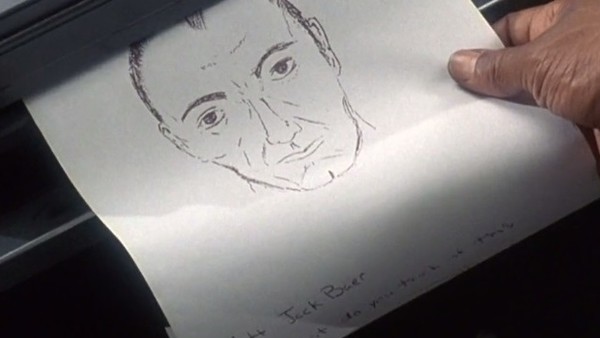
The problem is, the entire story told in that interview is built around various items in the room where the two are chatting, meaning Kujan quickly realises Kint isn't who he says he is, totally nullifying the film-long attempt by Söze to remain anonymous. He couldn't have known about the Hungarian survivor who provided a police drawing made it out of the explosion, but leaving all the clues for Kujan was totally out of character.
2. You Can't Kill In The Future (Unless You Can) - Looper

Looper's time-travel makes no sense. There, we said it. Making the plot-convenient time-rewriting of Back To The Future seem sensible, Rian Johnson's film features a fluid timeline where cause and effect are a little warped; if your future self is in the same time as you, removing a finger from current you suddenly removes future you's finger. But while it's utterly ridiculous, at least it follows its own set rules; once the concept's introduced it works in the same manner the whole way through. The same can't be said of The Terminator.
Not all of Looper's ideas are as consistent. The film is set primarily in the not-so-distant future where Joseph Gordon-Levitt kills people sent back from the not-so-distant-to-him future. The mechanics of why are rather basic; due to increased surveillance it's impossible to kills people in the future-future, so when the mob needs someone offed they nab then and send them back in time. OK cool, we got it. Now for ninety minutes of Joseph Gordon-Levitt turning into Bruce Willis.
Except this 'no killing in the future' rule isn't stuck to; when the hired goons come to take Bruce Willis back in time they accidentally kill his wife and cover it up by burning his house down. If that's all it takes to get away with murder why bother with a complex time-travel plot spanning thirty years?
1. You Can See The Helicopter In The Opening - The Shining

This is going to seem so bloody pernickety but because director Stanley Kubrick's obsession has become an enduring part of the legacy of his masterful, if loose, adaptation of Stephen King's novel's it just has to be mentioned.
The Shining opens with the camera hauntingly following a yellow VW driving along an isolated road. It's an unsettling opening to the film, with the music and gradual closing-in the car starting to build the film's intoxicating unease. It's not a perfect opening though; just in the corner of one shot before the titles roll, you can clearly see the shadow of the helicopter from which it's being filmed. That's just a goof, right? A mistake in filming that couldn't be corrected once it was discovered in editing. Well, yes, that's exactly what it is. But the fact that it exists in this film is a reputation altering flaw.
Since its mixed reaction upon release in 1980, The Shining has become a treasure trove of subtext, with so many theories about what the film really means thrown about that there's a documentary chronicling them. Room 237 brings a mixture of the believable (there's something in there about Native Americans) and the insane (it's Stanley Kubrick's confession for faking the moon landings), but what links them all is their reliance on Kubrick's perfectionism; everything, even the split-second images made in a fading shot transition, have a purpose. But that's all clearly not true; if it was how did the helicopter's shadow, a sign this is a work of fiction, make it into the film? Maybe it is just a horror movie.
Which other near-perfect movies have niggling flaws? Let us know your picks in the comments below.