10 Problems With The Marvel Cinematic Universe Nobody Seems To Acknowledge
Are we going far too easy on a franchise that might be damaged beyond repair?
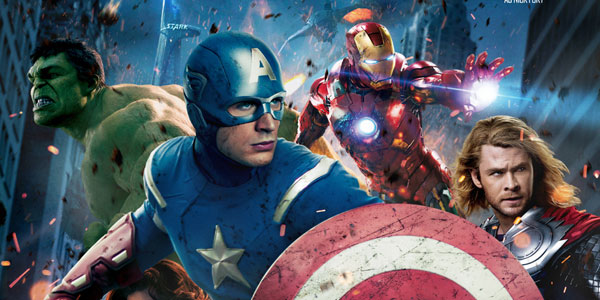
It was noted film critic A.O. Scott who once said that superhero movies peaked in quality in 2008, and have been in a sort of decline ever since. And back in 2008, we had two of the greatest films ever made, regardless of their superhero trappings: The Dark Knight and Iron Man, the latter of which marked the beginning of the Marvel Cinematic Universe. Many other films were released to help expand the roster of the Marvel Universe, too, with The Incredible Hulk later in the same year, Iron Man 2 in 2010, Thor and Captain America in 2011, and The Avengers in 2012.
Yet despite all these big budget blockbusters dominating the big screen in terms of critical and - especially - commercial reception, there's been something lacking in each and every one of them ever since the first Iron Man. Some have emerged as mere cash cows, whilst others feel like they were made in a factory. Some have been nothing but mindless action fare. But this was supposed to be a revolutionary era for everyone who had grown up reading comics - instead, the MCU has so many prevalent issues associated with it that we almost wish there was a mass reboot to turn things back to the way they once were in 2008.
So here are 10 problems with the Marvel Cinematic Universe nobody seems to want to acknowledge, starting with...
10. Disney's Acquisition Of Marvel

After seeing Iron Man, we were all hooked: Robert Downey Jr. was perfect as the playboy industrialist, Gwyneth Paltrow wasn't hated yet, and Jon Favreau had proven his directing credentials. Regardless of The Incredible Hulk's poor casting decisions, what we really wanted was the next Iron Man, with Tony starting to deal with the pressures of being publicly unmasked. Jon Favreau even told us that he'd be adapting the famous "Demon in the Bottle" story arc for the sequel, which saw Tony as an alcoholic.
It was all going great until we received the shocking news: Disney had acquired Marvel for $4 billion. Disney are a company that have built up their successes by delivering mature and family-friendly animation titles, yet that was just the problem; superhero films were meant to be different, geared towards teenagers/young adults (hence why PG-13 became the favoured rating).
Still, there was some hope, right? Stan "the Man" Lee assured us that things would be perfect, and it was true that Disney had a ton of money to back up future franchises. Unfortunately, it all went the opposite way: Iron Man 2 was so obviously tweaked with from its original concept that anyone could see that the new intention of the film was to be massive propaganda for the Avengers. The promised Demon in the Bottle arc? Dumbed down to a couple of p*ss jokes and a live action version of Rock'em Sock'em Robots.
This was the poor tone precedent Disney set up for its future franchise, but it wasn't just the atmosphere they got wrong. They also ensured that we got a....
9. Poorly Set-Up Cinematic Universe
The Avengers was revolutionary in comic book history as it was Marvel's response to DC's best-selling debut of the Justice League three years before. This is the point, though - in three years Stan Lee had successfully built up five popular characters with fleshed out backgrounds and adventures. When all of them were brought together, we had a good understanding of each and every one.
When Disney was setting up this universe, there was this idea that, like Iron Man, each character would get at least two films to give them a little more background and character stability. Instead, Thor was diminished from a character rich with Norse mythology to a Shakespearean archetype, Captain America's history in the golden age of World War II-themed comic books was reduced to an underdog story cliche, and Iron Man's character development was deferred in favor of giving Nick Fury and Black Widow added screentime.
8. Too Much Damn Comedy
Hearkening back to 2008, what made The Dark Knight and Iron Man so great was that they knew what kind of atmosphere was necessary for each scene and didn't try to craft a single dominant feeling over the entire movie. Disney, however, had already found their successful formula for live-action pictures via the Pirates of the Caribbean films; adventure-comedies. The thing is, while that totally worked for that franchise, it didn't fit the Marvel movies.
Iron Man 2 came off as ridiculously campy compared to the first entry, while Thor and Captain America didn't do any better. But the real damage arrived with The Avengers: it literally felt like every few minutes, someone was saying a lame, cheesy one-liner, from, "Sir, put down the spear" to "Doth mother know you weareth her drapes?" On the other end of the spectrum, Bruce warning Alfred he'll tell the police Batman was Alfred's idea is hilarious. Lois telling Clark to be careful with her bags because they're heavy is ironically humorous. As charismatic as Robert Downey Jr. is, Tony asking: "Of the people in this room, which one is; A. wearing a spangly outfit, and B. not of use?" just doesn't hold up to what should actually be a mature film.
What doesn't make sense is that all these movies come courtesy of several great directors/writers. What happened? Well..
7. It's The Producer's Vision Over The Director's

Ever since Disney bought Marvel, one director has been brought on for each film. By the time Age of Ultron comes around, only Joss Whedon will have stayed on for seconds. The chain of shifting directors proves that the producers don't care about their characters being developed fully. As stated before, the characters were all thrown into the mix having only been half-baked, so that no arc could be created for each one individually. This plan is genius for multiple sequels as it allows a superhero to go through many adventures without ever establishing a "concrete ending."
Wasn't Jon Favreau going to be in charge of this entire franchise? Well, that might have been the case had Marvel stayed independent. When Disney flooded the executive offices and gave its producers far stronger control over the whole project, Favreau was reduced to executive producer on The Avengers and didn't even return as director for the dividing Iron Man 3. The reason he gave the public? He wanted to direct a fantasy adaptation of Disney theme park the Magic Kingdom - but you can tell this is a lie because Magic Kingdom hasn't even entered production yet!
Now, you would think that having a consistent team of leaders would actually be beneficial for a large-scale universe of this kind. Truth be told, though...
6. Nobody Seems To Care About Plot Inconsistencies
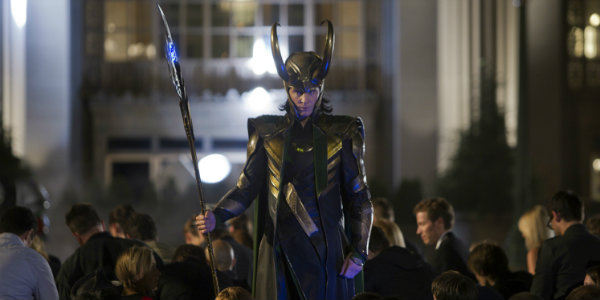
Almost every movie in the Marvel Cinematic Universe is so crammed with plot holes that it very nearly makes it seem like the producers don't even know what they're trying to do. "How did Loki survive that fall off the Bifrost?" Doesn't matter, he needs to be the villain of The Avengers - we'll leave it open to interoperation. "How did Nick Fury get the Tesseract?" Who cares? We need a MacGuffin. "Why isn't S.H.I.E.L.D. trying to save the President of the United States?" Why does it matter? Iron Man needs to be a BA!
There are so many other instances like this scattered through the franchise. The people at the top of the tower don't seem to know what they're doing, or they at least don't seem to care - it's just about money... and at the cost of quality and consistency. If you don't want to trust the directors, fine: just supplement that by strategising yourself and not throwing out average popcorn flicks until the next Avengers arrives. But it's not just the plot that are suffering from this lack of oversight, as...
5. The Heroes Are Inconsistent
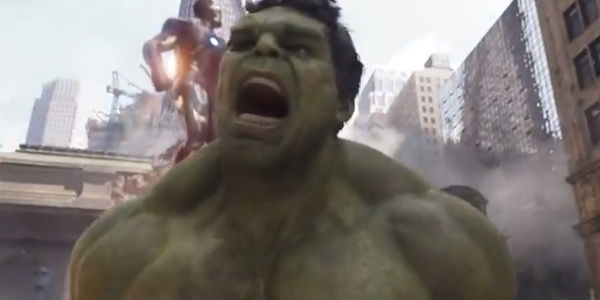
In the first Iron Man, Tony was so smart he was able to build an arc reactor and suit in a cave... with a load of scrap objects! In Iron Man 3, he couldn't even defend his own home. Thor was able to defeat many Ice Giants and The Destroyer in the original Thor, but was getting tossed around by Hulk like a rag doll in The Avengers.
Do powers even matter anymore at this point? Iron Man's armor was once able to take tank shells and hits from Mjolnir. Come post-Avengers, it was getting wrecked by trucks and fire-breathing terrorists. Captain America was having trouble fighting regular human soldiers during World War II, but in The Avengers he was able to take on alien creatures and demi-gods like Loki. And the characters aren't the only problem, as...
4. The Critics Now Live In A Bubble

I'll quote Roger Ebert's review of Thor: "Here is a film that is scoring on Rotten Tomatoes. For what? The standards for comic book superhero movies have been established by Superman, The Dark Knight, Spider-Man 2 and Iron Man. In that company, Thor is pitiful."
Ebert was one of the few critics who managed to retain the memories of 2008 when it came to the new surge of superhero films, but he was - after all - just one critic. It's surprising how many critics came to love these below average flicks, despite the fact that - before - we had so many masterpieces that were consistently setting new standards for the genre.
It makes sense to theorise that because Sony were in the process of rebooting Spider-Man, Christopher Nolan was busy with Inception, and Fox were recovering from Bryan Singer temporarily leaving X-Men behind, that the lack of competition allowed Disney to flood the market with their films. By the time these other franchises got back on their feet, a new bar had been set - one that required lots of comedy to supplement the action and drama (if any at all).
Then again, sometimes the critics are not in tune with audiences, as Man of Steel clearly proved. However, Disney's Marvel films have had another unintentional consequence...
3. There's A New Schism Between Comic Book Fans And Non-Comic Book Fans
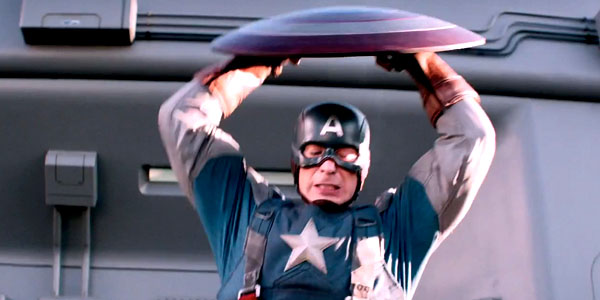
By the end of its run, Spider-Man had grossed over $800 million in revenue - you'd be a fool to attribute that all to comic book fans. The truth is that Spider-Man also managed to appeal to people unfamiliar with the comic book genre - the movie brought two sides together. When adapting a character to the big screen, you often had directors taking the best elements from multiple stories and combining them into singular films. Not only that, but whenever a film decided to ignore the source material, it was felt by everyone (remember The Spirit?).
When Disney took over, the comics were made meaningless. Save for the beginning, Thor was nothing like its comic counterpart: they made up half the characters and completely ignored his time serving as a doctor called Donald Blake. There was no mention of the Holocaust in Captain America, despite that being a major plot point in the comics (95% of the writers/artists were Jewish). And The Avengers got the original team wrong: the roster was supposed to consist of Thor, Iron Man, Hulk, Wasp, and - believe it or not - Ant-Man.
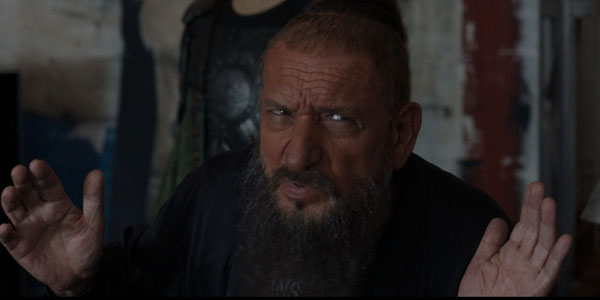
Marvel have somehow found a formula capable of bringing in casual audience member, which in turn has reduced comic book fans to a snobby, annoying minority that need to simmer down and be grateful that they're getting a film. When Iron Man's archenemy, the Mandarin, was revealed to be a mere persona played by a drunk Brit in Iron Man 3, words such as "butthurt" and "get over it" were thrown at fans. Honestly, what happened to these people? If this same thing had been done before Disney established the universe, non-fans would be calling it idiotic and branding it a direct ripoff of the Ra's al Ghul decoy twist from Batman Begins.
But the Mandarin really speaks volumes about another major problem present in the Cinematic Universe...
2. The Villains Are Lame
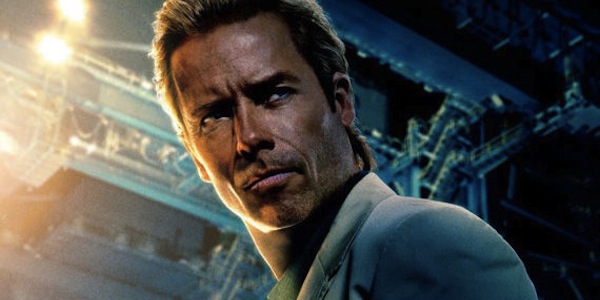
Superhero movies are almost always supposed to focus on the hero's journey, with adversaries playing the roles of those trying to stand in their way. This doesn't mean, however, that you under-develop the enemies to the point where they're given a simple motivation and it's left at that. Mickey Rourke admitted that he wasn't given much to work with for Ivan Vanko. Red Skull, Captain America's nemesis of all people, was barely even in the film to constitute a real threat. I don't think I need to say much about Aldrich Killian, who, as many have pointed out, was nothing more than a rip-off of Syndrome from The Incredibles. Malekith the Accursed, a powerful figure in Thor comics tied to Loki, was degraded to a Zod-like caricature projecting the sins of the father onto the son.
The worst part, of course, is that all these antagonists are played by wonderful actors: Mickey Rourke, Guy Pearce, Hugo Weaving, Christopher Eccleston. Marvel is bringing in these big names, yet the only villain they seem to care about is Loki - and even then his motivations have never been clearly grounded. In the first Thor it appeared to be daddy issues, while in The Avengers it wasn't even stated what he was up to. Tom Hiddleston is perfect as Loki, but he deserves to play a better-defined character.
And at the end of the day, all these problems unite into the biggest strife present in the MCU, and that is...
1. Plot-Induced Stupidity

In the comic book world, plot-induced stupidity occurs when characters are degraded to make their situations seem more perilous than they should be, and this is what irks most about the MCU, because so many powerful narratives have been constructed over the years for these characters, and yet because the producers don't really care for the source material, they deliberately ignore it in favor of their own contrived ideas.
In The Avengers, for example, Bruce Banner claims to be in control of the monster after having spent years in isolation and meditation (as seen in the end-credits scene of The Incredible Hulk), yet during Hawkeye's attack on the helicarrier, he somehow loses control and goes on a rampage. But then he regains control in time for the Chitauri invasion later on?
In Iron Man 3, Tony is suffering from panic attacks after falling through a wormhole in space... why? In the first Iron Man film he was kidnapped, tortured, and permanently (at the time, anyway) fused to a machine in order to be kept alive. That seems a lot more traumatic than anything he experienced in The Avengers, which was actually kind of tame by the depicted standards. At the end of Captain America, how is it that it was easier to find the Tesseract at the bottom of the ocean, over Rogers' plane in the arctic?
When Stan Lee was writing all these stories, they were targeted towards kids who were growing up in the counterculture movement and experiencing the harshness of real life. They weren't meant to be escapist outlets as much as they were ways to experience life's difficulties through the eyes of a superhero. When the producers in charge of the Marvel Cinematic Universe tell you that the source material doesn't matter, they're only fooling themselves, simply because that same counterculture has only grown since the 1960s.
Dumbing down superhero films as mere child's fare signals just how much the Marvel Cinematic Universe has been disappointing us under Disney's leadership. As a result, it's actually surprising how successful it's all been since 2008.
Like this article? Agree or disagree? Let us know in the comments section below.