10 Reasons DC's Cinematic Universe Is Already Doomed

It's going to be a loooooooooong six years...
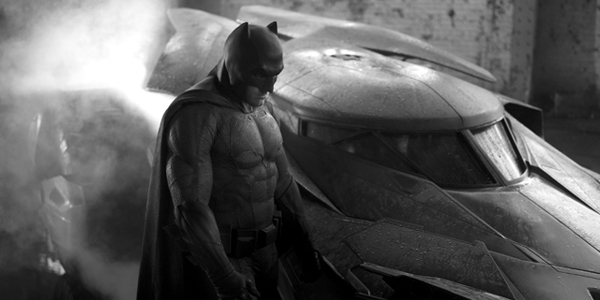
This past Wednesday, Time Warner announced a spate of new movies designed to establish, expand, and cement the profitability of DC Comics' cinematic universe. Those films -- Batman v Superman: Dawn of Justice and Suicide Squad in 2016, Wonder Woman and Justice League Part One in 2017, The Flash and Aquaman in 2018, Shazam and Justice League Part Two in 2019, and Cyborg and Green Lantern (a reboot of the property) in 2020 -- will be punctuated with additional films starring Ben Affleck's Batman and Henry Cavill's Superman. The news has taken the internet by storm, even eclipsing some major Marvel cinematic rumors from earlier in the week. Though the initial optimism at seeing DC finally get its film division off the ground has not yet abated, the discerning fan will find cause for concern. What could -- and should -- be a strong competitor to Marvel's bulletproof cinematic universe looks like a pale imitation, and while it is possible that the films themselves will end up delivering in terms of quality, it already seems unlikely. To make matters worse, as the buzz around the announcements dies down, this fear will spread. Here are ten reasons why DC's cinematic universe is already behind the eight-ball. Feel free to debate in the comments sections!

10. Planning Too Far In Advance

Simply announcing a plan that led up to the first Justice League film would have gotten people talking about DC. Hell, just unveiling Suicide Squad for 2016 would have been big, given some of the names rumored to be sought after for roles (Will Smith, Ryan Gosling, and Tom Hardy). But no, DC went whole hog, spilling the beans on ten projects that will take them all the way to a year that still sounds like the far-flung future. DC should be lauded for having a grand vision, but will announcing it ultimately come to bite the company in its behind? A lot can change over the course of the next few years, and it's possible that by 2017 or 2018, certain announcements won't seem like such good ideas -- or new opportunities may have presented themselves. Will it be possible for DC to alter its announced lineup without losing face and alienating fans? That may be an answer the publishing giant finds out the hard way.

9. They'll Be Compared To Nolan's Batman Films
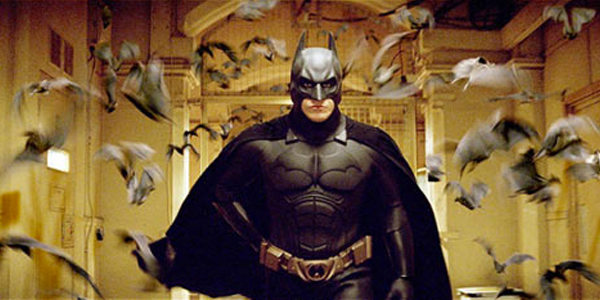
While Marvel Studios has its ardent supporters, there are those who feel that Christopher Nolan's Batman trilogy -- comprised of Batman Begins, The Dark Knight, and The Dark Knight Rises -- represent the absolute pinnacle of the superhero film. As the only comic book movie to win an Academy Award for acting, The Dark Knight is particularly beloved. In a sense, it's unfair that these new DC films will draw comparison with Nolan's -- after all, he had the benefit of eschewing the conventional trappings of superheroes and villains to create something grounded. These movies don't have that luxury. It's unfair. It's also unavoidable. Nolan's films were considered artistic high-points for the genre, and the fact that the exact same character will be appearing throughout this new lineup of movies makes a one-to-one look at them easy. Just as someday, the character of Iron Man will be recast and people will complain that the new guy isn't as great as Robert Downey, Jr., fans will lament what has been lost in the transition from Nolan's style to a real shared superhero universe.

8. Justice League In Two Parts

Justice League Movie One of the more curious aspects of the film schedule is that Justice League -- the lynchpin in the entire series -- has been split up into two parts. While this isn't unheard of in the world of adaptive genre film, other notable examples -- Harry Potter and the Deathly Hallows and the upcoming The Hunger Games: Mockingjay -- have taken much more loyal approaches to the conversion of their source material. If anything, superhero comic book films -- with decades of published material and tens of thousands of pages from which to pick and choose -- are telling original stories with adapted characters. If The Avengers can tell a complete (and fantastic) story in a single film, shouldn't Justice League be able to do the same? Also, the gap between the two films seems strangely wide. Though comic readers are no strangers to being left in a cliffhanger, in those cases it only lasts for a month. Will audiences -- comic fans and non-fans alike -- really want to see the League strung up by a villain, with Batman traversing the bowels of his lair to plan an extraction, as their last impression of the film for two whole years? This isn't 1980, and it's not The Empire Strikes Back. The words "To Be Continued" have never seemed so ominous.

7. No Films Until 2016
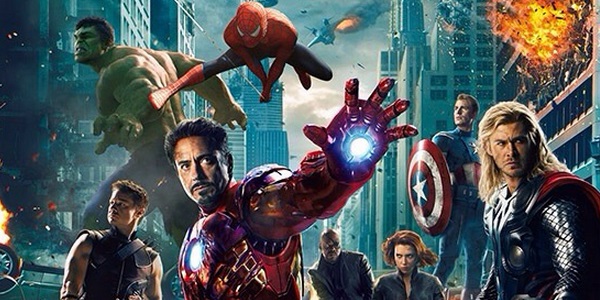
Avengers Spider Man When Batman v Superman: Dawn of Justice hits theaters on March 25, 2016, it will have been almost three years since the release of the DCCU's last motion picture, Man of Steel. Films do take a long time to make -- and everyone wants to see DC nail the attempt and stick the landing -- but such a huge gap is likely to dilute interest. As it is, these new announcements come over 17 months before fans will get to enjoy anything. Yes, time flies, but DC's film universe is stuck in a long limbo. Marvel, by contrast, has released at least a single film every year since the studio debuted with Iron Man, with 2009 as the only exception. Whatever the reasoning tack behind their scheduling, it's proven commercially fruitful. Via trial and error, Marvel have made it so that their movies are considered must-see by filmgoers, and while the public isn't bombarded by them, it seems like one is never too far away. While the final outcome is the same -- both studios are settling into the "two-films-a-year" groove -- DC is going straight from zero to sixty... following three years of zero. At least there's Avengers: Age of Ultron!

6. They'll Always Be In Marvel's Shadow

Iron Man1 Batman and Superman in a movie together should potentially be one of the biggest comic book film stories of all time. The finished motion picture should be a box office steamroller, capable of flattening all competition. Nevertheless, Batman v Superman: Dawn of Justice, which was at one point scheduled for release on May 6, 2016, was pushed up six weeks to March 25. May 6, however, is still the release date of Marvel's Captain America 3. Did DC's film run from Marvel's? Warner Bros. insiders have denied it, but DC's scheduling change (the second for BvS's release date), followed the amazing box office haul of Captain America: The Winter Soldier and the dynamite opening of Guardians of the Galaxy. Even though May is traditionally a stronger month for film than March, not having to worry about competition from a proven winner could have affected DC's decision. Potentially worse, though, is the fact that the plots of both films could be similar -- in both, the two main heroes of each franchise will go head to head. Cap 3 is rumored to be adapting Marvel's Civil War storyline, in which Iron Man and Captain America do battle, with the stakes as high as they can get. By contrast, BvS, which will undoubtedly be a "let's-fight-hey-you're-good-let's-team-up" story, may seem to lack teeth.

5. Why So Serious?
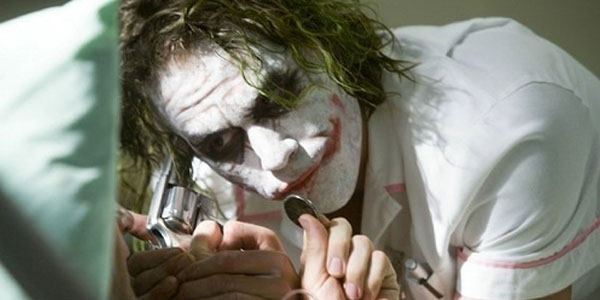
Much was made a few months back of an edict that came down from Warner Brothers higher-ups announcing that there were to be no jokes in DC's upcoming movies. Granted, a serious approach worked wonders for Christopher Nolan's Batman films -- which took the camp out of the character and reinterpreted him in a modern, relevant way -- but anyone who's followed the comics themselves for a while can explain why levity has a place. Alan Moore, Dave Gibbons, and Frank Miller redefined DC Comics -- and the entire industry -- in the 1980s with Watchmen and The Dark Knight Returns, both of which showed deconstructed, "darker" looks at the superheroic lifestyle. Unfortunately, their work spurred on scores and scores of imitators who missed the point, but kept the "grim and gritty" nature -- in essence, there was a lot of meaningless violence and unnecessary adult material. DC still makes these mistakes with their books, and it looks like the films are headed the same way. Plus, just at Marvel's movie output. It's not like a good sense of humor has hurt their product.

4. No TV Crossover

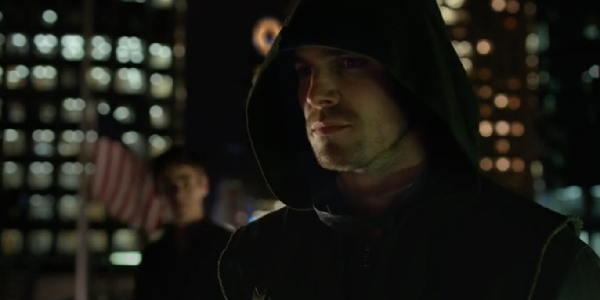
Marvel's "Agents of S.H.I.E.L.D." may be a hit, but when it comes to TV, DC rules the roost. Following the surprise success of The CW's "Arrow," DC has an astonishing four hours of prime time network television this season, with "Constantine," "The Flash," and the already-a-hit "Gotham" joining in on the action. Marvel is debuting its "Agent Carter" show in January, but the sky is the limit for DC on TV. How will they harness this momentum for their films? They won't. In addition to the films that were announced, several casting announcements were made, as well. It turns out that 2018's The Flash is set to star Ezra Miller in the title role, whereas the TV show stars Grant Gustin. That simple fact is all it took to confirm that the film and TV entities were separate universes, and that DC was choosing to forgo any of the good will it had built up on the small screen. In other words, don't expect Stephen Amell's Oliver Queen in the Justice League films.

3. Less Popular Characters

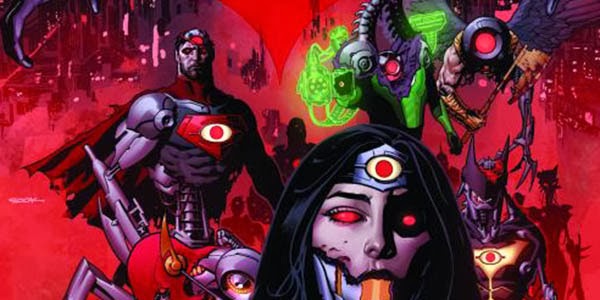
Any comic book fan can tell you that Aquaman and Cyborg are great characters with no shortage of good stories in their pasts. Unfortunately, to the mainstream public, both are completely unknown -- or worse. Aquaman has long served as the butt of jokes in the public arena, frequently held up as an example of a hero who drew the short straw in the superpowers department. Geoff Johns chose to lampoon this perception of Aquaman in his recent run on the comics to great effect, but it doesn't change the fact that many see the character as a punchline. With DC's reboot in 2011, Cyborg was made a part of the "Big Seven" -- the original Justice League lineup -- alongside Superman, Batman, Flash, Green Lantern, Wonder Woman, and Aquaman. Certain promotional materials for DC at large, though, had Cyborg cropped out of artwork. That's hardly a show of faith in the character. Even The Flash and Wonder Woman are untested at best -- and cheesy at worst. While the characters do appeal to comic fans -- and for good reason -- a public without a sci-fi/fantasy interest, or those not used to suspending their disbelief, might have trouble accepting them. DC is to be commended for beating Marvel Studios to the finish line on a woman-led superhero movie (and, in making Cyborg, potentially on a film starring a minority character), but skeptics have to wonder -- how deep does public interest in DC's properties run, Batman and Superman aside?

2. More Controversy Than Interest

DC's announcement of a movie featuring Batman and Superman together generated a lot of excitement -- but that excitement turned sour when Ben Affleck was cast as the new Bruce Wayne. Despite Affleck's pedigree (he's won a pair of Academy Awards), fan-boys and girls were outraged by the fact that Batman -- most recently portrayed by Christian Bale -- would now be subjected to an interpretation by the man who, in their estimation, ruined Daredevil. In fact, that's all people seemed to be talking about... until the ten month delay in the film's release. Taking both factors into consideration, most of the buzz surrounding the movie has been negative. That's not to say Batman v Superman: Dawn of Justice won't make a lot of money. The problem is, though, it will cost a lot of money to make. In order to be profitable, it needs to make a lot of money. Only a fool believes that there's no such thing as bad publicity, and if DC keeps letting fear and pessimism carry word of their films to every corner of the Earth, they could be shooting themselves in the foot. To make the inevitable comparison, when Robert Downey, Jr. was announced as Tony Stark, fans were bowled over with the elegance of the choice. That was where the good word of mouth began for Marvel Studios, and seven years later, it's made them a powerhouse.

1. They're Already Off To A Bad Start
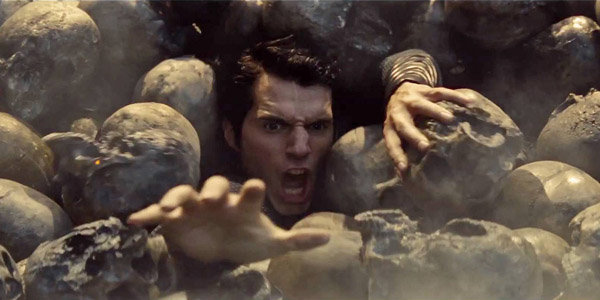
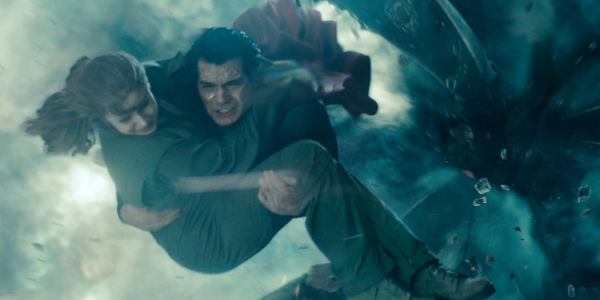
SPOILERS FOR MAN OF STEEL FOLLOW! When Superman Returns failed to live up to expectations in 2006, its poor performance was blamed on a lack of action. Of course, with typical executive logic -- and with Zack Snyder at the helm -- Man of Steel was a complete 180. Superman and General Zod beat each other up and down the streets of Metropolis before Superman finally ends the fight by breaking his foe's neck. The violence was seen as excessive, and worse still, Superman's actions were seen as a complete betrayal of the character. Many fans -- including Superman's most avid supporters -- left theaters with sour tastes in their mouths. Fans weren't the only ones who were disappointed, as critics were also muted on Man of Steel. It currently holds a 56% -- or "rotten" -- rating on film site RottenTomatoes.com, which generates percentages based on mass reviewer response. By contract, Thor: The Dark World -- the lowest-rated of Marvel Studios' films -- has a "fresh" rating of 65%. Zack Snyder's films aren't everybody's cup of tea, to be sure. Still, Warner Bros. has hitched their wagon to him -- he'll be directing Batman v Superman: Dawn of Justice as well as both of the Justice League films.

Contributor
Contributor

Scott Fried is a Slammy Award-winning* writer living and working in New York City. He has been following/writing about professional wrestling for many years and is a graduate of Lance Storm's Storm Wrestling Academy. Follow him on Twitter at https://twitter.com/scottfried. *Best Crowd of the Year, 2013