10 Reasons Movie Scenes Turned Out THAT WAY
The weird reasons why these baffling scenes turned out how they did.
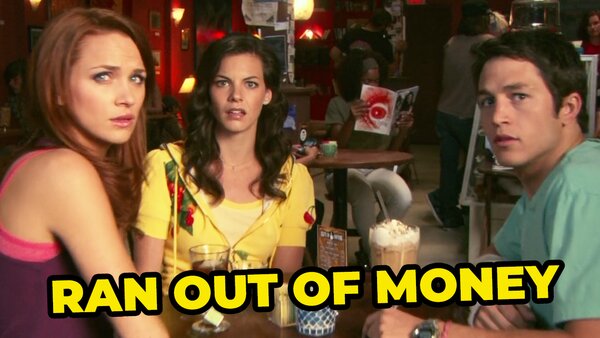
We've all been there, watching a movie when a scene happens that just seems a little bit out of place.
There's just something totally off about it, whether due to the writing, direction, acting, editing, visual effects, or perhaps even a combination of the lot.
Sometimes a scene is odd enough that you might be left wondering precisely what happened during filming or post-production for things to turn out that way.
Now to be clear, this doesn't always mean that the scene in question is bad - in some instances it might be far from it, but nevertheless distinct from everything else surrounding it.
And that's absolutely the case with these 10 movie scenes, each of which are tough to forget for one reason or another - maybe they're a shambolic mess of editing, feature an infamous continuity error, or simply make puzzling choices that left the audience scratching their heads.
But each of these scenes ultimately has a reason for its very being - perhaps legal issues interrupted the shoot, the production ran out of money, or other restrictions forced the filmmakers to pivot, to name just a few...
10. The TERRIBLY Edited Meeting With John Reid - Bohemian Rhapsody
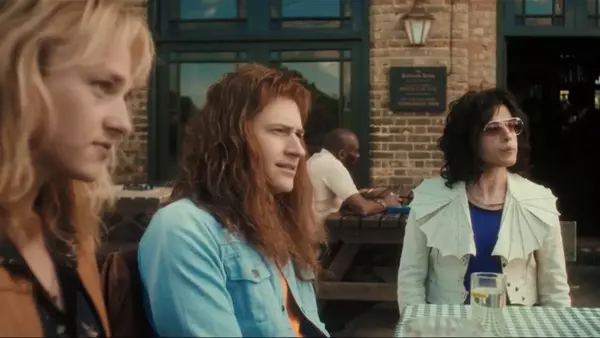
After Freddie Mercury biopic Bohemian Rhapsody rather dubiously won the Best Film Editing Oscar, a clip from the movie went viral, showcasing a chaotically edited sequence where Queen's band members meet their first manager John Reid (Aidan Gillen).
Considering the relative simplicity of the scene - a dialogue-driven sequence with basic coverage of characters talking - many questioned precisely why the film's editor, John Ottman, opted to cut more than 60 times in a scene lasting less than two minutes.
That's an average of less than two seconds per shot in a scene that, again, is almost entirely people talking.
But in an interview following his Oscar win, Ottman explained why the scene was such an editorial mess.
Due to original director Bryan Singer being replaced with Dexter Fletcher for the final three weeks of shooting, Ottman was working with footage shot by two different people, much of which didn't naturally cut together properly.
And so, Ottman was basically doing the best he could to stitch together an even passably coherent scene amid extremely trying circumstances.
Ottman also acknowledged being unhappy with the end result of the scene, saying, "Whenever I see it, I want to put a bag over my head."
While Bohemian Rhapsody is one of the most questionable Best Film Editing Oscar wins of recent years, considering the fresh hell that Ottman was working with throughout the troubled shoot, you could certainly argue that he earned the gong in his own way.
9. The Changing Mask - Scream

If you've seen the original Scream more than a few times, there's a good chance you might notice that the design of Ghostface's mask changes several times throughout the film.
Hell, it even changes back and forth during a few individual scenes, most notably throughout the iconic opening sequence where Drew Barrymore's Casey Becker is killed.
The reason for this is that, when Scream began shooting, the production hadn't yet secured permission from mask designer Fun World to use the Ghostface mask, and so to cover themselves legally, they started shooting with a knock-off mask from KNB Effects which was just distinct enough to avoid a lawsuit.
However, once everything was worked out with Fun World, additional photography was conducted with their original mask, therefore explaining why the mask design subtly changes from shot to shot in several scenes - namely Casey's death and also that of Principal Himbry (Henry Winkler).
It hardly ruins the movie, but it is fascinating that a glossy studio horror film didn't have the basics locked down before shooting began.
8. The Impossible Car Roll - Diamonds Are Forever
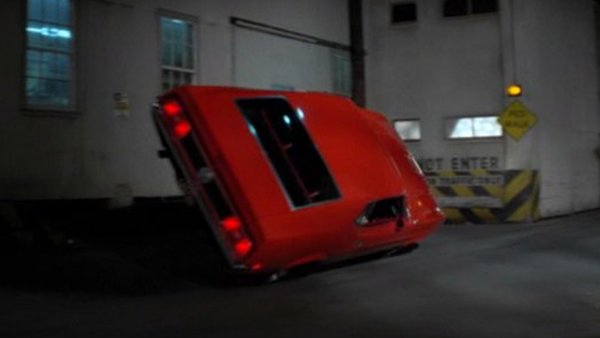
Diamonds Are Forever features one of the most infamously ridiculous stunts in the series' entire storied history, when 007 (Sean Connery) drives a Ford Mustang down an alleyway on two wheels.
As many have pointed out, however, Bond enters the alleyway while riding on the Mustang's two right wheels, but when the car emerges out the other side, it's inexplicably riding on its two left wheels.
The sequence was somehow shot without anyone realising this discrepancy, but when the producers noticed it during editing, the decision was made to shoot an insert from inside the car where the Mustang appears to roll onto the other side.
Hilariously, while this sort-of resolved the initial continuity error, it also created another one entirely, because there's simply no room in the alleyway for Bond to rotate the Mustang. And so, how the hell did he pull it off?
While Bond has never been above some goofy, credibility-straining hooey, this was arguably a bit much even for the franchise. Still, at least it's not the godawful slide whistle from The Man with the Golden Gun.
7. The Cheerleader Protest - Can't Buy Me Love
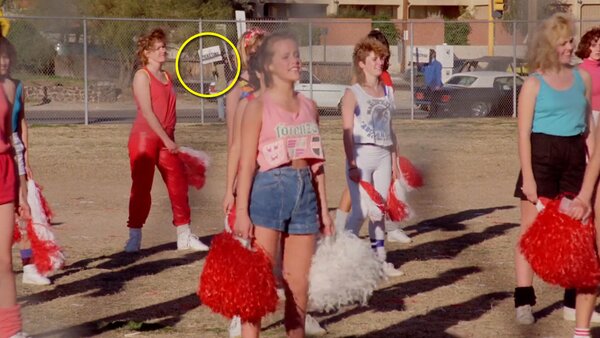
In the opening minutes of the cult fave '80s rom-com Can't Buy Me Love, you might notice a conspicuous group of picketers protesting in the background while protagonist Cindy (Amanda Peterson) is leading a cheer group.
Given that this wasn't part of a subplot within the movie itself, what exactly is going on here?
Well as it turns out, the picketers were striking crew members from the production who, in an attempt to disrupt the rest of the shoot, tried to keep themselves and their picket signs in view of the camera as much as possible.
While it hardly ruins the scene, once you notice the picketers and the fact that they're straight-up staring at the camera in an effort to ruin the shoot, it's tough to pay attention to anything else that's happening.
Sadly there's precious little info about the strike itself, but it's certainly unexpected to see industrial action straight up captured on celluloid and part of the very movie that's actually being protested.
6. The Kaleidoscopic Final Shot - The Last Temptation of Christ

Martin Scorsese's incredible biblical drama The Last Temptation of Christ is, like all of the legendary director's films, a supremely diligent piece of work where every single frame appears to have been crafted with 100% intention.
And that also goes for the surreal final moments of the movie, where Jesus (Willem Dafoe) dies on the cross and the image is distorted by a strange bright light, seemingly signifying Jesus' resurrection, before cutting to the end credits.
It's certainly an odd stylistic flourish and one that feels a bit at odds with the scene otherwise, and that's because it wasn't originally part of the plan at all.
In a 2019 interview, Scorsese revealed that after shooting this take, a camera assistant accidentally opened the film magazine, in turn exposing and compromising the footage.
When Scorsese later reviewed this take, he discovered it had been tainted by "edge fog" - the visual aberration from the closing shot which, obviously, he decided to keep because he actually loved how it looked.
In Scorsese's own words, "The edge fog became the resurrection." Brilliant.
5. The Blatant Day-For-Night - 28 Weeks Later
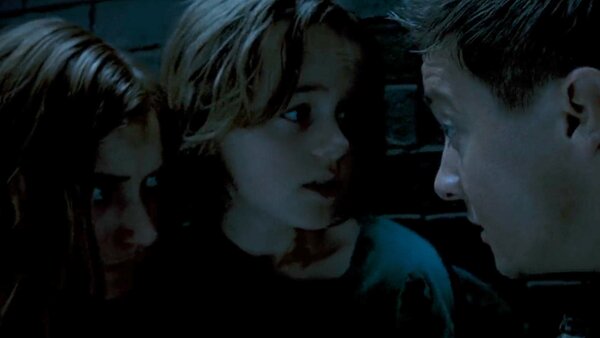
Roughly half-way through 28 Weeks Later, the survivors find themselves running through the streets of London in the middle of the night while attempting to escape District One before it's firebombed by the U.S. Air Force.
The scene is very clearly shot day-for-night, meaning that it was filmed during the day and then colour-graded in post to more closely resemble nighttime.
This technique is commonly employed on lower budget productions to avoid renting expensive lighting equipment needed to capture scenes filmed at night, but even with 28 Weeks Later rocking a tight $15 million budget, that should've been plenty to shoot at night for real.
As it turns out, there were two other concerns.
First and foremost, actor Mackintosh Muggleton, who plays Don's (Robert Carlyle) son Andy, was only 12 years old during shooting, and because child labour laws limited how much he could film at night, it simply wasn't practical to shoot his scenes that way.
Secondly, because London is supposed to be powered-down during the sequence, filming at night for real would've needed the production to paint out countless illuminated windows which would be visible while shooting in the evening, adding considerable VFX costs.
By filming the scene during the day and altering the colours in post, they didn't need to worry about Muggleton's schedule or having to digitally remove lights, because few buildings would have their lights on during the day.
4. The Uncanny Valley Scorpion King - The Mummy Returns

Though the laughably bad CGI at the end of The Mummy Returns has been consistently ridiculed ever since the film's 2001 release, only recently did we learn precisely why it turned out this way.
The VFX blunder in question involves the final form of the Scorpion King (Dwayne Johnson) - a gaudy fusion of man and scorpion who, even for the time, looked absolutely horrible.
While such woeful results are usually due to a VFX team being given unrealistic deadlines to complete work, on a 2022 episode of Corridor Crew's VFX Artists React, The Mummy Returns' visual effects supervisor, John Berton Jr., revealed what really happened.
Ultimately, due to Dwayne Johnson being busy with his WWE wrestling career, the VFX team weren't able to meet with him and scan his face in order to collect detailed reference material, as is the standard for complex 3D characters such as this.
And so, the team were instead left to design The Scorpion King from scratch, without any of the expected high-res references of Johnson's face to work from.
And that's why the creature looks like such an uncanny valley abomination compared to most digital doubles of the era.
3. Pancake Karate - Cabin Fever

Eli Roth's cult classic horror Cabin Fever is an unapologetically crass throwback to the exploitation flicks of decades past, but beyond the plentiful gore, the single most memorable sequence in the entire movie actually involves... pancakes.
In act three, a disease-infected Bert (James DeBello) heads to the local store for assistance, where the owner's developmentally disabled young son Dennis (Matthew Helms) starts shouting "Pancakes!"
From here Dennis leaps around, performing karate kicks before biting Bert on the hand. It's totally bonkers, and while the bulk of the scene was in Roth's original script, believe it or not Dennis' out-of-nowhere karate moves weren't.
On the film's DVD commentary, Roth revealed that Dennis' actor Matthew Helms just showed off his karate moves during a break between setups, and Roth decided to have him perform the moves in the scene itself.
Roth was clearly onto something here, even if he surely couldn't have appreciated how such a minor choice would continue to fascinate and beguile horror fans decades later.
2. The X-Ray Ending - The Final Destination
By the time the fourth and apparently final Final Destination movie was released, it had become customary for each movie to end with a "gotcha!" kill scene, where one or several surviving characters swiftly feel the brutal swipe of Death's scythe.
And The Final Destination kept true to this pattern, with survivors Nick (Bobby Campo), Lori (Shantel VanSanten), and Janet (Haley Webb) being instantly killed when a truck swerves into the cafe where they're sat.
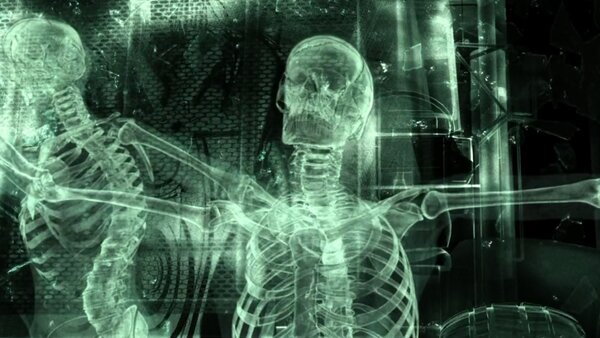
But at the moment of impact, rather than show the trio's deaths in live-action form, we suddenly cut to the same x-ray vision effect featured in the movie's opening credits, where we only see Nick, Lori, and Janet's skeletons being destroyed by the truck.
It's an odd way to end the film considering the audience expectation that it would linger on the grisly demise of the three remaining survivors.
But as was recently confirmed by franchise producer Craig Perry, the x-ray transition actually happened because the production didn't have the money to shoot an elaborate, stunt-filled live-action sequence.
It was ultimately much cheaper to just build an x-ray animation of the scene in post instead.
1. The Non-Ending - Monty Python & The Holy Grail

Monty Python and the Holy Grail is remembered for so many reasons, not least its utterly bonkers ending, where just as the British knights ready to reclaim Castle Aarrgh from the French, modern British police officers show up to arrest Arthur (Graham Chapman) and company for apparently murdering a historian earlier on.
One of the bobbies quickly places their hand over the camera lens and... that's the end of the movie.
Even for the gleefully surreal tendencies of the Python troupe, this was one hell of an odd - and oddly abrupt - way to wrap things up, and one that wasn't the original plan.
During production Holy Grail was set to conclude with the promised battle, but due to the film's tight budget, it was decided to instead end with the cops shutting things down both to save money and because many of the Python team felt it was much funnier.
Though the ending ultimately gels perfectly with the movie's deeply unserious brand, star John Cleese stated in recent years that he was disappointed with the curtailed non-climax.