10 Sci-Fi Movie Clichés Everyone Secretly Loves
Surely nothing bad will happen on this abandoned ship in deep space?

Science fiction might be one of the best genres in entertainment. The imagination and creative freedom that comes with pulling at the thread of technology, space-travel and human advancement is ripe with so much opportunity, it's practically a bottomless pit of ideas.
The limitless world-building is what pulls audiences back for more sci-fi, and as writers and movie-makers get more daring, their creative muscles have been going in all kinds of directions.
However, if you're an avid film watcher, you'll start to pick up on recurring trends in film - and science fiction is no exception. The cliches and tropes of sci-fi can become grating, and it's almost impossible not to think of anything else. You might start guessing twists and narrative plot points before they happen, because you've seen these directions so many times before.
That isn't to say they are not entirely welcome. In fact, some cliches and tropes in science-fiction are secretly adored. They help build the world we're about to watch, and while they might appear repetitive, they roll off our backs quite quickly and we're able to enjoy the films for what they are.
If you haven't noticed all ten, you won't stop seeing them in your favourite films after this.
10. Aliens Go Sightseeing When They Invade Earth

The Martians and moon-people are about to conquer Earth. Humans look to the skies in horror and awe.
But if they're a resident in a quiet little town in Somerset, there's a strong chance they'll be watching the mayhem on the six o'clock news, because aliens love Big Ben and the Eiffel Tower.
It's almost laughable how many times aliens have blown up famous landmarks in their pursuit of fatally wounding the human race, and it isn't lost on movie watchers how often they've seen The White House or Empire State Building get beamed to smithereens.
So why do we enjoy it? Aliens attacking cultural landmarks provides a frame of reference for the audience. The montage of places you'd find on a postcard being overrun by invading green monsters gives audiences a scope of the worldwide invasion and how far the attack has spread. Big buildings and city skylines convey an almighty destruction that petrol stations in the Nevada desert just can't provide.
Plus it gives our heroes reason to act fast. If they don't fight back soon, the aliens will have destroyed every tourist destination. And if that happens, then what the heck is left to fight for?
9. Space Funerals Involve Ejecting A Coffin Out An Airlock

When you're on a space ship, travelling a billion miles between planets for an unspecified amount of time, clutter is something you want to avoid.
The heroes of our favourite science-fiction films think the same. So when a comrade in arms died dutifully, a tasteful ceremony is held in which the main characters gather together to say good-bye, before firing the coffin into the endless abyss of space.
As far as funerals go, it's not a bad gesture. Eulogies, salutes and tearful mourners all compose an emotional scene, and on a spaceship, the endless void is the perfect grave. Like contemporary films having burials that takes place in the rain, jettison funerals have become a cliche.
Starship Troopers and Star Trek have worked with this trope well - the tone of their scenes have been sombre, and watching characters eject into space has made the scene even weighty as they are bid farewell forever. Maybe one of the best innovations of this trope came in Guardians of the Galaxy 2, when Yondu was cremated and his ashes were expelled out into the never-ending terrain.
Until writers come up with new and exciting methods of disposing of bodies in space, this way is a preferred favourite.
8. Earth Is A Bustling Metropolis Of Super Cities

When a science-fiction film is set within a busy city, showing how the times have changed comes in many forms. One of the most common traits in sci-fi cities, is to show the landscape of today blown up into monoliths of skyscrapers and extravagant towers.
Like counting the rings in a tree to determine its age - the bigger and taller the buildings, the further in the future the film is set.
The Fifth Element, Blade Runner, Dredd, Minority Report and Equilibrium are just scratching the surface of what the busy world has in store for humanity. With heroes, villains and everyone in between living in high-rise domiciles instead of country cottages, there is a disconnected sign that the old, rural lifestyle dwindles with time, which can be a little upsetting for some.
But the reason why everyone loves this cliche is that it exemplifies the expansion of society with time. Progress and development can't be more obvious than when the characters are staring out a window at a city skyline, with flying cars whizzing past at breakneck speed - it definitely sets a tone for the world the film is set.
Bonus points are always awarded if legacy buildings still stand, albeit shrouded beneath towering skyscrapers.
7. Aliens Speak Earth Languages
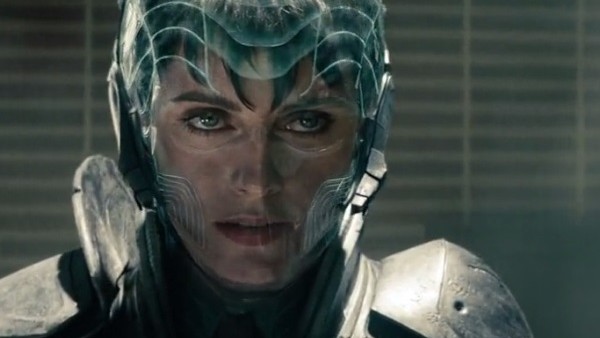
Right out of the gate, this trope is possibly the most commonly used in science-fiction. Whether the film be set in the modern day, or five-hundred years in the future, if an advanced alien race is on the scene, there's a chance they not only know the common tongue, but they'll talk as if it's their first language.
While it might immediately lose authenticity in the film when green or blue humanoids start speaking English, (and in North American dialects no doubt), it isn't at the top of a person's list of gripes when we tune in to watch a film.
There have been neat exceptions though; over half the characters in Star Wars speak in an obscure alien language, which is subtitled on screen and then responded to by the human characters - who have no issue whatsoever answering in a totally different language.
And when we do encounter aliens who speak English, it has been awfully fun to see them miss-pronounce or fail to grasp famous sayings and phrases.
Spock and Drax The Destroyer both display a knowledge of the human languages, but their bemused expressions to idioms and expressions does serve as some humour amidst everything else that's serious.
6. Food In The Future Sucks!
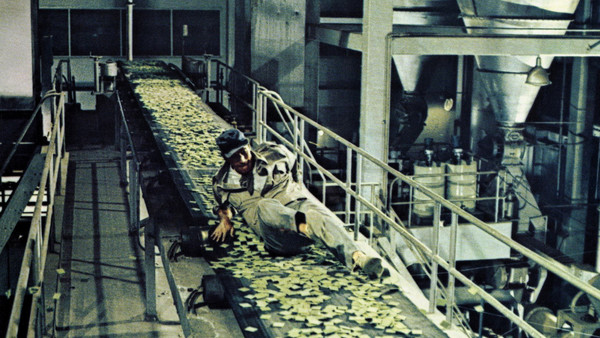
If there is one thing to be grateful of living in the present instead of the future, it's that at least we don't have to put up with the weird meals. Sci-fi films present to audiences a world in which the food our heroes and villains consume might some of the most undesirable nonsense ever conceived.
In Snowpiercer, even before we learn that the black gel bars the back of the train consume are made of bugs, they don't look like anything you'd pick up in your local supermarket. The freedom-fighters of The Matrix don't get a Michelin Star meal either; dining on what looks like porridge but most definitely is not milk and oats.
And let's not get started on the weird things that constitute as meals in a Star Wars movie.
We love this trope because it's an exaggeration of where we are now, which is exactly what sci-fi is.
While noodles and fruit still exist in the future (according to most sci-fi films at least), it is interesting when characters on screen bite down on a meat flavoured protein bar (like in 1998's Lost In Space) or are presented with a disgusting looking substitute for a food product that went extinct hundreds of years before.
5. Holograms Are The Future Of Communication

There is a very short list of technology that tells a movie audience that a film they are about to watch is set in the future. Flying cars, robotic limbs and holograms certainly make the list. But while the first two have been molded and presented in a variety of ways, holograms often come in one form.
For some reason, sci-fi mythology insists that a life-size display of a person (shoes included!) on a little platform is the way people in the future will be talking to one another. In the lore of each film, I'm curious to know why the characters need to see below the waist of the person they're talking to?
Holograms make sense when a character is shown a schematic of a fortress they intend to breach, or in explaining the outer-rim of a newly discovered planet. But when two characters are just talking, or being presented with a recorded memo, the necessity that the whole of a person be shown is a head-scratcher.
Pointless imagery aside, this cliche is loved because of the hilarious implications it brings. The idea that someone on the other end of the hologram telephone is gesturing while staying perfectly still beneath their holodeck spotlight is laughably silly.
4. Abandoned Ships In Space Are Always A Death Trap

You know those idiotic moments in a horror film, when one character suggests everyone split up inside the murder mansion? This is it, but for sci-fi.
Space Travel Tip: If you receive a distress signal from a lost ship in space, it's definitely got something that will murder your crew on board.
Alien, Event Horizon, Ad Astra and Sunshine are just prime examples of what happens when one ship stumbles across another and decides to help. The audience knows what's going to happen. The decision of the crew comes from a dutiful, caring place. But in reality, it's a suicide mission born out of dumb curiosity.
Whether there are ghosts, aliens, feral crew-members or escaped monsters, the landing party is sure to be fodder for whatever caused that ship to be abandoned in the first place. Never has this cliche gone the other way, and everything is fine.
So why is it so fun? Because it's the catalyst move that sets up the rest of the story. The quiet eeriness worries us from the moment the landing party steps onto the abandoned ship.
It's even better, when what caused the wreckage is a complete surprise. Right Ad Astra?
3. Time Travelling Never Goes According To Plan

Going back in time to fix a problem is something we've all personally wished for. Be it something monumental like a world-changing event, or something even worse, like accidentally saying "I love you" to the waiter in a restaurant, we've all at some point wished we could turn back the clock and do things differently.
Time travel as a major plot device is already going to be ripe with twists and turns. When a movie's protagonist goes back to the past, there's a strong possibility they are going to wreck the future (Looper), or their presence could jeopardize their very existence (Back To The Future).
The idea of going back in time to fix a problem, only for the hero to make matters worse is not a fresh idea despite it being conveyed in various ways. Whether you get the twist within the first five minutes or not, films have been routinely trying to slip this one past us.
Lately, movie-makers have cottoned on and now the twist is woven into the plot- the narrative beats of Arrival keep the audience believing segments of the film are taking place in the past, and Tenet presents time travel as a battlefield as opposed to a narrative device.
Until the laws of moving through time become more concrete, let's let films have more fun with it.
2. If You Die In A Virtual World, You Die In The Real World

Raising the stakes in something akin to playing a video game is tough to sell. Over the years, virtual reality worlds in movies have had to create legitimate threats so audiences feel concerned about the protagonists. Thankfully, the premise isn't used that often.
While we might roll our eyes when it does come about, it's still a welcome variable to add, and for the few flicks that have adopted it, they have been very well received.
The Matrix is the obvious film that springs to mind. The dangers of the Agents and what the heroes face inside the virtual world wouldn't be as threatening if once they are killed, they simply wake up and jack back in - like restarting the level in a video game.
The added stakes in the film that suggest a death in The Matrix causes death in the real world does make for one of the most tense sequences in the film.
But The Matrix isn't alone. Inception played with this premise too, albeit in a dream world, and while death isn't on the table, brain degeneration is. Perhaps the best example of it going the other way is Ready Player One - where characters do have to jolt back into the Oasis after dying.
1. Robots Gain Self Awareness, And Eventually Turn Against Humans

This premise alone is its own sub-genre within science-fiction. Even thirty years ago when computers were just giant xerox calculators, creative writers and filmmakers have had a bottomless well of ideas and concepts to play with.
Yes, Artificial Intelligence gaining sentience and deciding to kill its maker is a common trope in Science Fiction (and a legitimate concern today, right Elon Musk?). And unfortunately, as the 21st Century becomes the age of smartphones, social media and twitter-bots, the paranoia that WE ARE ACTUALLY welcoming the robot uprising seems far more real.
Perhaps, the reason why this trope is enjoyed so much is that it has come in so many forms? And like hearing covers of classic rock anthems, we welcome every interpretation every time.
Whether it's Terminator, I, Robot, Ex Machina, The Matrix, Chappie or Blade Runner - the concept is executed in broad and interesting ideas. Even shows like Humans, Westworld and Battlestar Galactica present robot uprisings in their own unique way.
Not unlike zombie apocalypse', robot uprisings will always be something sci-fi fans will welcome. The only risk this trope has of becoming stale is if they all start with the same motive - to save the world, humans must be exterminated.
Watch Next
Guess The Actor From Their First Three Movies
